The terraced slopes of Aristarchus
The science team of Lunar Reconnaissance Orbiter released a spectacular image of the lunar crater Aristarchus on Christmas Day, looking sideways at the crater’s west wall. The image was taken from only 16 miles above the Moon’s surface. You can see the full image here.
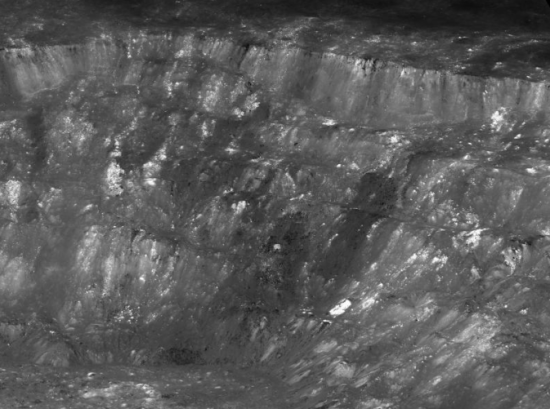
Two things to note from this image:
- The terraced nature of the crater’s slopes. These terraces were not put there by Chinese farmers. Instead, they show us the slumping downward over time of the crater floor after the initial impact. The various terraces are the result of “the sagging blocks of the pre-impact lunar crust.” In other words, each terrace provides a window into a different epoch of the Moon’s geological history.
- The crater wall has a remarkable range of bright and dark material. In several places dark volcanic material coated the wall as it tumbled downward. In other areas there are extremely bright deposits, fresh material more recently excavated from beneath the surface. Both types suggest that the geology of Aristarchus is complex, and would provide lunar geologists a wealth of information about the history of the Moon.

On Christmas Eve 1968 three Americans became the first humans to visit another world. What they did to celebrate was unexpected and profound, and will be remembered throughout all human history. Genesis: the Story of Apollo 8, Robert Zimmerman's classic history of humanity's first journey to another world, tells that story, and it is now available as both an ebook and an audiobook, both with a foreword by Valerie Anders and a new introduction by Robert Zimmerman.
The print edition can be purchased at Amazon. from any other book seller, or direct from my ebook publisher, ebookit. The ebook is available everywhere for $5.99 (before discount) at amazon, or direct from my ebook publisher, ebookit. If you buy it from ebookit you don't support the big tech companies and the author gets a bigger cut much sooner.
The audiobook is also available at all these vendors, and is also free with a 30-day trial membership to Audible.
"Not simply about one mission, [Genesis] is also the history of America's quest for the moon... Zimmerman has done a masterful job of tying disparate events together into a solid account of one of America's greatest human triumphs."--San Antonio Express-News
wow awesome! It is fun to cruise around the whole image zooming in and out . it would be amazing to get people to explore this area
rather than volcanic deposits, could these be remnants left from the heat of the impact?