Starlab partners with the interior design company Journey

Starlab design in 2025
The Starlab design in 2025. Click
for original image.

The consortium designing the commercial Starlab space station has now signed a partnership deal with the interior design company Journey for the latter to design the station’s habitable interior.

Journey brings a deep portfolio of globally recognized projects, including the Sphere in Las Vegas, the Empire State Building observatory in New York City and the Sun Princess Dome for Princess Cruises. The agency will be working closely with Hilton, one of the original strategic partners in the Starlab program, designing the Starlab hospitality and crew experience. Journey’s role adds a vital layer of design and experiential innovation, shaping a space that reflects both function and humanity.

Much of the press release is similar blather. It is good that Starlab is thinking about making the living space in its station “both a cutting-edge research platform and a welcoming, livable habitat,” but this deal doesn’t include any actual design work. Apparently nothing concrete will be done until Starlab wins the big NASA construction project — assuming it does so. Thus, I still rank Starlab low in my rankings of the four commercials stations being built or proposed, but this deal has convinced me to raise its ranking above Orbital Reef. Both have built little, but Starlab is at least making a lot of partnership deals with others, strengthening the quality of its team.

  • Haven-1, being built by Vast, with no NASA funds. The company is moving fast, with Haven-1 to launch and be occupied in 2026 for an estimated 30 days total. It hopes this actual hardware and manned mission will put it in the lead to win NASA’s phase 2 contract, from which it will build its much larger mult-module Haven-2 station..
  • Axiom, being built by Axiom, has launched four tourist flights to ISS, with the fourth carrying government passengers from India, Hungary, and Poland. Though there have been rumors it has cash flow issues, development of its first module has been proceeding more or less as planned.
  • Starlab, being built by a consortium led by Voyager Space, Airbus, and Northrop Grumman, with an extensive partnership agreements with the European Space Agency and others. It recently had its station design approved by NASA, but it has built nothing. The company however has now raised $383 million in a public stock offering, which in addition to the $217.5 million provided by NASA gives it the capital to begin some construction.
  • Orbital Reef, being built by a consortium led by Blue Origin and Sierra Space. Overall, Blue Origin has built almost nothing, while Sierra Space has successfully tested its inflatable modules, including a full scale version, and appears ready to start building its module for launch.

Hat tip to BtB’s stringer Jay.

1 comment

Third star destroying part of expanding shells surrounding binary Wolf-Rayet stars

Apep system.
From figure 3 of the paper.

Using the Webb Space Telescope, astronomers think they can now disentangle the strange spiral shape of the expanding dust shells caused by the colliding powerful winds flowing from a binary pair of giant aging Wolf-Rayet stars, dubbed the Apep system.

Apparently, a third smaller O-type star sits in the system, and is acting to block the winds and destroy the dust within them, carving out a large cavity in the spiral shells. The image to the right, produced by the Very Large Telescope in Chile, shows the spiral dust shells shaped by the strong solar winds flowing and colliding from the binary Wolf-Rayet stars (the bright dot in the center). The O-type star can be seen just above them. The yellow lines indicate the empty cone. Without the O star computer models had predicted a very bright shell north of the binary, and its non-existence in VLT images caused these further Webb observations.

From the paper’s [pdf] conclusion:

The JWST observations of Apep reveal luminous circumstellar dust that support[s] … our finding that the O supergiant ‘northern companion’ is dynamically associated with the binary WR stars in Apep; this is the first time that dust destruction has been observed by a tertiary star in a colliding wind nebula, and marks Apep as part of a rare class of triple colliding wind binaries.

The dust produced by Wolf-Rayet stars is thought to be a major component in seeding the formation of later stars, such as our own Sun. Finding that a third star in the system can destroy that dust suggests (as always) that this process can be far more complicated that first believed.

Hat tip to BtB’s stringer Jay.

2 comments

Firefly hopes to raise more than $600 million in initial stock offering

The rocket startup and lunar lander company Firefly yesterday posted details about its initial public stock offering, designed to hopefully raise more than $600 million.

Firefly Aerospace, a market leading space and defense technology company, today announced that it has launched the roadshow for its proposed initial public offering of 16,200,000 shares of its common stock. In addition, Firefly intends to grant the underwriters a 30-day option to purchase an additional 2,430,000 shares of its common stock at the initial public offering price, less underwriting discounts and commissions. The initial public offering price is expected to be between $35.00 and $39.00 per share.

The company stated it would use the money “to repay outstanding borrowings under its credit agreement, pay any accrued and unpaid dividends on certain series of its preferred stock, and for general corporate purposes.”

The company has not yet announced the date when this stock offering will become available for purchase.

1 comment

Chinese pseudo-company launches classified payload

The Chinese pseudo-company Ispace successfully placed a classified payload into orbit today, its solid-fueled Hyperbola-1 rocket lifting off from the Jiuquan spaceport in northwest China.

This was the first launch by Ispace since July 2024, following a launch failure. Not only did China’s state-run press say nothing about the payload, no information about where the rocket’s lower stages crashed inside China was provided.

The leaders in the 2025 launch race:

93 SpaceX
39 China
10 Rocket Lab
9 Russia

SpaceX still leads the rest of the world in successful launches, 93 to 68.

1 comment

Wang Leehom – More I Cannot Wish You

An evening pause: This song is from the Broadway production of Cole Porter’s Guys & Dolls, which unfortunately got cut from the movie. It is song by an older man, a kind of father figure in the play, wishing the best for a young woman co-worker.

This version is actually the best live performance I could find, and amazingly it is from Beijing in 2017.

1 comment

July 28, 2025 Quick space links

Courtesy of BtB’s stringer Jay. This post is also an open thread. I welcome my readers to post any comments or additional links relating to any space issues, even if unrelated to the links below.

23 comments

Galaxies without end

Galaxies without end
Click for original.

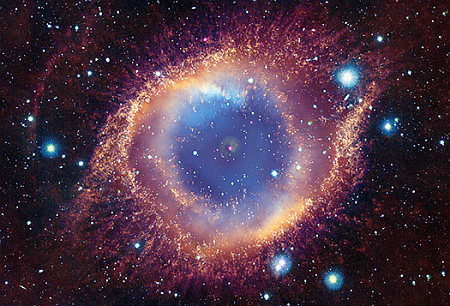
Cool image time! The picture to the right, reduced and enhanced to post here, was taken by the Hubble Space Telescope as part of a monitoring program studying the two supernovae that have occurred in this galaxy previously.

Hubble has turned its attention toward NGC 1309 several times; previous Hubble images of this galaxy were released in 2006 and 2014. Much of NGC 1309’s scientific interest derives from two supernovae, SN 2002fk in 2002 and SN 2012Z in 2012. SN 2002fk was a perfect example of a Type Ia supernova, which happens when the core of a dead star (a white dwarf) explodes.

SN 2012Z, on the other hand, was a bit of a renegade. It was classified as a Type Iax supernova: while its spectrum resembled that of a Type Ia supernova, the explosion wasn’t as bright as expected. Hubble observations showed that in this case, the supernova did not destroy the white dwarf completely, leaving behind a ‘zombie star’ that shone even brighter than it did before the explosion. Hubble observations of NGC 1309 taken across several years also made this the first time the white dwarf progenitor of a supernova has been identified in images taken before the explosion.

The image however carries a far more philosophic component. Except for the star near the top (identified by the four diffraction spikes), every single dot and smudge you see in this picture is a galaxy. NGC 1309 is about 100 million light years away, but behind it along its line of sight and at much greater distances are innumerable other galaxies, so many it is impossible to count them. And each is roughly comparable in size to our own Milky Way galaxy, containing billions of stars.

The scale of the universe is simply impossible to grasp, no matter how hard we might try.

11 comments

South Korea transfers its government-built Nuri rocket to private company

Capitalism in space: South Korea’s space agency KARI has now completed the transfer of its government-built Nuri rocket to the private South Korea company Hanwha Aerospace.

The transfer includes a total of 16,050 technical documents. While some 2 trillion won ($1.45 billion) in public funds was invested in developing the Nuri rocket, the two sides agreed on a technology transfer fee of 24 billion won, based on direct research and development costs. The agreement comes nearly two years and 10 months after Hanwha Aerospace was selected as the preferred negotiator.

Under the contract, Hanwha Aerospace has secured exclusive rights to lead Nuri production until 2032, which coincides with the government’s target for the next-generation Korean launch vehicle. [emphasis mine]

The highlighted phrase is important, as it shows that this transfer is not completely shifting space development and ownership from the government to the private sector. Hanwha is going to operate the rocket, but it does not appear to own it, nor is it clear it will be allowed to market it to others for profit. Furthermore, it is not Hanwha but KARI that will be developing the next-generation rocket, using government funds.

The dominance of the South Korean government is also reflected in the cost, as the article notes that the Nuri rocket costs “per kilogram … about 10 times that of SpaceX’s reusable Falcon 9.” Like all governments, KARI was not focused on profit in developing Nuri, so it built a rocket uncompetitive in the present launch market.

Still, this deal indicates the South Korean government’s recognition that it must foster a robust private sector aerospace industry if it truly wishes to enter the space age. This deal is thus just a first step.

6 comments

Bankrupt balloon company Space Perspective bought by European company

The bankrupt high-altitude balloon company Space Perspective has now been purchased by the Spanish balloon startup Eos X Space.

Space Perspective “will operate with full autonomy, under U.S. leadership and corporate structure,” Eos X Space representatives said in an emailed statement on Thursday (July 24). Space Perspective’s efforts will dovetail with those of Madrid-based Eos X Space, an aerospace outfit founded in 2020 that has been working on a balloon-tourism system of its own.

Eos X is one of three Spanish balloon startups, all vying to provide high altitude flights to tourists, with the other two companies being Zero-2 and Halo. All three have been in a long legal fight, with the latter two indicted in 2023 over the theft of Eos X’s balloon concept. In an earlier legal action, Zero-2 claimed its concept was stolen by Eos X.

None, including Space Perspective, has as yet actually flown any tourists.

2 comments

Another two launches by SpaceX and China

There were two more launches last night and today. First, SpaceX put another 24 Starlink satellites into orbit, its Falcon 9 rocket lifting off from Vandenberg in California. The first stage completed its 19th flight, landing on a drone ship in the Pacific.

Next, China today successfully launched another five satellites in its planned Guiwang (“king”) internet constellation of 13,000 satellites, its Long March 6 rocket lifting off from its Taiyuan spaceport in northern China. No word on where the rocket’s lower stages crashed inside China.

This launch brought the total number of operational satellites in orbit for this constellation to 39, all launched since December 2024. At this pace it will take many years for China to complete this constellation, though it likely can begin selling the service in China with an incomplete constellation. Its international licence requires it to launch 10% by 2029 and 50% by 2032.

The leaders in the 2025 launch race:

93 SpaceX
38 China
10 Rocket Lab
9 Russia

SpaceX now leads the rest of the world in successful launches, 93 to 67.

1 comment

Texas Space Commission hands $5 million to proposed spaceport in the middle of Texas

US and Mexico
Click for source.

In what can only be seen by anyone with any objectivity as a political payoff that has no chance of ever producing anything worthwhile, the Texas Space Commission (TSC) has given the Midland International Air and Space Port a $5 million grant to develop its proposed spaceport for vertical rockets in the middle of west Texas.

The spaceport is one of three facilities — along with ILC Aerospace in Houston and SylLab Systems in Plano — that received grant funding as part of the Space Exploration and Aeronautics Research Fund (SEARF). The SEARF provides funding to eligible companies, including government entities that the TSC is partnered with, to fund such purposes as technology development, research, workforce training, curation of materials and development of infrastructure. In its history, the SEARF fund has provided $126 million worth of grant money to 22 different projects.

…Although requested and managed by the city of Midland, the vertical launch site will be in Balmorhea in Reeves County, around the same site as the International Rocket Engineering Competition earlier this summer. The area can currently support suborbital rocket launches, but the vertical launch site is expected to support orbital flight, which will complement their horizontal launch system and high speed corridor for hypersonic flight.

The map to the right shows the location of Midland and Balmorhea. As you can see, this site makes no sense for vertical rocket launches, unless every rocket launched from the site is completely reusable. Even then, it faces major political hurdles to get permission to fly rockets over all the neighboring communities and states. The FAA would certainly have doubts.

In other words, this $5 million grant is a nice pay-off from one government agency to another, with its only purpose to spread some graft around.

That the Hearst-owned Midland Reporter-Telegram news article at the link recognizes none of this, and simply and naively spouts the propaganda put forth by government officials, once again illustrates the bankruptcy of our so-called “mainstream” press.

8 comments

One of NASA’s two Tracers satellites just launched has an issue

During the commissioning phase shortly after their launch earlier this week, one of NASA’s two Tracers satellites designed to study the solar wind and its interaction with the Earth’s magnetic field has had an as yet unnamed issue.

During the commissioning process, the team made routine adjustments to the power subsystem on both vehicles. While the adjustments achieved the desired results on one satellite, the other satellite requires further investigation by the team. Commissioning operations are temporarily paused while the team analyzes the situation and determines the appropriate response.

Though the press release provides no other information, it appears the satellite is having a problem producing the power expected.

1 comment
1 151 152 153 154 155 2,927