Clara Cernat & Thierry Huillet – Zigeunerweisen/Gipsy Airs
An evening pause: The songs are by Pablo de Sarasate. Performed live c2009.
Hat tip Judd Clark.
An evening pause: The songs are by Pablo de Sarasate. Performed live c2009.
Hat tip Judd Clark.
Courtesy of BtB’s stringer Jay. This post is also an open thread. I welcome my readers to post any comments or additional links relating to any space issues, even if unrelated to the links below.
Using telescopes both on Earth and in space, astronomers now think two giant clusters of galaxies that had collided previously have now stopping flying from each other and are on target for second collision.
The annotated image to the right shows what we can see today. The two blue blobs near the center are the two galaxy clusters.
The galaxy cluster PSZ2 G181.06+48.47 (PSZ2 G181 for short) is about 2.8 billion light-years from Earth. Previously, radio observations from the LOw Frequency ARray (LOFAR), an antenna network in the Netherlands, spotted parentheses-shaped structures on the outside of the system. In this new composite image, X-rays from Chandra (represented in purple) and ESA’s XMM-Newton (blue) have been combined with LOFAR data (red) and an optical image from the Pan-STARRS telescope of the stars in the field of view.
These structures are probably shock fronts — similar to those created by jets that have broken the sound barrier — likely caused by disruption of gas from the initial collision about a billion years ago. Since the collision they have continued traveling outwards and are currently separated by about 11 million light-years, the largest separation of these kinds of structures that astronomers have ever seen.
Now, data from NASA’s Chandra and ESA’s XMM-Newton, a mission with NASA contributions, is providing evidence that PSZ2 G181 is poised for another collision. Having a first pass at ramming each other, the two clusters have slowed down and begun heading back toward a second crash.
When such giant object collide what really interacts the most is the gas and dust between the stars. The motions of the stars and galaxies of course get distorted by the pull of gravity, but there are almost never any crashes.

U.S. debt as of June 4, 2025. Click for original.
For my entire life it has always been the same: Whenever any politician or elected official proposes any cuts to the federal budget, and most especially when those cuts are aimed at a popular government agency like NASA, the news reports in the mainstream press are uniformly hostile.
Trump’s proposal to cut NASA’s budget by 24% in 2026 has been no different. Here are just a few headlines:
This list is only a sampling, but they are typical of almost all the reporting now and that always happens when big cuts are proposed in any government program. The spin is always the same: “These cuts are horrible, their acceptance would be the act of a barbarian, and by doing so will certainly cause the fall of civilization!”
Above all, the focus is always on the cuts themselves, and never on the larger picture.
I am not going to do that. I have reviewed in detail the proposed cuts to NASA, and am now going to take a detailed look, but will do so by considering the larger context of the overall federal budget and the need to get its spending under control.
And out of control that budget is, as indicated by the screen capture above of today’s US Debt Clock. The United States is bankrupt. If we don’t gain some control over federal spending in a very near future some very bad things are going to happen, and soon. And those bad things will likely shut down luxury items like NASA entirely, not just impose some cuts to its overall budget.
All Trump is doing is attempting a first stab at this problem. The real question is whether he has made a rational and reasonable attempt, or whether it should be revised in some manner.
This is the perspective I bring to this issue. I just wish others would do the same.
» Read more

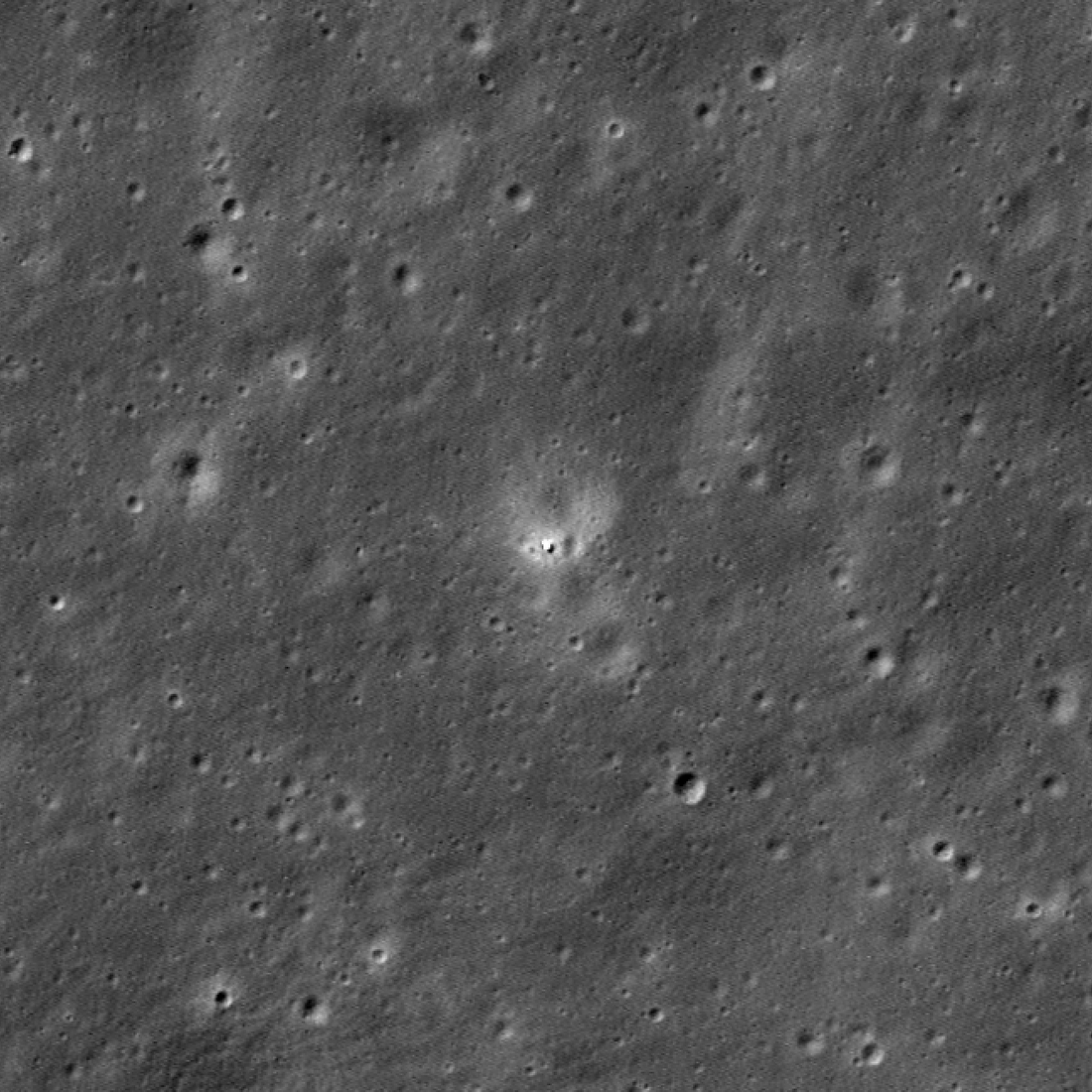
Landing sites for both Firefly’s Blue Ghost and
Ispace’s Resilience
The Japanese lunar lander startup Ispace — about to attempt its second unmanned lunar landing — has now signed a $3 millionj contract with the European Space Agency (ESA) to begin design and construction of its proposed Magpie lander.
The agreement comes in the context of the Small Missions for Exploration initiative launched by ESA. This initiative called for innovative and short-term mission ideas for lunar exploration. ispace’s MAGPIE concept was selected and awarded a pre-phase A contract on Dec. 12, 2024. Under the Phase 1 extension agreement, ispace-EUROPE will collaborate with ESA on the implementation of the lunar exploration mission. In aggregate, the value of the contracts for the two phases is €2,695,000 (approximately ¥437 million JPY).
The company already has contracts for future landers with both NASA and Japan’s space agency JAXA. It appears these space agencies consider the company’s engineering to be acceptable, even though its only attempt to land on the Moon, Hakuto-R1, crashed in 2023 when its software shut the engines down prematurely, three kilometers above the surface.
Ispace’s second lander, Resilience, is presently in lunar orbit and is now targeting a landing attempt tomorrow, June 5, 2025, at 3:17 pm (Eastern). The map to the right shows the landing zone, in Mare Frigoris in the high northern latitudes of the near side of the Moon.
This contract by ESA also illustrates Europea’s increasing shift to the capitalism model. Rather than design and build the lander itself, ESA is buying this product from the private sector. It will likely get what wants sooner and for far less money.
Following several large contract announcements in recent weeks, the orbital tug startup Impulse has now raised an additional $300 million in private investment capital, in addition to the $150 million it raised last year.
Impulse plans to use the funding for several initiatives. One is to scale up production of its Mira and Helios vehicles to better meet demand for them. The company says it has more than 30 signed contracts for those vehicles, a backlog worth nearly $200 million. Romo said the company is seeing increasing demand for Mira, the smaller of the two vehicles, for defense applications.
The company was founded by Tom Mueller, who was one of the principal engineers during SpaceX’s development of the Falcon 9. Mira is the smaller of the two tugs, and has flown one demo mission. The larger Helios tug has not yet flown, but the company recently won a contract with the satellite company SES to use it.
The company has also said it is developing its own rocket, but I suspect its first launch that will come later.
NASA, Axiom, and SpaceX yesterday announced that the launch of Axiom’s fourth commercial passenger flight to ISS, dubbed Ax-4, has been delayed two days to June 10, 2025.
NASA, Axiom Space, and SpaceX are targeting no earlier than 8:22 a.m. EDT on Tuesday, June 10, for launch of the fourth private astronaut mission to the International Space Station, Axiom Mission 4. This shift allows teams to account for predicted inclement weather during the SpaceX Falcon 9 rocket and Dragon spacecraft transport in addition to completing final processing of the spacecraft ahead of launch.
The Dragon capsule for this mission is new, and there had been delays in getting it built. Though weather is likely the biggest reason for this delay, it also sounds as if SpaceX has needed just a little bit of extra time to finalize the capsule’s construction.
The mission will fly one Axiom astronaut plus three passengers, each a government astronaut from India, Poland, and Hungary. It will spend about a week docked at ISS.

The Starlab design in 2025. Click
for original image.
The space station startup Voyager Technologies yesterday announced its first public stock offering, with the hope of raising almost $400 million in investment capital.
Underwriters have a 30-day option to purchase up to 1.65 million additional Class A shares, on top of the 11 million initially offered, which are expected to be priced between $26 and $29 each. If fully subscribed at the top end of the range, the IPO could raise as much as $367 million in gross proceeds.
Voyager plans to build the Starlab space station, launched as a single large module by SpaceX’s Starship/Superheavy rocket, but so far has cut no metal, focusing its work entirely on designs. It has also signed deals with several foreign companies in Europe and Japan as well as the European Space Agency, positioning itself as providing the international community a station to replace ISS when it is gone.
At the moment however I rank Starlab fourth among the four commercial space stations under development, mostly because it has built nothing. Hopefully the funds raised by this stock offering will allow it to start some construction work.
The proposed commercial spaceport in Nova Scotia, operated by Maritime Launch Services, announced this week that it has signed a contract with a Netherlands rocket startup, T-Minus, whereby the latter will do two suborbital launches of its new Barracuda sounding rocket.
On 3 June 2023, Maritime Launch Services, a Canadian commercial launch facility operator, announced that it had signed an agreement with T-Minus Engineering for the launch of two Barracuda rockets. According to the press release, the two launches will carry various scientific and educational payloads for several customers, whose names were not disclosed. The launches are expected to take place from Spaceport Nova Scotia in October 2025.
The viability of both the rocket startup and spaceport are open to question. T-Minus was founded in 2011, and has apparently done little in that time period. It claims it is flown this rocket many times, but if so there is little solid information confirming this fact. Most of its business appears to have been flying very small sounding rockets for European defense agencies.
Maritime Launch Services first proposed this spaceport in 2017, but has seen only one student suborbital launch in that time. Its original plan was to offer both the launchpad and rocket to satellite manufacturers. The rocket however was Ukrainian-built, and when Russia invaded the Ukraine that rocket was no longer available. Furthermore, red tape in Canada stalled launch approvals for years.
Recently the spaceport has been marketing itself to multiple rocket companies, announced a number of deals with unnamed startups or named startups that haven’t flown anything yet. It has also signed a partnership deal with the space station company (Voyager), apparently to bring some real technical expertise to the operation.
Nothing real at this spaceport however has actually yet occurred. Whether this new deal is real will have to wait for something to happen.
An evening pause: Performed live 2017.
Hat tip John Jossy.
Courtesy of BtB’s stringer Jay. This post is also an open thread. I welcome my readers to post any comments or additional links relating to any space issues, even if unrelated to the links below.
It is time for my monthly update of the Sun’s ongoing sunspot activity, using the update that NOAA posts each month to its own graph of sunspot activity but annotated by me with extra information to illustrate the larger scientific context.
The activity in May was shocking in that it completely contradicted all expectations by everyone in the solar science community, with the Sun’s sunspot count changing in a way that was somewhat unprecedented. The graph below makes this very clear: