NASA’s still undecided as to Starliner’s next flight

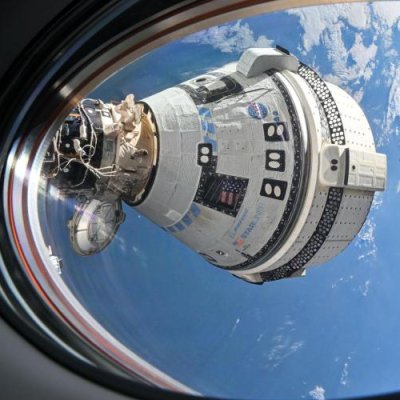
Starliner docked to ISS
Starliner docked to ISS.

Though it now appears that the management at both NASA and Boeing are still committed to getting Boeing’s manned Starliner capsule certified for commercial flights, NASA remains undecided as to the scope and nature of the capsule’s next test flight.

[T]esting will be a big part of the next Starliner flight, whenever it lifts off. “We need to make sure we can eliminate the helium leaks; eliminate the service module thruster issues that we had on docking,” [said Steve Stich, manager of NASA’s Commercial Crew Program].

NASA has not yet decided whether the coming Starliner flight will carry astronauts or not, he added. But even if the mission is uncrewed, the agency wants it to be crew-capable — “to have all the systems in place that we could fly a crew with,” Stich said. “As I think about it, it might be there for a contingency situation, as we prepare for whatever events could happen,” he added. “One of the things that I’ve learned in my time at NASA is, always be prepared for the unexpected.”

NASA plans to certify Starliner for operational, long-duration astronaut missions shortly after this next flight, if all goes well.

Stich’s comments took place during a press conference following the return of the Starliner crew on SpaceX’s Freedom capsule.

There had been rumors last year that NASA would pay Boeing to use Starliner on a cargo mission to ISS, thus saving the company the cost of flying another demo mission on its own dime. I suspect those plans have now been squashed by the Trump administration, which is likely to insist that Boeing honor the deal in its fixed price contract. If so, the next flight will once again be a demo mission to prove the capsule’s systems, paid for by Boeing. Whether astronauts fly on it will be a political decision made by Trump, with advice from NASA management. And that decision cannot occur until NASA’s new administrator is confirmed and has had time to review the situation.

18 comments

Camille Saint-Saëns – from the Symphony No. 3

An evening pause: Performed live December 7, 2024 for the reopening of Notre Dame in Paris. Gustavo Dudamel is the conductor, leading Olivier Latry and the Orchestre Philharmonique de Radio France.

Hat tip Judd Clark.

2 comments

March 19, 2025 Quick space links

Courtesy of BtB’s stringer Jay. This post is also an open thread. I welcome my readers to post any comments or additional links relating to any space issues, even if unrelated to the links below.

2 comments

High ridge down the center of a big Martian crack

High ridge down the middle of a Martian canyon
Click for original image.

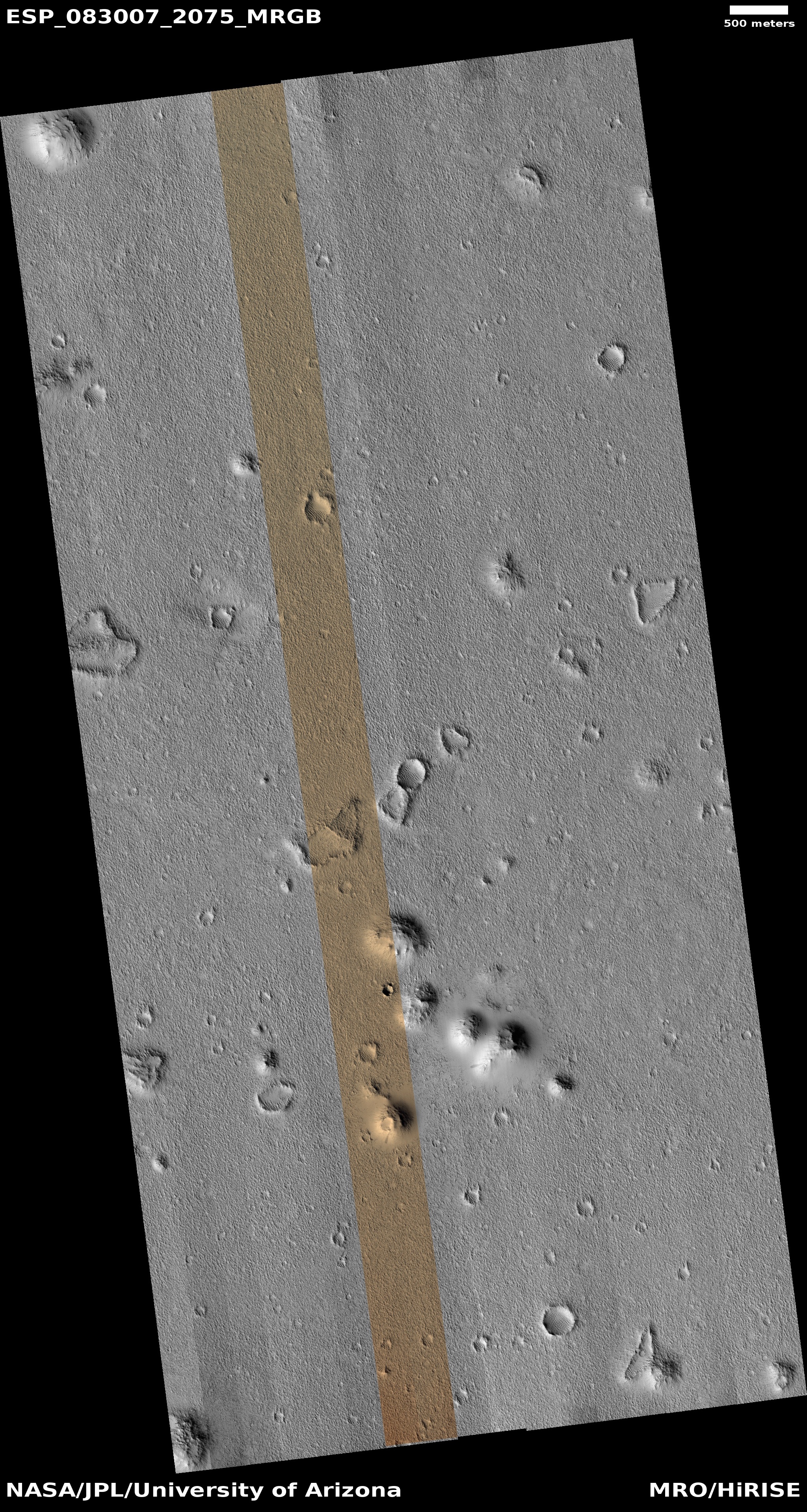
Cool image time! The picture to the right, rotated, cropped, reduced, and sharpened to post here, was taken on January 27, 2025 by the high resolution camera on Mars Reconnaissance Orbiter (MRO). Labeled simply as a “terrain sample,” it was likely taken not as part of any specific research project but to fill a gap in the schedule in order to maintain the camera’s proper temperature.

Whenever the camera team needs to do this, they try to find an interesting object to photograph, and often succeed. In this case they focused on the geology to the right. I suspect that at first glance my readers will have trouble deciphering what they are looking at. Let me elucidate: This this a 2.5-mile-wide canyon, about 1,000 feet deep, that is bisected by a ridge about 500 feet high.

On the sunlight walls of this canyon you can see boulders and debris, with material gathered on the canyon floor. The smoothness of the floor suggests also that a lot of Martian dust, likely volcanic ash, has become trapped there over the eons.
» Read more

0 comments

Firefly releases movie of lunar sunset

Sunset on the Moon
Click for original image.

Using imagery taken by Firefly’s Blue Ghost lander, the company today released a short movie showing sunset on the Moon, from several different angles.

I have embedded that movie below. The picture to the right, cropped, reduced, and sharpened to post here, is one of the photos from that movie. It shows the Sun on the horizon, with the Earth above it and Venus the small bright dot in between.

One alien aspect of the Moon that that while the Sun (and Venus) slowly crossed the sky during Firefly’s two week mission, going from just after sunrise in the east to sunset in the west, the Earth remained stationary in this location above the horizon. This phenomenon occurs because the length of the Moon’s day and its orbit around the Earth are the same length, so that one hemisphere always faces the Earth. Blue Ghost landed in Mare Crisium on the eastern edge of that hemisphere. At that location the Earth always hangs at this spot in the sky.
» Read more

7 comments

Freedom capsule splashes down successfully

SpaceX’s Freedom capsule has successfully splashed down off the coast of Florida, and has now been fished out of the water.

UPDATE: All four astronauts have now exited the capsule.

In watching the live stream, it is important to once again note that no one involved in this recovery operation is a government employee. The entire operation is being run by SpaceX, a private American company doing this work for profit.

It will take a bit more time before the astronauts come out of the capsule, as they must do some leak checks to make sure everything is safe.

25 comments

March 18, 2025 Quick space links

Courtesy of BtB’s stringer Jay. This post is also an open thread. I welcome my readers to post any comments or additional links relating to any space issues, even if unrelated to the links below.

1 comment

SpaceX launches 23 more Starlink satellites, including 13 with phone-to-satellite capabilities

SpaceX today successfully launched another 23 Starlink satellites, its Falcon 9 rocket lifting off from Cape Canaveral in Florida.

The first stage completed its nineteenth flight, landing on a drone ship in the Atlantic.

The leaders in the 2025 launch race:

32 SpaceX
13 China
4 Russia
4 Rocket Lab

SpaceX now leads the rest of the world in successfully launches, 32 to 24.

0 comments

More surprises from the Wolf-Rayet star numbered 104 and known for its pinwheel structure

Keck infrared data of WR104

Among astronomers who study such things, Wolf-Rayet 104 is one of the most well known OB massive stars in their catalog, with the infrared picture to the right illustrating why. The star is actually a binary of massive stars, orbiting each other every eight months. Both produce strong winds, and the collision of those winds results in a glorious pinwheel structure that glows in the infrared.

Such stars are also believed to be major candidates to go supernova and in doing so produce a powerful gamma ray burst (GRB) that would shoot out from the star’s poles. As the orientation of this pinwheel suggests we are looking down into the pole of the system, this star system was actually considered a potentially minor threat to Earth. Located about 8,400 light years away, this is far enough away to mitigate the power of the GRB, but not eliminate entirely its ability to damage the Earth’s atmosphere.

New research now suggests however that despite the orientation of the pinwheel, face-on, the plane of the binary star system is actually tilted 30 to 40 degrees to our line of sight. The press release asks the new questions these results raise:

While a relief for those worried about a nearby GRB pointed right at us, this represents a real curveball. How can the dust spiral and the orbit be tilted so much to each other? Are there more physics that needs to be considered when modelling the formation of the dust plume?

You can read the paper here. It is a quite refreshing read, not just because of its relatively plain language lacking jargon, but because of its willingness to list at great length the uncertainties of the data.

1 comment

Isar confirms March 20, 2025 for first launch

Proposed spaceports surrounding Norwegian Sea

The German rocket startup Isar Aerospace has now confirmed that it will attempt the first orbital test launch of its Spectrum rocket on March 20, 2025, lifting off from Norway’s Andoya spaceport.

Isar announced March 17 that the Norwegian Civil Aviation Authority (CAA) issued a launch operator license to the company for its Spectrum rocket, launching from Andøya Spaceport in northern Norway. The launch, called “Going Full Spectrum” by the company, is a test flight of Spectrum with no customer payloads on board. “Our goal is to test each and every component and system of the launch vehicle,” Alexandre Dalloneau, vice president of mission and launch operations at Isar Aerospace, said in a statement about the upcoming launch.

Isar Aerospace did not announce a specific time for the launch, noting the timing would depend on weather as well as range and vehicle readiness.

This launch is also going to be the first vertical orbital rocket launch from the European continent, and will put Andoya ahead of the three other spaceports being developed in the United Kingdom and Sweden. For the two UK spaceports this launch will be especially embarrassing, as both started years before Andoya but have been endlessly hampered by red tape, government interference, and local lawsuits. Norway meanwhile has moved with alacrity in approving Andoya’s permits and Isar’s launch licenses.

As for Isar, this launch puts it in the lead over the half dozen or so new European rocket startups as the first to attempt a launch. None of the others are close to that first launch attempt, though the German startup Rocket Factory Augsburg came close last year. During its last static fire test of the first stage prior to launch the rocket was destroyed in a fire.

0 comments
1 217 218 219 220 221 2,930