Japanese private lunar lander HAKUTO-R now scheduled for launch on November 22nd

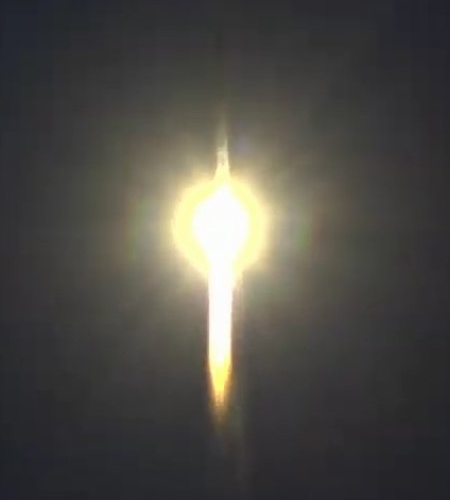
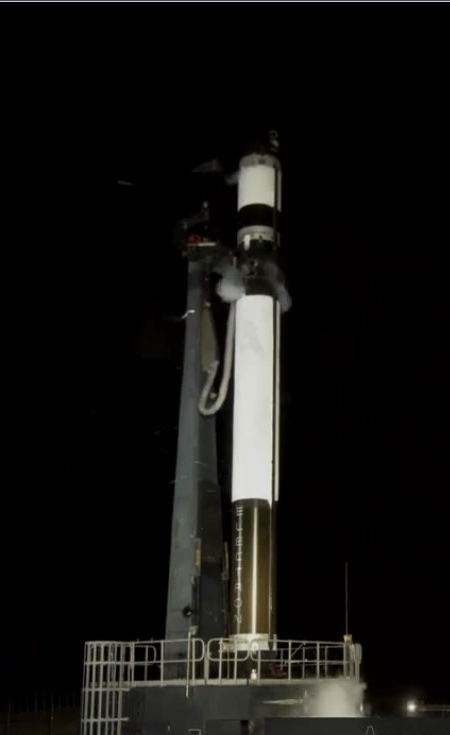
The private lunar lander HAKUTO-R, built by the Japanese company Ispace, has now been scheduled for a November 22, 2022 launch on a Falcon 9 rocket.

The launch of the first commercial lunar lander mission to attempt a landing on the Moon was originally scheduled between November 9 -15. However, ispace stated that after consulting with SpaceX, the new tentative launch date would be moved to November 22 because it “allows for best preparation for the mission when considering the fuel-loading schedule for the lander and launch date availability.” SpaceX has a busy schedule at the Cape and NASA still has the Artemis 1 launch scheduled for November 14.

HAKUTO-R’s primary mission is to test the lander. However, it also includes several customer payloads, the most significant of which is the Rashid rover from the United Arab Emirates. Rashid, which is about the size of a Radio Flyer red wagon, will operate for one lunar day, about two weeks. While its main mission is to test the engineering and to train the engineers who built it, it will have two cameras for taking pictures. In addition, on its wheels are test adhesive patches of different materials, designed to see how each material interacts with the Moon’s abrasive dust.

3 comments

Astronomers discover a new large potentially dangerous near-Earth asteroid

Using a variety of ground-based telescopes, astronomers have discovered three new near-Earth asteroids orbiting the Sun but inside Earth’s orbit, with one of these asteroids having the possibility of one day in the future impacting the Earth.

An international team using the Dark Energy Camera (DECam) mounted on the Víctor M. Blanco 4-meter Telescope at Cerro Tololo Inter-American Observatory in Chile, a Program of NSF’s NOIRLab, has discovered three new near-Earth asteroids (NEAs) hiding in the inner Solar System, the region interior to the orbits of Earth and Venus. This is a notoriously challenging region for observations because asteroid hunters have to contend with the glare of the Sun.

By taking advantage of the brief yet favorable observing conditions during twilight, however, the astronomers found an elusive trio of NEAs. One is a 1.5-kilometer-wide asteroid called 2022 AP7, which has an orbit that may someday place it in Earth’s path. The other asteroids, called 2021 LJ4 and 2021 PH27, have orbits that safely remain completely interior to Earth’s orbit. Also of special interest to astronomers and astrophysicists, 2021 PH27 is the closest known asteroid to the Sun. As such, it has the largest general-relativity effects of any object in our Solar System and during its orbit its surface gets hot enough to melt lead.

You can read their paper here [pdf].

2002 AP7 is the largest such potentially dangerous asteroid discovered in eight years. Its present orbit however never brings it closer to the Earth than 4.4 million miles, and it will be many thousands of years before that orbit might result in an impact. This of course doesn’t prevent foolish mainstream news outlets like the New York Times to label it a “planet-killer.”

The importance of this study however is that it underlines the possibility that there might be other such asteroids lurking close to the Sun that are difficult to spot. This is a blind spot in our asteroid surveys that needs to be eliminated.

14 comments

Lockheed Martin invests $100 million in startup satellite maker Terran Orbital

Lockheed Martin has now invested $100 million in the startup smallsat-maker Terran Orbital, which has already been building satellites of a wide variety for customers.

Under the deal, which runs through 2035, the smaller Florida-based firm will build SAR and other advanced payloads, as well as satellite sub-assemblies, for the aerospace behemoth, Terran said in a press release today. These include electro-optical, hyperspectral, infrared and secure communication payloads, as well as things like star trackers and flight computers.

With this deal, Terran has also decided that it will no longer launch its own radar constellation, as that constellation would have competed directly with its radar satellite customers. Instead, it will make its radar satellite for others, including Lockheed Martin.

As an example of the variety of smallsats Terran Orbital has been building, it manufactured the smallsat lunar orbiter CAPSTONE for NASA, now on its way to the Moon but being operated for NASA by a different private company, Advanced Space.

1 comment

Orbex signs 50-year lease at Sutherland spaceport

The British startup rocket company Orbex has signed a 50-year lease to operate its own launchpad at the Space Hub Sutherland spaceport in Scotland.

The company will lease Space Hub Sutherland from a local development agency for an initial period of 50 years with an option to extend for a further 25 years. Orbex will soon commence construction at the 10-acre launch site on the A’Mhoine peninsula in Sutherland. The bulk of the construction work will be contracted out to technology solutions company Jacobs, which also does a lot of work for NASA.

The company hopes to launch its Prime rocket in ’23. At present it is testing launch operations of a prototype on its launchpad. All told, Orbex has raised a little over $100 million in private investment capital.

0 comments

Mengtian module docks with China’s Tiangong-3 space station

Tiangong-3 station, when completed

The new Mengtian module has docked with the main port of China’s Tiangong-3 space station.

The graphic to the right shows the planned design of the station. Mengtian however is not yet in its side port as shown, but in the main docking port in line with the core module where a Shenzhou crew capsule is shown docked. At some point soon the astronauts on board will use a small robot arm to move Mengtian from the main port to its side port. (This system is very similar to one the Russian’s used on Mir.)

Furthermore, the large vertically oriented solar panels have not yet been installed on the station. These will likely need to be delivered, and require spacewalks to deploy.

0 comments

Falcon Heavy launches successfully for 1st time since 2019

Capitalism in space: SpaceX today successfully put a military reconnaissance satellite using its Falcon Heavy rocket, its first launch since 2019.

The two side boosters and core stage all made their first flight. The core stage was intentionally not recovered, as it needed to use all its fuel for getting the satellite to its orbit. The two side boosters successfully landed at SpaceX’s two landing sites at Cape Canaveral.

The leaders in the 2022 launch race:

50 SpaceX
47 China
18 Russia
8 Rocket Lab
7 ULA

American private enterprise now leads China 70 to 47, though it still trails the rest of the world combined 74 to 70.

This year’s 70 successful launches ties the previous high for the United States in a single year, set in 1966. With two months still left in the year, it looks like that record will be broken, by a lot.

9 comments

October 31, 2022 Quick space links

Courtesy of BtB’s string Jay, who has been sending them to me for the past week. Unfortunately, my isp decided to only send me about half my emails during that time, and I only discovered this today. Ugh, modern big corporations. They operate like badly run feudal plantations.

Thus, tonight’s quick links will catch up on some stories we missed from late last week.


  • Blue Origin delivers second BE-4 flightworthy engine to ULA
  • ULA can now install the engines in the first Vulcan rocket and begin testing. Whether it will be ready for its first flight early next year remains unknown. It is even more uncertain whether Blue Origin can ramp up its BE-4 assembly line so as to produce enough of these engines for all of the planned launches of the Vulcan as well as Blue Origin’s own as-yet-unflown New Glenn rocket.

10 comments

The knobby floor of a Martian crater

The knobby floor of a Martian crater

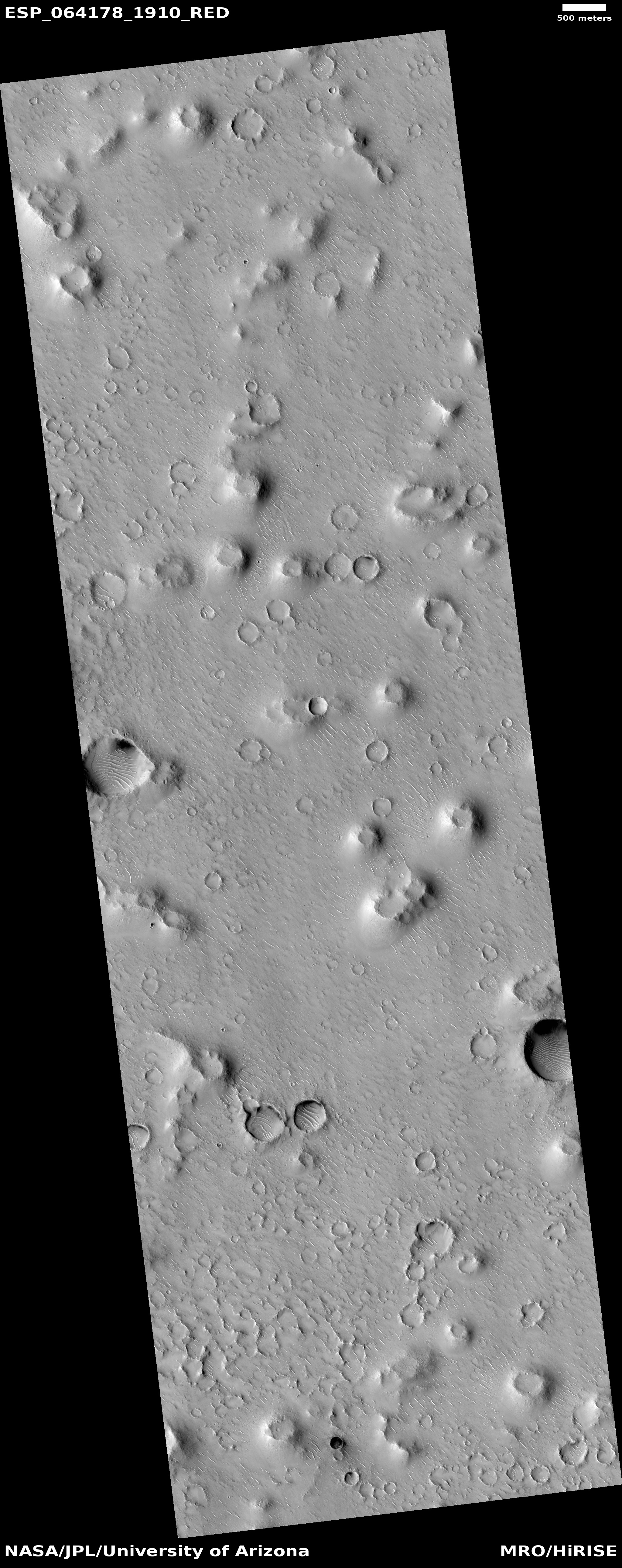
Cool image time! The picture to the right, rotated, cropped, reduced, and enhanced to post here, was taken on July 20, 2022 by the high resolution camera on Mars Reconnaissance Orbiter (MRO). It shows a small portion of the knobby floor of a 70-mile-wide ancient and eroded unnamed crater in the southern cratered highlands of Mars.

Why knobby? Usually such terrain on Mars signifies an very ancient and well eroded region of chaos terrain, its knobs the leftover worn remains of ancient mesas cut by eons of glacier flow.

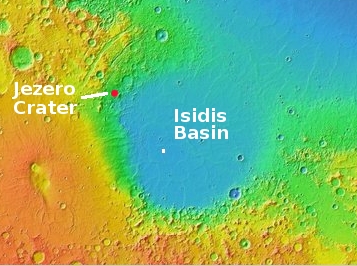
If this is so, the location as shown in the overview map below suggests if there were ever any glaciers — or any near surface ice — at this location, it had to be a very long time ago.
» Read more

0 comments

CAPSTONE makes course correction, now on target for lunar orbital insertion on November 13th

Engineers have successfully overcome the valve issue that had caused the CAPSTONE lunar probe to tumble, and have made a subsequent mid-course correction that has put the spacecraft on target for entering lunar orbit on November 13, 2022, as planned.

The CAPSTONE spacecraft successfully completed a trajectory correction maneuver on Thursday, Oct. 27, teeing up the spacecraft’s arrival to lunar orbit on Nov. 13.

CAPSTONE is no longer in safe mode following an issue in early September that caused the spacecraft to spin. The team identified the most likely cause as a valve-related issue in one of the spacecraft’s eight thrusters. The mission team will design future maneuvers to work around the affected valve, including the two remaining trajectory correction maneuvers scheduled before CAPSTONE’s arrival to orbit at the Moon.

Though it appears the CAPSTONE team has figured out how to deal with that malfuncting valve, it is unclear what the long-term ramifications of that valve will be. If it is still leaking it likely means the mission will be shortened because of loss of fuel, as well as the need to use more to compensate.

1 comment

Today’s blacklist victim: Distinguished scientist and long-time journal editor forced to resign due to threats

Jose Domingo, blacklisted scientist
Dr. José Luis Domingo, blacklisted scientist

The modern dark age: Dr. José Luis Domingo, an often cited expert on toxicology and editor for the last seven years of the journal Food and Chemical Toxicology, has been forced to resign his position because of threats and slanders directed at him after he approved the publication of a peer-review paper that documented the potential harmful effects of the mRNA COVID shots.

About a month after the paper was published, Domingo said, he began receiving angry emails and messages. These included insults, calls to resign, demands to retract the paper, and even threats. One email asked him how he could sleep at night, knowing that the scientific paper that he had allowed to be published would lead to the death of millions of people.

The angry messages, he said, were filled with ad hominem attacks against him and against the paper’s co-authors, but did not specify their scientific objections to the contents of the paper.

…Since then, pro-vaccine factions have increased their personal campaign against him, going so far as to adding false information to the Wikipedia entry about him, as well as attacking the Wikipedia page of the journal itself. Both, he said, were negatively modified by pro-vaccination activists. Indeed, an Oct. 4 version of his page, accessed via internet archive, included a subheading entitled “Antivaccine controversy” that accused Domingo of “spreading disinformation during the pandemic.” That paragraph has since been removed.

Domingo even offered — in a gesture of open-mindedness and good will — to publish one of the more-detailed attack messages, if the writers would agree to peer review. They did agree, and then discovered that with peer-review you need to have some facts to back up your accusations. They did not, and their paper was rejected.

No matter. These individuals then found another journal, Stem Cell Reviews and Reports, to publish their attack essay, demanding once again that Domingo retract the paper while once again accusing him of causing the death of millions by its publication:
» Read more

10 comments

Distant interacting galaxies

Interacting galaxies
Click for original image.

Cool image time! The picture to the right, cropped and reduced to post here, was taken by the Hubble Space Telescope as part of a survey of known “weird and wonderful galaxies.” This particular pair is dubbed Arp 248, and is estimated to be about 200 million light years away.

Two spiral galaxies are viewed almost face-on; they are a mix of pale blue and yellow in colour, crossed by strands of dark red dust. They lie in the upper-left and lower-right corners. A long, faint streak of pale blue joins them, extending from an arm of one galaxy and crossing the field diagonally. A small spiral galaxy, orange in colour, is visible edge-on, left of the lower galaxy.

The connecting stream indicates that these galaxies are interacting with each other, gravity drawing stars and gas from the upper galaxy towards the lower.

0 comments
1 674 675 676 677 678 2,927