
Avio’s CEO: SpaceX’s slow decommissioning of Falcon 9 has brought us lots of business!
According to CEO Giulio Ranzo of the Italian rocket company Avio, the decision by SpaceX to no longer fly its Falcon 9 Transporter missions — that fly dozens of small payloads in one launch — has been a blessing for his company, forcing it to push to ramp up its launch cadence to meet the new demand.
“SpaceX has practiced a lot of price damping for a number of years by launching satellites at very cheap rates, all together with the so-called transporter mission. Guess what? The party is finished, and they don’t do that anymore,” Ranzo said. “Now all these smaller customers are turning back to us and asking to launch. Thank you very much. Now, we will try to do what we can for them. We are certainly happy to entertain, again, discussions with customers that seem to be only looking at SpaceX.”
…Avio’s Vega C launch system is currently configured to support up to four flights per year [of its Vega-C rocket]. Ranzo explained that Avio may need to move more quickly towards a flight rate of six Vega missions per year, an increase he said would require additional investment and support from the European Space Agency. He added that the ramp-up could also require Avio to bring more work in-house, arguing that production “can only go as fast as the slowest of your suppliers.”
This is exactly as I predicted in August 2026. When it became clear that SpaceX was ending Transporter missions, the general reaction in the media was panic. I said instead that SpaceX and Elon Musk was doing the rest of the rocket industry a favor:
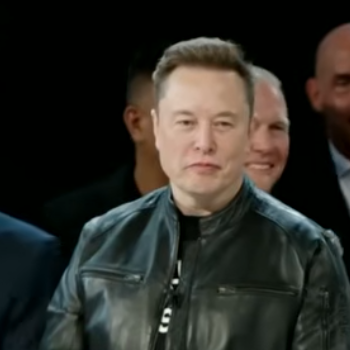
Elon Musk
I … honestly believe that SpaceX’s decision was not entirely based on its own internal needs. Those needs certainly were the main motive, but based on Elon Musk’s passionate dream of making the human race multi-planetary, as well as his repeated willingness to help his competitors when they needed SpaceX to launch their satellites, I believe he recognized that SpaceX’s dominance could be hurting the rest of the rocket industry, and that the instant it made business sense to clear the field for these competitors, he was quite willing to do so.
Ranzo’s comments show how his company is now benefiting from SpaceX’s decision. You can also bet that every other new and old rocket company in the U.S. and Europe — of which there are a lot — is experiencing the same thing.
Meanwhile, it is amusing to see how this story illustrates the insane and consistent anti-Musk hatred in our leftist propaganda media. When SpaceX was flying its Transporter missions, the press routinely condemned SpaceX for dominating the industry. When it decided to stop those Transporter missions, the press then condemned the company for not supporting the industry. The narrative was never reality, but how to hate Musk and his company.

On Christmas Eve 1968 three Americans became the first humans to visit another world. What they did to celebrate was unexpected and profound, and will be remembered throughout all human history. Genesis: the Story of Apollo 8, Robert Zimmerman's classic history of humanity's first journey to another world, tells that story, and it is now available as both an ebook and an audiobook, both with a foreword by Valerie Anders and a new introduction by Robert Zimmerman.
The print edition can be purchased at Amazon or from any other book seller. If you want an autographed copy the price is $60 for the hardback and $45 for the paperback, plus $8 shipping for each. Go here for purchasing details. The ebook is available everywhere for $5.99 (before discount) at amazon, or direct from my ebook publisher, ebookit. If you buy it from ebookit you don't support the big tech companies and the author gets a bigger cut much sooner.
The audiobook is also available at all these vendors, and is also free with a 30-day trial membership to Audible.
"Not simply about one mission, [Genesis] is also the history of America's quest for the moon... Zimmerman has done a masterful job of tying disparate events together into a solid account of one of America's greatest human triumphs."--San Antonio Express-News
Not to mention the fact that SpaceX revolutionized the launch industry by demonstrating how rocket reuse can drive costs down, allowing a smaller company to compete against the aerospace giants.
Other than that, hardly any impact at all, right?
This not only puts pressure on Avio to improve its operations, but it puts pressure on all the rest. The timing is good, because there are several other companies available for serving the smallsat customers. Not just smallsat launch companies but also the larger launchers may be pressured to do their own transporter-like missions, too. The coming tidal wave of new rockets as well as the current (but grounded) large rockets will all benefit from the growing demand for launching smallsats.