Katalyst and NASA cancel any attempt to catch and raise the orbit of Gehrels-Swift
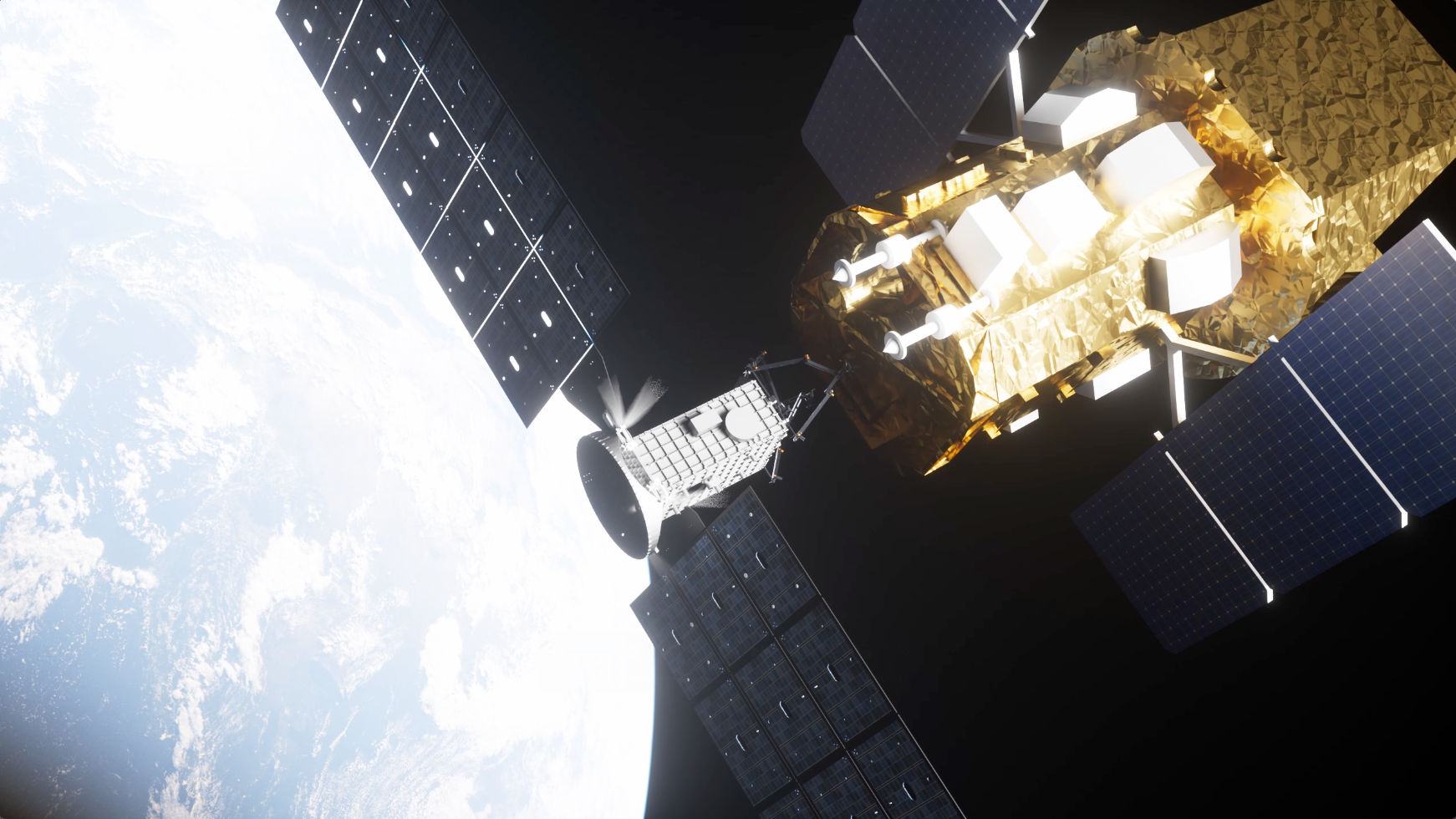
Artist rendering of Link (on left) about to attach to Gehrels-Swift.
Click for original image.
In parallel announcements today by both the satellite repair startup Katalyst and NASA, due to continuing attitude thruster issues the decision has been made to forego any attempt by Katalyst’s Link spacecraft to grab the Gehrels-Swift space telescope and raise its orbit. From the NASA press release:
Due to an ongoing commercial spacecraft attitude control issue, NASA and Katalyst Space announced Wednesday the LINK spacecraft will not capture or boost an agency satellite to a higher altitude to extend its science mission as planned. However, LINK still will attempt to conduct rendezvous and proximity operations with NASA’s Neil Gehrels Swift Observatory to demonstrate key capabilities for the future of space exploration.
At the moment it appears NASA expects Gehrels-Swift to re-enter the atmosphere and burn up before the end of the year. Thus, there is not enough time left to mount another rescue mission. The loss of this space telescope is a major blow to the field of astronomy. If the astronomy community was focused on launching similar space telescopes, rather than big ground-based telescopes that simply can’t do as much, a replacement would likely have already been ready for launch. Alas, no such replacement is planned or has even been proposed.
For Katalyst this failure is actually a shining achievement. It managed to quickly reconfigure its planned first demo mission into Link, and get it built and launched in less than six months. The company also showed resilience in dealing with technical problems after launch. As a result it is not surprising that two days ago it was one of three companies to win a Space Force contract to develop satellite technology for rendezvousing with defunct military satellites, grabbing them, and de-orbiting them. Such technology could also be used directly against satellites of hostile powers.

On Christmas Eve 1968 three Americans became the first humans to visit another world. What they did to celebrate was unexpected and profound, and will be remembered throughout all human history. Genesis: the Story of Apollo 8, Robert Zimmerman's classic history of humanity's first journey to another world, tells that story, and it is now available as both an ebook and an audiobook, both with a foreword by Valerie Anders and a new introduction by Robert Zimmerman.
The print edition can be purchased at Amazon or from any other book seller. If you want an autographed copy the price is $60 for the hardback and $45 for the paperback, plus $8 shipping for each. Go here for purchasing details. The ebook is available everywhere for $5.99 (before discount) at amazon, or direct from my ebook publisher, ebookit. If you buy it from ebookit you don't support the big tech companies and the author gets a bigger cut much sooner.
The audiobook is also available at all these vendors, and is also free with a 30-day trial membership to Audible.
"Not simply about one mission, [Genesis] is also the history of America's quest for the moon... Zimmerman has done a masterful job of tying disparate events together into a solid account of one of America's greatest human triumphs."--San Antonio Express-News
If we are going to lose the telescope in 6 months why not give LINK a free try?
Are they afraid it might crash into it at speed and blow off thousands of small parts? I can’t see that happening.
If they can’t get close and make a catch then no problem. They both burn in at the same time.
Murphy was an optimist
When there’s somethin’ weak,
In the neighborhood…
Somethin’ nice,
But it don’t look good…
Who ya gonna call?
E-lon!
Oh ho! A new MC on the mic.
Next up, Lil’ Thug and Vanilla Scab