
Saxavord spaceport faces new regulatory and financial issues
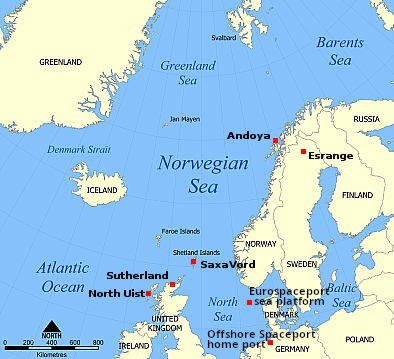
Proposed or active spaceports in North Europe
The long-delayed Saxavord spaceport on the Shetland Islands in Great Britain appears to now face two new problems that could block future launches, one regulatory and the second financial.
First the financial issue: The spaceport, which has lost about $7 million in both ’23 and ’24, appears to be in technical default of a loan of a bit more than $14.3 million. In this case, the lender is willing to ignore the technical issue, assuming the spaceport meets certain conditions presently being negotiated.
The regulatory issue however is more serious, and could block the spaceport’s expected first launch later this year by the rocket startup Rocket Factory Augsburg.
Despite claiming to be ready for launch, the spaceport has also been subject of a formal complaint to the SIC [Shetland Islands Council] over allegations that the facility has not yet been granted a completion certificate or approval for occupation. The complaint alleges that the fire detection and alarm systems appear not to have been installed and that the premises may be in use without adequate fire precautions. It asks the council to confirm whether the premises has been subject to regulatory oversight and whether it has undertaken an inspection of the site.
The SIC said in response: “Concerns have been raised with the council and these are being looked at by our building standards service. A site inspection is scheduled this week as part of the live building warrant process, including to establish the current position in relation to the building on the site that falls within the council’s building standards remit. Any further action will be considered in light of the findings of that inspection.”
In other words, if the local council finds the fire detection and alarm systems not installed and within its regulatory responsibility, it will deny Saxavord its launch permit.
Meanwhile, the spaceport has been trying for years to get other rocket companies interested in using Saxavord, to no avail. Rocket startups have enough difficulties. They quite rightly don’t need the added delays caused by the UK’s red tape, delays that contributed to the bankruptcy of two different rocket startups. For example, most of the regulatory delays — lasting years — have initially come from a variety of national agencies, with Great Britain’s Civil Aviation Authority leading the way. This new issue is local, an additional bureaucratic layer that must be satisfied.

On Christmas Eve 1968 three Americans became the first humans to visit another world. What they did to celebrate was unexpected and profound, and will be remembered throughout all human history. Genesis: the Story of Apollo 8, Robert Zimmerman's classic history of humanity's first journey to another world, tells that story, and it is now available as both an ebook and an audiobook, both with a foreword by Valerie Anders and a new introduction by Robert Zimmerman.
The print edition can be purchased at Amazon or from any other book seller. If you want an autographed copy the price is $60 for the hardback and $45 for the paperback, plus $8 shipping for each. Go here for purchasing details. The ebook is available everywhere for $5.99 (before discount) at amazon, or direct from my ebook publisher, ebookit. If you buy it from ebookit you don't support the big tech companies and the author gets a bigger cut much sooner.
The audiobook is also available at all these vendors, and is also free with a 30-day trial membership to Audible.
"Not simply about one mission, [Genesis] is also the history of America's quest for the moon... Zimmerman has done a masterful job of tying disparate events together into a solid account of one of America's greatest human triumphs."--San Antonio Express-News