An outline of NASA’s present schedule leading up to the Artemis-2 manned lunar fly-by mission

Link here. The mission will slingshot four astronauts around the Moon and back to Earth. The update includes lots of details about the rollout, the dress rehearsal countdown, the follow-up, and finally the various launch windows and the requirements that determine them.

This paragraph however about those requirements struck me:

The launch day and time must allow SLS to be able to deliver Orion into a high Earth orbit where the crew and ground teams will evaluate the spacecraft’s life support systems before the crew ventures to the Moon.

That life support system will be making its first flight in space, with four humans as the guinea pigs. Though this is another example of NASA putting schedule ahead of safety (the system should have flown at least once unmanned), it does indicate the agency recognizes the risk it is taking, and has added this extra longer orbit to give engineers time to test the system.

There are three launch windows, within which there are only five available launch dates:

January 31 to February 14 (February 6, 7, 8, 10, and 11)
February 28 to March 13 (March 6, 7, 8, 9, 11)
March 27 to April 10 (April 1, 3, 4, 5, 6)

In 2022, once NASA managers chose their first launch window, they were able to get the rocket off on the first attempt. There were no scrubs or aborts, though prior to that attempt the launch date was delayed numerous time over five years. Based on that past history, it is likely the agency will succeed on its first attempt in February, barring weather issues.

2 comments

ISS crew to return on Wednesday January 14, 2026

The present four-person expedition 11 crew on ISS, which has one member with an undisclosed sudden health issue that needs addressing on the ground, will undock and return to Earth on January 14, 2025 in SpaceX’s Endeavour capsule.

NASA and SpaceX are targeting no earlier than 5 p.m. EST, Wednesday, Jan. 14, for the undocking of the agency’s SpaceX Crew-11 mission from the International Space Station, pending weather conditions. … NASA astronauts Zena Cardman and Mike Fincke, JAXA (Japan Aerospace Exploration Agency) astronaut Kimiya Yui, and Roscosmos cosmonaut Oleg Platonov will splash down off the coast of California at approximately 3:40 a.m. on Thursday, Jan. 15.

Mission managers continue monitoring conditions in the recovery area, as undocking of the SpaceX Dragon depends on spacecraft readiness, recovery team readiness, weather, sea states, and other factors. NASA and SpaceX will select a specific splashdown time and location closer to the Crew-11 spacecraft undocking.

NASA has released no information about the medical issue that canceled a spacewalk and prompted the early return of this crew. We do not even know the name of the impacted astronaut.

7 comments

SpaceX launches 29 Starlink satellites

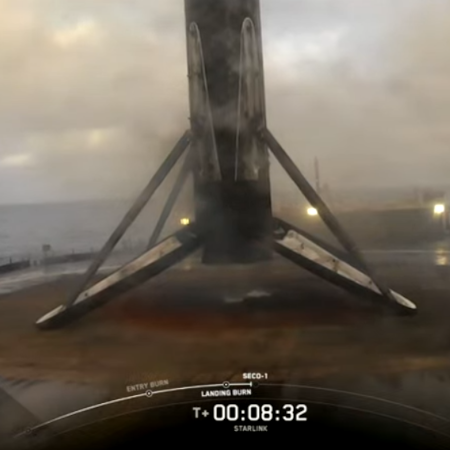
The beat goes on: SpaceX today successfully launched another 29 Starlink satellites into orbit, its Falcon 9 rocket lifting off from Cape Canaveral in Florida.

This was SpaceX’s third launch in 2026. It remains the only entity globally to complete a launch so far this year.

The first stage of its Falcon 9 rocket (B1069) flew for its 29th time, passing the space shuttle Columbia in the rankings of the most reused launch vehicles:

39 Discovery space shuttle
33 Atlantis space shuttle
32 Falcon 9 booster B1067
30 Falcon 9 booster B1071
30 Falcon 9 booster B1063
29 Falcon 9 booster B1069
28 Columbia space shuttle

Sources here and here.

0 comments

January 9, 2026 Quick space links

Courtesy of BtB’s stringer Jay. This post is also an open thread. I welcome my readers to post any comments or additional links relating to any space issues, even if unrelated to the links below.

6 comments

Isaacman okays flying Artemis-2 manned, despite heat shield questions

According to an article posted today at Ars Technica, after a thorough review NASA administrator Jared Isaacman has decided to allow the Artemis-2 mission — set to launch sometime before April and slingshot around the Moon — to fly manned with four astronauts despite the serious questions that still exist about its heat shield.

The review involved a long meeting at NASA with NASA engineers, several outside but very qualified critics, as well as two reporters (for transparency).

Convened in a ninth-floor conference room at NASA Headquarters known as the Program Review Center, the meeting lasted for more than three hours. Isaacman attended much of it, though he stepped out from time to time to handle an ongoing crisis involving an unwell astronaut on orbit. He was flanked by the agency’s associate administrator, Amit Kshatriya; the agency’s chief of staff, Jackie Jester; and Lori Glaze, the acting associate administrator for NASA’s Exploration Systems Development Mission Directorate. The heat shield experts joined virtually from Houston, along with Orion Program Manager Howard Hu.

Isaacman made it clear at the outset that, after reviewing the data and discussing the matter with NASA engineers, he accepted the agency’s decision to fly Artemis II as planned. The team had his full confidence, and he hoped that by making the same experts available to Camarda and Olivas, it would ease some of their concerns.

My readers know that I have been strongly opposed to flying Artemis-2 manned, an opposition I expressed in an op-ed at PJMedia only yesterday. However, after reading this Ars Technica report, my fears are allayed somewhat by this quote:
» Read more

21 comments

Another spiral galaxy that should not exist discovered in the early universe

Early spiral galaxy
Click for original.

Using the Webb Space Telescope, a graduate student at the University of Pittsburgh has discovered another barred-spiral galaxy that should not exist because it exists only two billion years after the Big Bang,.

The false color Webb image of this new galaxy is to the right, reduced to post here. This is the second such early spiral galaxy discovered, with the previous discovery announced in December 2025.

In essence, Ivanov said, “It’s the highest redshift, spectroscopically confirmed, unlensed barred spiral galaxy.” He wasn’t necessarily surprised to find a barred spiral galaxy so early in the universe’s evolution. In fact, some simulations suggest bars forming at redshift 5, or about 12.5 billion years ago. But, Ivanov said, “In principle, I think that this is not an epoch in which you expect to find many of these objects. It helps to constrain the timescales of bar formation. And it’s just really interesting.”

I think he is being careful with his words. Based on present theories of galaxy evolution as well as Big Bang cosmology, spiral galaxies like this should not yet exist this early.

2 comments

Chinese pseudo-company building 3/4 billion dollar rocket factory

Though the Chinese pseudo-company Space Epoch has yet to launch any orbital rockets, it has announced it will spend $740 million on a factory for building its reusable rockets, intended to land on a platform at sea.

The 5.2 billion yuan ($740 million) project, led by Beijing-based space launch company Space Epoch, got underway on January 7. According to Hangzhou Daily, it will produce medium-to-large liquid-fueled rockets capable of reuse, high payloads, low cost and sea recovery. The facility, when ready, will manufacture up to 25 of these rockets a year. “A reusable rocket is like a taxi, satellites are the passengers, and a constellation of satellites is a busload of tourists,” Wei Yi, founder and chairman of Space Epoch, told local newspaper Hangzhou Daily.

The cost of space launch vehicles for mainstream rockets in China is approximately 80,000 to 100,000 yuan per kilogram ($11,000 to $14,000), Wei Yi explains. With Space Epoch’s “stainless steel + liquid oxygen and methane” solution, the cost is expected to be slashed to 20,000 yuan per kilogram, he adds.

The only flight tests that Space Epoch has publicly admitted to was a successful hop of a small scale Grasshopper-type prototype in May 2025. This new construction project suggests it has been able to raise the money to build its full scale rocket. I suspect some if not all of that money came from the Chinese government.

0 comments

ISS expedition 11 will return early due to medical issue

Though NASA officials provided no new details on what the medical issue is on ISS nor who it occurred to, in a briefing this afternoon they announced that they have decided to bring the crew home early, and are also looking at launching the next crew earlier than its presently scheduled February launch.

They did say that the medical issue had nothing to do with space operations or the spacewalk the astronauts were getting ready to do. Though NASA’s chief medical officer James Polk was amazingly vague in his comments, he did suggest it was related to the environment of micogravity.

The one comment that struck me during the press briefing was the repeated insistence by all three officials, including NASA administrator Jared Isaacman, that NASA “never compromises safety”. Considering my own op-ed today and the unreasonable risks the agency is taken for the upcoming Artemis-2 mission, as well as its failures with Apollo 1, Challenger, and Columbia, NASA has compromised on safety many times in the past, and is doing it right now.

6 comments

January 8, 2026 Quick space links

Courtesy of BtB’s stringer Jay. This post is also an open thread. I welcome my readers to post any comments or additional links relating to any space issues, even if unrelated to the links below.

4 comments

Icy Mars

Overview map

Icy Mars

Today’s cool image once again illustrates the fact that most of Mars Mars is not a dry desert like the Sahara, as most news sources and the general public still believes, but a cold icy place similar to Antarctica, with plenty of near surface ice covering almost the whole planet, except for the dry equatorial regions (the one region we have sent almost all our landers and rovers).

The picture to the right, rotated, cropped, reduced, and sharpened to post here, was taken on November 26, 2025 by the high resolution camera on Mars Reconnaissance Orbiter (MRO). It shows one small section of the floor of an unnamed very old and eroded 82-mile-wide crater located in the northern mid-latitudes of Mars.

That location is indicated by the white dot on the overview map above. This part of the mid-latitudes is a region I dub “glacier country”, a 2,000-mile long strip where practically every image taken there shows very obvious glacial features.

Today’s image is no different. The 2-mile-wide crater in the upper left appears blobby, as if the impact had landed in mud. Its interior is filled with what the scientists believe is glacial debris. The surrounding landscape has a similar appearance, as if the ground was slushy and easily misshapen by seasonal temperature changes. To the southwest of the crater, within what appears to be a surrounding splash apron, there appears to be an eroded drainage channel, likely created by the flow of glacial ice downward.

So, when you read articles telling you Mars is dry and scientists are still hunting for water there, know that whomever wrote that article had no idea what he or she were talking about. The scientists studying Mars know that Mars has lots of water. Except for the tropics below 30 degrees latitude, there is near surface ice everywhere. Their questions revolve instead on figuring out how deep and extensive it is, and how it has shaped Mars’ overall geology.

1 comment

South Korean rocket startup Innospace signs deal with Portugal’s Santa Maria spaceport

Santa Maria spaceport

The South Korean rocket startup Innospace, which just last month attempted its first launch out of Brazil, has now signed a deal to launch its rocket from Portugal’s proposed Santa Maria spaceport in the Azores, located about 900 miles west of the European mainland.

Through this agreement, INNOSPACE has secured priority and long-term access to the Malbusca Launch Center, located on Santa Maria Island in the Azores, Portugal, for a five-year period starting in 2026. The company plans to gradually establish key launch infrastructure required for initial operations, including launch pads, operations and control systems, and testing facilities, with the goal of conducting its first commercial launch in the fourth quarter of 2026.

Despite the launch failure last month, Innospace has been aggressive about obtaining agreements for launching its rockets from multiple locations. That first launch occurred at Brazil’s long unused Alcantera spaceport on its eastern coast, and the company will use it for its second launch attempt later this year. It has also signed agreements with two spaceports in Australia (Southern Launch and Equatorial Launch), though the latter spaceport is not yet operational and might never exist.

0 comments
1 51 52 53 54 55 2,411