
Buffalo Bill: The greatest true boy adventure story that’s never been told
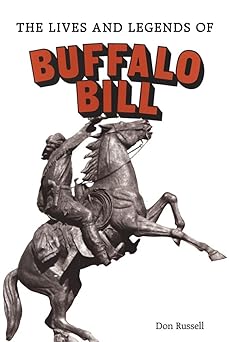
In American popular culture, Buffalo Bill is an icon whose history we all think we know, a western showman who in the latter decades of the 19th century traveled the world with his Wild West show, enchanting heads of states as well as ordinary people with the romantic fantasy of the American west, made up of wagon trains, gunfighters, Indian attacks, and last-minute cavalry rescues.
His name inspired the name of a professional football team. His Wild West show inspired at least one musical and numerous Hollywood movies and television shows.
Yet do we really know who the man was?
I discovered recently that we do not. Our culture knows nothing about the man, whose real name was William Cody. Worse, its cartoon vision of him denigrates his unique American nature. He was not only the greatest scout the U.S. Army ever saw, his knowledge of American Indian made it possible for him to not only help make peace with those Indians who wanted it, it also helped the U.S. put down those Indians willing only to wage terrorist war. And when he shifted into the entertainment world, his show provided employment for both his many cowboy friends as well as for many of those same Indians, both friends and former enemies.
And most astonishing of all, I discovered that Buffalo Bill’s childhood was one of the most amazing boy adventure tales, far more exciting than any kid’s movie made in the last hundred years. That Hollywood has never made a movie of his youth now baffles me. It is the stuff that Hollywood craves, but more significantly, it appears it actually happened!
I discovered these facts in reading Don Russell’s wonderful biography of Bill Cody, The Lives and Legends of Buffalo Bill, published by the University of Oklahoma in 1979. Russell’s focus was to dig into the original source material in order to separate the fact from the fiction, since much of Cody’s life had been exaggerated by himself and others during his showman days, and then overblown and warped by Hollywood’s later interpretations.
In this Russell succeeds brilliantly. He describes what we know in vivid language, but also outlines what we don’t know or can’t trust about each story. In the end he describes a unique man with unique talents who always tried to do the right thing, even in difficult circumstances. In every sense Cody’s life was the epitome of an American western pioneer cowboy, pushing the unknown with courage and pluck.
But to me the most amazing part of Russell’s biography was its first few chapters, when Russell describes Cody’s childhood. The boy’s father, Isaac Cody, was a pioneer in his own right, taking his family farther and farther west until they ended up in Kansas and involved in the violent politics there preceding the Civil War. When Isaac died in 1857, he left behind a widow and three young children, who then had to find a way to survive in that difficult pioneer world.
And so, at the age of eleven Billy Cody went out to find work. And the work the boy found was truly astonishing, when compared to what we expect from kids his age today.
First he worked driving an ox-team for a neighbor. Then he got a job as an “express boy,” riding a horse to carry messages back and forth between a local store and the telegraph office three miles away. He got the job because he already had experience racing horses locally.
When he got into a kid’s fight with another boy, resulting in a minor knife wound, Cody was sent as a helper on a 40-day train trip (until things cooled down at home), during which the train was almost swamped by a buffalo stampede.

Bill Cody at 19. Click for source.
Still only eleven-years-old, he was next hired as an “extra hand” on a wagon train transporting freight across Kansas. On this trip he met for the first time James B. Hickok, better known today as Wild Bill Hickok (later famous as a gunfighter and lawman), who apparently became the boy’s protector and mentor during that trip. According to Cody:
One of the teamsters … was a surly, overbearing fellow, and took particular delight in bullying and tyrannizing over me and one day while we were at dinner he asked me to do something for him. I did not start at once and he gave me a slap in the face with back of his hand–knocking me off an ox-yoke on which I was sitting and sending me sprawling to the ground.
Jumping to my feet I picked up a camp kettle full of boiling coffee which was sitting by the fire and threw it at him. I hit him in the face, and the hot coffee gave him a severe scalding. He sprang for me with the ferocity of a tiger and would undoubtedly have torn me to pieces, had it not been for the timely interference of my new-found friend, Wild Bill, who knocked the man down. As soon as he recovered himself he demanded of Wild Bill what business it was of his that he should “put in his oar.”
“It’s my business to protect that boy, or anybody else, from being unmercifully abused, kicked, and cuffed, and I’ll whip any man who tries it on,” said Wild Bill. “And if you ever again lay a hand on that boy–little Billy here–I’ll give you such a pounding that you won’t get over it for a month of Sundays.”
They became lifelong friends, so much so that Cody later hired Hickok to perform for a time in his show.
The boy’s adventure continued. He went on several more wagon train drives. On one he and two other men where ambushed by Indians and almost killed. At some point during these drives it appears the boy shot and killed his first Indian, though the story has never been confirmed from independent sources.
Next he went on a hunting expedition with a man named Dave Harrington, who at the time was dating Cody’s 16-year-old sister Julia. During that hunt they were first attacked by a bear. Then the boy broke his leg when he fell while they were stalking a herd of elk. While Harrington went back for help, a journey expected to last three weeks (it eventually took four) the boy was to set up inside their dug-out with provisions and firewood.
For the first eleven days after Dave left, the boy had little to do but lie still. He read the Bible through and a few other books–one of the rare times he mentions reading anything. Like Robinson Crusoe (which may have one of the books) he cut a notch in a stick each day to keep track of time.
The next day he found himself surrounded by Indians, looking for spoils. The boy’s life was spared however because their leader, a well known chief by the name of Rain-in-the-Face, recognized Cody from his wagon train work in delivering goods to Fort Laramie, where this tribe got its reservation supplies. While they took Cody’s rifle and other stuff, they left the boy enough to survive. Seventeen days later Harrington finally arrived, finding the dugout covered with several feet of snow. With Cody laying on a wagon, they took another ten days to get back to civilization, where they sold their beaver skins and other catches for a big profit.
Cody was now about thirteen. He next says he worked as a rider for the Pony Express, though this is also not confirmed. Russell concludes however that it is quite likely, due to Cody’s experience as a horseman and his contacts with the people who ran the express.

Click for source.
Bill Cody did all this before he was fourteen. And he did it to help his mother and family survive, with him always returning home with his earnings.
This experience laid the groundwork for his later work as a buffalo hunter, Army scout, author, and entertainer, with the rest of Cody’s life just as exciting. He played a major role in the Indian wars. Later his entertainment show was instrumental in establishing the pioneer American west in culture and literature world wide.
It is his childhood however that I think we should note. Cody lived at a time when people were willing to let kids work as adults, even if the work they did was tailored to their age. And young Cody was not only expected to work, even if that work could involve real danger. And though his mother repeatedly tried to get him back in school, his ability to bring income to the family was too valuable. And he disinterest in schooling and his independent spirit made it difficult to hold him down.
In the end the experience made him a man. It also made him a successful man who contributed greatly to the society in which he lived.
Nowadays we shelter kids far too much — boys especially — so they grow up untethered to the world and lacking the experience needed to live in it with strength and courage. While it would not be good to have kids miss schooling and be made to work as Cody did, it is just as bad to deny them that experience entirely until they have left college.
Telling the story of Cody’s early life would thus provide future generations a lesson of great value. It still astonishes me no one has yet done it.

On Christmas Eve 1968 three Americans became the first humans to visit another world. What they did to celebrate was unexpected and profound, and will be remembered throughout all human history. Genesis: the Story of Apollo 8, Robert Zimmerman's classic history of humanity's first journey to another world, tells that story, and it is now available as both an ebook and an audiobook, both with a foreword by Valerie Anders and a new introduction by Robert Zimmerman.
The print edition can be purchased at Amazon or from any other book seller. If you want an autographed copy the price is $60 for the hardback and $45 for the paperback, plus $8 shipping for each. Go here for purchasing details. The ebook is available everywhere for $5.99 (before discount) at amazon, or direct from my ebook publisher, ebookit. If you buy it from ebookit you don't support the big tech companies and the author gets a bigger cut much sooner.
The audiobook is also available at all these vendors, and is also free with a 30-day trial membership to Audible.
"Not simply about one mission, [Genesis] is also the history of America's quest for the moon... Zimmerman has done a masterful job of tying disparate events together into a solid account of one of America's greatest human triumphs."--San Antonio Express-News
When I was younger, I ran a bike shop, had a newspaper route, worked in construction, and sold home-brewed computer games. All before I was 16. No way the state would let a young boy do these things today. Parents wouldn’t allow it either – except maybe making the video games or trying to be an influencer on Tik Tok.
My first full time job was running games at Hemisphere 68 (Worlds Fair) in San Antonio the summer between 5th and 6th grades. I was 11.
Dropped out at 12 and have been working full time since. GED at 19 and some engineering at the community college. I don’t recommend that path. I also don’t recommend kids at 18 or30) with zero work experience.
Young boys having consequential jobs was fairly commonplace in the 19th and even the early 20th century. Thomas Edison, for example, had railroad and telegraphy jobs as a youth. The Wright Brothers collected and sold scrap commodities of various kinds as kids – iron, paper, rags and bones among them. Newsboys, of course, were ubiquitous.
But minors were also employed in all sorts of messenger and delivery jobs in urban areas and in all varieties of farm labor in rural areas, though the farm labor was only for wages when done outside the family holdings.
A great many urban personal service jobs, such as theater ushering, used to be done by minors. As minimum wage laws took hold, such jobs largely disappeared. These jobs paid very little, but child wages were seen as supplemental to the family income and not as its foundation. Families used to be larger than they are now, even in urban areas, and the modest wages of several children of varying ages could be a significant contribution to the family exchequer.
Even when I was a kid, in the late ’50s and early ’60s, I mowed lawns and shoveled snow in the neighborhood for wages and also did a bit of door-to-door greeting card sales. I worked part-time stockboy jobs in retail as a junior high-schooler. In high school, I worked part-time for the city government doing a mix of drafting, records management and document printing jobs.
My G-Father (b. 1898) was a Civil Engineer but could only find work during the Depression at a small vocational school teaching blueprint reading, drafting, metal & woodworking. For extra money he would write little articles & how-to stuff for wood & metal work and sell them to national magazines and trade-publication’s.
My Dad (b. 1927) Had a paper-route for a long time that grew to be huge and did Life-guarding stuff in the Summers on Lake Erie.
I had a paper-route and always tried to get something for the Summer with Parks & Recreation or as a flag-boy & goffer at the Road Commission. In College, I cleaned the library & was the Art-Guard at the student gallery. (No thefts on my watch!)
Mr. Z.,
You should do a deep dive on Annie Oakley!
“The Real Annie Oakley”
Phoebe Ann Mosey; (August 13, 1860 – November 3, 1926)
Visiting her hometown & Final Resting Place; Greenville, Ohio
Sidetrack Adventures (June, 2025)
https://youtu.be/xz5ja_wlgy4
12:13
“By the mid 1880’s, Annie joined Buffalo Bills Wild West Show, and the rest is History…”
“U.S. put down those Indians willing only to wage terrorist war”
That’s an odd way to characterize the “take over” of a land mass that had many EXISTING nations. I’m pretty sure that is exactly the playbook for us modern patriots, if we were to be invaded. Resist.
But that isn’t my point.
The point is, that you wonder why some on the left accuse history of glossing over a genocide…
Not here to fight with anyone or argue, just wanted to point out to you that the words you chose have an impact, and as an author, you should be aware..
Michael–
(Our Host happens to be an author & historian, not that he needs me to make an appeal toward authority.
Ref:
“..accuse history of glossing over a genocide…”
I don’t want to start an argument either, I would put forth you have an incomplete timeline of the Players & Events. History is a messy business.
————————————-
Mr. Durant’s Speech; Foreshadowing
Hell on Wheels Se1 Ep1
https://youtu.be/yAHL5oPXOD0
2:59
“Is it a villain you want? I’ll play the part. After all, what is a drama without a villain? And what is the building of this grand road, if not a drama? This business is not for the weak of heart, it’s a thorny brutal affair that rewards the lion for his ferocity….”
“Make no mistake, blood will be spilled, lives will be lost, fortunes will be made, men will be ruined. There will be betrayal, scandal, a perfidy of epic proportions….”
“One-hundred years hence, when this railroad spans the continent and America rises to be the greatest power the world has ever seen, I, will be remembered as a caitiff, a malefactor, who only operated out of greed for personal gain. All true, all true. But remember this, without me, and men like me, your glorious railroad would never be built.”
I never cared for Westerns the way my folks did. I heard Louis L’ Amour had a “reading saddle” chair with the pommel a book stand. That intrigued me.
The West was about new beginnings. A person with a bad rep in one town could be a different man in another. A time when the only baggage you had you took with you. East Germans at least knew about the Stazi. Today it is social media… invisible. In the movie “The Lives of Others” an upright man is protected by a handler taken with his nobility.
Doxxing and the Internet is turning us all into Mean Girls, I fear.
Fretting about the return of child labor is a bit overblown….having young people do something besides household chores is good….and yet–I miss the true 3 month summer vacations from school where I could let my imagination run free:
https://agingwithanattitude.quora.com/Why-were-children-in-the-1970s-and-80s-allowed-so-much-independence
Both (structured) work and play allowed resilience I suppose.
The 1700s, and the mid-20th Century were the best for advancement. Not too poor…not too distracted. The 1800’s were all about pointing towards something…but never arriving.
A favorite tale of mine
https://www.hplovecraft.com/writings/texts/fiction/qi.aspx
I’ve been to Cody, WY, and it has some interesting features. Surprisingly, there are places in the area *not* named for William Cody. Also in the area, on the way to Yellowstone, is the longest tunnel in Wyoming. There’s a good chance the longest tunnel in your state, is longer.
Wayne,
My own father grew up in corn country in rural Ohio. About 1920, when he was 11, he went into business as a crow-shooter using a single-shot rifle chambered for .22 cal. shorts. He would take his kills, in a burlap sack, to the county courthouse in his small hometown where the county clerk would count the kills and pay a 25 cent bounty for each. Then he would take the dead birds downstairs to the furnace room where the “colored” janitor would feed them into the firebox. After a couple of years of this, his younger brother joined the hunting business.
This was quite a lucrative business for a boy of his day. Even after paying for ammo, he often cleared more than a dollar a day in profit for what was a part-time job – the equal of what many full-time adult jobs paid at the time.
It was also work not just anyone could do as one had to be a very accurate shooter to avoid excessive misses and consequent extra ammo expense. My dad was a very good shooter and competed many times as a “gravel belly” at the Camp Perry shooting matches during the late 1920s and the 1930s.
He could easily have been a sniper during WW2, but that was a dangerous job and, had he done so, I likely wouldn’t be here. Fortunately, he had a college degree in physics too, so when he joined the USAAF he was put in charge of running aircraft maintenance depots.
The airfields he worked at did sometimes come under enemy fire, but it wasn’t a constant thing. He also did a stint helping engineer and construct expedient bridges to replace those blown up by retreating Nazis during Operation Husky, the allied conquest of Sicily. That was a quasi-front-line job as well.
Oddly, as I now look back on it, I never asked him if he had ever used his marksmanship skills in actual combat and he never volunteered any such information. I guess, now, I can only echo Louis Renault’s remark to Rick in Casablanca, “I’d like to think you killed a man – it’s the romantic in me.”
Yo, Michael Adams Jr:
Yes, when cultures, because of “differences,” inevitably clash, the potential for the usual brutality, carnage, and injustice becomes potentially loosened on all. Perhaps never more so when tribal and nomadic ones meet one dominated by the values that characterize “Western Civilization!” Well, just what are those values that clashed with the natives of North America?
From the perspective of intellectual and cultural content, America (Western civilization) represents an understanding and acceptance of the following:
The laws of logic; the concept of causality and, consequently, of a universe ruled by natural laws intelligible to man (on these foundations rests the whole known body of physical laws surrounding mathematics and science):
Further, the individual’s self-responsibility based on his free will to choose between good and evil; the value of man above all other species on the basis of his unique possession of the power of reason; the value and competence of the individual human being and their logical corollary possession of individual rights – among them the right to life, liberty, and the pursuit of happiness:
The need for limited government and for the individual’s freedom from the state. On this foundation, rests the validity of capitalism, with its unprecedented and continuing economic progress in terms of the division of labor, technological development, capital
accumulation, and rising living standards:
Finally, Western civilization represents the importance of visual arts and literature depicting man as capable of facing the world with confidence in his power to succeed; and in music featuring harmony and melody:
Synthesized from endless alternative or opposing values, values that more often than not are irreconcilably in conflict with those embodied by “western” culture, western values fundamentally represent intellectual and cultural achievements “embraced” from all manner of civilizations, past and present. These values are not the product or property of any race, gender, tribe, or ethnicity:
Furthermore, Western civilization did not originate in the West. It stands on the intellectual/cultural shoulders of Greece and Rome that, in turn, derived much of their knowledge of science, for example, from Egypt and Babylon.
When, during what are referred to as “The Dark Ages,” as much – if not all of western Europe reverted to fear, superstition and virtual barbarism, people living in the Middle East and China made far greater contributions to what we now call western civilization than did anyone living in western Europe!
My point is that the tribal cultures of North America, upon being exposed to what descended upon/among them, faced choices. Almost impossible ones – ALMOST!
I would suggest you watch the scene near the conclusion of the movie starring Clint Eastwood, “The Outlaw Josey Wales.” The scene takes place between Josey, played by Clint, and the Indian Chief “Ten Bears,” played so powerfully by Will Sampson. If you have not seen it or if you have seen it but not taken note of the dialog, I would highly recommend that you do so. In its brief minutes are spoken eloquent and timeless truths, truths especially relevant today.
Yes, when viewed from the lofty heights of context-dropping value-judgements, the cultures that populated North America (hell, the entire New World!) took a terrible beating. However, individuals among them did not. They adapted to a profound potential for a profoundly better way of life (should you disagree then the cultural differen ce between you and I must never clash)! Unless, of course either their respective “tribal councils” or in WC’s case, their Governments, were summoned to enter the clash…………..
,
When I was 12 (1958), my parents gave me a collection of books from Readers’ Digest on historical figures, including one on William Frederick Cody. Others included John Paul Jones, Benjamin Franklin, Thomas Jefferson, and about 20 others. They gave me a strong understanding of early American history that has stood me in good stead all my life. Nothing like those books are available today, and I’ve not heard many others discuss them. Our nation is poorer because of it.
Old Patriot: Such books exist, such as my own Genesis: The Story of Apollo 8. In the last half century however our academic and educational elites decided that having kids read about American heroes was a bad idea. They no longer promote such books in schools. Instead, they push books that either advocate the queer agenda, or describe American history routinely in negative terms.
One gripe, I disagree with your characterization of Buffalo Bill as the greatest scout, I would attribute that to Christoper “Kit” Carson.
Second point. several people have mentioned the economic advantages of boys working. I read an interesting article recently talking about how humans tend to adapt to their surroundings, if teenaged boys only hang around teenaged boys they will not be motivated to mature. If, however, teenaged boys work with grown men they will take on the traits of the older, more mature coworkers. This is a good thing for society.
Mr. Zimmerman:
Thank you for the recommendation…I have bookmarked a used copy for when I have a long enough list to get free shipping from my preferred (non-Amazon) vendor.
Living here in NW Wyoming you can’t move 10 feet without tripping over a reminder that “Buffalo” Bill Cody was here. The reservoir which bears his name is the source of pretty much all life here in the Bighorn Basin, making possible all of the towns along the Shoshone River. His original house in Cody was moved, and is now at the western edge of town right on the South Fork Highway. His ranch is much farther up the South Fork. The Irma Hotel is still operating in the “downtown” (that’s a stretch of imagination for an area two blocks wide by 6 blocks long) with one of the most impressive wooden bars around. There’s a legend that after the city of Cody got a sheriff the first man arrested was bagged for riding his horse into the Irma bar.
Another Western character you might want to read about is John Colter, the mountain man. The big problem is that not much is known about him; not even how his name was originally spelled. He was part of the Lewis & Clark expedition, and then went off with various partners ending up on his own. He was the first white man to see the Yellowstone area and return to tell about it, with such fantastic tales of geysers, fumaroles, and steaming springs all in a spectacular set of mountain valleys that nobody believed him.
His escape from Indians while barefoot and naked created a legend to this day. Heck, the movie “The Naked Prey”, while set in Africa, was basically taken by Cornel Wilde from the accounts of “Colter’s Run”.
Josey Wales Meets Ten Bears, Comanche Chief
https://youtu.be/ou3mDl2nZoQ
4:20
Blackwing1: I am well aware of Colter. He figures prominently in the daily logs of the Lewis & Clark expedition. He also left the expedition on its way home so that he could go back to the mountains and hunt beaver, beginning his life as a mountain man.
In fact, it is difficult to avoid his name in reading any history about those early explorations. I really need to find out if there are any books about him.
on the other hand….
Tulsa King (se2 ep4)
Dwight Meets with Med Hat, leader of the Quapaw Nation
https://youtu.be/oN6Gas3CePM
3:05
“We will front the windfarm in exchange for 20% of all energy generated and 20% of all your hydroponic weed profits….”
Blackwing1–
Vaguely aware of this guy, thank you!
Life and Legend of John Colter:
The Original Mountain Man
This Is Yellowstone (Dec. 2024)
https://youtu.be/xNFgI5RZ-Ac
1:14:41
“…the full-length version of the new film series, as told by interpretive guide and storyteller Ken Sinay.”
last one…
“Johnny Appleseed: The Man Behind the Legend”
The Story of John Chapman (Sept. 26, 1774 – March 18, 1845)
https://youtu.be/MKs0VJbB0R4
12:53
Michael Adams Jr,
Despite the leftist rubbish that passes for “education” in US schools these days, there was never a “genocide” of American Indians. There was an enormous die-off of American Indians that started when the Spanish arrived in the Caribbean with diseases to which the indigenes had little or no immunity. These plagues spread slowly across the entirety of the Americas over the following century.
These deaths occurred because the various American Indian populations – excepting the Plains tribes – didn’t routinely travel long distances and even the Plains Indians didn’t routinely encounter people who were entirely novel in their experience, just the same old competitor tribes year after year. From an immunological standpoint, American Indians were a bunch of insular populations and had been for millennia.
The sort of infectious catastrophe that overtook the American Indians was by no means unique in human history. One reason the new European arrivals got only syphilis in exchange for smallpox, bubonic plague and other horrors was that Europe had been in exactly the same situation as the American Indians only a couple of centuries previously during the era of the Black Death. That, in turn, was a consequence of Europeans having engaged in the several Crusades to far-distant places teeming with, to them, novel pathogens. The Europeans who came to the Americas were the descendants of that minority of their ancestors who did not die during the Plague Years. Everybody pays their dues anent contagions at some point in their histories. Starting in 1492, it was the American Indian’s turn.
None of this was deliberate. Europeans of the time had no more understanding of contagion and disease etiology than did the American Indians.
Later armed conflicts between American Indians and Europeans were of relatively minor consequence by comparison. These, also, were not “genocide.” There are still plenty of surviving members of tribes that can trace their ancestry to pre-Columbian times. If Europeans had decided to completely exterminate American Indians, that would not be so.
The fact is that many American Indians simply deserted their tribal heritages voluntarily for life in European America – particularly women. Being a rank-and-file woman in European America was a lot better deal than being a rank-and-file woman in a typical American Indian tribe. The degree to which modern-day normative Americans have at least a bit of American Indian ancestry, as revealed by retail gene-sequencing companies, simply confirms this assimilation.
American Indians had warred with one another – even to the point of genocide – for millennia. The arrival of Europeans of various national origins was simply seen by American Indians as the addition of newer players to the tribal mix. Some tribes were able to considerably improve their circumstances via alliances with Europeans against traditional enemies. The introduction of horses to the Americas by the Spanish was, for example, pretty much the making of the Comanche as a consequential tribe. They became expert horsemen and likely the finest light cavalry in human history.
There is a lot more texture and nuance to the interactions of Europeans and American Indians than the simple-minded leftist reductionism to an exploiters-exploited/racialist narrative.
Dick Eagleson wrote: “Being a rank-and-file woman in European America was a lot better deal than being a rank-and-file woman in a typical American Indian tribe.”
A major difference being that one was Industrial Age and the other was Stone Age. There were better comforts and better health care, among other advantages.
He is buried in a modest grave at the top of Lookout Mountain in Golden, Colorado. There is a small museum and gift shop by his grave. A worthwhile stop if you are in the area.
Edward and Dick: One of the facts modern academia likes to hide is the strong appeal of Christianity to Indian women in both the U.S. and Canada when they were first exposed to it in the 1600s. This is in addition to the practical benefits. Its rules about marriage and family gave a women the kind of security and status she did not have within many Indian tribal cultures.
In this context, a story. When I got my masters in early American history back in the mid-nineties, there was one class where a women professor came in to give a guest lecture about the patriarchy of religion and how Christianity oppressed women. Most of what she said was junk, typical Marxist slogans and jargon.
At one point I raised my hand and asked her one simple question (related to what I noted above as well as what I was learning then in extensive research about the early contacts between the American Indians and westerners, most especially with the Jesuits in Canada): “If Christianity is so oppressive to women, why did it appeal so strongly to Indian women that many in New England and Canada quickly converted, eventually bringing their men along with them? It wasn’t the men who converted first, but the women.”
Of course she had no answer. She made some off-hand comment like “That’s irrelevant,” and immediately continue her lecture.
It was about this time that I realized academia was becoming very bankrupt, probably more than two decades before most anyone else.
Robert:
“One of the facts modern academia likes to hide is the strong appeal of Christianity to Indian women in both the U.S. and Canada when they were first exposed to it in the 1600s. This is in addition to the practical benefits. Its rules about marriage and family gave a women the kind of security and status she did not have within many Indian tribal cultures.”
Oh, that was well hidden. It explains why Christianity was so popular around the world. I had assumed that there was some sort of bargain/coercion from missionaries, such as “we will give a sermon while you eat your free food,” similar to some “soup kitchens.” It sounds like an improved life/lifestyle did not come at a price but came with additional cultural benefits.
Edward wrote, ” It sounds like an improved life/lifestyle [from Christianity] did not come at a price but came with additional cultural benefits.”
This is what I have been saying now for years, beginning with Genesis: The Story of Apollo 8, though every time I do I get hard pushback (in some cases a refusal to print my work): Some cultures are simply better than others, and western civilization at this moment appears to hold the top position for providing the most wealth and the best lifestyle, for everyone. Or to quote the conclusion from that book:
This is an idea that is hated by our modern academics and the last few generations they have indoctrinated. Nonetheless, it is right and grand.
“Some cultures are just better than others….”
Median population IQ in Somalia is 67.
=cognitive impairment, below average intellectual functioning, lack of skills for activities of daily living.
Median population IQ in the United States is 98.
=”100″ is considered “average.”
The United States military uses the Armed Forces Qualification Test (AFQT), the lowest score acceptable is 31 of 99 questions, which equates to roughly an IQ of 83.
—————————————————-
“Do the Poor have Low IQ’s?”
Dr. Jordan Peterson
https://youtu.be/zRphm3RSo-A
10:37
“You can make a high IQ person stupider by not educating them up to the level of their possibility but taking someone who has a low IQ and trying to raise that, well, that’s Nobel prize time.”
here’s how this works:
(I’m retired, and I never, ever, signed off on anyone who wasn’t qualified & deserving. Illegals were just starting to overflow into my Agency when I retired, a solid 80% of my clients were always actual Americans.)
The ruling elite funds a local quasi-NGO, Church Groups are the biggest local NGO’s that laundry tons of cash for illegals, they then apply for Medicaid on behalf of the illegal immigrant.
Once they have Medicaid, and a Primary Care person; you refer them to someone with credentials like me. I would evaluate them and order additional psychological testing. (My Agency then bills Medicaid $400 for my part.)
If you qualify as a “mental health” “client,” we’ll grab you immediately, and we’d like your children as well—we would get additional supplemental payments if your kids are “autistic,” and surprise, surprise, they generally were, because “everyone” is.
At that point they (almost all) qualify on paper for SSI (supplemental security income) which is a monthly cash payment. They also qualify for a variety of “mental health” services, every one of which is billed to Medicaid. (we had about 50% “poor” and 50% private-insurance, you can’t run an agency on just Medicaid, unless you are shady, you need some private-insurance revenue.)
Contrary to popular myth, Medicaid pays very well, but there are time-limits for “services.”
Private insurance pays less on average but will pay longer. Private insurance also demands weekly progress-reports with documented progress, or the money stops, instantly. Our psychiatrist would spend 4 hours every Friday negotiating with a bachelor’s level “screener” at some call-center, and if they didn’t approve services for that week, we had to eat it all.
(Tangentially– my Agency ran numerous “Day-Programs,” the minimum amount we could bill for that was $4.15 per 15-minute Medicaid-billing Unit increment, with a maximum of a 7-hour day. We would have to generate supporting documentation that the Services were actually performed, but Medicaid is not paying for documented improvement, just that the Services were provided.)
They already qualify for SNAP (food stamps) and Section 8 (housing). They probably also receive a variety of cash & non-cash benefits, globally referred to as “welfare.” (varies by State)
If I’m a totally committed America-hater, I’ll immediately apply for SSDI on behalf of the illegal immigrant. (social security disability income)
–That will take about 3+ years and probably a minimum of 3-5 re-submissions or more. And we are busily billing Medicaid, for some thing, every time we see this person. The applications for SSDI are difficult to get approved, because they are permanent payments.
Once you are on SSDI, it cannot be rescinded except for reasons of fraud, and nobody has a vested interest (at this level) in exposing fraud. Clawing back any of this is near impossible.
But the Founders of America were primarily Christian, and they were white men.
That can’t be good.
Where is the diversity? Where is the equity? Where are the slavery reparations?
The ghosts of mammoths ask indians to go back to Asia once Columbus’s descendants clone them back to life :)
Union soldiers (many Buffalo Soldiers who helped tame the West) were the worst Indian killers…scalps paid for like crows perhaps.
Native Americans got a long with Confederates…and some indians own slaves. And Barbary pirates enslaved more Europeans than the latter did the former. Go far enough back, and everyone has unsavory family members.
One of the more spooky deals set in the same time frame as Apocalypto was how cross-like the Tree of Life was at Palenque.
Robert,
“Some cultures are simply better than others, …”
This is self evident, even to those who say otherwise, many of whom will say in the same or next sentence that western culture is inferior.
For those who do not agree, ask them whether they believe that NAZI culture is equal to the others. Those who do not agree that there are better cultures will be the NAZIs themselves, who believe their culture to be superior. That was the basis upon which they operated. The Aztecs and the Mayans were not much better.
It is not hard to demonstrate that some cultures are simply better than others. It is somewhat harder to convince them that western culture ranks high. After all, it was western culture, starting with the American northern colonies, that abhorred and banned all forms of slavery, Vermont being the very first place in all of human history.
Wayne:
“Flowers for Algernon”
https://www.sdfo.org/gj/stories/flowersforalgernon.pdf
To Wayne
I fully believe the 67 IQ finding –the problem is the spin:
https://phys.org/news/2025-12-science-minorities.html
If your heroes are Tom Swift, not sportsball players–it helps.
Asian tiger Moms help too.