The stormy atmosphere of Jupiter

Jupiter's South South Temperate Belt
Click for full image.

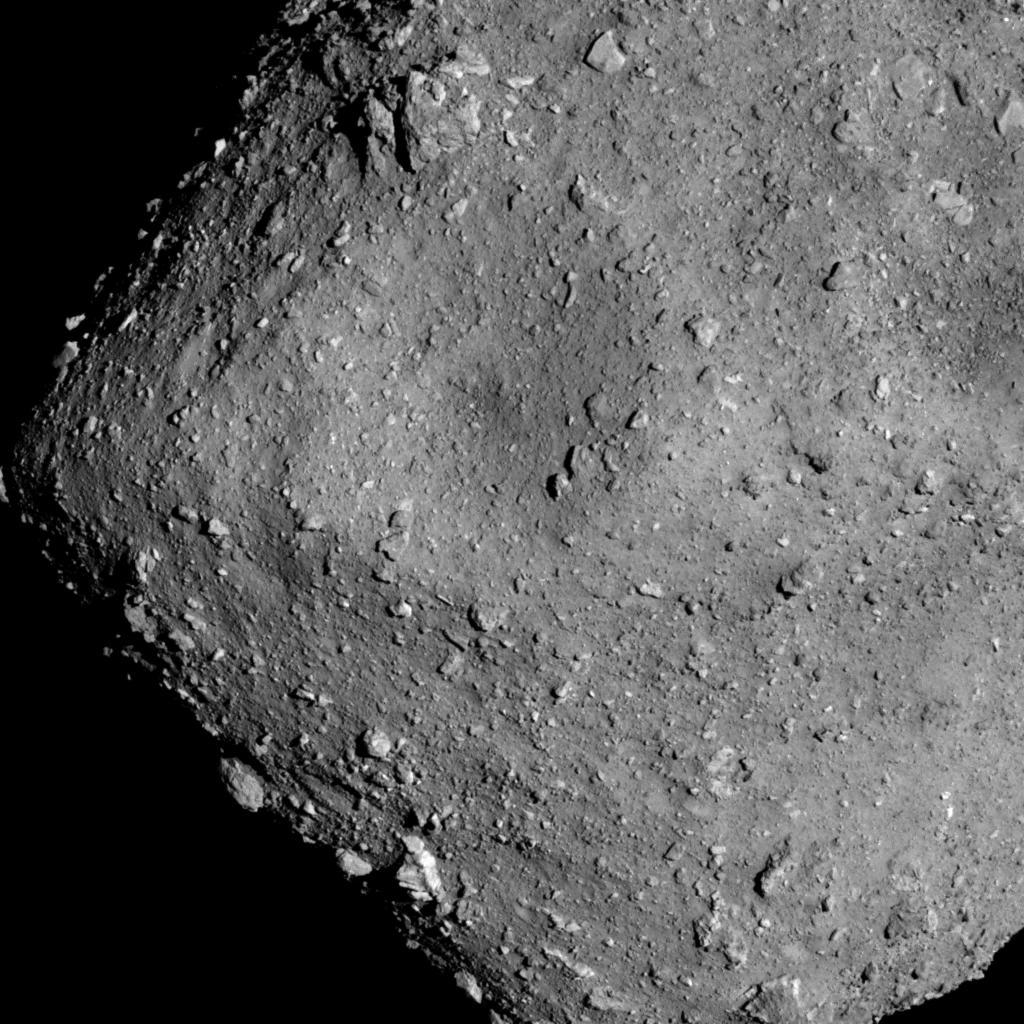
Cool image time! The photo to the right, cropped to post here, was created by citizen scientist Thomas Thomopoulo from a Juno image taken during its 16th close pass of Jupiter in 2018. To bring out the different colors of the clouds he enhanced the resolution and color contrast.

We have no scale, but I would guess the distances seen exceed several thousand miles. The area covered is what is called Jupiter’s South South Temperate Belt, the visible belt at about 40 degrees south latitude that circles the South Polar Region (which is the darker purple swirls in the bottom left). This belt is difficult to observe from Earth because of its high latitude, with the curve of Jupiter’s limb beginning to bend away from view.

1 comment

ISS to maneuver around space junk leftover from Chinese anti-satellite test

Russian engineers will today fire engines on a Progress freighter docked to ISS to guarantee that a piece of debris left over from a 2007 Chinese military anti-satellite test does not hit the station.

The object the space station will dodge is called 35114 in NASA’s catalog of space objects, and is also identified at 1999-025DKS, a piece of debris from a Chinese anti-satellite weapons test in 2007. Originally part of a Chinese weather satellite, the debris resulted from an in-orbit missile test performed by China. As part of that test, a kinetic-energy, suborbital missile was fired at a defunct Chinese weather satellite called Fengyun-1C (which stopped working in 2002), obliterating it into thousands of pieces.

The destroyed satellite was originally in a much higher orbit, but atmospheric drag has pulled the debris closer to Earth over the years and ultimately into the flight path of the space station. The two objects’ closest approach is estimated to occur on Nov. 12, according to Jonathan McDowell, an astronomer at Harvard who tracks and catalogs objects in space. McDowell tweeted on Tuesday that his calculations show that this will be the 29th space station debris avoidance maneuver, and the third related to the 2007 Chinese anti-satellite test.

The maneuver will take place prior to the arrival of Endurance, carrying four astronauts.

While the anti-sat test initially produced about 3,500 pieces of debris, that number has dropped in the past fourteen years to about 2,700 pieces as the orbits of these objects slowly decay. The test was also another example of China’s willingness to break the Outer Space Treaty. As a signatory China is required to control every object it puts into orbit in order to prevent collisions. Instead, it performed a military test that created debris in the thousands, in orbits that threaten ISS.

We shall get another demonstration of China’s contempt for treaties in the next few months, when it launches two more large modules to its space station and the large core stage of the rocket comes crashing down somewhere on Earth, out of control.

4 comments

Genesis cover

On Christmas Eve 1968 three Americans became the first humans to visit another world. What they did to celebrate was unexpected and profound, and will be remembered throughout all human history. Genesis: the Story of Apollo 8, Robert Zimmerman's classic history of humanity's first journey to another world, tells that story, and it is now available as both an ebook and an audiobook, both with a foreword by Valerie Anders and a new introduction by Robert Zimmerman.

The print edition can be purchased at Amazon or any other book seller. If you want an autographed copy the price is $60 for the hardback and $45 for the paperback, plus $8 shipping for each. Go here for purchasing details. The ebook is available everywhere for $5.99 (before discount) at amazon, or direct from my ebook publisher, ebookit. If you buy it from ebookit you don't support the big tech companies and the author gets a bigger cut much sooner.


The audiobook is also available at all these vendors, and is also free with a 30-day trial membership to Audible.
 

"Not simply about one mission, [Genesis] is also the history of America's quest for the moon... Zimmerman has done a masterful job of tying disparate events together into a solid account of one of America's greatest human triumphs."--San Antonio Express-News

SpaceX successfully launches four astronauts to ISS

At launch
Falcon 9 lifts off from Cape Canaveral.

Capitalism in space: SpaceX tonight successfully used its Falcon 9 rocket to launch four astronauts to ISS on its new Endurance capsule.

SpaceX now has three capsules in its manned fleet, Endeavour, Resilience, and Endurance. This was the company’s fifth manned launch, and its fourth for NASA. The crew will dock with ISS tomorrow in the early evening.

The company also successfully landed its first stage, which was also making its second flight.

The leaders in the 2021 launch race:

41 China
24 SpaceX
18 Russia
4 Northrop Grumman
4 ULA
4 Europe (Arianespace)

China now leads the U.S. 41 to 37 in the national rankings.

15 comments

Conscious Choice cover

Now available in hardback and paperback as well as ebook!

From the press release: In this ground-breaking new history of early America, historian Robert Zimmerman not only exposes the lie behind The New York Times 1619 Project that falsely claims slavery is central to the history of the United States, he also provides profound lessons about the nature of human societies, lessons important for Americans today as well as for all future settlers on Mars and elsewhere in space.

 
Conscious Choice: The origins of slavery in America and why it matters today and for our future in outer space, is a riveting page-turning story that documents how slavery slowly became pervasive in the southern British colonies of North America, colonies founded by a people and culture that not only did not allow slavery but in every way were hostile to the practice.  
Conscious Choice does more however. In telling the tragic history of the Virginia colony and the rise of slavery there, Zimmerman lays out the proper path for creating healthy societies in places like the Moon and Mars.


โ€œZimmermanโ€™s ground-breaking history provides every future generation the basic framework for establishing new societies on other worlds. We would be wise to heed what he says.โ€ โ€”Robert Zubrin, founder of the Mars Society.


All editions are available at Amazon, Barnes & Noble, and all book vendors, with the ebook priced at $5.99 before discount. All editions can also be purchased direct from the ebook publisher, ebookit, in which case you don't support the big tech companies and the author gets a bigger cut much sooner.


Autographed printed copies are also available at discount directly from the author (hardback $29.95; paperback $14.95; Shipping cost for either: $6.00). Just send an email to zimmerman @ nasw dot org.

A quick one week fund-raising campaign for Behind the Black: Thank You!

My quick one week fund-raising campaign for Behind the Black is now over.

Thank you to everyone that donated or subscribed. As always I am surprised by the number of people who do so, considering that my work here is free for the taking. Because of this, to make sure everyone sees this message of thanks I will keep it on the to of the page for the next few days.

You of course can still donation or subscribe, if you wish. All you need to do is go to the tip jar below or in the right column, depending on the technology you use to view the webpage. There you will find four options for supporting me, including by subscription or donation.

8 comments

Leaving Earth cover

Leaving Earth: Space Stations, Rival Superpowers, and the Quest for Interplanetary Travel, can be purchased as an ebook everywhere for only $3.99 (before discount) at amazon, Barnes & Noble, all ebook vendors, or direct from my ebook publisher, ebookit.

If you buy it from ebookit you don't support the big oppressive tech companies and I get a bigger cut much sooner.


Winner of the 2003 Eugene M. Emme Award of the American Astronautical Society.

 
"Leaving Earth is one of the best and certainly the most comprehensive summary of our drive into space that I have ever read. It will be invaluable to future scholars because it will tell them how the next chapter of human history opened." -- Arthur C. Clarke

A volcanic extrusion on the floor of Valles Marineris?

A volcanic extrusion on the floor of Valles Marineris?
Click for full image.

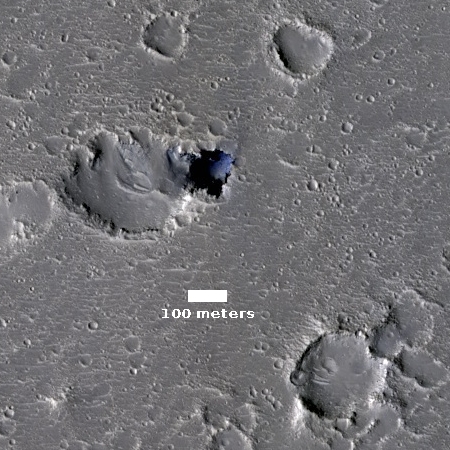
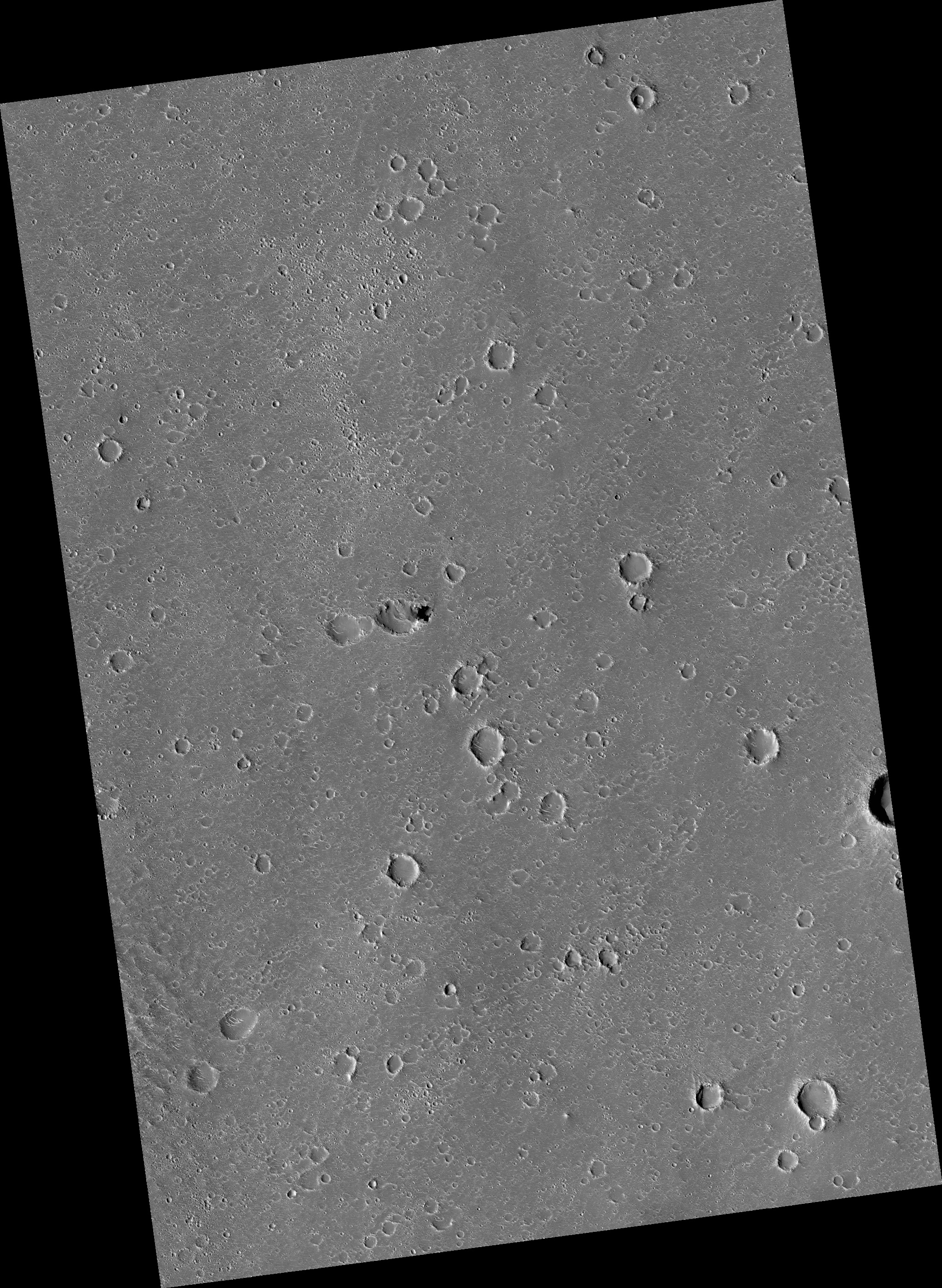
Cool image time! The photo to the right, rotated, cropped, and reduced to post here, was taken on August 31, 2021 by the high resolution camera on Mars Reconnaissance Orbiter (MRO). It shows what the science team labels a “possible contact between two units.”

I think that contact is the point where that eroded mountain touches the surrounding smooth canyon floor. The mountain itself looks to me to be a very eroded extrusion of lava that was placed there from below a very very long time ago, covered later by material, and now exposed for a long enough period that its surface appears to have been carved by wind and even possibly flowing water or ice.

Because it is lava it is more resistant to erosion, which is why it sits higher than the smooth terrain around it. Even though both experienced the same processes of wear over time, the mountain’s surface was only carved away partly, while the material that had been in the floor was washed away entirely.

This is all a guess. However, a look below at the overview map, showing this mountain’s location on Mars, as well as MRO’s wider view from its context camera, I think strengthens my hypothesis.
» Read more

0 comments

Today’s blacklisted American: UCLA threatens to expell remote student for not revealing his COVID shot status

Dictatorial clowns are running UCLA
Dictatorial clowns are running UCLA.

They’re coming for you next: Christian Walker, an online student who never comes on campus was threatened with expulsion by UCLA if he did not reveal whether he had gotten his COVID shots or not.

โ€œYou are calling to tell me you will drop my classes after weโ€™ve already paid $70,000 for the year if I donโ€™t upload something about my vaccine status when all of my classes are online,โ€ Walker is heard saying in his video. A UCLA official responded, โ€œCorrect.โ€ โ€œGot it.โ€ responded Walker.

โ€œAll of my classes are online. I donโ€™t step onto campus. Iโ€™ve already paid. Weโ€™re a week into classes. My university just called to tell me they are dropping my classes if I donโ€™t report to them about my vaccination.โ€ Walker commented on Twitter.

You can listen to Walker’s recording of this conversation at the link.
» Read more

17 comments

Viewing tonight’s Endurance launch with four astronauts

NASA has published an updated schedule for the launch tonight of four astronauts to ISS in SpaceX’s new Endurance Dragon capsule.

The launch now is targeted for no earlier than 9:03 p.m. EST Wednesday, Nov. 10, on a SpaceX Falcon 9 rocket from Launch Complex 39A at NASAโ€™s Kennedy Space Center in Florida. The launch follows a successful return of the agencyโ€™s SpaceX Crew-2 mission.

The Crew Dragon Endurance is scheduled to dock to the space station at 7:10 p.m. Thursday, Nov. 11. Launch and docking coverage will air live on NASA Television, the NASA app, and the agencyโ€™s website.

You can also watch it on SpaceX’s website, as well as the embedded live stream below, which begins around 4 pm (Eastern).

This will be the fourth manned flight SpaceX has launched for NASA, the fifth overall using three spacecraft.
» Read more

1 comment

Spinlaunch conducts first prototype test launch

Spinlaunch prototype suborbital launcher

Capitalism in space: Spinlaunch on October 22, 2021 successfully completed the first launch of a prototype using its radical spin technology that spins the payload to high speeds and then releases it upward.

On October 22, the company completed its first test flight at its Spaceport America base in New Mexico, successfully launching a prototype vehicle from its Suborbital Accelerator which reached supersonic speeds and was recovered for reuse thereafter. It plans to conduct further test flights across 2022 with different vehicles and at different launch velocities, as it plans for its first customer launches in late 2024.

In the photo to the right, note the vehicles and cherry-pickers in the lower right corner. They provide some scale. There is also a video showing this test flight on the company’s webpage. Lots of music, few details, but the video does show the prototype rocket-shaped payload rising upward after release.

If this technology becomes viable, it offers the possibility of an incredibly cheap method for putting bulk payloads into space, such as water, fuel, and other resources that will not be harmed by the initial high accelerations.

61 comments

History Unplugged โ€“ The Age of Discovery 2.0: Episode 3

Episode three of the six part series, The Age of Discovery 2.0, from the podcast, History Unplugged, is now available here.

This episode features Robert Zubrin. From the description:

A new space race has begun. But the rivals, in this case, are not superpowers but competing entrepreneurs. These daring pioneers are creating a revolution in spaceflight that promises to transform the near future. Astronautical engineer Robert Zubrin spells out the potential of these new developments in an engrossing narrative that is visionary yet grounded by a deep understanding of the practical challenges.

Fueled by the combined expertise of the old aerospace industry and the talents of Silicon Valley entrepreneurs, spaceflight is becoming cheaper. The new generation of space explorers has already achieved a major breakthrough by creating reusable rockets. Zubrin foresees more rapid innovation, including global travel from any point on Earth to another in an hour or less; orbital hotels; moon bases with incredible space observatories; human settlements on Mars, the asteroids, and the moons of the outer planets; and then, breaking all limits, pushing onward to the stars.

Zubrin shows how projects that sound like science fiction can actually become reality. But beyond the how, he makes an even more compelling case for why we need to do thisโ€”to increase our knowledge of the universe, to make unforeseen discoveries on new frontiers, to harness the natural resources of other planets, to safeguard Earth from stray asteroids, to ensure the future of humanity by expanding beyond its home base, and to protect us from being catastrophically set against each other by the false belief that there isnโ€™t enough for all.

Listen to it. It is definitely worth your time.

The next episode is mine.

10 comments
1 852 853 854 855 856 2,927