Smallsat rocket startup ABL raises $200 million in anticipation of 1st launch

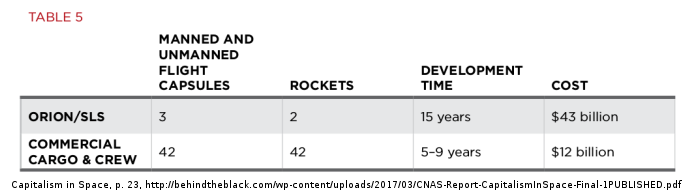
Capitalism in space: With its first test launch of its rocket scheduled for mid-December, the smallsat rocket startup ABL has raised $200 million in investment capital, in addition to the $170 million it had raised in March.

Dan Piemont, president and co-founder of ABL, told SpaceNews that the company still has most of the $170 million it raised in March, describing the new round as “somewhat opportunistic and driven by insider interest.” Much of the additional funding, though, will go to scale up production of its RS1 vehicle that is nearing its first launch. “We have received large orders for RS1 and will need to scale faster than we previously planned to meet the demand,” he said, with more than 75 launches under contract. “Our investors have seen the incredible demand for RS1 and want to make sure we have all the resources we need to serve it. We updated our operating plan accordingly, and you’ll see that in the form of more launch sites, more facilities, more machines and larger production crews next year.”

ABL is one of seven rocket companies — the others are Virgin Orbit, Astra, Firefly, Relativity, Aevum, and Blue Origin — that had planned a first test launch in ’21. Of those, Virgin Orbit has had two successful orbital launches, while Astra and Firefly have attempted orbital launches but failed. Blue Origin’s first launch of its New Glenn rocket has been delayed to next year, but it is questionable it will occur then. The launch dates for Relativity and Aevum remain unannounced.

0 comments

Japan launches GPS-type satellite

Japan successfully launched a government GPS-type satellite, using the H-2A rocket that is built by Mitsubishi.

This was Japan’s first launch in 2021. It appears this year it will not match last year’s launch total of four.

The leaders in 2021 launch race remains unchanged:

37 China
23 SpaceX
17 Russia
4 Northrop Grumman
4 ULA
4 Arianespace (Europe)

China still leads the U.S. 37 to 36 in the national rankings.

1 comment

Genesis cover

On Christmas Eve 1968 three Americans became the first humans to visit another world. What they did to celebrate was unexpected and profound, and will be remembered throughout all human history. Genesis: the Story of Apollo 8, Robert Zimmerman's classic history of humanity's first journey to another world, tells that story, and it is now available as both an ebook and an audiobook, both with a foreword by Valerie Anders and a new introduction by Robert Zimmerman.

The print edition can be purchased at Amazon or any other book seller. If you want an autographed copy the price is $60 for the hardback and $45 for the paperback, plus $8 shipping for each. Go here for purchasing details. The ebook is available everywhere for $5.99 (before discount) at amazon, or direct from my ebook publisher, ebookit. If you buy it from ebookit you don't support the big tech companies and the author gets a bigger cut much sooner.


The audiobook is also available at all these vendors, and is also free with a 30-day trial membership to Audible.
 

"Not simply about one mission, [Genesis] is also the history of America's quest for the moon... Zimmerman has done a masterful job of tying disparate events together into a solid account of one of America's greatest human triumphs."--San Antonio Express-News

Layered glaciers in Mars’ glacier country

Layered glacier in Mars' glacier country
Click for full image.

Cool image time. The photo to the right, cropped and reduced to post here, was taken on August 30, 2021 by the high resolution camera on Mars Reconnaissance Orbiter (MRO). It shows two different impact craters in a glacial region dubbed Nilosyrtis Mensae, located in the northern mid-latitudes in the 2,000 mile long strip chaos terrain that I have labeled glacier country because practically every image finds them there.

The splash apron surrounding the larger crater is typical of craters in Martian regions where ice is thought to be near the surface.

What makes this picture interesting is that the glaciers appear layered. You can see evidence of this in the mounds inside both craters. Those mounds appear to represent earlier periods when there was more ice here. Since then the mounds have partly sublimated away.

You can also see evidence of layers in the material surrounding the nearby larger mounds.

The map below shows us where this image is, relative to all of glacier country as well as the rover Perseverance in Jezero Crater.
» Read more

0 comments

Conscious Choice cover

Now available in hardback and paperback as well as ebook!

From the press release: In this ground-breaking new history of early America, historian Robert Zimmerman not only exposes the lie behind The New York Times 1619 Project that falsely claims slavery is central to the history of the United States, he also provides profound lessons about the nature of human societies, lessons important for Americans today as well as for all future settlers on Mars and elsewhere in space.

 
Conscious Choice: The origins of slavery in America and why it matters today and for our future in outer space, is a riveting page-turning story that documents how slavery slowly became pervasive in the southern British colonies of North America, colonies founded by a people and culture that not only did not allow slavery but in every way were hostile to the practice.  
Conscious Choice does more however. In telling the tragic history of the Virginia colony and the rise of slavery there, Zimmerman lays out the proper path for creating healthy societies in places like the Moon and Mars.


“Zimmerman’s ground-breaking history provides every future generation the basic framework for establishing new societies on other worlds. We would be wise to heed what he says.” —Robert Zubrin, founder of the Mars Society.


All editions are available at Amazon, Barnes & Noble, and all book vendors, with the ebook priced at $5.99 before discount. All editions can also be purchased direct from the ebook publisher, ebookit, in which case you don't support the big tech companies and the author gets a bigger cut much sooner.


Autographed printed copies are also available at discount directly from the author (hardback $29.95; paperback $14.95; Shipping cost for either: $6.00). Just send an email to zimmerman @ nasw dot org.

Today’s blacklisted American: Doctor fired for refusing vaccine

The modern dark age: Mollie James, an ICU doctor working jobs in hospitals in both St. Louis and New York, was forced to leave her hospital practices because she refused to get vaccinated against COVID because she already had natural immunity.

From the Nebraska AG report
The Nebraska AG’s doubts about remdesirvir.

In addition, James was also forced out because she researched the use of ivermectin, tried it on her patients, and found it beneficial. Her desire to prescribe it to her sick patients however was blocked by her hospitals, who insisted instead that she prescribe remdesivir, an anti-viral drug that the government pays a premium for hospitals to use, but has been shown to be of doubtful benefit [see screen capture to the right].
» Read more

7 comments

Sierra Space teams up with Blue Origin to build its Life space station

Proposed Orbital Reef space station

Capitalism in space: Sierra Space and Blue Origin today announced [pdf] that they are forming a consortium of space companies to build a space station they dub Orbital Reef. From the press release:

The Orbital Reef team of experts brings proven capabilities and new visions to provide key elements and services, including unique experience from building and operating the International Space Station:

  • Blue Origin – Utility systems, large-diameter core modules, and reusable heavy-lift New Glenn launch system.
  • Sierra Space – Large Integrated Flexible Environment (LIFE) module, node module, and runway-landing Dream Chaser spaceplane for crew and cargo transportation, capable of landing on runways worldwide.
  • Boeing – Science module, station operations, maintenance engineering, and Starliner crew spacecraft.
  • Redwire Space – Microgravity research, development, and manufacturing; payload operations and deployable structures.
  • Genesis Engineering Solutions – Single Person Spacecraft for routine operations and tourist excursions.
  • Arizona State University – Leads a global consortium of universities providing research advisory services and public outreach.

I suspect that this deal is actually telling us that Jeff Bezos is spreading some of his Blue Origin money to help finance Sierra Space’s work. The deal also appears to be an effort to generate work for Blue Origin’s not-yet-launched New Glenn rocket and Boeing’s not-yet launched Starliner capsule.

The release says nothing about target dates, but the overview [pdf] on the Orbital Reef website says they are aiming for the second half of this decade.

While the success of such a project can only increase the competition and lower the cost to orbit, thus making the settlement of space more likely, this announcement reeks of the same kind of high-minded promises that came with Blue Origin’s Blue Moon lunar lander: Big plans by the best and most established space companies, with little firm commitment by these companies to actually build anything.

Compared to the Blue Moon lunar lander project, however, this project has one very significant difference that could make it real. Orbital Reef is not being touted in order to win a government contract. It is being touted as a commercial station for private customers. Such a project will require these companies to either invest their own money, or obtain outside investment capital, to build it. To make money they can’t sit and wait for their customers to pay for it, since customers never do that (except the government). They need to first build it.

Meanwhile, the BE-4 engine is not yet flight worthy, so that Blue Origin’s New Glenn rocket remains no closer to launch, even though it is now approaching two years behind schedule.

21 comments

Leaving Earth cover

Leaving Earth: Space Stations, Rival Superpowers, and the Quest for Interplanetary Travel, can be purchased as an ebook everywhere for only $3.99 (before discount) at amazon, Barnes & Noble, all ebook vendors, or direct from my ebook publisher, ebookit.

If you buy it from ebookit you don't support the big oppressive tech companies and I get a bigger cut much sooner.


Winner of the 2003 Eugene M. Emme Award of the American Astronautical Society.

 
"Leaving Earth is one of the best and certainly the most comprehensive summary of our drive into space that I have ever read. It will be invaluable to future scholars because it will tell them how the next chapter of human history opened." -- Arthur C. Clarke

First exoplanet detected in another galaxy?

The uncertainty of science: Using the Chandra X-ray Observatory, astronomers think they may have detected the first exoplanet ever found in another galaxy, the Whirlpool Galaxy, 28 million light years away.

This new result is based on transits, events in which the passage of a planet in front of a star blocks some of the star’s light and produces a characteristic dip. Astronomers using both ground-based and space-based telescopes — like those on NASA’s Kepler and TESS missions — have searched for dips in optical light, electromagnetic radiation humans can see, enabling the discovery of thousands of planets.

Di Stefano and colleagues have instead searched for dips in the brightness of X-rays received from X-ray bright binaries. These luminous systems typically contain a neutron star or black hole pulling in gas from a closely orbiting companion star. The material near the neutron star or black hole becomes superheated and glows in X-rays.

Because the region producing bright X-rays is small, a planet passing in front of it could block most or all of the X-rays, making the transit easier to spot because the X-rays can completely disappear. This could allow exoplanets to be detected at much greater distances than current optical light transit studies, which must be able to detect tiny decreases in light because the planet only blocks a tiny fraction of the star.

The team used this method to detect the exoplanet candidate in a binary system called M51-ULS-1, located in M51. This binary system contains a black hole or neutron star orbiting a companion star with a mass about 20 times that of the Sun. The X-ray transit they found using Chandra data lasted about three hours, during which the X-ray emission decreased to zero. Based on this and other information, the researchers estimate the exoplanet candidate in M51-ULS-1 would be roughly the size of Saturn, and orbit the neutron star or black hole at about twice the distance of Saturn from the Sun.

While this is a tantalizing study, more data would be needed to verify the interpretation as an extragalactic exoplanet. One challenge is that the planet candidate’s large orbit means it would not cross in front of its binary partner again for about 70 years, thwarting any attempts for a confirming observation for decades. [emphasis mine]

As the press release says, this data is tantalizing, but it is really insufficient to prove that an exoplanet has been found. What is known is that for some reason the X-ray emissions from the X-ray binary system disappeared for about three hours. An exoplanet could be one explanation. So could many other things.

4 comments

Space Adventures fails to find customer for Dragon orbital flight

Capitalism in space: A high orbital tourist flight on SpaceX’s Dragon capsule has been cancelled because the company organizing it, Space Adventures, apparently failed to find enough customers.

Company spokesperson Stacey Tearne confirmed to SpaceNews that the company had dropped plans for the mission. “The mission was marketed to a large number of our prospective customers, but ultimately the mix of price, timing and experience wasn’t right at that particular time and our contract with SpaceX expired,” she said. “We hope to revisit the offering in the future.”

This revises the list of scheduled of orbital tourist flight that began with SpaceX’s Inspiration4 flight in September.

  • September 15, 2021: SpaceX’s Dragon capsule flew four private citizens on a three day orbital flight
  • October 5-17, 2021: Two Russians fly to ISS for 12 days to shoot a movie
  • December 2021: The Russians will fly billionaire Yusaku Maezawa and his assistant to ISS for 12 days
  • January/February 2022: Axiom, using a Dragon capsule, will fly four tourists to ISS
  • 2022-2024: Three more Axiom tourist flights on Dragon to ISS
  • 2024: Axiom begins launching its own modules to ISS, starting construction of its own private space station
  • c2024: SpaceX’s Starship takes Yusaku Maezawa and several others on a journey around the Moon.

Why Space Adventures could not get enough customers for their Dragon flight is unclear. It could be for many reasons outside of not enough demand. For example, SpaceX might have determined that the prospective customers were not physically capable for the flight. Maybe Space Adventures sold two or three tickets, but couldn’t fill the manifest before their SpaceX contract expired.

The cancellation however does suggest that the price per ticket might have to come down to garner business for orbital tourist space flights. Or those flights need to arrive at a space station where the passengers can spend more than two or three days.

4 comments

Arianespace and Chinese launches this weekend

Two launches occurred this weekend.

First Arianespace used its Ariane 5 rocket to place two communications satellites in orbit, one for the French military and the second for the commercial company SES. The total payload weight set a record for the rocket.

With this success the path is now clear for the launch of the James Webb Space Telescope on the next Ariane 5 launch in December.

Next the Chinese used its Long March 3B rocket to launch a technology test satellite aimed at testing “space debris mitigation technologies.” No other information was released.

The leaders in the 2021 launch race:

37 China
23 SpaceX
17 Russia
4 Northrop Grumman
4 ULA
4 Arianespace (Europe)

China now leads the U.S. 37 to 36 in the national rankings.

1 comment
1 861 862 863 864 865 2,927