Likely debris from rockets washes up in Australia

Though not yet identified, a half dozen round metal spheres that resemble the internal helium tanks rockets use to maintain pressure have washed up on beaches in Australia.

The Australian Space Agency confirmed on Sunday it was working to determine the nature and origin of the mysterious objects, which police said were suspected of containing hazardous chemicals.

Reports showed the objects, washed up on beaches in the Forrest Beach area of Townsville, appeared to be large spheres. The Queensland Fire Department said on Sunday a total of six objects had been found washed up on beaches. Five had been “secured into drums” and a sixth was being “rendered safe” on Sunday, a spokesperson said.

Assuming these spheres are rocket related, their most likely source would be from either a Chinese launch from its coastal Wenchang spaceport, an Indian launch from its east coast Sriharikota spaceport, or possibly a Russian launch from its Vostochny spaceport in far east Russia. All three dump lower stages in the Indian and Pacific Oceans.
6 comments

The rise and fall of two Australian spaceports

Australian commercial spaceports
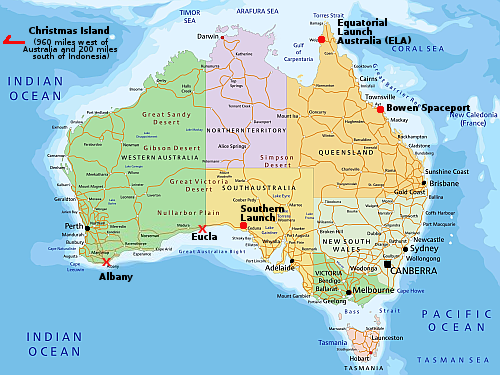
Australia’s commercial spaceports as of 2024. Click for original map.

Two stories today about the success of one Australian commercial spaceport and the failure of another illustrate perfectly the normal ups and downs one can expect from freedom and capitalism.

The ports in question are Southern Launch and Equatorial Launch Australia. In the first story, Southern Launch announced today that it has raised $25 million in private investment capital.

Adelaide-based spaceport operator Southern Launch has raised $25 million in a funding round led by national security investor Brindabella & Company, with the National Reconstruction Fund Corporation (NRFC) committing $10 million in direct equity to help scale Australia’s sovereign launch infrastructure.

The capital will fund expansion of Southern Launch’s two facilities – the Koonibba Test Range on the far west coast of South Australia and the Whalers Way Orbital Launch Complex near Port Lincoln – as the company works to meet growing demand from domestic and international launch customers.

Though the spaceport has obtained several tentative launch contacts, this success is mostly the result of its multiple contracts by capsule companies to use Koonibba as a landing site. There is a boom in this recoverable capsule industry at this time — with lots of investment money and multiple companies flying or building capsules. Koonibba at this moment has become the go-to place for such landings.

In the second story, we learn the sad fate of Equatorial Launch Australia (ELA). » Read more

0 comments

Australia’s Southern Launch range gets another re-entry capsule customer

Proposed Australian spaceports
Australian spaceports: operating (red dot) and proposed (red “X”)
Click for original image.

The Australlian spaceport Southern Launch, which also controls the Koonibba Test Range where a variety of government and commercial capsules have landed since 2020, has signed another American company building its own re-entry capsules.

Southern Launch has signed a new agreement with US-based SpaceWorks Enterprises, Inc. to host multiple re-entry missions at the Koonibba Test Range in South Australia.

The agreement enables SpaceWorks to advance its growing portfolio of atmospheric Re-Entry Devices (RED) and further demonstrates confidence in the Koonibba Test Range as the leading global location for the safe and reliable return of spacecraft and high-value payloads.

This is the third American re-entry capsule company to sign with Southern Launch. Varda has already landed I think five capsules at Koonibba, and has a deal to land up to 20 through 2028. In 2025 the American startup Lux Aeterna signed a deal as well.

Two take-aways from this story: First, SpaceWorks as a re-entry capsule company appears to be a new project, joining the host of other re-entry capsule companies that have obtained investment capital since Varda demonstrated its success, including three U.S. and five European startups. It really appears the financial community sees profits here, and are committing money to this effort.

Two, the red tape by multiple U.S. government agencies in 2023 that delayed the return of Varda’s first capsule to the Air Force’s test range in Utah for six months has driven all this business out of the U.S.

That red tape was part of the Biden administration’s general policy aimed at hindering private enterprise, but it also is systematic to the existing administrative state that dominates and impedes American industry across the board. The result here is the business went elsewhere.

15 comments

Australian rocket startup Gilmour pinpoints cause of first rocket launch failure

Eris rocket launch and failure
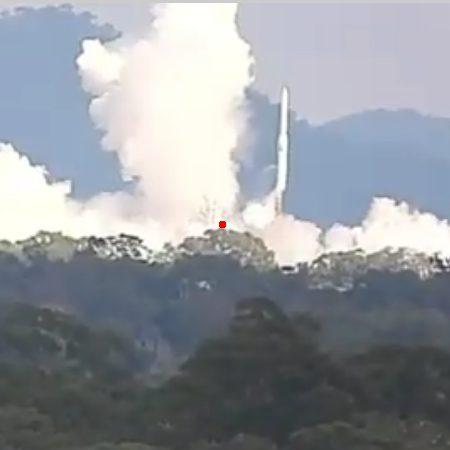
Click for video, cued to just before launch. The red
dot marks the launchpad location.

The Australian rocket startup Gilmour Space on April 24, 2026 released the results of its investigation into the launch failure seconds after liftoff of its Eris rocket in July 2025.

Our investigation found that approximately nine seconds after ignition, one of the four first-stage hybrid rocket motors experienced a loss of thrust. A second motor exhibited similar behaviour at around 17 seconds, reducing vehicle performance and bringing the mission to an early end.

Analysis identified two independent failure modes originating from the oxidiser pump subsystem. Electrical and thermal faults were observed in the electric pump motors and associated inverters, including components sourced from an external supplier. We now have a clearer understanding of the underlying causes.

The company hopes to try again later this year, but to do so it will need license approval from Australia’s bureaucracy, and such approvals have not been quick.

Hat tip BtB’s stringer Jay.

3 comments

Rocket Lab completes another HASTE suborbital mission

Rocket Lab late yesterday successfully completed its seventh HASTE suborbital mission, using the first stage of its Electron rocket to do a hypersonic test mission for the War Department.

In this case, the test vehicle was from the Australian company Hypersonix, and it lifted off from Rocket Lab’s Electron launchpad at Wallops Island in Virginia.

This was Rocket Lab’s second flight for this particular military agency in the past three months, and its eleventh overall launch from Wallops Island. The company’s quick reconfiguration of Electron for hypersonic suborbital testing made it possible for it to capture a bulk of the military’s suborbital hypersonic testing business that others, such as Stratolaunch, had hoped to win.

2 comments

Australian rocket startup Gilmour Space raises $145 million in investment capital

Eris rocket launch and failure
Gilmour’s Eris rocket falling sideways from launchpad
(indicated by red dot) in July 2025. Click for much better
video.

The Australian rocket startup Gilmour Space, whose one orbital test launch in 2025 failed, has now raised an additional A$217 million ($145 million American) in investment capital, in addition to the A$142 million it had previously raised.

The Series E round was jointly led by the National Reconstruction Fund Corporation (NRFC) and Hostplus, with participation from Future Fund, Blackbird, Funds SA, HESTA, NGS Super, Main Sequence, QIC, and Brighter Super.

…Proceeds from the raise will be used to support continued development and qualification of its Eris orbital launch vehicle, scale rocket and satellite manufacturing, expand test and launch infrastructure, and grow the company’s workforce to meet global demand for space launch services.

The National Reconstruction Fund Corporation is a government agency with a A$15 billion budget tasked to help finance new industries. It contributed A$75 million in this fund raising round.

The other major contributor was Hostplus, which matched that contribution.

Though the company has said it will attempt a second orbital test launch in 2026, no dates have been announced.

5 comments

Another American orbital capsule company turns to Australia for a landing spot

Proposed Australian spaceports
Australian spaceports: operating (red dot) and proposed (red “X”)
Click for original image.

The American orbital capsule company Lux Aeterna has now signed a deal with the Australian spaceport startup Southern Launch to allow its capsules to land at its Koonibba Test Range in southern Australia.

Under the agreement, two Lux Aeterna Delphi satellites will return to the Koonibba Test Range with Southern Launch. The first mission is targeted to return in 2027.

Lux Aeterna, based in Denver, Colorado, USA, is developing a reusable satellite platform designed to operate in Low Earth Orbit and support defense, intelligence, and commercial missions such as technology demonstrations, hypersonic and materials testing, in-orbit servicing, and in-space manufacturing. The Delphi platform and its core components are engineered to withstand the thermal and structural demands of atmospheric re-entry, enabling routine return and recovery of both the satellite bus and payload to support expedited technology development.

…Under the partnership, Southern Launch will provide end‑to‑end services for each orbital re-entry, including regulatory approvals, range operations, air and maritime coordination, and recovery operations.

This is the second American orbital capsule company to sign with Southern Launch. Varda was the first, and it did so because red tape in the U.S. made use of an American drop zone impractical. It appears Lux Aeterna has come to the same conclusion, and thus went to Australia instead.

This is an issue that needs to be addressed by the Trump administration. It is absurd that red tape is forcing American capsules to land in another country on the other side of the globe.

1 comment

South Korean rocket startup Innospace signs deal to launch from Australia

Proposed Australian spaceports
Australian spaceports: operating (red dot) and proposed (red “X”)
Click for original image.

The South Korean rocket startup Innospace — about to attempt its first orbital launch from Brazil on December 19, 2025, earlier this week signed an agreement with Australia’s Southern Launch spaceport to launch its rockets from there.

Leading space mission service provider Southern Launch has signed South Korean launch service provider Innospace to conduct space missions from the Whalers Way Orbital Launch Complex and the Koonibba Test Range. This strategic partnership enables Innospce to conduct a diverse range of missions from Southern Launch sites, including orbital satellite launches and suborbital technology demonstrations.

Beginning in 2026 and continuing for at least the next decade, this agreement strengthens South Australia’s position as an emerging global hub for space innovation.

Whether or not its launch from Brazil’s long unused Alcantera spaceport is a success, it appears Innospace was looking for another spaceport option closer to South Korea. Moreover, Southern Launch has been an on-going active launch site for suborbital launches as well as a landing zone for spacecraft, unlike Alcantera which has sat unused for decades. That activity probably makes it a more viable place to operate.

Hat tip to BtB’s stringer Jay.

0 comments

New Australian rocket startup completes suborbital launch

Proposed Australian spaceports
Australian spaceports: operating (red dot) and proposed (red “X”)
Click for original image.

A new Australian rocket startup, AtSpace, announced earlier this week it had successfully launched a test suborbital rocket from the commercial spaceport Southern Launch on the south coast of Australia.

At 09:22 AM [on November 27th], the 12.2m tall vehicle rocketed from Southern Launch’s Koonibba Test Range, performed perfectly and flew close to the target altitude of 80km. The four-and-a-half-minute flight validated AtSpace’s hybrid propulsion technology before safely returning to Earth as planned.

According to the press release, the company was able to recover the rocket afterward.

The company’s website says it was founded in 2021, and plans an orbital rocket dubbed Kestral, using hybrid fuels. No target dates for a first launch however are provided.

AtSpace is Australia’s second rocket startup to launch, following Gilmour Space’s failed launch attempt from its own Bowen spaceport on the east coast of Australia. Gilmour hopes to try again next year.

0 comments

Gilmour to attempt first launch again next year

Eris rocket launch and failure
Eris rocket falling sideways from launchpad
(indicated by red dot). Click for video, cued
to just before launch.

According to a presentation by the CEO and founder of Australian rocket startup Gilmour Space, the company now sufficiently understands what caused the failure on its first launch attempt on July 30 to plan a second attempt in 2026.

The company is still investigating the root cause of the failure. “It looks like what went wrong on the launch is something we’ve never tested close enough to the launch conditions before,” he said, but didn’t elaborate.

One factor in the launch was the long delay between shipping the rocket to the launch site, known as the Bowen Orbital Spaceport, and the launch itself. “Rockets aren’t designed to be at the launch site for 18 months,” he said. The launch site, he noted, is just a kilometer from the ocean, creating salty conditions that can be corrosive.

That extended time at the launch site stemmed from delays securing regulatory approvals for the launch. That included not just a launch license from the Australian Space Agency but also airspace, maritime and environmental permits. “We had to get 24 different permits from the Queensland government,” Gilmour said. “All of these things take a long time to do.” He acknowledged that the company had not put enough resources into those regulatory processes. “The approval processes just took way too long.”

What is ironic is that as bad as Australia appears to be in terms of red tape, it is far better that it mother country, Great Britain. At least in Australia spaceports have been approved and at least one launch has taken place. And it only took eighteen months! In Great Britain the permitting process for its two proposed rocket spaceports has taken almost a decade, and still no vertical launches have occurred at either.

2 comments

Australian satellite startup to fly an instrument on private mission to Apophis

In March 2024 the orbital tug startup Exlabs announced that it will use its orbital tug to deliver three cubesats to the asteroid Apophis when that object makes its next close fly-by of the Earth on April 13, 2029.

The California-based Exlabs has now signed its first customer for that mission. An Australian satellite startup, Fleet Space Technologies, has agreed to fly an instrument on this private commercial mission.

Under the ApophisExL mission, Fleet will provide geophysical sensing technologies for ExLabs’ mothership to collect targeted data and characterize the asteroid. The datasets should enable new avenues for data sharing and commercial use, set criteria for prioritizing asteroids for prospecting and feed critical intelligence into planetary‑defence planning.

Fleet already has a contract to fly another instrument, a seismometer, on Firefly’s second Blue Ghost lander mission to the Moon. It has also developed and flown satellite instruments used to detect minerals on Earth.

Both companies are clearly aiming to enhance their brand name with this mission, set to launch in 2028.

1 comment

Proposed Australian commercial spaceport signs land lease

Proposed Australian spaceports
Proposed Australian spaceports.
Click for original image.

After being forced to change locations because of red tape and the refusal of the local aborigine authorities to sign an agreement, the Australian commercial spaceport startup Space Centre Australia has now obtained a land lease for its new location, dubbed Atakani, on the eastern shore of Cape York.

Space Centre Australia Pty Ltd (SCA) has secured a spaceport land lease, signing a multi-decade agreement with the local Traditional Landowners for approximately 300 km² at Billy’s Lagoon, Cape York. The agreement paves the way for the development of the Atakani Space Centre (ASC).

The Binding Term Sheet, signed with the support of Mokwiri RNTBC, marks the first time an Australian-based spaceport has secured a lease and opportunity of this scale. It ensures Traditional Owner access to country for cultural and ceremonial purposes, governance participation through the soon-to-be-established Luthiggi Corporation, and direct involvement in environmental management, cultural heritage monitoring, and operational activities. A royalty framework will deliver long-term economic benefits in addition to the spaceport’s operational revenue.

At the moment it appears the spaceport’s focus will be attracting suborbital launch companies, with the eventual goal to bring orbital rockets to the site.

2 comments

Gilmour’s first launch a failure

Eris rocket launch and failure
Click for video, cued to just before launch.

The first launch of the Australian rocket startup Gilmour Space’s Eris rocket ended in failure today when the rocket started drifting sideways after rising about 150 feet and then crashing near the launchpad.

The picture to the right is a screen capture from an independent live steam of the launch posted on youtube by Aussienaut, captured about 20 seconds after liftoff. The red dot indicates the location of the launchpad where the rocket took off to make clear the rocket’s sideways motion. Ten seconds after this, the rocket fell to the ground and exploded.

This launch attempt was the first ever by a private commercial Australian rocket company, so the failure itself is not surprising. It was also the first orbital test launch from a privately owned Australian spaceport. Whether the company has the resources to recover remains to be seen, but I suspect it will try again.

6 comments

Proposed Australian spaceport changes name

Proposed Australian spaceports
Proposed Australian spaceports.
Click for original image.

A proposed Australian spaceport company that was previously called Equatorial Launch Australia and was forced to shift its location because of red tape has apparently changed its name to Space Centre Australia and named its proposed spaceport the Atakani Space Centre.

It is also possible there was a major shake-up in management, but this is unclear from available sources.

The map to the right shows the location where Atakani is planned, on Cape York in Queensland. Previously this company hoped to build the spaceport to the west in the Northern Territory, but local bureaucracy made that impossible.

Right now the company hopes to open for launches by 2029.

5 comments

Premature fairing release cancels first launch of Gilmour’s Eris rocket

The Australian rocket startup has canceled any attempt to launch its Eris rocket during its present launch window as a result of the premature fairing release that occurred during the countdown yesterday.

Last night, during final checks, an unexpected issue triggered the rocket’s payload fairing. No fuel was loaded, no one was hurt, and early inspections show no damage to the rocket or pad.

While investigating the cause of this incident, the company will ship and install a replacement fairing from its factory. A new launch date will be announced after these actions are completed. Expect a delay of at least two months, likely more.

2 comments

Gilmour scrubs launch attempt today

The Australian rocket startup Gilmour Space has scrubbed its first attempt to launch its Eris rocket from its own Bowen spaceport on the eastern coast of Australia.

Our team identified an issue in the ground support system during overnight checks. We’re now in an extended hold to work through it. Our next target is the Friday morning launch window.

The company has a two week launch window extending through the end of the month. If it can’t launch in that window then it will try again in the second half of June, assuming the bureaucracy of the Australian Space Agency issues a revised licence. It took that government three years to issue this license, so assuming it will work quickly to issue a revision is a dangerous thing.

The company is not providing a live stream of the launch, though it has said it will release a full video after the fact.

3 comments

Gilmour finally gets launch license from Australian bureaucrats

Australian commercial spaceports
Australia’s commercial spaceports. Click for original map.

After several years of delays, the Australian rocket startup Gilmour Space today announced that it has finally been issued a launch license from the Australian Space Agency.

According to the company, “pending weather & final system checks, we’re on target for our launch window to open NET May 15.”

The launch will take place at Gilmour’s own Bowen spaceport on the east coast of Australia. The Eris rocket has three stages and is designed to launch smallsats similar to Rocket Lab’s Electron rocket.

It is amazing this company hasn’t gone bankrupt waiting for this launch license. It applied in 2022, hoping to launch that year. Three years later it finally gets the okay. The amount of cash it had to burn unnecessarily in those years would generally destroy most startups.

Whether the red tape in Australia will clear up in the future is decidedly unknown, especially with the election victory this month of the leftist party.

Hat tip BtB’s stringer Jay.

0 comments

Australia’s first rocket company continues to be blocked by red tape

Australian commercial spaceports
Australia’s commercial spaceports. Click for original map.

The first rocket launch by Gilmour Space, Australia’s first rocket company, from its Bowen spaceport on the east coast of Australia has apparently been blocked by continuing bureaucratic regulatory red tape.

In February the company had announced a planned launch date in March, based on what appeared to be the issuance (after more than a year’s delay) of its launch licence. That launch however never happened, with no public explanation, until now. From the link above:

In an update on Sunday, the Queensland-based firm said it had received approval from CASA and is now waiting for final clearance from the Australian Space Agency.

…It had planned for an inaugural blast-off in April 2024 but faced a lengthy delay in obtaining its final permit from the Australian Space Agency.

In other words, the launch license had only been promised, but then was not issued, leaving the company stranded for several more months, with that license still buried in the government’s byzantine operations.

The article at the link says the Australian government is now moving to streamline its space regulatory system, but don’t believe it. The elections this week saw a resounding victory for the leftist coalition with the conservative party defeated handily. With the left now in firm control, expect the regulation to increase, not decrease. Leftwing governments almost never reduce regulation. It goes against their power-hungry genetics.

4 comments

Varda’s successfully returns its 2nd capsule from orbit

The startup Varda yesterday successfully returned its second capsule from orbit, with the capsule re-entering the atmosphere and touching down in Australia after spending six weeks in space.

The W-2 capsule carried a spectrometer built by the Air Force Research Laboratory (AFRL) and employed a heatshield developed in collaboration with NASA’s Ames Research Center in California’s Silicon Valley. The capsule also carried internal research that will expand Varda’s pharmaceutical processing capacity and capability.

The capsule landed at the Koomibba Test Range, operated by the spaceport startup Southern Range and located on the southern coast of Australia. Varda had arranged this landing location after it had absurd regulatory delays getting permission to land its first capsule at the Air Force test range in Utah.

0 comments

Australia’s government proposes subsidies to build spaceport in Western Australia

Australian spaceports
Proposed commercial spaceports in Australia

The Labor Party that presently runs Australia has now proposed a $2 million program to “develop a business case” for a spaceport in the generally unpopulated state of Western Australia.

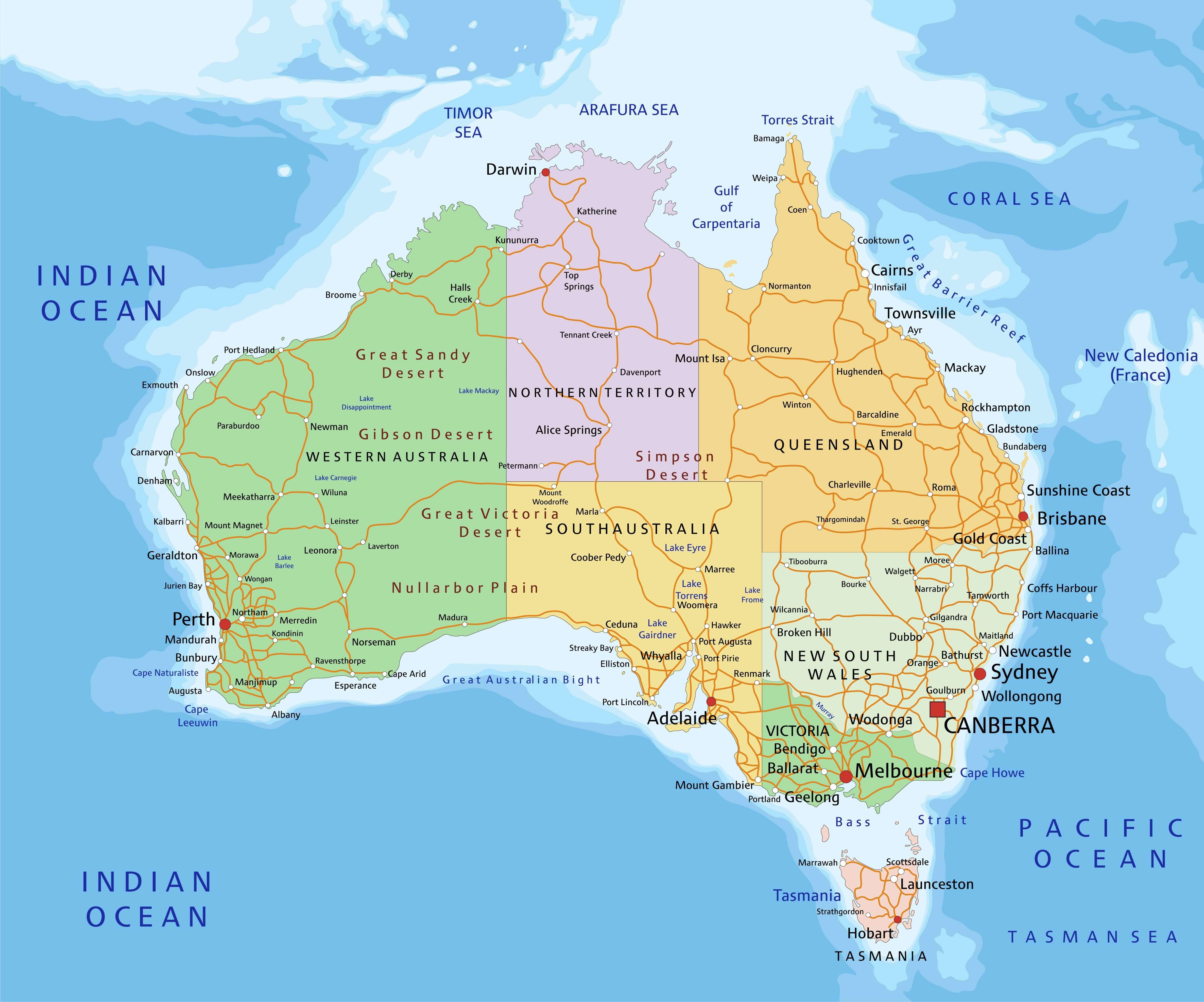
The red arrow and two X’s on the map to the right shows three potential locations. The Eucla and Christmas Island locations have been proposed by a private startup dubbed Space Angel. The Albany location has been proposed by a different startup called WA Australia.

At present, only the Bowen spaceport on Australia’s eastern coast has all its license approvals to do orbital launches, with the first now scheduled for mid-March. Southern Launch however has been a suborbital launch site for decades, and is also where many spacecraft returning from space have landed.

That the present leftist Australian government is considering a program to encourage new spaceports at these other locations instead makes me wonder if there isn’t a bit of political quid-pro-quo going on. Why favor these new locations in Western Australia exclusively? Why not offer this program to all the spaceports? I am especially suspicious of this proposal considering the regulatory burden the Labor government has placed on those other eastern spaceports, delaying approvals for years.

With so many commercial Australia spaceport proposals however suggests the political pressure to ease those regulations might be soon forthcoming.

1 comment
1 2 3 5