
Belgium company joins Starlab space station consortium

Starlab design in 2025
The Starlab design in 2025. Click
for original image.

The Starlab consortium, proposing to build its single-module large Starlab space station that will be launched on Starship, has now added the Belgium company Space Applications Services (SpaceApps) as both a partner and investor.

SpaceApps contributes deep experience in space systems, mission operations and payload integration with capabilities that include avionics, payload development, the end-to-end International Commercial Experiment Cubes (ICECubes) service, as well as mission integration and operations control software. The company also works closely with the European Space Agency and international partners, broadening Starlab’s access to global markets and research communities.

The Starlab consortium already includes the American companies Voyager Space and Northrop Grumman and the European company Airbus. It also has a partnership agreement with the European Space Agency. This new Belgium partnership further cements its place as Europe’s potential future space station after ISS is retired.

This deal is only one of several news stories in the past week signaling progress by this consortium. It has signed the American company Vivace to build the station’s main structure and its partner Northrop Grumman has successfully tested the rendezvous and docking technology its Cygnus cargo capsule will use to dock with Starlab. All in all this station appears to be assembling the pieces its needs.

Below is my updated rankings of the four commercial stations under development:
» Read more
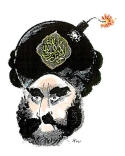
“We don’t need another lecture about Islamophobia.”

Mohammad the bomber

The religion of peace strikes again: Thirty-four are dead and almost 200 injured in suicide attacks in Belgium today.

ISIS has claimed credit for the attacks.

I think the reactions of our politicians here is of some significance, as by contrasting them we can learn a bit about each. Obama inserted a short pro-forma statement of sympathy during his prepared remarks at the start of a press conference in Cuba, then appeared to forget about the entire horrific attack. Donald Trump called for greater border security and a renewed consideration of the use of waterboarding to obtain information from captured terrorists. Hillary Clinton (at the previous link) expressed some incoherent blather about following “our values”.

Ted Cruz possibly spoke with the most clarity.

“Today’s attacks in Brussels underscores this is a war,” Cruz said. “This is not a lone war. ISIS has declared jihad. It is way past time we have a president who will acknowledge this evil and will call it by it’s name and use the full force and fury to defeat ISIS,” he continued. “Until they are defeated, these attacks will continue. Their target is each and every one of us.”

Cruz, one of five remaining presidential candidates, urged America needs a leader who is not afraid to speak about terrorism in bold terms. “We need a president who sets aside political correctness,” Cruz insisted. “We don’t need another lecture about Islamophobia.”

Cruz also criticized Trump’s proposal yesterday that we pull back from NATO.

I leave it to you to decide who appears to have the greatest grasp of the situation. And if you think I am spinning this to favor Cruz, go to the links and get a closer look at the other reactions. Note for example that, other than a twitter comment, I could not even find a story that specifically discussed Hillary Clinton’s reaction.

Update: I have added the cartoon showing Mohammad with a bomb in his turban because I think the response to these thugs has to be to defy them as blatantly as possible. I need to remember to do this more often.

A 33,000-year-old dog skull found in a Siberian cave, when compared with other ancient dog remains found in a Belgium cave, suggest to scientists that the domestication of dogs took place separately in many different places.

A 33,000-year-old dog skull found in a Siberian cave, when compared with other ancient dog remains found in a Belgium cave, suggest to scientists that the domestication of dogs took place separately in many different places.