
NASA practically eliminates any Starliner flights before ISS retires
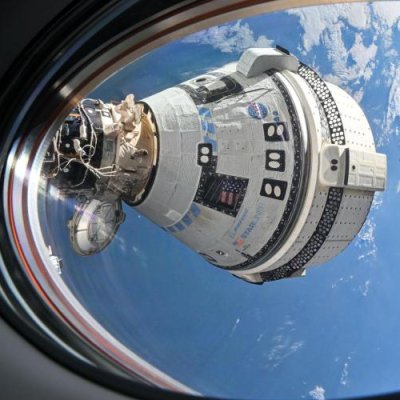
Starliner docked to ISS
Starliner docked to ISS in 2024.

In a procurement announcement on May 18, 2026, NASA added another three to six crewed flights to ISS to its contract with SpaceX, covering all missions possible through 2030, which in turn practically eliminates the possibility it will buy any manned flights on Boeing’s Starliner capsule.

In a May 18 procurement filing, NASA announced its intent to add six post-certification missions, or PCMs, to SpaceX’s commercial crew contract on a sole-source basis. The agency would order up to three of those missions at the time it added them, formally starting preparations for them.

…Adding six missions to the contract would cover three years of ISS operations, at a rate of one mission every six months. With the currently contracted missions, running through Crew-14, flying through the fall of 2027, the extension would provide coverage through late 2030, when the ISS is slated for retirement. NASA has previously stated the last crewed mission would likely spend a year at the station.

Though it is not stated yet exactly how much SpaceX will earn with these additional missions, based on previous contracts the revenue will likely range from $1 to $2 billion. Overall, SpaceX has probably received somewhere between $4 to $6 billion additional earnings that was supposed to go to Boeing.

Instead, Boeing is now out of the picture entirely, though NASA is being very coy about saying so. It will earn nothing from Starliner, at least in connection with hauling crews or cargo to ISS. And because its contract with NASA was fixed price and the company could not meet its final milestones to get the bulk of its payments, it will have cost the company about $2 billion beyond what NASA had paid it.

It remains unknown whether Boeing wishes to continue the project. NASA officials had suggested earlier this year that it would buy an unmanned cargo mission to ISS to give the company a chance to prove the capsule and get it certified for manned missions. They have since backed off from that plan, scheduling no Boeing missions through the rest of this year.

Though things could still change, it appears Starliner is dead. In history books this Boeing project I think will become the poster boy for the failures of the older big space companies that used to dominate America’s aerospace industry. By the 21st century they didn’t know how to budget, had poor quality control resulting in unreliable products, and designed things that were badly conceived. The result was a bankrupt space industry that was only saved when new companies appeared willing to fill a need these older companies could not.
25 comments

No Starliner mission to ISS this year

Though in February 2026 NASA officials suggested there might be a Starliner cargo mission to ISS sometime in April 2026, the new schedule released today for ISS manned and cargo missions for the rest of this year shows no Starliner missions at all.

The press release hinted an extra Starliner mission could be added, but don’t but too much faith in this:

Launch opportunities for NASA’s uncrewed Boeing Starliner-1 cargo mission remain under review as teams continue working through technical issues discovered during the Crew Flight Test in 2024, as well as final actions from the Program Investigation Team report. The agency is assessing operational readiness and space station traffic to determine the earliest feasible launch window.

What I think is happening in NASA is that the agency under Isaacman wants a better assurance from Boeing that the problems with Starliner have been fixed, and Boeing is having trouble satisfying them. If so, it seems he is doing what I suggested in February, demand from Boeing the highest quality work or don’t buy anything from it at all. If so kudos to Isaacman.

It is also possible Isaacman doesn’t want to spend extra money paying Boeing for this extra cargo mission to prove out Starliner’s systems. Boeing’s contract for Starliner is fixed price, and the capsule’s multiple problems has now cost the company more than a billion dollars. It is unlikely it will have make a profit on it, which is why it wants NASA to pay for that cargo flight.

Either way, the first operational manned mission using Starliner continues to recede into the future, to the point where ISS might be gone before the capsule is finally okayed for manned flights.

14 comments

NASA on Starliner: Too much freedom caused the failure!

Starliner docked to ISS
Starliner docked to ISS in 2024.

NASA today released its final investigation report on the causes behind the Starliner thruster issues during that capsule’s only manned mission in ISS, issues that almost prevented the spacecraft from docking successfully and could have left it manned and out-of-control while still in orbit.

You can read the report here [pdf]. NASA administrator Jared Isaacman made it clear in his own statement that the Starliner incident was far more serious than originally let on.

“To undertake missions that change the world, we must be transparent about both our successes and our shortcomings. We have to own our mistakes and ensure they never happen again. Beyond technical issues, it is clear that NASA permitted overarching programmatic objectives of having two providers capable of transporting astronauts to-and-from orbit, influence engineering and operational decisions, especially during and immediately after the mission. We are correcting those mistakes. Today, we are formally declaring a Type A mishap and ensuring leadership accountability so situations like this never reoccur. We look forward to working with Boeing as both organizations implement corrective actions and return Starliner to flight only when ready.”

A Type A mishap is one in which a spacecraft could become entirely uncontrollable, leading to its loss and the death of all on board. Though Starliner was NOT lost, for a short while as it hung close to ISS that result was definitely possible. Its thrusters were not working. It couldn’t maneuver to dock, nor could it maneuver to do a proper and safe de-orbit. Fortunately, engineers were able to figure out a way to get the thursters operational again so a docking could occur, but until then, it was certainly a Type A situation.

The report outlines in great detail the background behind Starliner’s thruster issues, the management confusion between NASA and Boeing, and the overall confused management at Boeing itself, including its generally lax testing standards.

The report’s recommends that NASA impose greater control over future commercial contracts, noting that under the capitalism model that NASA has been following:
» Read more

50 comments

NASA trims $768 million from Boeing’s Starliner contract

Starliner docked to ISS
Starliner docked to ISS in 2024.

According to one story late today, the modifications NASA announced today on its Starliner contract with Boeing will trim $768 million from the total contract, assuming the two later optional manned missions never fly.

Originally valued at $4.5 billion, Boeing’s contract under the Commercial Crew Program envisioned six operational astronaut flights. NASA’s latest modification cuts that number to four, including up to three crewed missions and an uncrewed cargo flight set for April 2026. Two additional flights remain optional. With the changes, the contract’s value has dropped by $768 million to $3.732 billion; NASA has already paid $2.2 billion to date.

Boeing can still earn that additional money if if somehow manages to convince NASA to do all six flights. It will have great difficult achieving this, however, since there probably won’t be enough time to get all six flights up before ISS is retired. That fact is partly why NASA has made this change.

This report however suggests that NASA is not paying Boeing extra money for the unmanned cargo mission in April 2026. Instead, it is treating it as if it were the first operational manned Starliner flight, paying Boeing its purchase price as if it had achieved all its milestones during the manned demo flight last year.

It really pays in today’s America to be a big giant corporation that does lots of business with our bloated and very corrupt federal government. That government is then quite willing to bend over backwards to help you, even if you are like Boeing and incompetent (Starliner), corrupt (737-MAX), or routinely go over-budget and fail to deliver on time (Air Force One). That certainly appears to be the case here with Boeing.

Hat tip BtB’s stringer Jay.

2 comments

NASA downgrades Boeing’s Starliner contract

Starliner docked to ISS
Starliner docked to ISS in 2024.

NASA today announced a major revision to its contract for Boeing’s manned Starliner capsule, changes that will require it to fly one more unmanned cargo mission to ISS before putting people on it again, while also reducing the total number of later purchased manned flights.

As part of the modification, the definitive order has been adjusted to four missions, with the remaining two available as options. The next Starliner flight, known as Starliner-1, will be used by NASA to deliver necessary cargo to the orbital laboratory and allow in-flight validation of the system upgrades implemented following the Crew Flight Test mission last year.

NASA and Boeing are targeting no earlier than April 2026 to fly the uncrewed Starliner-1 pending completion of rigorous test, certification, and mission readiness activities. Following Starliner certification, and a successful Starliner-1 mission, Starliner will fly up to three crew rotations to the International Space Station.

It has been rumored for months that NASA would require Boeing to fly another unmanned mission before certifying Starliner for manned flights. The question that this press release does not answer is whether NASA is paying for this unmanned flight. The original contract was fixed price, and required Boeing to meet certain milestones before further payments. Another cargo flight to ISS was not in that original deal.

I therefore suspect this is NASA’s way to get Starliner certified. Boeing has likely refused to pay for another demo flight, threatening instead in negotiations to cancel the project entirely. NASA however needs to get cargo to ISS. By buying a cargo mission from Boeing (possibly instead of Northrop Grumman’s Cygnus capsule, which is presently hindered because it lacks its Antares launch vehicle), NASA gets that cargo while also saving Starliner.

The bottom line remains fundamental: Will Boeing finally be able to do a successful problem-free Starliner flight in April 2026? We shall have to see. The fact that NASA appears to be reducing the total number of eventual Starliner missions to ISS indicates its own lack of confidence.

17 comments

SpaceX launches cargo Dragon to ISS; Problems with Tenacity?

Early this morning SpaceX successfully launched a cargo Dragon to ISS, its Falcon 9 rocket lifting off from the Kennedy Space Center in Florida.

The first stage completed its fifth flight, landing back at Kennedy. The capsule is on its fifth flight, and is carrying significantly more cargo than previous SpaceX cargo missions because it has had to replace much of the cargo that would have been launched on a Cygnus capsule whose launch was cancelled because it had been damaged during transport.

Furthermore, as part of their updates on this mission NASA officials revealed that Sierra Space’s cargo mini-shuttle, Tenacity, is facing more delays, and is now not expected to launch until late this year. This Dream Chaser spacecraft had begun ground testing early in 2024, with a first launch planned for shortly thereafter. For reasons that have not been explained, that ground testing has now been going on for more than a year, and will apparently continue for most of 2025. My guess is that the spacecraft has experienced engineering problems during that testing, and has required fixes that neither Sierra Space nor NASA wishes to reveal.

The result has been that NASA has had a shortage of cargo vehicles to keep ISS supplied. A significant number of science experiments had to be removed from today’s Dragon to make room for consumerables. NASA officials also stated publicly during this update that it is now definitely considering using Starliner as a cargo vehicle on its next flight, a plan that previously had only been hinted at.

The leaders in the 2025 launch race:

45 SpaceX (with another launch scheduled for later today)
20 China
5 Rocket Lab
5 Russia

SpaceX now leads the rest of the world in successful launches, 45 to 35.

4 comments

Starliner’s troubles were much worse than NASA made clear

Starliner docked to ISS
Starliner docked to ISS.

According to a long interview given to Eric Berger of Ars Technica, the astronauts flying Boeing’s Starliner capsule on its first manned mission in June 2024 were much more vulnerable than NASA made it appear at the time.

First, the thruster problem when they tried to dock to ISS was more serious than revealed. At several points Butch Wilmore, who was piloting the spacecraft, was unsure if he had enough thrusters to safely dock the capsule to ISS. Worse, if he couldn’t dock he also did not know if had enough thrusters to de-orbit Starliner properly.

In other words, he and his fellow astronaut Sunni Williams might only have a few hours to live.

The situation was saved by mission control engineers, who figured out a way to reset the thrusters and get enough back on line so that the spacecraft could dock autonomously.

Second, once docked it was very clear to the astronauts and NASA management that Starliner was a very unreliable lifeboat.
» Read more

22 comments

NASA/Boeing: More Starliner ground engine tests throughout 2025; Next flight likely in 2026

Starliner docked to ISS
Starliner docked to ISS.

According to a press release from NASA late yesterday, both the agency and Boeing will spend most of the rest of this year doing additional Starliner static fire engine tests of thruster redesigns before considering another flight of the capsule to ISS.

NASA and Boeing are working to finalize the scope and timelines for various propulsion system test campaigns and analysis that is targeted throughout the spring and summer. Testing at White Sands Test Facility in New Mexico will include integrated firing of key Starliner thrusters within a single service module doghouse to validate detailed thermal models and inform potential propulsion and spacecraft thermal protection system upgrades, as well as operational solutions for future flights. These solutions include adding thermal barriers within the doghouse to better regulate temperatures and changing the thruster pulse profiles in flight to prevent overheating. Meanwhile, teams are continuing testing of new helium system seal options to mitigate the risk of future leaks.

“Once we get through these planned test campaigns, we will have a better idea of when we can go fly the next Boeing flight,” said Steve Stich, manager, NASA’s Commercial Crew Program at the agency’s Kennedy Space Center in Florida. “We’ll continue to work through certification toward the end of this year and then go figure out where Starliner fits best in the schedule for the International Space Station and its crew and cargo missions. It is likely to be in the timeframe of late this calendar year or early next year for the next Starliner flight.”

The release indicated that the goal is to get the capsule certified prior to the next flight so that it can carry a crew on a fully operational mission. The release however left open the option that this next ISS flight might instead be an unmanned cargo mission. The announcement said nothing about who will pay for this flight. Under Boeing’s fixed-priced contract, it should foot the bill, but no one should be surprised if NASA works a deal to funnel money Boeing’s way.

Meanwhile, the agency has changed some of the crew assignments for that first and long-delayed operational Starliner flight, switching astronaut Mike Fincke from that mission to the next Dragon mission to launch later this year. (I suspect Fincke wanted to fly again, and was tired of sitting on his hands waiting for Boeing to get Starliner working.)

9 comments

NASA: Cygnus capsule damaged in transit to launchpad is too damaged to launch

According to this Ars Technica article today, the Cygnus cargo capsule that was reported to be damaged several weeks ago while being transported in a shipping container to its launchpad has now been found too damaged for launch, according to NASA.

On Wednesday, after a query from Ars Technica, the space agency acknowledged that the Cygnus spacecraft designated for NG-22 is too damaged to fly, at least in the nearterm. “Following initial evaluation, there also is damage to the cargo module,” the agency said in a statement. “The International Space Station Program will continue working with Northrop Grumman to assess whether the Cygnus cargo module is able to safely fly to the space station on a future flight.” That future flight, NG-23, will launch no earlier than this fall.

As a result, NASA is modifying the cargo on its next cargo flight to the space station, the 32nd SpaceX Cargo Dragon mission, due to launch in April. The agency says it will “add more consumable supplies and food to help ensure sufficient reserves of supplies aboard the station” to the Dragon vehicle.

It will be at least half a year before the next Cygnus will be ready for launch.

As the article notes (and immediately occurred to me also), this incident creates an opportunity to help Boeing and Starliner. Last year there were rumors that NASA might pay Boeing to fly Starliner as an unmanned cargo flight to ISS. This would allow the company to test its fixes to the capsule without having to pay for another test flight. These rumors however have faded since Trump took power, suggesting the new administration did not want to pay that extra money.

The loss however of this Cygnus cargo mission not only frees up NASA cash that could be transferred to a Starliner cargo mission, it frees up a slot in the cargo schedule. It actually makes a lot of sense to give Boeing the job.

Unfortunately, unless someone higher up in the Trump administration (possibly Trump himself) makes the decision, we should not expect any action on this idea until NASA’s new administrator is confirmed by the Senate and takes office. And that event remains in limbo at this point.

In the meantime, NASA has no redundancy for getting cargo to ISS, and must rely entirely on SpaceX and its Dragon cargo capsules. A third option, Sierra Nevada’s Tenacity Dream Chaser reusable cargo mini-shuttle, is still not ready to launch. It was supposed to do its first test flight to ISS a year ago, but could not because ground testing had to be done first, and for reasons that are very unclear, it appears that testing has not yet been completed.

8 comments

NASA’s still undecided as to Starliner’s next flight

Starliner docked to ISS
Starliner docked to ISS.

Though it now appears that the management at both NASA and Boeing are still committed to getting Boeing’s manned Starliner capsule certified for commercial flights, NASA remains undecided as to the scope and nature of the capsule’s next test flight.

[T]esting will be a big part of the next Starliner flight, whenever it lifts off. “We need to make sure we can eliminate the helium leaks; eliminate the service module thruster issues that we had on docking,” [said Steve Stich, manager of NASA’s Commercial Crew Program].

NASA has not yet decided whether the coming Starliner flight will carry astronauts or not, he added. But even if the mission is uncrewed, the agency wants it to be crew-capable — “to have all the systems in place that we could fly a crew with,” Stich said. “As I think about it, it might be there for a contingency situation, as we prepare for whatever events could happen,” he added. “One of the things that I’ve learned in my time at NASA is, always be prepared for the unexpected.”

NASA plans to certify Starliner for operational, long-duration astronaut missions shortly after this next flight, if all goes well.

Stich’s comments took place during a press conference following the return of the Starliner crew on SpaceX’s Freedom capsule.

There had been rumors last year that NASA would pay Boeing to use Starliner on a cargo mission to ISS, thus saving the company the cost of flying another demo mission on its own dime. I suspect those plans have now been squashed by the Trump administration, which is likely to insist that Boeing honor the deal in its fixed price contract. If so, the next flight will once again be a demo mission to prove the capsule’s systems, paid for by Boeing. Whether astronauts fly on it will be a political decision made by Trump, with advice from NASA management. And that decision cannot occur until NASA’s new administrator is confirmed and has had time to review the situation.

18 comments

SpaceX’s manned Freedom capsule has undocked with ISS with its crew of four

SpaceX’s manned Freedom capsule tonight undocked with ISS, carrying with it the two astronauts that launched with it in September as well as the two astronauts that launched on Boeing’s Starliner capsule in June.

At 1:05 a.m. EDT Tuesday, NASA astronauts Nick Hague, Suni Williams, and Butch Wilmore, along with Roscosmos cosmonaut Aleksandr Gorbunov undocked from the space-facing port of International Space Station’s Harmony module aboard the SpaceX Dragon spacecraft.

Splashdown is scheduled for 5:57 pm (Eastern) March 18, 2025 off the coast of Florida. I have embedded the NASA live stream below.

Normally the transfer of control of the station from the old crew to the new one takes about a week. In this case NASA cut that transfer time to only three days because of the political desire to get the Starliner astronauts home more quickly. The irony is that NASA decided to leave them up there for almost seven months more than planned in order to disturb its normal ISS launch and crew schedule as little as possible. This effort now to shorten their spaceflight by a few measly days seems quite trivial in comparison.
» Read more

6 comments

SpaceX launches new crew to ISS

Falcon 9 first stage barreling home to Florida
Falcon 9 first stage barreling home to Florida tonight.

After a scrub two days ago due to a ground equipment issue, SpaceX tonight successfully launched a new crew of four to ISS, its Falcon 9 rocket lifting off from Kennedy in Florida.

The Dragon capsule is Endurance, on its fourth flight. The first stage completed its third flight, landing back in Florida.

This launch will allow the two-person crews launched by Boeing’s Starliner capsule in June and SpaceX’s Freedom capsule in September to come back home on Freedom.

When it was decided not to allow the Starliner astronauts to come home on Starliner because of thruster issues on the capsule, NASA decided to keep its ISS launch schedule as normal as possible, thus forcing that crew to complete a mission of about eight months, with a planned return in February 2025. Initially their Starliner mission was expected to last anywhere from two weeks to two months-plus, depending on how well Starliner functioned while docked to ISS.
» Read more

20 comments
1 2 3 16