New Trump executive order today guarantees major changes coming to NASA’s Moon program

Change is coming to Artemis!

The White House today released a new executive order that has the typically grand title these type of orders usually have: “Ensuring American Space Superiority”. That it was released one day after Jared Isaacman was confirmed as NASA administrator by the Senate was no accident, as this executive order demands a lot of action by him, with a clear focus on reshaping and better structuring the entire manned exploration program of the space agency.

The order begins about outlining some basic goals. It demands that the U.S. return to the Moon by 2028, establish the “initial elements” a base there by 2030, and do so by “enhancing sustainability and cost-effectiveness of launch and exploration architectures, including enabling commercial launch services and prioritizing lunar exploration.” It also demands this commercial civilian exploration occur in the context of American security concerns.

Above all, the order demands that these goals focus on “growing a vibrant commercial space economy through the power of American free enterprise,” in order to attract “at least $50 billion of additional investment in American space markets by 2028, and increasing launch and reentry cadence through new and upgraded facilities, improved efficiency, and policy reforms.”

To achieve these goals, the order then outlines a number of actions required by the NASA administrator, the secretaries of Commerce, War, and State, as well as the Director of the Office of Management and Budget (OMB) and the Assistant to the President for Domestic Policy (APDP), all coordinated by the assistant to the President for Science and Technology (APST).

All of this is unsurprising. Much of it is not much different than the basic general space goals that every administration has touted for decades. Among this generality however was one very specific item, a demand to complete within 90 days the following review:
» Read more

Jared Isaacman confirmed as NASA administrator

Jared Isaacman during his spacewalk
Jared Isaacman during his spacewalk in September 2024

The Senate today finally confirmed Jared Isaacman to be the next NASA administrator, by a vote of 67 to 30.

All of the opposition came from Democrats, who fear Isaacman will eliminate several NASA centers in their states, centers that for decades have accomplished little but be jobs programs sucking money from the American taxpayer.

During hearings and private meetings with the senators Isaacman denied he had any intention to do this. In fact, the 62-page policy document Isaacman had written outlining his plans when he was first nominated for this position back in the spring makes it clear that is not his goal.

Instead, an honest read of that document shows that Isaacman has approached this position as administrator like the businessman he is. He intends to review every aspect of NASA’s operations and to restructure them to run more efficiently. For one example, he plans to eliminate the numerous “deputies” that every manager at NASA has been given. The managers should do the work, not hire a flunky to do it for them.

He also plans to review the next two Artemis missions, specifically looking at the Orion capsule and the questions relating to its heat shield and its untested environmental system. The concern that I and many others have expressed is that this capsule is not ready yet for a manned mission. The heat shield showed significant and unexpected damage on its return to Earth from its first unmanned mission around the Moon in 2022. Rather than replace it or redesign it, NASA has decided to push ahead and fly four astronauts on it around the Moon no later than April 2026. The agency’s solution will be to change the capsule’s flight path to reduce stress on the shield, a solution that might work but remains untested. It is also willing to fly the astronauts in a capsule with a untested environmental system. This NASA decision to push ahead is so it can meet the goal of Trump and Congress to get humans back on the Moon ahead of the Chinese, and hopefully within Trump’s present term of office.

In other words, NASA management is once again putting schedule ahead of safety and engineering, as it did with Challenger and again with Columbia.

It appears that Isaacman will at least review this situation. Whether he will have the courage to take the astronauts off that mission however remains unknown. He will certainly face fierce opposition from Trump and Congress if he does so.

Two new NASA science spacecraft achieve “first light”

First lights from Carruthers and IMAP

According to two different NASA announcements today, two new science spacecraft designed to study the Sun’s environment have successfully demonstrated that their cameras and instruments are working as planned, having taken their “first light” data after their recent launches.

That data is to the right. On top is the first light data from the Carruthers Geocorona Observatory. From the caption:

The images were taken on Nov. 17, 2025, from a location near the Sun-Earth Lagrange point 1 by the spacecraft’s Wide Field Imager (left column) and Narrow Field Imager (right column) in far ultraviolet light (top row) and the specific wavelength of light emitted by atomic hydrogen known as Lyman-alpha (bottom row). Earth is the larger, bright circle near the middle of each image; the Moon is the smaller circle below and to the left of it. The fuzzy “halo” around Earth in the images in the bottom row is the geocorona: the ultraviolet light emitted by Earth’s exosphere, or outermost atmospheric layer. The lunar surface still shines in Lyman-alpha because its rocky surface reflects all wavelengths of sunlight — one reason it is important to compare Lyman-alpha images with the broad ultraviolet filter. The far ultraviolet light imagery from the Narrow Field Imagery also captured two background stars, whose surface temperatures must be approximately twice as hot as the our Sun’s to be so bright in this wavelength of light.

This data will help map the corona or Sun’s atmosphere, near the Sun.

On bottom is the first light data from IMAP (Interstellar Mapping and Acceleration Probe), which will work to map the very fringes of the solar system, the heliosphere that separates the Sun’s environment from interstellar space.

To map the heliosphere’s boundaries, IMAP is equipped with three instruments that measure energetic neutral atoms: IMAP-Lo, IMAP-Hi, and IMAP-Ultra. These uncharged particles, called ENAs for short, are cosmic messengers formed at the heliosphere’s edge that allow scientists to study the boundary region and its variability from afar.

…As IMAP travelled away from Earth, the IMAP-Ultra instrument looked back at the planet and picked up ENAs created by Earth’s magnetic environment. These terrestrially made ENAs, which overwhelm ENAs coming from the heliosphere in sheer numbers, is a reason why IMAP will be stationed at L1. There the spacecraft will have an unobstructed view of ENAs coming from the heliosphere’s boundaries.

…Earth’s magnetic environment can be seen glowing bright. … Earth sits at the center of the red donut-shaped structure.

Both spacecraft are still on their way to their final operational position at L1, so actual science operations have not yet begun.

Updates on the status of two Mars missions, Maven and Escapade

NASA today posted two separate updates on the status of two of its missions to or at Mars.

First, it appears there is an issue with one engine on one of the two Escapade orbiters on their way to their parking orbit where they will await the right moment to head to Mars.

During trajectory correction maneuvers for NASA’s twin ESCAPADE spacecraft on Dec. 8 and Dec. 12, the mission operations team noticed low thrust during the burn for one of the spacecraft. The team is working to identify the cause and will attempt a trajectory correction maneuver in the coming weeks.

The other spacecraft has successfully completed its two trajectory correction maneuvers, as planned. Both spacecraft are operating normally otherwise, and currently there are no long-term impacts from the trajectory correction delay.

While not the best news, this issue does not at this moment appear critical.

The second update however was even more negative. It appears engineers have not yet been able to re-establish contact and control of the Mars orbiter Maven.

To date, attempts to reestablish contact with the spacecraft have not been successful. Although no spacecraft telemetry has been received since Dec. 4, the team recovered a brief fragment of tracking data from Dec. 6 as part of an ongoing radio science campaign. Analysis of that signal suggests that the MAVEN spacecraft was rotating in an unexpected manner when it emerged from behind Mars. Further, the frequency of the tracking signal suggests MAVEN’s orbit trajectory may have changed. The team continues to analyze tracking data to understand the most likely scenarios leading to the loss of signal. Efforts to reestablish contact with MAVEN also continue.

It appears the loss of Maven is also impacting communications with the two Mars rovers Curiosity and Perseverance. While NASA has use of three orbiters at present, Mars Reconnaissance Orbiter, Mars Odyssey, and Europe’s Trace Gas Orbiter, to relay data from the ground to Earth, the loss of Maven reduces that communications network by 25%. Engineers are revising plans to make up some of the loss, but operations for both rovers will be for the time being reduced somewhat.

House joins Senate in proposing a new space bureaucracy here on Earth

Gotta feed those DC pigs!

In mid-November a bi-partisan group of senators introduced legislation they claimed would help the U.S. beat China in space by creating a new government agency called the “National Institute for Space Research.”

The absurdity of creating a new agency to do this was obvious. Don’t we already have something called NASA that is tasked with this job? As I noted then, “This is just pork.”

Rather than funding real research or development in space, this legislation simply creates another Washington government agency supposedly functioning independent of presidential or even congressional oversight (a legal structure the courts have increasingly declared unconstitutional).

Well, it appears two congress critters in the House have decided they had to keep up with the Jones in the Senate, and have now introduced their own variation of this legislation.

Yesterday, Congresswoman Valerie Foushee [D-North Carolina], Ranking Member of the House Subcommittee on Space and Aeronautics, and Congressman Daniel Webster [R-Florida] introduced H.R. 6638, the Space Resources Institute Act, bipartisan legislation which directs the National Aeronautics and Space Administration (NASA) Administrator and the Secretary of Commerce to report to Congress on the merits and feasibility of establishing a dedicated space resources institute relating to space resources, the surface materials, water, and metals often found on the Moon, Mars, and asteroids.

The bill would give NASA 180 days to submit its report.

This is just more junk from Congress that will do nothing but distract NASA from its real business, fostering a new American aerospace industry capable of colonizing the solar system for profit. Note too that like the Senate bill, this House bill is a bi-partisan effort in stupidity.

As I said in reporting on the Senate version of this proposal, “Ugh. There are times I wish I didn’t have to read the news from DC. It almost always depresses me.”

Senate committee approves Isaacman’s nomination as NASA administrator

The Senate Commerce, Science, and Transportation Committee today approved the nomination of Jared Isaacman for NASA administrator, doing so for the second time after his first nomination was withdrawn by Trump in May and then re-instated his nomination in November.

All 15 committee Republicans and three of the 13 Democrats voted in favor: Senators Ted Cruz (Chairman, R-Texas), John Thune (R-South Dakota), Roger Wicker (R-Mississippi), Deb Fischer (R-Nebraska), Jerry Moran (R-Kansas), Dan Sullivan (R-Alaska), Marsha Blackburn (R-Tennessee), Todd Young (R-Indiana), Ted Budd (R-North Carolina), Eric Schmitt (R-Missouri), John Curtis (R-Utah), Bernie Moreno (R-Ohio), Tim Sheehy (R-Montana), Shelley Moore Capito (R-West Virginia), Cynthia Lummis (R-Wyoming), Maria Cantwell (Ranking Member, D-Washington), Tammy Baldwin (D-Wisconsin), and John Fetterman (D-Pennsylvania).

Ten of the 13 Democrats voted no: Senators Amy Klobuchar (D-Minnesota), Brian Schatz (D-Hawaii), Ed Markey (D-Massachusetts), Gary Peters (D-Michigan), Tammy Duckworth (D-Illinois), Jacky Rosen (D-Nevada), Ben Ray Luján (D-New Mexico), John Hickenlooper (D-Colorado), Andy Kim (D-New Jersey), and Lisa Blunt Rochester (D-Delaware).

In the previous April 2025 confirmation vote two Democrats, Kim and Hickenlooper, had voted yes. Now they voted no. In turn in April Fetterman had voted no and now changed his vote to yes.

Isaacman’s nomination still has to be confirmed by the Senate. No vote has been scheduled, but there have been indications that it will be scheduled in the next week or so. If not, the vote will have to wait until after the New Year. In either case, it is expected Isaacman will be approved handily.

House hearing on Artemis yesterday signals strong doubts about the program in Congress

Artemis logo

The space subcommittee of the House Science, Space, and Technology Committee yesterday held a hearing on space, one day after the Senate held its own hearing on the nomination of Jared Isaacman as NASA administrator.

The House hearing however was not about Isaacman, but was apparently staged to highlight what appears to be strong reservations within Congress about NASA’s Artemis program, as presently structured. Its timing, just after the Isaacman hearing, was clearly aimed at garnering as much publicity as possible.

Video of the hearing can be seen here.

The focus of the hearing was also on China, and how there is real fear in Congress that its space program is outstripping NASA’s. Both the Republican committee chairman and the ranking Democrat stressed these concerns, and the need to beat China to the Moon and beyond.

More important, all four witnesses pushed the same point.

The rallying cry at this hearing as well as yesterday’s is the “race” with China.

…Foushee asked each of the witnesses for one-word answers to the question: is NASA on track to get back to the Moon before Chinese taikonauts arrive?

Not all succeeded with one word, but their sentiment was similar. Cheng replied “no, I am very pessimistic.” Swope: “worried.” Besha: “maybe.” Griffin: “no possible way…with the present plan.”

Former NASA administrator Mike Griffin was the most blunt in his criticism of NASA.
» Read more

“Blemish” on Orion hatch’s “thermal barrier” delays countdown rehearsal

According to a report yesterday, a countdown rehearsal two weeks ago for the Orion/SLS stack that also included the four astronauts to fly on the next mission was delayed because a “blemish” was found on the Orion hatch “thermal barrier.”

“Prior to the countdown demonstration test, the agency had planned to conduct a day of launch closeout demonstration. This demonstration was paused when a blemish was found on the crew module thermal barrier, preventing hatch closure until it could be addressed,” the statement read. “A repair was completed on Nov. 18 allowing the closeout demo to successfully complete on Nov. 19. To allow lessons learned from the closeout demo to be incorporated into the planning for the countdown demonstration test, the decision was made to proceed into water servicing next and place the countdown demonstration test after this servicing completes.”

It was not clear from the NASA statement how a ‘blemish’ prevented the closure of the hatch and NASA would not say exactly when the countdown rehearsal will take place. Declining to provide further details, the space agency spokesperson said: “NASA remains on track to launch Artemis 2 no later than April 2026 with opportunities to potentially launch as soon as February.”

NASA released no additional details, though it claimed this delay will have no impact on the launch schedule for the Artemis-2 mission, planned for launch no later than April 2026.

The lack of detailed information from NASA is disturbing. What was the “blemish?” It appears it was on the rubber gaskets that circle the hatch’s edge. What caused it? Was it some damage? A production flaw? NASA’s general silence forces us to consider more serious possibilities.

I continue to pray that these four astronauts are not going to end up as sacrificial lambs to the political scheduling demands that is forcing NASA to push on blindly, as it did with both the Challenger and Columbia failures, ignoring or minimizing issues that common sense should never be minimized.

Yesterday’s Senate nomination hearing for Jared Isaacman was irrelevant; America’s real space “program” is happening elsewhere

Jared Isaacman
Billionaire Jared Isaacman

Nothing that happened at yesterday’s Senate hearing of Jared Isaacman’s nomination to be NASA’s next administrator was a surprise, or very significant, even if most media reports attempted to imply what happened had some importance. Here are just a small sampling:

To be fair, all of these reports focused on simply reporting what happened during the hearing, and the headlines above actually provide a good summary. Isaacman committed to the Artemis program, touted SLS and Orion as the fastest way to get Americans back to the Moon ahead of the Chinese, and dotted all the “i”s and crossed all the “t”s required to convince the senators he will continue the pork projects they so dearly love. He also dodged efforts by several partisan Democrats to imply Isaacman’s past business dealings with Musk and SpaceX posed some sort of conflict of interest.

What none of the news reports did — and I am going to do now — is take a deeper look. Did anything Isaacman promise in connection with NASA and its Artemis program mean anything in the long run? Is the race to get back to the Moon ahead of China of any importance?

I say without fear that all of this is blather, and means nothing in the long run. The American space program is no longer being run by NASA, and all of NASA’s present plans with Artemis, using SLS, Orion, and the Lunar Gateway station, are ephemeral, transitory, and will by history be seen as inconsequential by future space historians.
» Read more

Russian astronaut kicked out of the U.S. for stealing proprietary SpaceX designs

A Russian astronaut scheduled to fly on the next upcoming Dragon mission to ISS as part of the barter agreement between NASA and Roscosmos, has been removed from that mission after being caught taking pictures of SpaceX equipment in violation of State Department ITAR regulations.

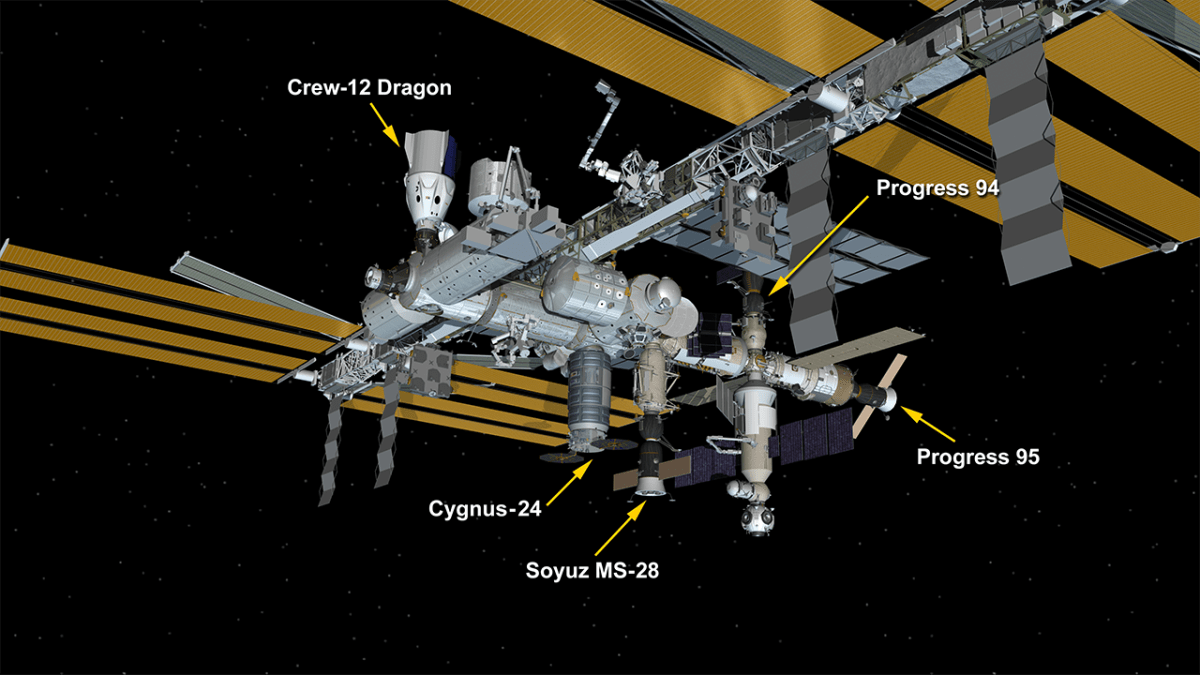
Russian cosmonaut Oleg Artemyev has been removed from the prime crew of SpaceX’s Crew-12 mission to the International Space Station and replaced by fellow Roscosmos cosmonaut Andrey Fedyaev after sources alleged he photographed confidential SpaceX materials in California in violation of US export control rules, according to The Insider on December 2.

The outlet reported that Trishkin also said NASA did not want the controversy around Artemyev to become public, while Artemyev was removed from training at SpaceX’s Hawthorne California, facility last week after allegedly photographing SpaceX engines and other internal materials on his phone and taking them off-site.

The sources for this story all come from within Russia but it appears the story is true. It now appears that when the next manned Dragon launches to ISS in February, Fedyaev will fly instead of Artemyev.

The irony of this is that Russia doesn’t really have the capability of developing a comparable SpaceX rocket using this information. If anything, it would be more likely for Russia to sell the information to China in exchange for military hardware it could use in the Ukraine.

Either way, this violation by Artemyev of ITAR does not speak well for the future of the U.S./Russian partnership in space. It will certainly continue until ISS is retired, but this incident cements the likelihood that it will then end. None of the American commercial stations have shown any interest in signing agreemennts with Russia, though they all have signed numerous international deals, some with former Soviet bloc nations and even former Soviet provinces. After ISS Russia will be on its own.

And based on its inability to develop anything new in the past three decades, don’t expect much from it in space.

Senate Commerce committee to move up its vote on Isaacman’s nomination as NASA administrator

Jared Isaacman
Billionaire Jared Isaacman

Today Senator Ted Cruz (R-Texas) announced that the Commerce committee he heads will vote on the re-nomination of Jared Isaacman for NASA administration on December 8, 2025, only five days after tomorrow’s renomination hearing.

It appears Cruz and his committee is pushing to get Isaacman approved as quickly as possible. At least one Republican senator, John Cornyn (R-Texas) has met with Isaacman again and gotten his commitment to move the space shuttle Discovery to Texas, as mandated by the budget bill passed several months ago. That commitment was likely a quid pro quo by Cornyn to get his vote for Isaacman.

Once Isaacman is approved by Cruz’s committee, the Senate could vote at any time. Whether it will do so before the end of the year remains unknown, as it would likely require a special session as the Senate is expected to be in recess until after the new year.

If it does not, it will likely give Isaacman very little time to review the next Artemis mission, tentatively schedule for launch as early as February 2026, carrying four astronauts around the Moon on a Orion capsule with a questionable heat shield and an untested environmental system.

NASA releases images during Osiris-Apex’s fly-by of Earth in late September

Earth as seen by Osiris-Apex
Click for original image.

NASA today released photos taken by the asteroid probe Osiris-Apex (formerly Osiris-Rex) as it swung past the Earth on September 23, 2025 at a distance 2,136 miles, on its way to the asteroid Apophis.

The picture to the right, cropped, reduced, and sharpened to post here, was one of about 424 images taken by the spacecraft during the fly-by. From those, scientists compiled a movie, which you can view here. As this picture shows, South America was in view on the right side of the Earth.

Osiris-Apex, which had already completed its prime mission by returning samples from the asteroid Bennu, is scheduled to arrive at Apophis shortly after that asteroid’s close fly-by of the Earth on April 13, 2029. The Trump administration had threatened to shut it down for budget reasons, but Congress restored those funds in ending the government shut down.

At that time Apophis will zip past only 20,000 miles from Earth. There will be no chance of collision. Nor is there much chance Apophis will hit the Earth in the next two centuries. Its orbit however makes it a potentially dangerous asteroid, and that 2029 fly-by could change these calculations.

NASA trims $768 million from Boeing’s Starliner contract

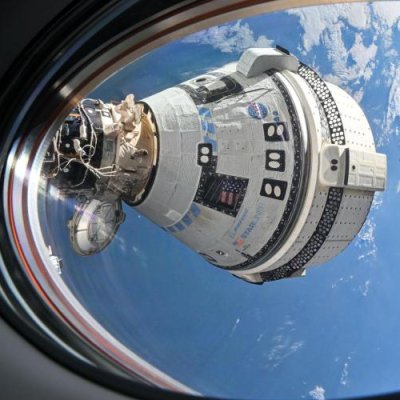
Starliner docked to ISS
Starliner docked to ISS in 2024.

According to one story late today, the modifications NASA announced today on its Starliner contract with Boeing will trim $768 million from the total contract, assuming the two later optional manned missions never fly.

Originally valued at $4.5 billion, Boeing’s contract under the Commercial Crew Program envisioned six operational astronaut flights. NASA’s latest modification cuts that number to four, including up to three crewed missions and an uncrewed cargo flight set for April 2026. Two additional flights remain optional. With the changes, the contract’s value has dropped by $768 million to $3.732 billion; NASA has already paid $2.2 billion to date.

Boeing can still earn that additional money if if somehow manages to convince NASA to do all six flights. It will have great difficult achieving this, however, since there probably won’t be enough time to get all six flights up before ISS is retired. That fact is partly why NASA has made this change.

This report however suggests that NASA is not paying Boeing extra money for the unmanned cargo mission in April 2026. Instead, it is treating it as if it were the first operational manned Starliner flight, paying Boeing its purchase price as if it had achieved all its milestones during the manned demo flight last year.

It really pays in today’s America to be a big giant corporation that does lots of business with our bloated and very corrupt federal government. That government is then quite willing to bend over backwards to help you, even if you are like Boeing and incompetent (Starliner), corrupt (737-MAX), or routinely go over-budget and fail to deliver on time (Air Force One). That certainly appears to be the case here with Boeing.

Hat tip BtB’s stringer Jay.

NASA downgrades Boeing’s Starliner contract

Starliner docked to ISS
Starliner docked to ISS in 2024.

NASA today announced a major revision to its contract for Boeing’s manned Starliner capsule, changes that will require it to fly one more unmanned cargo mission to ISS before putting people on it again, while also reducing the total number of later purchased manned flights.

As part of the modification, the definitive order has been adjusted to four missions, with the remaining two available as options. The next Starliner flight, known as Starliner-1, will be used by NASA to deliver necessary cargo to the orbital laboratory and allow in-flight validation of the system upgrades implemented following the Crew Flight Test mission last year.

NASA and Boeing are targeting no earlier than April 2026 to fly the uncrewed Starliner-1 pending completion of rigorous test, certification, and mission readiness activities. Following Starliner certification, and a successful Starliner-1 mission, Starliner will fly up to three crew rotations to the International Space Station.

It has been rumored for months that NASA would require Boeing to fly another unmanned mission before certifying Starliner for manned flights. The question that this press release does not answer is whether NASA is paying for this unmanned flight. The original contract was fixed price, and required Boeing to meet certain milestones before further payments. Another cargo flight to ISS was not in that original deal.

I therefore suspect this is NASA’s way to get Starliner certified. Boeing has likely refused to pay for another demo flight, threatening instead in negotiations to cancel the project entirely. NASA however needs to get cargo to ISS. By buying a cargo mission from Boeing (possibly instead of Northrop Grumman’s Cygnus capsule, which is presently hindered because it lacks its Antares launch vehicle), NASA gets that cargo while also saving Starliner.

The bottom line remains fundamental: Will Boeing finally be able to do a successful problem-free Starliner flight in April 2026? We shall have to see. The fact that NASA appears to be reducing the total number of eventual Starliner missions to ISS indicates its own lack of confidence.

NASA releases numerous images of interstellar Comet 3I/Atlas

Comet 3I/Atlas as seen by Mars Reconnaissance Orbiter

NASA yesterday released a slew of images of interstellar Comet 3I/Atlas, taken by numerous in-space probes at Mars and elsewhere.

The picture to the right, cropped to post here, is probably the one with the most detail, taken by Mars Reconnaissance Orbiter (MRO) from Mars orbit on October 2, 2025. In addition, images were captured by:

None of these pictures show the comet in any great detail. All however confirm once again that it is a comet, not an interstellar alien spacecraft as some idiots in academia have been proposing wildly. The Maven observations in ultra-violet wavelengths for example identified hydrogen and other isotopes coming off the comet as it is heated by the Sun. MRO’s image to the right once again showed the comet’s coma and tail.

Above all, these observations were great engineering experiments for all the science teams, demonstrating that they could point their instruments in an unplanned direction and capture a very faint object quite far away.

Katalyst picks Northrop Grumman’s Pegasus rocket to launch its Swift rescue mission

Katalyst's proposed Swift rescue mission
Katalyst’s proposed Swift rescue mission.
Click for original image.

The orbital repair startup Katalyst yesterday announced it has chosen Northrop Grumman’s air-launched Pegasus rocket to launch its mission to rescue NASA Gehrels-Swift space telescope.

Unlike typical launch campaigns that take up to 24 months, Katalyst has under eight months to get its LINK spacecraft on orbit to rescue Swift. Swift’s orbital decay demands an urgent mission, launching before atmospheric drag makes recovery impossible. Pegasus is the only system that can meet the orbit, timeline, and budget simultaneously.

Swift’s orbit at 20.6° inclination is difficult to reach from U.S. launch sites, where most small rockets are limited by launch site to inclinations above ~27°. Pegasus, carried aloft by Northrop Grumman’s L-1011 Stargazer aircraft and released midair at 39,000 feet, offers the flexibility to launch from virtually anywhere on Earth, making it one of the few viable systems capable of achieving Swift’s orbit on a highly compressed timeline.

This plan has numerous unusual aspects. First, the decision by NASA in September 2025 to pick Katalyst was a surprise. The company is new, and has never actually flown a repair mission yet. It got the contract basically because it could quickly reshape its first planned demo mission into a Swift repair mission.

Second, Pegasus was originally created in the 1980s as a low-cost rocket by the company Orbital Sciences (now part of Northrop Grumman). Though it initially undercut the prices of the existing rocket companies, in the long run it failed to offer a viable option. It hasn’t launched in almost five years, and has only been used five times in the past sixteen years. Northrop Grumman stopped making it years ago, and presently only has this one last rocket in its warehouse.

Finally, saving Gehrels-Swift is critical. It has been one of NASA’s most successful relatively low-cost space telescopes, designed to quickly target high energetic events like gamma ray bursts in order to capture the optical component of the blast. Its orbit is fast decaying and if not raised it will burn up in the atmosphere by 2029. To save it however requires a unique and improvised solution as it has no grapple attachment. Katalyst’s rescue spacecraft ““will rely on a custom-built robotic capture mechanism that will attach to a feature on the satellite’s main structure–without damaging sensitive instruments.”

To put it mildly, in many ways this might be one of the most daring NASA missions ever flown.

Senate demands a second hearing before voting on Isaacman as NASA administrator

Jared Isaacman
Billionaire Jared Isaacman

Despite being days from a confirmation vote in June after undergoing a Senate hearing previously — when Trump nominated Jared Isaacman for NASA administrator the first time — the Senate has now demanded a second hearing before it will schedule a second confirmation vote on Isaacman.

Sen. Ted Cruz has scheduled a Dec. 3 hearing for Jared Isaacman, the billionaire entrepreneur and commercial astronaut renominated to lead NASA, before the Senate Commerce, Science and Transportation Committee. … The new hearing will mean that Isaacman will not be confirmed by the Senate in the next batch of nominees, which will likely see the floor in the first week of December.

Trump first nominated Isaacman in December 2024, only to withdraw that nomination in May 2025. Trump then renominated Isaacman two weeks ago.

This extra hearing means Isaacman will likely not be confirmed as NASA administrator until early in 2026. It also means he will probably not be in a position to review and reconsider NASA’s plans to send astronauts around the Moon in the February-April time frame, using an Orion capsule with a questionable heat shield and an untested environmental system.

In fact, I suspect this decision to hold hearings was pushed by Cruz partly to make sure Isaacman couldn’t review those plans. Cruz has made it his goal to save SLS and Orion, no matter the cost, and appears willing to play whatever games necessary to prevent any actions that would delay or impact NASA’s present plans.

This however is not the only reason this new hearing has been scheduled. It appears a lot of Senators, especially the Democrats, want to question Isaacman about Isaacman’s 62-page policy paper that was leaked to many in DC in the past few months. It is certain that questioning will have no impact on the final vote (Isaacman is expected to be confirmed handily), but it will allow these senators to preen before the camera, for no good purpose.

The bottom line however is that Isaacman will not be in place early enough to review and change that Artemis-2 mission. It means that almost certainly NASA will once again fly a manned mission that places schedule above engineering, putting four human lives at risk using a spacecraft that has not be vetted properly.

SpaceX launches NASA ocean radar satellite

SpaceX tonight successfully launched Sentinal-6B, a NASA radar satellite designed to measure the global sea level, its Falcon 9 rocket lifting off from Vandenberg Space Force Base.

The first stage completed its 3rd flight, landing back at Vandenberg.

The leaders in the 2025 launch race:

150 SpaceX (a new record)
70 China
14 Rocket Lab
13 Russia

SpaceX now leads the rest of the world in successful launches, 150 to 117.

Note that until SpaceX began to up its launch rate significantly in 2022, the entire global rocket industry — run entirely by governments — never completed more than 135 successful launches in a single year, and usually failed to make 100 launches. SpaceX is now proving that those global numbers over more than a half century were indicative of the failure of those governments. Those governments controlled everything, and so they prevented innovation, competition, and new ideas.

The transition to capitalism and freedom since 2010 has finally begun to open up space for everyone.

Goldstone antenna damaged and out of service

The Goldstone antenna in California that is a major component in NASA’s Deep Space Network (DSN) that it uses to communicate with interplanetary spacecraft was damaged recently and is presently out of service, with no known date for when or even if it will be repaired.

NASA’s Jet Propulsion Laboratory confirmed Nov. 10 that the 70-meter antenna at the Deep Space Network (DSN) site in Goldstone, California, has been offline since Sept. 16, with no timetable for its return to service. “On Sept. 16, NASA’s large 70-meter radio frequency antenna at its Goldstone Deep Space Communications Complex near Barstow, California, over-rotated, causing stress on the cabling and piping in the center of the structure,” JPL said in a statement to SpaceNews. “Hoses from the antenna’s fire suppression system also were damaged, resulting in flooding that was quickly mitigated.” [emphasis mine]

This statement suggests that as workers were changing the antenna’s orientation, it was moved too far in one direction, beyond the normal limits of that piping and cabling. The immediate question that the JPL statement avoids is this: What caused the antenna to “over-rotate”? Did something fail to stop it from going too far? Or was this an example of simple human error, whereby the person rotating the antenna failed to pay attention and allowed the antenna to exceed its limits?

Either way, the loss of this antenna not only poses a serious limitation in getting data back from the various unmanned probes at Mars, Jupiter, and elsewhere, it is also a problem for the upcoming Artemis-2 mission in the spring of ’26, which will rely on the Deep Space Network to communicate with the astronauts on Orion as it goes to and from the Moon. The network’s other two antennas in Spain and Australia can pick up the slack, but the system will have less redundancy, and more important, other missions will likely have to delay communications in order to give Artemis priority.

Isaacman shows up as surprise speaker at Turning Point USA event in Alabama

In what could very well explain why Donald Trump changed his mind about Jared Isaacman’s nomination for NASA administration, Isaacman showed up unexpectedly at a Turning Point USA event at Auburn University in Alabama this past week, where he described how the murder of Charlie Kirk had profoundly changed his outlook on life.

[O]n a very personal note, I didn’t grow up very religious at all — my mother’s family, we celebrate Christmas. My father’s family, we celebrated Hanukkah. But I can tell you, having gone to space twice and looking back on our planet, looking at the stars around us, it is very hard not to be spiritual.

But it was only recently, in the last couple weeks that I was inspired for the first time in a very long time to pick up the Bible, and I’ll tell you why.

It’s because of Charlie, and it’s for Charlie, and there’s millions others just like me. Thank you.”

One of the theories as to why Trump withdrew Isaacman’s nomination in May was because of Isaacman’s past political and financial support for numerous Democratic Party candidates, along with his apparent support for DEI at his companies. It was speculated that once Trump learned of these associations during the confirmation process he decided Isaacman was not trustworthy and dumped him.

I wonder now if Isaacman changed Trump’s mind when they met several times in the past few weeks by talking about Kirk’s assassination and how it had changed Isaacman. I can easily see how that would have influenced Trump.

This is also another case of the Democrats and their most radical and public cohort doing a good job of alienating another former Democrat, simply by advocating and committing violence against those who disagree. They did it to Trump and Elon Musk, both former Democrats, and apparently they have done it to Isaacman as well.

Trump renominates Jared Isaacman for NASA administrator

Jared Isaacman
Billionaire Jared Isaacman

President Donald Trump late yesterday announced that he has renominated billionaire Jared Isaacman as his nominee to become the administrator of NASA.

Just as Trump had given no reasons why he had withdrawn Isaacman’s nomination in late May, in his announcement yesterday Trump made no effort to explain why he had changed his mind.

One week ago I would have said that Isaacman’s nomination would proceed very quickly to a vote in the Senate, as he had already been vetted completely in the spring and was fully expected to be confirmed within days when Trump pulled the nomination. Now however I expect the Senate might want to bring Isaacman back for questioning in response to the leak this week of a policy paper he had written in the spring outlining his plans for NASA should he be approved.

That paper, still not released to the public, apparently contained a lot of specifics about Isaacman’s plans to reshape NASA that appeared to raise the hackles of the many swamp creatures in DC that live off the government trough. Isaacman addressed that leak in a very long and very detailed tweet yesterday that outlined in detailed but general terms what his goals were in that paper, and it could be his reasoning in this tweet that convinced Trump to renominate him. As Isaacman concluded:

This plan never favored any one vendor, never recommended closing centers, or directed the cancellation of programs before objectives were achieved. The plan valued human exploration as much as scientific discovery. It was written as a starting place to give NASA, international partners, and the commercial sector the best chance for long-term success. The more I see the imperfections of politics and the lengths people will go, the more I want to serve and be part of the solution… because I love NASA and I love my country

These speculations however are all worthless. As we really don’t know the exact reasons why Trump pulled the nomination in May, it is difficult to guess why Trump changed his mind now.

It will be interesting to see how the Senate responds to this new Trump decision.

More Washington shenanigans over who will be NASA’s next administrator

Two news outlets in the past day (Politico and Ars Technica) have posted stories about a 62-page plan — supposedly written by Jared Isaacman while he was still the nominee to become NASA administrator — that was recently leaked to them as well as others inside and outside NASA.

The plan itself, dubbed “Project Athena”, has not been made available, though the descriptions at both sources suggest it matches closely with the overall Trump effort to cancel SLS and Orion and shift space operations out of NASA and more into the private sector.

The nature of this plan of course threatens NASA’s established work force and the big space contractors who have worked hand-in-glove with NASA for decades, producing little but distributing a lot of money and jobs to these groups. Not surprisingly, both news sources quote extensively from anonymous sources within that NASA work force and those big space contractors, lambasting the plan and blasting Isaacman for proposing it. From the Politic article:

Sean Duffy
Sean Duffy: “Pick me! Pick me!”

Putting all of these plans into writing is a “rookie move,” and “presumptuous,” said an industry insider who has seen the document and thought it would stoke congressional skepticism around his nomination. Many of these ideas would need congressional approval to enact, and Congress could always block them.

The Ars Techica article speculates that interim NASA administrator Sean Duffy was the source of the leak, in his effort to become NASA’s official administrator. If the plan is Isaacman’s, it generates opposition to renewing Isaacman’s nomination as NASA administrator while garnering support for Duffy from NASA’s workforce and those big space contractors.

All of this is pure Washington swamp, however, which really matters little in the long run. First of all, none of this is real. We are talking about an unreleased plan that no one has seen publicly, and the reactions of anonymous sources criticizing that unseen plan. It is all the stuff of ghosts and fantasy. For we know, it is all made up, just like the Russian collusion hoax was manufactured against Trump.

Second, and more important, who runs NASA next is becoming increasingly unimportant. » Read more

Update on Vast’s first planned space station, Haven-1

Haven-2
Haven-2 station once completed

Link here. The article essentially puts together a number of X links that Jay has provided Behind the Black previously in his daily Quick Space Links reports to provide an overall picture. Two aspects stand out however.

One, the demo Vast launched this weekend on SpaceX’s bandwagon mission is expected to fly for about six months, and has successfully deployed its solar panels. During its flight the company will “test out key capabilities, such as Reaction Control Systems (RCS), power systems, and propulsion, in preparation for Haven-1”, which it hopes to launch in the spring.

Two, Haven-1’s planned mission remains unchanged. The company still intends to fly four crewed missions to it during its three-year mission, though who will make-up the crew and passengers remains unknown. This single module station is aimed at proving Vast’s capabilities at space station design and operation to convince NASA to award it a much larger contract to build its much larger Haven-2 multi-module station.

Max Haot [Vast’s CEO] described Haven-1 as the “minimum viable product”. With its one docking port and reliance on a SpaceX Crew Dragon for key life support systems, the station will enable the company to test out capabilities needed for larger stations in the future. The Dragon spacecraft requires a daily change of its CO2 scrubber; therefore, the station will launch with the necessary amount needed for 30-40 days on station for four astronauts.

All in all, Vast appears to be strongly demonstrating its capabilities, on schedule, making my listing it number one as most likely to win that big NASA contract increasingly correct. That ranking is made even more reasonable with the decision by NASA to now award several of those contracts, at smaller amounts, in a step-by-step process that matches milestones. Below is my updated rankings of the four commercial stations under development:
» Read more

Two former NASA administrators express wildly different opinions on NASA’s Artemis lunar program

At a symposium yesterday in Alabama, former NASA administrators Charles Bolden and Jim Bridenstine expressed strong opinions about the state of NASA’s Artemis lunar program and the chances of it getting humans back to Moon before the end of Trump’s term in office and before China.

What was surprising was how different those opinions were, and who said what. Strangely, the two men took positions that appeared to be fundamentally different than the presidents they represented.

Charles Bolden
Charles Bolden

Charles Bolden was administrator during Barack Obama’s presidency. Though that administration supported the transition to capitalism, it also was generally unenthusiastic about space exploration. Obama tasked Bolden with making NASA a Muslim outreach program, and in proposing a new goal for NASA he picked going to an asteroid, something no one in NASA or the space industry thought sensible. Not surprisingly, it never happened.

Bolden’s comments about Artemis however was surprisingly in line with what I have been proposing since December 2024, de-emphasize any effort to get back to the Moon and instead work to build up a thriving and very robust competitive space industry in low Earth orbit:

Duffy’s current messaging is insisting it’ll be accomplished before Trump’s term ends in January 2029, but Bolden isn’t buying it. “We cannot make it if we say we’ve got to do it by the end of the term or we’re going to do it before the Chinese. That doesn’t help industry.

Instead the focus needs to be on what we’re trying to accomplish. “We may not make it by 2030, but that’s okay with me as long as we get there in 2031 better than they are with what they have. That’s what’s most important. That we live up to what we said we were going to do and we deliver for the rest of the world. Because the Chinese are not going to bring the rest of the world with them to the Moon. They don’t operate that way.” [emphasis mine]

In other words, the federal government should focus on helping that space industry grow, because a vibrant space industry will make colonizing the Moon and Mars far easier. And forget about fake deadlines. They don’t happen, and only act to distort what you are trying to accomplish.

Meanwhile, Jim Bridenstine, NASA administrator during Trump’s first term, continued to lambast SpaceX’s Starship lunar lander contract, saying it wasn’t getting the job done on time, and in order to beat the Chinese he demanded instead that the government begin a big government-controlled project to build a lander instead.
» Read more

SpaceX: Starship will be going to the Moon, with or without NASA

Artist's rending of Starships on the Moon
SpaceX’s artist’s rending of Starships on the Moon.
Click for original.

In what appears to be a direct response to the claim by NASA’s interim administrator Sean Duffy that SpaceX is “behind” in developing a manned lunar lander version of Starship, SpaceX today posted a detailed update of the status that project, noting pointedly the following in the update’s conclusion:

NASA selected Starship in 2021 to serve as the lander for the Artemis III mission and return humans to the Moon for the first time since Apollo. That selection was made through fair and open competition which determined that SpaceX’s bid utilizing Starship had the highest technical and management ratings while being the lowest cost by a wide margin. This was followed by a second selection [Blue Origin’s Blue Moon lander] to serve as the lander for Artemis IV, moving beyond initial demonstrations to lay the groundwork that will ensure that humanity’s return to the Moon is permanent.

Starship continues to simultaneously be the fastest path to returning humans to the surface of the Moon and a core enabler of the Artemis program’s goal to establish a permanent, sustainable presence on the lunar surface. SpaceX shares the goal of returning to the Moon as expeditiously as possible, approaching the mission with the same alacrity and commitment that returned human spaceflight capability to America under NASA’s Commercial Crew program.

The update then provides a list of the testing and engineering work that SpaceX has been doing on the Starship lunar lander, including full scale drop tests simulating lunar gravity, qualification of the docking ports, and the construction of a full scale mock-up of the Starship cabin to test its systems.

A close list of the work done is actually not that impressive, but at the same time this is not surprising. SpaceX is now mostly focused on getting Starship into orbit, proving it can be refueled there, and proving it can fly for long enough to get to the Moon. This part of the update was most exciting, as it confirms what I have suspected for next year’s flight program:
» Read more

Blue Origin officials provide update on their lunar lander program

2023 artist rendering of the manned Blue Moon lander

Link here. According to the article, the company is presently stacking its first unmanned version of its Blue Moon lander, dubbed Blue Moon Mark 1, scheduled for launch now next year.

The 8.1-meter-tall cargo lander will help with ongoing development of their crewed lander, named Blue Moon Mk. 2, which is 15.3 meters tall. Both are powered by Blue Origin’s BE-7 engines, which are being tested on stands in Alabama, Texas and Washington.

…“A big milestone for you to look out for online is that Mk. 1 is three modules that are being stacked as we speak: aft, forward and mid. And once it is stacked in its finished configuration, we will be barging it over to NASA Johnson Space Center Chamber A to do a full up thermal vac campaign,” said [Jacqueline Cortese, Blue Origin’s Senior Director of Civil Space]. “So when you see that on its boat, you will know that big things are happening.”

Both versions of the lander are powered by a combination of liquid hydrogen and liquid oxygen. A key difference though is that Mk.1 can be launched to the Moon with a single launch of Blue Origin’s New Glenn rocket while Mk. 2 requires orbital refueling. [emphasis mine]

The highlighted sentence above is important because it illustrates the absurdity of the comments last week by interim NASA administrator Sean Duffy, claiming SpaceX’s program to make Starship a manned lunar lander is “behind”, forcing him to open up the competition to Blue Origin, who might get it done sooner.

One of the big issues used against SpaceX is that Starship will need to be refueled once in orbit to work as a lunar lander, and that technology needs to be developed and tested. The problem with this criticism is that, as noted above, Blue Origin’s manned lunar lander also needs to be refueled.
» Read more

Lockheed Martin completes first flight of X-59 supersonic test plane

My heart be still: Lockheed Martin yesterday completed the first flight for NASA of the X-59 supersonic test plane, designed to produce a much quieter sonic boom.

The X-59 took off from Skunk Works’ facility at U.S. Air Force Plant 42 in Palmdale, California, before landing near NASA’s Armstrong Flight Research Center in Edwards, California. The X-59 performed exactly as planned, verifying initial flying qualities and air data performance on the way to a safe landing at its new home.

The plane did NOT yet fly at supersonic speeds. It needs to do more flight tests before it attempts that feat. A somewhat uninteresting video of the flight can be seen here. (Hat tip to Jay.)

This NASA program is another example of government waste. NASA issued the company a $247.5 million the contract for this test plane in 2018, after two years of preliminary design work. Seven years later it finally flies once, but not at supersonic speeds.

Meanwhile, the commercial startup Boom Supersonic started at about the same time, raised far less investment capital, and successfully flew a supersonic flight in January 2025 in which it broke that sound barrier three times, with no audible sonic boom.

Boom has already obtained numerous contracts with the airline companies United and Japan Airlines to provide them planes. It is in the process of manufacturing its Overture commercial passenger jet for sale.

Lockheed Martin’s NASA project has no investors and no airlines interested in the test plane. Lockheed Martin itself is not marketing it and has no plans to use the technology commercially. In fact, NASA likely forbids it from doing so.

I am sure these tests will provide data helpful to Boom and the handful of other commercial supersonic startups. At the same time, the entire project is another example of a poor use of taxpayer funds.

Astrobotic’s Griffin lunar lander delayed again

Moon's south pole, with landers indicated

According to an update on the status of Astrobotic’s Griffin lunar lander posted on October 24, 2025, the company has now delayed the launch from the fall of 2025 to July 2026, apparently because the spacecraft is not yet assembled and its many components are still undergoing testing.

For example, none of Griffin’s four propellant tanks have yet been installed. Nor apparently has its core structure been fully integrated, with “tanks, ramps, attitude control thrusters, and solar panels” only now having completed “fit checks.”

The map to the right indicates the location where Griffin is supposed to land, about 100 miles from the Moon’s south pole. Nova-C, Intuitive Machines first attempt to soft land on the Moon, landed at the green dot, but failed when it fell over at landing. Intuitive Machines second lunar lander, Athena, also fell over when it landed in the same region that is now Griffin’s target landing zone.

Griffin has experienced repeated delays since the contract was issued to Astrobotic in 2020. The mission was originally supposed to launch in November 2023, carrying NASA’s Viper rover. In July 2022 however it was delayed one year to November 2024 because Astrobotic said it needed more time.

Sometime after the failure of Astrobotic’s first lunar lander, Peregrine, in January 2024, NASA once again delayed the Griffin mission, pushing it back another year to November 2025.

In July 2024 NASA canceled Viper, removing it as a payload from Griffin, because Viper was significantly overbudget and would not be ready for that fall 2025 launch. NASA however did not cancel Griffin. It appears however that Astrobotic wasn’t ready either for a launch in November, and thus this further delay.

Whether it will be ready by July remains unknown. Based on Astrobotic’s own update I have serious doubts. For a spacecraft that was supposed to originally launch in 2023, Griffin seems woefully unready now, two years past that date.

Two lawsuits filed against NASA at its Marshall Space Flight Center

Two lawsuits against NASA’s Marshall Space Flight Center were announced yesterday, one by several employees citing discrimination and the second by the government union representing Marshall employees protesting the Trump executive order that strips it of its collective bargaining rights.

The timing of both announcements strongly suggests the lawsuits are a coordinated effort. The discrimination suit protests the demand of the Trump administration that government employees come back to the office to work. The suit says the agency has not made reasonable accommodation for the suing employees to work at home. It also appears that the lead employee in the suit has made it a habit of doing so, having already won $30K in a settlement of a 2024 lawsuit.

The second suit is of course more significant, as it challenges the president’s power.

The complaint, filed in the U.S. District Court for the District of Columbia, seeks to invalidate Executive Order 14343, issued by President Trump on Aug. 28. The order excludes NASA and five other agencies from coverage under the Federal Service Labor-Management Relations Statute (FSLMRS), effectively terminating their union representation rights on the grounds of “national security”.

According to the complaint, the Trump Administration justified the exclusion by claiming these agencies have a primary function of national security work and that collective bargaining is inconsistent with those requirements. A White House Fact Sheet accompanying the order stated that collective bargaining “can delay the implementation of time-sensitive national security measures”.

IFPTE vehemently disputes this characterization. The union argues that NASA’s primary mission is “not national security,” but rather scientific exploration for the “benefit of all humanity”. The complaint cites the National Aeronautics and Space Act, which states that “activities in space should be devoted to peaceful purposes for the benefit of all humankind”.

The existence of all these government unions comes originally from an executive order by President John Kennedy. It seems Trump should have the right to cancel that order. The lawsuit also argues no, that Trump is acting beyond his legal authority.

Isn’t it interesting how presidents who are Democrats always have the power to issue executive orders n matter how outrageous (such as was done frequently by Obama and Biden), but Republican presidents like Trump do not.

Hungary becomes the 57th nation to sign the Artemis Accords

NASA’s acting administrator, Sean Duffy, announced yesterday in a tweet that Hungary has now signed the Artemis Accords.

There was no NASA press release because of the government shutdown.

Hungary is now the 57th nation to sign the accords. The full list of nations now part of this American space alliance: Angola, Argentina, Armenia, Australia, Austria, Bahrain, Bangladesh, Belgium, Brazil, Bulgaria, Canada, Chile, Colombia, Cyprus, Czech Republic, Denmark, Dominican Republic, Ecuador, Estonia, Finland, France, Germany, Greece, Hungary, Iceland, India, Israel, Italy, Japan, Liechtenstein, Lithuania, Luxembourg, Mexico, the Netherlands, New Zealand, Nigeria, Norway, Panama, Peru, Poland, Romania, Rwanda, Saudi Arabia, Senegal, Singapore, Slovakia, Slovenia, South Korea, Spain, Sweden, Switzerland, Thailand, the United Kingdom, the United Arab Emirates, the Ukraine, the United States and Uruguay.

The addition of Hungary means that almost the entire European portion of the former Soviet bloc has now joined the alliance. I suspect the desire of these nations to ally with the U.S. and the west is a reflection of their fear of Russia, which has not been kind to its neighbors, both during the Cold War as well as recently.

It still remains to be seen if this alliance will be used by the American government to encourage property rights in space, something that the Outer Space Treaty presently outlaws. That appeared to be its original goal when the accords were created during the first Trump administration. That goal however was abandoned during the Biden administration, making the accords alliance more of a globalist collective in support of the Outer Space Treaty’s restrictions.

So far during Trump’s second administration no action has been taken to reassert those original goals.

1 2 3 74