Pushback: Oral surgeon sues state for shutting down his practice for refusing COVID shots

Oral surgeon Stephen Skoly, blackballed by Rhode Island

Don’t comply: Stephen Skoly, an oral surgeon in Rhode Island, has sued both his governor, Democrat Daniel McKee, and the head of the state’s health department, James McDonald, for shutting down his dental practice — serving 800 patients monthly — and preventing him (and his ten employees) from earning a living, simply because he has decided for medical reasons not to get the COVID shots.

Skoly, who’s been a dental surgeon since 1990, requested medical exemption from the COVID-19 vaccine because of his history of Bell’s palsy paralysis, the complaint says, and he says he has “natural immunity” against the virus because of a “blood test” that confirmed he has COVID-19 antibodies.

More information here.
» Read more

6 comments

Have astronomers discovered an asteroid with three moons?

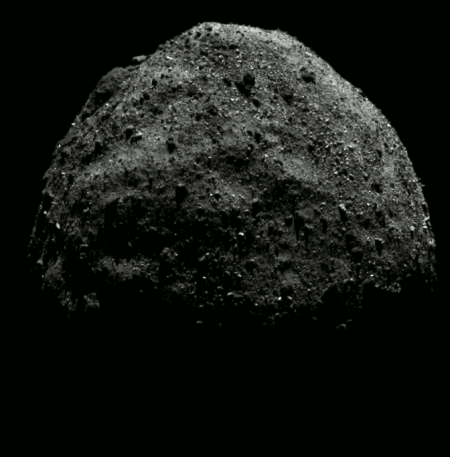
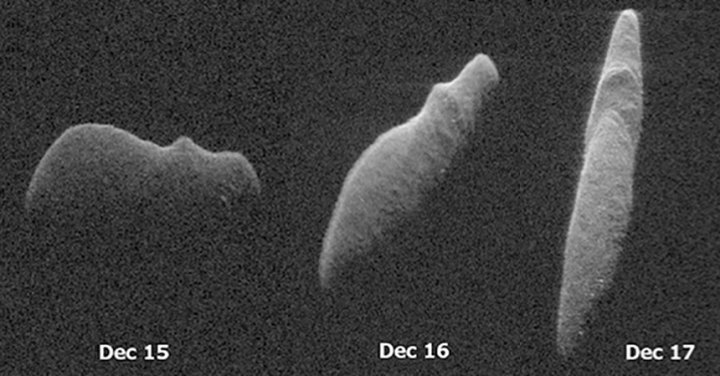
The uncertainty of science: According to a New York Times article published yesterday, astronomers have now discovered an asteroid with three moons, making it the first such asteroid ever discovered.

The asteroid, Electra, was first discovered in 1873, and orbits the Sun in the asteroid belt between Mars and Jupiter. It was already known that it had two moons. The new research thinks it has found a third.

In reading the researchers’ the actual paper describing this research, it appears that the Times is spinning the data, making it sound more certain than it is. This new result comes entirely from new software that was designed to better resolve archival images of the asteroid, and thus carries a lot of uncertainty. From the paper’s conclusion:

[There remain] a lot of uncertainties remain concerning the orbit of S3 [the new asteroid moon]. More data on S2 and S3, as well as a more thorough dynamical study are necessary to solve the problem of the motion of the satellites of Elektra. However, the discovery of the first quadruple asteroid system slightly opens the way for understanding the mechanisms of the formation of these satellites.

In terms of data processing, S3 is barely visible in the data reduced with the standard pipeline and processed with standard halo removal algorithms and it was missed until now.

The paper repeatedly notes that the orbital data for Electra and its moons is presently “poorly constrained” and needs significant refinement in order to confirm this result.

If true, however, these moons are probably pieces that broke off of Electra at some point in the past, and could provide good information about the long term history of asteroids in the asteroid belt.

0 comments

Swiss startup raises $29 million to build a hypersonic commercial plane

Capitalism in space: Destinus, a new Swiss startup, has successfully raised $29 million in seed money to begin development of a hypersonic commercial plane.

Destinus is developing a vehicle that takes off and lands horizontally under the power of airbreathing jet engines. Once out of controlled airspace, Destinus’ hyperplane is designed to accelerate to hypersonic speeds with the help of a cryogenic hydrogen-fueled rocket engine, according to the company’s Feb. 8 news release.

Destinus has been testing airbreathing engines during flight tests of an unpiloted prototype. By the end of the year, the company aims to show its prototype can break the sound barrier

This company’s founding has an interesting backstory. Its founder, Mikhail Kokorich, was a major investor in the American space tug company Momentus. When the Defense Department forced him to sell his share in that company last year because he was not an American, he moved to Switzerland to form Destinus instead. Nor is this Kokorich’s only endeavors in commercial space. He has started a number of other small companies previously.

Don’t expect Destinus’s plane to fly in the near future. Though it has already flown a small scale prototype, the company only started to hire engineers in the past few months.

1 comment

Ingenuity completes 19th flight

Perserverance and Ingenuity as of February 8, 2022
Click for interactive map.

The Mars helicopter Ingenuity yesterday successfully completed its 19th flight on the Martian surface, traveling for 99 seconds about 200 feet to the northeast, landing close to the landing site of its 8th flight back in June 2021.

The map to the right shows the helicopter’s overall travels in tan, with the 19th flight path in green. The white line marks Perseverance’s travels, with the red dot indicating its present location. The dashed yellow line indicates the rover’s planned route. To achieve that the rover team is retracing its steps along the path it had previously traveled, with Ingenuity flying in front, along that path.

The flight had been delayed more than a month while waiting for a dust storm to settle as well as making sure Perseverance was in a good position to maintain communications throughout the flight. With Perseverance finally on the move to the east and the dust storm subsiding, the Ingenuity flight was finally possible.

0 comments

Pioneer game update: Full demo of game released

Though no launch date for the Kickstarter campaign for funding the creation of a videogame based on my science fiction book Pioneer has been announced, the producer, Aaron Jenkin, early this week released the full demo of the game. You can download a version for either Windows, Mac, or Linux here.

I’ve played the Linux version and had a great time. While this is only a demo, Aaron has captured the feel of my book, while adapting it to the needs of a video game. I really hope when the Kickstarter campaign starts, it quickly raises enough to produce the game. It will be a blast for players.

For those who want to get the game’s newsletter updates, published about once per week, you can subscribe at PioneerSpaceGame.com. If you are definitely interested in donating to the game, you should also subscribe as it gives Aaron a sense of the amount of interest (the numbers have been rising quickly in the past month, a very good sign!).

For those who want to get a sense of of what the game itself will be like now, below the fold is the game’s trailer.
» Read more

13 comments

Random Martian ridges on a lava plain

Random ridges on Martian lava plain
Click for full image.

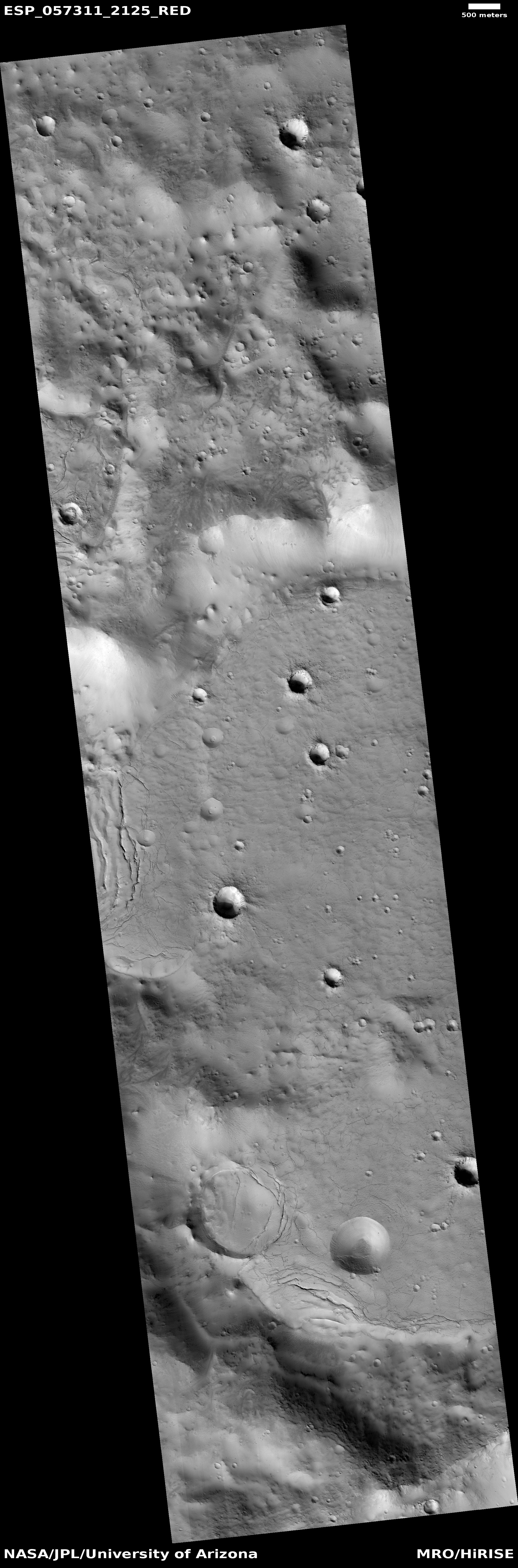
Cool image time! The photo to the right, cropped and reduced to post here, was taken on December 30, 2021 by the high resolution camera on Mars Reconnaissance Orbiter (MRO). This was a terrain sample image, taken not as part of any specific research project but to fill a gap in the camera’s schedule and thus keep its temperature maintained properly. When the MRO team needs to take such pictures, they try to pick locations that might be interesting and previously unphotographed, but often the location is neither.

In this case this terrain sample captured a flat lava plain interspersed with sinuous ridges going in all directions. On top of this is a scattering of smaller impact craters, which obviously occurred after the lava had flowed and solidified.

What caused the ridges?
» Read more

0 comments

Pushback: Conservative Hispanic student defeats effort to blacklist her

Olivia Gallegos
Gallegos is also participating in Wichita State’s
first Collegiate Leadership Competition

Don’t comply: Despite being Hispanic, Olivia Gallegos — a student at Wichita State University and an elected member of its student government — was accused of being a white supremacist and threatened with removal because she nominated a conservative woman for recognition by the school’s Diversity, Empowerment and Inclusion Committee.

It seems that committee wanted nothing to do with diversity of thought, even if it empowered a woman.

“Basically by highlighting a conservative, I was [called] a white supremacist and [accused of] giving a platform to white supremacy,” she said. “I just laughed, because I’m Hispanic.”

But the effort to force Gallegos to resign never came to fruition. “I had to sit through a 2.5-hour senate review board where they ultimately determined, ‘You did nothing wrong. But we’d like you to meet with diversity and inclusion to learn how to respond to things like this, and use this as a learning experience,’” Gallegos said.

She refused.

» Read more

5 comments

Space tug company picks Falcon 9 for test flights

Capitalism in space: Launcher, one of several space tug startups, has awarded SpaceX the contract to launch its first four test flights of its Orbiter tug.

Launcher announced Feb. 7 it signed a multi-launch contract with SpaceX for three additional missions of its Orbiter tug. Those tugs will fly on Falcon 9 rideshare missions in January, April and October of 2023.

Launcher’s first Orbiter tug will launch on SpaceX’s Transporter-6 rideshare mission in October 2022 under a contract announced last June when the company revealed its plans to develop Orbiter. The vehicle is designed to deploy cubesats and other smallsats in their desired orbits as well as host payloads for missions lasting up to two years.

Launcher — along with Momentus, Spaceflight, Astroscale, and several others — are all rushing to build and launch the first tugs for transporting satellites from orbit to orbit, or to remove space junk. Launcher’s deal with SpaceX suggests it is tailoring its system for satellites launched from the Falcon 9.

2 comments

Rogozin’s salary rockets upward

The salary of Dmitry Rogozin, the head of Roscosmos which runs Russia’s entire space industry, has grown from a mere $100K when he took over in 2018 to $1.3 million in 2020.

During the most recent year for which salary data is available, 2020, Rogozin was paid $1.3 million—and this does not include perks of the job, such as four vehicles, real estate holdings, spousal pay, and possibly off-the-books income. Before his imprisonment, Russian critic Alexei Navalny released an investigation of Rogozin and the corruption at Roscosmos that delves into some of these benefits.

Rogozin has seen a stunning rise in his fortunes since coming to Roscosmos. Before his move, he earned about $100,000 per year as deputy chairman in the Russian government. In 2018, his salary jumped to $513,000, and in 2019, it went up to $639,000.

By way of comparison, NASA, which has a budget several times larger than that of Roscosmos, pays Administrator Bill Nelson an annual salary of $185,100.

Rogozin is merely doing what all high level managers in Russia do. They get a job, and while there suck as much cash from it as they can before moving on or getting fired. The gigantic and fast increase in these numbers suggest Rogozin does not expect to remain in charge that much longer.

This pattern is very similar to what happened in the Roman Empire. The Caesar in Rome would appoint governors to the various outlying provinces in Germany, France, England, and the Middle East, who would then skim off for themselves as much cash from tax revenues as they could get away with, then retire back to Rome to live the good life. Meanwhile, governance in those provinces would suffer, to the point that eventually the empire fell.

Rogozin appears to be doing the same in Roscosmos, which suggests not much will come from its many projects to come up with new rockets, spacecraft, and space stations in the coming years.

7 comments

Lockheed Martin wins NASA contract to build Mars rocket

Capitalism in space: NASA yesterday awarded Lockheed Martin a $194 million contract to build the Mars rocket that will lift Perseverance’s samples into orbit for return to Earth.

Set to become the first rocket fired off another planet, the MAV [Mars Ascent Vehicle] is a crucial part of a campaign to retrieve samples collected by NASA’s Perseverance rover and deliver them to Earth for advanced study. NASA’s Sample Retrieval Lander, another important part of the campaign, would carry the MAV to Mars’ surface, landing near or in Jezero Crater to gather the samples cached by Perseverance. The samples would be returned to the lander, which would serve as the launch platform for the MAV. With the sample container secured, the MAV would then launch.

Once it reaches Mars orbit, the container would be captured by an ESA (European Space Agency) Earth Return Orbiter spacecraft outfitted with NASA’s Capture, Containment, and Return System payload. The spacecraft would bring the samples to Earth safely and securely in the early- to mid-2030s.

According to this project’s webpage, the European Space Agency (ESA) is building that they call a “fetch rover” which will be deployed from the rover to get the samples and bring them back to the MAV.

There are a lot of uncertainties in this scenario. It has been decades since Lockheed Martin built rockets. ESA has not yet built an operational Mars rover. It is also unclear who will build NASA’s lander and capture/return payload. Thus, do not expect this mission to launch “as early as ’26,” as the press release says. I predict it will launch at least five, maybe ever ten years, later.

4 comments
1 812 813 814 815 816 2,927