
NASA on Starliner: Too much freedom caused the failure!
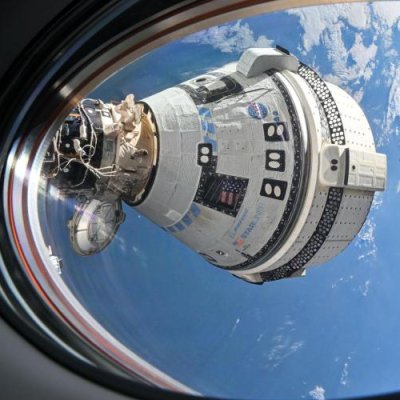
Starliner docked to ISS in 2024.
NASA today released its final investigation report on the causes behind the Starliner thruster issues during that capsule’s only manned mission in ISS, issues that almost prevented the spacecraft from docking successfully and could have left it manned and out-of-control while still in orbit.
You can read the report here [pdf]. NASA administrator Jared Isaacman made it clear in his own statement that the Starliner incident was far more serious than originally let on.
“To undertake missions that change the world, we must be transparent about both our successes and our shortcomings. We have to own our mistakes and ensure they never happen again. Beyond technical issues, it is clear that NASA permitted overarching programmatic objectives of having two providers capable of transporting astronauts to-and-from orbit, influence engineering and operational decisions, especially during and immediately after the mission. We are correcting those mistakes. Today, we are formally declaring a Type A mishap and ensuring leadership accountability so situations like this never reoccur. We look forward to working with Boeing as both organizations implement corrective actions and return Starliner to flight only when ready.”
A Type A mishap is one in which a spacecraft could become entirely uncontrollable, leading to its loss and the death of all on board. Though Starliner was NOT lost, for a short while as it hung close to ISS that result was definitely possible. Its thrusters were not working. It couldn’t maneuver to dock, nor could it maneuver to do a proper and safe de-orbit. Fortunately, engineers were able to figure out a way to get the thursters operational again so a docking could occur, but until then, it was certainly a Type A situation.
The report outlines in great detail the background behind Starliner’s thruster issues, the management confusion between NASA and Boeing, and the overall confused management at Boeing itself, including its generally lax testing standards.
The report’s recommends that NASA impose greater control over future commercial contracts, noting that under the capitalism model that NASA has been following:
NASA’s hands-off approach during contract initialization resulted in insufficient systems knowledge and available data to the government for accepting a development vehicle as a service.
NASA’s adoption of a commercial services procurement strategy through the CCP prioritized provider-led development and minimized traditional NASA insight and oversight. This contributed to the creation of the previous intermediate causes and organizational factors that produced insufficient data for NASA to fully understand system qualification of the Starliner spacecraft. This approach led to gaps in end-to-end verification, validation, and interface management, ultimately contributing to crew and mission risk. In accordance with the SAA and guiding documentation, NASA teams were prohibited from providing feedback during key design phases or requiring closure on feedback submitted.

One meatball to rule them all!
The solution: Establish a whole range of new management processes to closely supervise the development of any new spacecraft.
In other words, go back to the old system where NASA controlled all and micro-managed everything. This is a failed idea, something that NASA has tried time after time with little success. It punishes everyone, without punishing the bad apples. And if implemented could end up destroying entirely the present renaissance in space.
Ironically, the report’s recommendations completely miss the fundamentals revealed within the report itself.
What the report makes clear is that Boeing is not a company NASA can ever rely on. It failed to fix these problems in a timely manner, before the launch. It made numerous bad engineering decisions during construction. And once launched it took a generally bad approach to dealing with the problems, as they happened.
In the capitalism model, NASA must let private enterprise do the work. It is NASA’s job to buy the best products, from companies it can rely on utterly. The last thing NASA should be doing is micro-managing what those companies do.

Let freedom rule!
The solution is for NASA to stop buying products from the bad apples. Isaacman says in his statement that he “looks forward to working with Boeing” in the future. Bah. While for now it might make sense to fly Starliner on an unmanned cargo mission to ISS to once again test its systems, it should be very clear that using it for future manned missions is a very very low priority. The company has not built a good product worth buying.
If Isaacman and NASA had any faith in freedom and capitalism, both would instantly see the entire Starliner incident as an example of “Let the buyer beware.” We thought Boeing was a better company than it was. We won’t make that mistake again. Let’s find other American companies we can buy better products from!
That’s what freedom and competition is all about. The good rise to the top. The bad fall to the wayside. But you must try them all for awhile to distinguish them from each other. This report — and what it tells us about Boeing and Starliner itself — is part of that process. Competition and freedom will give NASA many alternatives, good and bad. As it learns the difference it should simply buy products from those who do good work.
Sadly, it is very unclear from this report’s conclusions whether this is the lesson NASA and Isaacman are taking from the Boeing-Starliner debacle. Instead, it looks once again like Isaacman wants to return to the old days where NASA ran everything, and private enterprise was squelched under a government space program run from DC with little freedom or innovation.
If so, NASA’s future in space will be dim indeed. The better companies, such as SpaceX, will want to work less and less with the agency, leaving it stuck with the weak sisters like Boeing.

On Christmas Eve 1968 three Americans became the first humans to visit another world. What they did to celebrate was unexpected and profound, and will be remembered throughout all human history. Genesis: the Story of Apollo 8, Robert Zimmerman's classic history of humanity's first journey to another world, tells that story, and it is now available as both an ebook and an audiobook, both with a foreword by Valerie Anders and a new introduction by Robert Zimmerman.
The print edition can be purchased at Amazon or from any other book seller. If you want an autographed copy the price is $60 for the hardback and $45 for the paperback, plus $8 shipping for each. Go here for purchasing details. The ebook is available everywhere for $5.99 (before discount) at amazon, or direct from my ebook publisher, ebookit. If you buy it from ebookit you don't support the big tech companies and the author gets a bigger cut much sooner.
The audiobook is also available at all these vendors, and is also free with a 30-day trial membership to Audible.
"Not simply about one mission, [Genesis] is also the history of America's quest for the moon... Zimmerman has done a masterful job of tying disparate events together into a solid account of one of America's greatest human triumphs."--San Antonio Express-News
As an aside, a number of observers have been struck by the fact that, once again, Boeing did not send any representatives to be at this NASA teleconference.
As another aside….I am just starting to read through the main report, and there is a vast amount to digest…there is an astounding revelation on page 3 of the report:
“Deorbit Capability Fault Tolerance
a. The propulsion system lacked required two-fault tolerance for deorbit burns, which was a design flaw present since early development but not identified until CFT pre-launch.”
I’m honestly just about speechless about this.
Why was this never disclosed publicly before?
Agreed. All other NASA catastrophes happened under this supervision by NASA employees so how did such happen if this new (old) solution works?
Robert Pratt: Notice that SpaceX was given the same kind of freedom of action as Boeing. Yet somehow SpaceX produced its capsule on time and on budget. And more important it works as expected!
So freedom isn’t the problem here. Boeing is.
The best way to get good performance and quality work out of a company it to actually stop buying its products.
This how capitalism actually works.
Also don’t buy a product before its proven to actually work.
And if you do have to pay for a contracted product make sure the provider knows you can cancel the contract.
Money talks and he who holds it controls who gets it.
This is why you *don’t* kill projects like the Apollo capsule The augmented Titans should never have existed with Apollo capsules kept.
Jeff Wright: the Apollo capsules were not safe. Near the end the higher-ups thought they were playing Russian roulette with the odds of crews surviving a mission. They were good for a sprint to the Moon. Had we wanted something more appropriate to operations in LEO, a smaller capsule is sufficient-which SpaceX ended up building in the form of Dragons 1 and 2.
As for the Titan rockets, whether or not Apollos kept flying is not relevant to them. Saturn’s costs were higher than Titan III’s, and the Saturn IB wasn’t available in time for USAF needs. Rather, this is why we select competent contractors who aren’t famous for cost-plus contracts and bad engineering, but great lobbying.
Apollo and its times were way different from today. back then a huge amount of the NASA budget can from the military and other “organizations”.
The SLS has no real purpose. Not military or civilian. Not even political.
The SLS states might disagree.
As for this garbage about the Apollo capsules not being safe…they withstood a fuel cell blast Orion will never face.
What capsule exploded on April 20, 2019?
I forget…
At any rate, Apollo could easily have been made safer over time.
When car shopping, you want a new version of a model that has been around awhile… because the bugs have more of a chance of being addressed.
R-7, for example, is older than I am and has been struck by lightning.
Now is R-7 as safe as a DC-3? Probably not….that doesn’t make it unsafe withal.
At least the Ruskies were not stupid enough to kill their best ride.
“Yet somehow SpaceX produced its capsule on time and on budget.”
Well, gotta be fair here: under the terms of the Commercial Crew CCtCap contract, the expectation was that the crew vehicles (Starliner and Dragon) would be ready to fly in 2017. Neither made that deadline.
https://www.nasa.gov/news-release/commercial-crew-milestones-met-partners-on-track-for-missions-in-2017/
That said, there was good reason to think that this timeline was not realistic, not least because of Congress’s severe underfunding of the program in FY2011-15, and NASA change orders, to say nothing of unexpected problems both vehicles ran into with their parachute systems, etc.
Hello Nate,
At the risk of enabling Mr. Wright’s strange brainstorms, I do think this is overstating the risks of the Apollo CSM, *on its own*. The overall Apollo architecture *was* massively risky, and more than a few senior NASA officials were keen to see it terminated as quickly as possible for that reason alone. “Russian Roulette odds” is, unfortunately, probably not far off the mark of just what a Loss of Mission event was even by the time of the J class missions, when NASA was actually getting kinda proficient at the whole thing….
But I submit that the Apollo CSM by itself was likely not all that unsafe for merely Low Earth Orbit missions. We don’t know its risk because NASA never did a formal probability risk assessment at the time, but I think it is reasonable to believe that by the early 70’s it was safer than Gemini or Soyuz. Had NASA decided to continue with it for human spaceflight, there’s no reason to think that, with an adequate launch vehicle, it couldn’t have iterated into something reasonably safe — certainly safer than the Space Shuttle in the 1980’s! Cut down the propellant tanks, add on some solar arrays, extend the life support, upgrade the avionics, perhaps even develop a Soyuz-style orbital module, if you can get the mass budget on the launcher… it was a serviceable platform. Not a long-term answer, but for a HSF platform in the 1970’s and 80’s, I think we could have done worse, risk wise, and with the Shuttle, alas, we actually *did*!
Richard M: I agree that the CSM could have been revamped into something more appropriate for LEO, and certainly it was safer than Gemini or Soyuz at the time, but safer there to me is a matter of degrees rather than of kind. They were safe enough to accomplish that narrow goal, but not safe enough to justify holding onto, especially with the various Shuttle proposals floating around. Had we chosen more wisely, it’s possible no one would miss Apollo because we’d have had a more reliable shuttle that could fly far more often. Alas, nowadays it’s all academic.
Yes, we did indeed do worse with Shuttle. Apollo, while heavily political, at least had the politicians out of the way with vehicle development, while the Shuttle and SLS did not have that benefit.
Jeff Wright: yes, and it was terribly risky, as much as matter of luck that they survived as engineering. Had that explosion happened at a different time, we would have three more dead astronauts to mourn. Read the memoirs of men who worked at NASA in that era: they are much less sanguine and blasé than you are.
I mean, with something like the Flax Shuttle? Sure, it’s possible. :)
But given what was happening to NASA by the end of Apollo . . . we also have to admit that many of the same org culture problems that fatally compromised the Shuttle would have been there, shaping and impacting any other HSF architecture NASA employed at that point. I think we must concede (as doubtless our host would remind us) that no possible architecture NASA could have come up with was going to be very *cost effective*, and likely not as reliable as possible, either.
What possible advantage would keeping a conservative Apollo/Saturn architecture around through the 80’s have had? If you do it right, it would certainly save NASA a lot of development time and money. Of course, as Ares I/V and SLS remind us, we cannot be sure that they would have done it right . . .
Richard M: you’ve been reading Eyes Turned Skyward again, haven’t you.
Amazingly, Boeing somehow has managed to leave this page up on its corporate website: 5 ways the Boeing Starliner wows
I kid you not.
https://www.boeing.com/features/2024/04/the-boeing-starliner-wows
Eric Berger quips: “Two years later, this remains hands-down the best page on the internet. Full stop.”
Hello Nate,
“Richard M: you’ve been reading Eyes Turned Skyward again, haven’t you.”
One of my all-time favorites, LOL
It’s easier to see the soft spots now, looking back. (Even the authors* have said as much!) But certainly a “conservative” HSF path like that *could* have been done, and no matter how relentlessly Pournelle’s Iron Law and Conquest’s Last Law and Dittemore’s Law and the Shirky Principle pounded and shrink-wrapped NASA in those years, it’s hard to think it would have killed nearly so many NASA astronauts, or cost quite as much, as the Space Shuttle ended up doing.
__
* But hey, if you want a Saturn-based shuttle architecture, they did a timeline on that, too….
https://www.alternatehistory.com/forum/threads/right-side-up-a-history-of-the-space-transportation-system.405832/
pzatchok,
The SLS has no real purpose. Not military or civilian. Not even political.
The purpose of a system is what it does.
Richard M: The delays for SpaceX were almost entirely due to Congress.
Well so far SLS has done nothing. So it must not have a purpose.
Unless you count keeping people employed.
The heavy lift part has no real plans to lift anything the other heavy lift vehicles cant do.
The capsule falls far short of a lunar orbital station and we already have a low earth orbit vehicle.
If NASA has a lunar lander/return to lunar orbit vehicle ready they can launch and test it on something already flying.
Ryan Caton of NSF asks an important question:
But, NASA’s Bethany Stevens did respond to his tweet, with . . . well, you be the judge:
Boeing’s absence from the press conference remains unexplained.
___
P.S. Pzatchok: “Unless you count keeping people employed.” You’re getting warmer!
Richard M and pzatchok:
The SLS has been fantastic at funneling money to Boeing, L3Harris née Aerojet, Alabama, Utah, and Louisiana; and at burnishing the reelection campaigns of some now-former members of Congress. Anything else, well-it’s been mediocre at best. Sounds like that’s the purpose of the program to me. That seems to be the inevitable result of programs run by politicians rather than statesmen; they become thinly-veiled spoils for a politician’s favorites rather than a productive use of the citizenry’s taxes.
Hello Bob,
Thank you for the reply. Honestly, I really do not have a strong sense of how the various factors in Crew Dragon’s delay are weighted. The full story of how it was developed still has not been told, not even in Eric Berger’s REENTRY. Certainly there is no question that the intentional underfunding of Commercial Crew in FY2011-15 (only 30% or so of NASA budget requests cumulatively, if I recall correctly) was a big factor in delaying Dragon (and, I assume, Starliner), not least because SpaceX simply did not have the capital available to make up the difference easily in those days. It is striking to me that Congress only changed its tune after the Russian occupation of Crimea and the Donbas in 2014…
That said, Gwynne Shotwell gave an important interview to Spaceflight Now back in December 2019 which I think gives some clues to the answer, though it’s certainly still not the full story. Congressional underfunding aside, she noted four developments that slowed SpaceX down: 1) the need to switch from retropropulsive landing to parachutes, thanks to NASA certification requirements that turned out to be cost and schedule prohibitive; 2) NASA’s change requirement to reconfigure Dragon from 7 seats to 4 (Shotwell: “That was kind of a big change for us.”); 3) the explosion of the Crew Dragon capsule on a test stand at the Cape in April 2019 (Shotwell says this cost them 3-4 months); and 4) the unexpected problems with parachute loads, which Shotwell says cost them as much as 18 months.
(Shotwell also noted that NASA also required safety enhancements to helium pressurant tanks and Merlin engines on the Falcon 9 rockets that would launch Crew Dragon missions. It is not clear how much if any delay these change orders imposed.)
Link: https://spaceflightnow.com/2019/12/07/after-redesigns-the-finish-line-is-in-sight-for-spacexs-crew-dragon/
Now, I think we can say that (1) and (2) are definitely issues that NASA is basically on the hook for, regardless of whether one thinks their demands were justified or not*; Shotwell does not qualify how much time those changes cost SpaceX, but it does seem that she thinks the time lost was significant. Reason (4) involved an unknown failure mode which had not shown itself in previous NASA parachute system experience, so I think it is not fair to blame SpaceX for that, either — it caught NASA by surprise, too. Shotwell: “NASA made a (conservative) assumption … from the Apollo program. We did it. Boeing did it. We were just following their standard.” That leaves us with Reason 3, which I think we can say is on SpaceX, but it only cost them 3-4 months.
So if what Gwynne Shotwell says is true, perhaps I could propose this tentative hypothesis: Crew Dragon was delayed three years from its CCtCap timeline of 2017, but mostly for reasons not within its control, to wit: congressional underfunding in CCP’s first four fiscal years, NASA requirements to switch to parachute landing and a seat reduction from 7 to 4, and previously unknown failure modes with parachute dynamics. SpaceX certainly ran into development problems of its own, but so far as we can make out, these do not seem to have contributed too much to the timeline delay.
Anyway, that’s just my thoughts on it.
_____
* There is an argument I have heard, that SpaceX *should* have anticipated that its proposed retropropulsive landing system was not going to be easily certifiable, and that they ought to have never adopted it in the first place, at least as an initial EDL mode — so that they are to blame for the delay involved in that change, not NASA. I’m unable to evaluate that critique without more information. The way Shotwell talks in this interview, she seems to say that they had good reason at the time of their final 2014 CCtCap bid to think it was going to be doable. It is also worth noting that NASA has subsequently certified the Superdraco retropropulsive landing system as a backup landing mode for Crew Dragon.
As a retired government contractor I have seen all too well how engineering organizations evolve to meet the low expectations of and manipulate the customer..
When Jared Isaacman wrote/talked about the need to have more intellectual rigor at Nasa (hiring and retaining such people with an organization to help retain) and more information from suppliers, this sounded good. As a buyer you have to have the ability to not look like, and be, a push over. Example: A company was buying a multi-million dollar storage system. The vendor collected questions asked during the RFP intro, and then the vendor told the buyer at the company to make sure certain people did not touch the system until after the 90 probationary period had expired. Sure enough, after the 90 days had expired, a one line command, just a recursive directory list of only a million files, took over 8 hours and then crashed the system. Vendors learn how to play organizations that lack intellectual rigor.
Agree with idea that it is time that Nasa fired Boeing on Starliner. I am hoping that Nasa happy talk is pre litigation posturing. The chance that Boeing will invest a billion more dollars to complete Starliner rather than sell it off for a write down seems unlikely.
Saturn V-B might have cost no more than shuttle flights–and no solids… except as augmentation once a Blue Moon.
I myself wanted the two winning concept be Dragon and Dream Chaser.
If I had my ‘druthers, Falcon and OMega would be flying, and no Vulcan.
OMega could always be pared down to Athena III in an ICBM silo, in case of asteroids.
“That leaves us with Reason 3, which I think we can say is on SpaceX, but it only cost them 3-4 months.”
IIRC it was a previously unknown reaction between Tet and Titanium in the thrusters. The whole industry had been doing this and it was never seen before. A worthwhile lesson was learned for the whole industry.
Bit like the Ulmer leather gaskets in the XLR11 engines on the X-1, X-2 and D558-2. Worked fine most of the time until it didn’t.
All this is why I just don’t like depots….the same nightmare that affects ground support equipment you want to fool with up there? Madness.
Von Braun wanted hypergolics for a reason in his early days.
Expensive and dangerous? Yes. But I’d much prefer to be around it…room temperature….lasts for years up there…
Hello Mike,
Oh, I wouldn’t disagree. I wouldn’t be, and never was, too hard on them for that.
It’s just the one major factor Shotwell cited that can’t be blamed principally on something pretty much out of their control. It was only a few months delay anyway.
Jeff Wright: without offworld refueling our capabilities will remain cruelly limited, so ultimately it doesn’t matter if it’s hard if we want to do much better than we are now. There is no reason to assume our present capabilities are the best we can do. von Braun’s preferences are not inviolate, each must be examined in turn to see if it still holds or if we can move on.
Plus, non-hydrogen-based rockets don’t have a fraction of the issues that the SLS does. No reason to let Boeing’s and NASA’s mistake prevent others from moving forward.
Robert Zimmerman wrote: “In the capitalism model, NASA must let private enterprise do the work. It is NASA’s job to buy the best products, from companies it can rely on utterly. The last thing NASA should be doing is micro-managing what those companies do.”
The intention was for NASA to get two dissimilar crewed spacecraft in order to assure continuous access to low Earth orbit. The advantage is that a problem that grounds one spacecraft does not exist in the other spacecraft, and one of them can always be flying. If NASA does too much oversight and provides too much feedback during key design phases, then they won’t have dissimilar spacecraft. Thus, Robert is right, and too much micro-managing defeats the attempt at dissimilarity.
_______________
Richard M asked and answered: “What possible advantage would keeping a conservative Apollo/Saturn architecture around through the 80’s have had? If you do it right, it would certainly save NASA a lot of development time and money.”
This is true, and we would have kept our lunar exploration capability alive, but that was not where the politics of the day was. The good new is that it offered an opportunity to create a launch system that was inexpensive, reliable, and could make orbital space travel routine enough that we could easily make a space station and eventually develop a new deep space exploration program.
The bad news is that the launch system they created failed on its fundamental three objectives. It was expensive, dangerous, and could launch at best six times annually, but averaged less than five. We eventually got the space station, but it was immensely expensive. The Space Shuttle was an opportunity lost, but Starship holds the same opportunity, and the extensive development program is intended to assure success.
_______________
GeorgeC wrote: “Agree with idea that it is time that Nasa fired Boeing on Starliner. I am hoping that Nasa happy talk is pre litigation posturing. The chance that Boeing will invest a billion more dollars to complete Starliner rather than sell it off for a write down seems unlikely.”
I disagree. If Boeing is willing to spend a billion dollars to save face, then NASA and America can have a second manned spacecraft. It looks like the manned Dream Chaser is unlikely, or at best many years away.
Senator Jerry Moran (R-Kansas) posted a tweet expressing concern about Isaacman’s report on Starliner:
https://x.com/i/status/2024885370005930029
Isaacman had a lengthy tweet in response. You can read it there.
Moran is important because he chairs two Senate committees which oversee NASA activity.
I am struck by the wording of Moran’s statement, which had to be carefully measured. It’s focused on NASA failings, not Boeing’s; and it is clear that he wants Starliner to stay in the game, and be brought online.
It is worth noting that a) Boeing is in the middle of setting up 737 manufacturing in Wichita right now, and b) Moran repeatedly clashed with Elon Musk over his DOGE cuts.
Such are the political thickets Jared Isaacman must navigate.
Richard M: 737 manufacturing never left, Spirit kept doing what the Wichita facilities had long provided the company when it was just Boeing Wichita. Along with various jobs for Airbus and other clients, of course.
The design and implementation of manned spacecraft has now moved beyond NASA’s ambit and any attempt to rebuild in-house expertise capable of usefully evaluating the work of private sector producers is going to run up against the same problem that has kept the FAA dependent on producer personnel in its airworthiness certification efforts – good aerospace engineers want to design and build things, not kibitz the work of others who do. Anyone eager to be a professional second-guesser is most likely the last person you really want doing that job. I think NASA needs to acknowledge that design of chemical rocket engines and the space vehicles they power has moved, irrevocably, beyond its ability to any longer contribute meaningfully and simply abandon such efforts of its own. NASA’s propulsion effort should be strictly in areas the private sector is not pursuing.
Similarly, NASA should cease being an “operations” organization in any significant way. The private sector has launch operations covered and will soon add LEO space station operations to its core competencies. NASA can continue to define the work NASA astronauts will do on privately-built LEO space stations, but the operation of said stations should not be its concern.
This means, among other things, that at least half of what NASA now does should be eliminated along with the centers that concern themselves mainly with such activity. If such centers and personnel can be usefully repurposed, fine – though I have my doubts about the practicality of this. But, if not, then NASA needs to accept that, in future, it will be a smaller organization and will “get to say” less and less about what actually goes on off-planet.
Edward said the shuttle “was expensive, dangerous, and could launch at best six times annually, but averaged less than five.”
Let that sink in. SLS (and its GSE) is based on the same technology and carries a far smaller, simpler spacecraft, yet can only launch once every three years. That’s roughly an order of magnitude decrease in launch cadence.
And just like that, SLS is done for March. Another supposedly corrected problem from Artemis I wasn’t corrected after all.
Hello Nate,
I appreciate the clarification about Wichita.
I came across a claim last night that Senator Moran also has $15,000 in Boeing stock. I have not confirmed that, though OpenSecrets suggests that it actually might be as high as $50,000. If true, even if it is now in blind trust, that sure sounds like a conflict of interest.
You know, the more I read of this report, the more horrified I become.
You read stuff like….here, a question that an engineer asked, on the record, eleven months after the crewed flight test: “Nobody within NASA has been held accountable. Nobody. We’re 11 months after it happened, and there’s been no accountability at all, from any organization.” (Page 141)
And that isn’t even the worst quote I’ve read in this thing.
Richard M: The demand for heads at NASA I find misguided. NASA management might have overall downplayed the seriousness of the situation, but they were under orders of the Biden administration and Bill Nelson, who clearly wanted to downplay things. Moreover, that management was simply following the new capitalism model which left responsibility to the contractor.
The fault here falls entirely on Boeing, from top to bottom. Every effort to spread it elsewhere misses the point, or is an effort to distract others from that point.
Is it true Boeing’s last decent product was the B-52H Bomber? They finished manufacturing them in 1963; but most of that model are still flying…
Setnaffa: I would not forget the 747, which was introduced in 1969. That airplane was king for decades, and remains one of the best passenger jets ever produced by anyone.
Dick Eagleson wrote: “<Anyone eager to be a professional second-guesser is most likely the last person you really want doing that job.”
It is a good thing that we are amateur second guessing kibitzers. Although, no-one seems to be hiring us, either.
“Similarly, NASA should cease being an ‘operations’ organization in any significant way.”
I think that they still do some good planetary science, but their track record on manned spaceflight is more of a steep learning curve than an operations organization should be.
“This means, among other things, that at least half of what NASA now does should be eliminated along with the centers that concern themselves mainly with such activity. If such centers and personnel can be usefully repurposed, fine – though I have my doubts about the practicality of this. But, if not, then NASA needs to accept that, in future, it will be a smaller organization and will ‘get to say’ less and less about what actually goes on off-planet.”
I think this was part of the leaked document that Isaacman had written, last year. Because of the leak, many people got spooked, and I believe this is why Isaacman had to do his tour of the various NASA centers, just to calm down the frightened workforce. It also means that he ended up having to make promises to the NASA workers that will prevent him from making many, most, or all of his proposed adaptations to the new reality of spaceflight, at least not soon. NASA’s chance to become an organization that is compatible with commercial space is slipping away, largely because the NASA workforce, Congress, and probably the President are not eager to change the status quo. Commercial space needs the change and is bringing it about, advancing spaceflight and space usage in ways that we have wanted for decades.
NASA’s response must comply with these advancements, otherwise they will become completely obsolete. Isaacman saw that in his leaked document, so he understands something must be done. Whether he can get the government to do it, after his thoughts were leaked, is another matter entirely. We already know that Congress wants to go forward with its own plan to Beat the Chinese,™ but that is not a good long term strategy. It is an ego booster for America, giving a short-term advantage at the expense of long-term planning.
______________
Patrick Underwood wrote: “SLS (and its GSE) is based on the same technology and carries a far smaller, simpler spacecraft, yet can only launch once every three years. That’s roughly an order of magnitude decrease in launch cadence.”
The Shuttle was reusable, so NASA didn’t have to build another one for each launch. SLS is not, so they do.
I’ll note that while the development of the 787 was abysmally run, especially compared to the 777, every flight I’ve had aboard a 787 has been the most comfortable I’ve ever been on an aircraft.
Richard M: that is definitely a conflict of interest, even though Boeing does not, to my knowledge, do any Starliner-related work in Kansas (or have subcontractors from here, though perhaps I’m wrong on that point). Congress should have to divest itself of stocks while in office, just as someone like a NASA administrator has to.
Boeing excelled far beyond the B-52. They built the S-1C, the 727, many generations of 737s, Queen pf the Skies 747, the 757 (most beautiful airliner ever) and sister 767, and the mighty 777. Just a tiny part of a long list. But they lost their way in the late 90s.
”Is it true Boeing’s last decent product was the B-52H Bomber?”
Oh good grief! This is getting ridiculous.
Since then there’s been:
The 727, 737, 747, 757, 767, 777, 787, MD-80, MD-90, and MD-95 commercial airliners
The F-4 Phantom II, the F-15 Eagle, the F/A-18 Super Hornet, the EA-18G Growler, the AV-8B Harrier, the T-45 Goshawk, the C-17 Globemaster III, and the B-1B Lancer combat aircraft, all the best in the world at what they do
The AH-64 Apache, the MD-500 Defender, and MD-520 NOTAR (no tail rotor) helicopters
The Harpoon anti-ship missile, the SLAM ER land attack missile, and the JDAM, Laser JDAM, SDB, and Massive Ordnance Penetrator (MOP) attack munitions, all the best in the world in their class
The Delta II and Delta IV launch vehicles; the PAM and IUS upper stages; the HS-376, Boeing 601, Boeing 702, GOES, TDRS, GPS II, GPS IIF, WGS, FIA Radar, and Orbital Express satellites; the Minuteman ICBM, the Mercury capsule, the Gemini capsule, the Apollo command module, the Skylab space station, the Space Shuttle orbiter, the SpaceHab commercial space laboratory, the International Space Station, and the Ground-based Midcourse Defense system space systems
And the X-15 spaceplane, the X-31 thrust vectoring demonstrator, the X-36 tailless agility fighter, the X-37 Future-X, the X-40 Space Maneuver Vehicle, the X-43 Hyper-X, the X-45A Stingray, the X-45C Phantom Ray, the X-48 Blended Wing Body, the X-51 (shock) Wave Rider, the DC-X Delta Clipper, and the Bird of Prey experimental vehicles
Those are just off the top of my head. I’m sure there are more.
There’s a reason Boeing is considered the best aerospace company in the world. An occasional misstep doesn’t change that.
mkent wrote, “There’s a reason Boeing is considered the best aerospace company in the world.”
I would amend that to read, “There’s a reason Boeing was once considered the best aerospace company in the world.”
Its reputation has fallen badly in the past ten years, regardless of this past history, and to deny that fact only makes it harder for the company to recover its reputation.
mkent: I wouldn’t count products produced by competitors that Boeing bought as Boeing products. And regardless of how good Boeing was in the past, after they bought McDonnell-Douglas they’ve taken a nosedive in quality.
Robert wrote: “… only makes it harder for the company to recover its reputation.”
Yeah. I want Boeing’s reputation back, too. I keep hoping that Starliner will do the trick, because SLS never will. No matter how well SLS flies, it just isn’t the thing that will ever be able to do well enough to show the world that Boeing is back. If it ever becomes famous (infamous), it will be known at the next generation of Apollo that couldn’t do the job.
Starliner, however, could become the taxi to the stars. Or at least to the many orbiting space stations. SpaceX is not interested in a long term Dragon, and its Starship is too large for any of the serious proposed space stations, as its mass overwhelms any attitude control or stationkeeping systems for these stations. Starliner is America’s last best hope for long term domestic access to low Earth orbit space stations, because Dream Chaser isn’t chasing any dreams, right now.
Hello Edward,
“Starliner, however, could become the taxi to the stars. Or at least to the many orbiting space stations.”
It’s a hopeful thought. But reading this report, and reading other testimonies I’ve seen from people involved, it strikes me that the problem with Starliner is not so much that it’s a bad spacecraft (though it is that), but that it’s a bad organizational culture running it. The team has had a lot of turnover, but there’s nothing in the report which leads me to think the org been fixed.
And frankly, you really wonder if Boeing wants to keep going with this thing. It’s going to take *a lot* of work to make this a reliable crewed space vehicle. That will cost money. Boeing will be on the hook for all of that money.
If Boeing wrote it off and sold it off to a competent space company that could actually put it under a good management team and rework it into something reliable, that might be its one hope. Blue Origin seems like the most obvious buyer, but while it does seem like they are interested in having their own crew access to orbit, I don’t know if Jeff Bezos would want Starliner as the means to that end.
Richard M,
“If Boeing wrote [Starliner] off and sold it off to a competent space company that could actually put it under a good management team and rework it into something reliable, that might be its one hope. Blue Origin seems like the most obvious buyer, but while it does seem like they are interested in having their own crew access to orbit, I don’t know if Jeff Bezos would want Starliner as the means to that end.”
Starliner could be a quick way for a company to have a manned commercial spacecraft, and if it is the management that is the major problem, then a change to Bezos management may work. I can see that working for him.
Which brings us back to what Robert wrote in the original post:
Can another company save Starliner and make it into a good product worth buying? I sense that Starliner is close, although the service module’s propulsion and attitude control system may not be. Without Starliner, we may not have a second supplier of small-sized commercial manned spacecraft for the foreseeable future, and SpaceX’s Dragon may be the American sole monopolistic provider, while it lasts. Starship is a completely different class and is not well suited to docking with our proposed commercial space stations.
Because Dream Chaser will remain a dream, at least for the (again) foreseeable future, without Starliner we have no second source for competition to force improvements in our small commercial manned spacecraft. We are kind of screwed without Starliner or another (not yet in development) commercial manned spacecraft.
Because Dream Chaser will remain a dream, at least for the (again) foreseeable future, without Starliner we have no second source for competition to force improvements in our small commercial manned spacecraft. We are kind of screwed without Starliner or another (not yet in development) commercial manned spacecraft.
Starliner is not a production craft. If it does not even get close to its rivals launch cadence or production numbers its not a replacement. Its not competition. Its has no power to force change or improvement.
Starliner is not even in the same class.
The potential for loss of crew wasn’t just associated with the SM thruster failures during the docking – in fact, wouldn’t failure to dock or deorbit prompt a rescue EVA? It would seem to be possible.
No, the most chilling statement was made in a paragraph about the CM thruster situation:
“The CM RCS jet failure is specifically important to resolve. The CM RCS is required to control the capsule during return. The system is required to be two fault tolerant by design. For Starliner, Variance 1 (CCTS-VR-0001) was accepted and signed to approve the system at one fault tolerance, for all flights. This jet failure on CFT took the system to zero fault tolerance. Loss of the single remaining redundant thruster, for this control axis, would have resulted in a loss of crew.”
If the last sentence isn’t boldfaced, it was in the report. That seems like a pretty unequivocal statement to me.