
The two American launches today set a new global annual launch record exceeding 300+
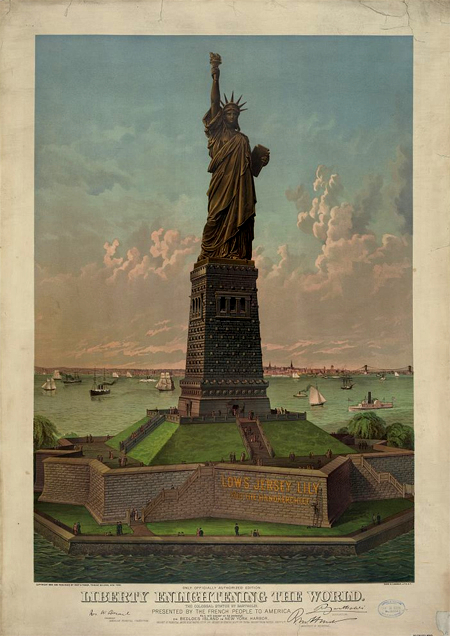
Now liberty is enlightening the solar system!
Two American companies today successfully completed launches from opposite sides of the globe, and in doing so set a new global benchmark for rocket launches in a single year.
First, Rocket Lab placed a Japanese technology test smallsat into orbit, its Electron rocket taking off from one of its two launchpads in New Zealand. The satelliite, dubbed Raise-4, was built by Japan’s space agency JAXA and carries eight different experimental payloads from a variety of academic and industry entities, including a test of a new solar sail design.
SpaceX then followed, launching another 27 Starlink satellites, its Falcon 9 rocket lifting off from Vandenberg Space Force Base in California. The first stage completed its 9th flight, landing on a drone ship in the Pacific.
The leaders in the 2025 launch race:
165 SpaceX (a new record)
83 China
16 Rocket Lab (a new record)
15 Russia
SpaceX now leads the rest of the world in successful launches, 165 to 136.
More significantly, with these two launches the total number of successful orbital launches in 2025 has now exceeded 300, for a present total of 301. To put the spectacular nature of this number in perspective, until 2020 it was rare for the world to exceed 100 launches in a year, especially after the fall of the Soviet Union. Most often, the total each year ranged between 50 to 80 launches.
Those numbers are now history, and it has been competition and freedom that has made all the difference.
Before, all rockets were owned or controlled by government monopolies, which limited risk or creativity and kept costs high. Now, they are owned and controlled by private companies, who are incentivized by competition to lower costs and attract as many new customers as possible. Even in communist China this concept has been used (under tight government supervision) to achieve the same ends.
The result has been an energized in-space economy, with numerous new companies launching a wide range of new spacecraft and satellites providing new products to people on Earth (such as today’s Starlink launch) as well as testing new technology (such as today’s Raise-4 launch).
To coin a phrase, the sky is the limit. As long as this free competition continues, we shall see more rocket companies entering the field to further lower the cost. This in turn will widen the customer base, which in turn will encourage more competition and more innovation.
If we don’t go bankrupt with a major economic collapse (sadly a real possibility right now) and we don’t let our governments re-impose their will on this new free market in space, there is nothing to stop it. It can only accelerate until there are human cities and settlements across the entire solar system.
And believe it or not, that will only be the beginning!

On Christmas Eve 1968 three Americans became the first humans to visit another world. What they did to celebrate was unexpected and profound, and will be remembered throughout all human history. Genesis: the Story of Apollo 8, Robert Zimmerman's classic history of humanity's first journey to another world, tells that story, and it is now available as both an ebook and an audiobook, both with a foreword by Valerie Anders and a new introduction by Robert Zimmerman.
The print edition can be purchased at Amazon or from any other book seller. If you want an autographed copy the price is $60 for the hardback and $45 for the paperback, plus $8 shipping for each. Go here for purchasing details. The ebook is available everywhere for $5.99 (before discount) at amazon, or direct from my ebook publisher, ebookit. If you buy it from ebookit you don't support the big tech companies and the author gets a bigger cut much sooner.
The audiobook is also available at all these vendors, and is also free with a 30-day trial membership to Audible.
"Not simply about one mission, [Genesis] is also the history of America's quest for the moon... Zimmerman has done a masterful job of tying disparate events together into a solid account of one of America's greatest human triumphs."--San Antonio Express-News
”Before, all rockets were owned and controlled by government monopolies…”
Oh, good grief Bob! Launch vehicles in this country haven’t been owned and controlled by the government since the passage of the Commercial Space Launch Act of 1984 — over 40 years ago. If you want to quibble and say the first commercial launch didn’t make orbit until 1989, OK, but that was still over 35 years ago.
I know you love SpaceX, but they were beaten to orbit by McDonnell Douglas (Delta II, Delta III, and Delta IV Medium), General Dynamics (Atlas II, Atlas III, and Atlas V), Martin Marietta (Commercial Titan), Orbital Sciences (Pegasus and Taurus), Lockheed (Athena I and Athena II), and Boeing (Sea Launch). Of those Pegasus, Athena I, Athena II, Delta III, Delta IV Medium, and Sea Launch were developed with commercial funds for the commercial market.
That the market for satellite launches was smaller back then doesn’t make it a government monopoly, just as the market for PCs being smaller back then didn’t make the Apple II a government monopoly either.
mkent wrote, “I know you love SpaceX…”
You know wrong. I love success. SpaceX achieves it, but if others did so I’d love them as well.
As for your so-called private rockets companies from 1984 to about 2010, you are living in a fantasy world. During those years the shuttle dominated entirely. As for the companies you list, they did little or nothing to compete or reduce costs. Instead, they teamed up with NASA and the Pentagon to divide up the market government market at high prices, ceding the commercial market to Europe’s Arianespace.
In the end, they failed, causing a steady consolidation until we were left with only one company, ULA, with Orbital Sciences a very weak second on the periphery. And even these were struggling to survive, as their cost to launch was so high only the government could really afford them.
I wrote about this at the time for UPI. See: A Shrinking, Timid Industry These so-called private rocket companies didn’t want to compete, they wanted to work out deals with the government to guarantee their existence, whether or not they launched much of anything.
Even now, two decades later, what is left of these same big space companies, ULA and Northrop Grumman, has shown little interest in innovation or competition. There are hints they might try, but they never really get very far. The future does not belong to them.
mkent: However, I will cede one point to you. I should have said “all rockets were owned or controlled by the government.” More accurate. I have revised.
Robert wrote wrecently ” Even in communist China this concept [free enterprise (not to put words . .)] has been used . . . ”
I have written that the best one-word response to a planned economy: China. If the ChiComs have turned to the capitalist/free enterprise model, tell me again how government grocery stores are going to work.
”During those years the shuttle dominated entirely.”
Good heavens, no. In addition to the Commercial Space Launch Act of 1984 legalizing the private launch industry, the Shuttle was barred from the commercial launch market by Presidential Directive in February of 1988 (i.e. before return to flight). This was codified into law by the Launch Services Purchase Act of 1990.
The Space Shuttle did not launch a commercial satellite post-Challenger. In fact, only 20 of the 110 post-Challenger Shuttle missions carried a payload deployable by an unmanned vehicle. The rest were a combination of retrieval missions, servicing missions, manned Spacelab / SpaceHab missions, or manned Space Station construction missions.
Instead commercial and government satellites rode on Delta II (155 launches), Delta III (3 launches), Delta IV Medium (29 launches), Atlas II (63 launches), Atlas III (6 launches), Atlas V (105 launches), Commercial Titan (4 launches), Pegasus (45 launches), Athena (10 launches), Taurus (7 launches), Antares (18 launches), and Sea Launch (36 launches). Throw in 13 Titan IIs and 39 Titan IVs launching government payloads, and you’re over 500 non-Shuttle launches post-Challenger (533 to be exact).
So that’s 20 satellite missions for the Shuttle post-Challenger vs. 481 for commercial vehicles. It wasn’t the Shuttle that dominated the launch market.
It was a hodgepodge….there was a gap between Titan IV and smaller LVs. Today we have a wider range of payloads available.
I have often wondered if payload gaps may have had a more negative effect on space commerce.
Minor math error.
You show 165 for SpaceX in the tally, but then show “166 to 136” right below that.
Terry: Typo fixed. Thanks for letting me know.