New data says interstellar Comet 3I/Atlas IS different from comets in our solar system

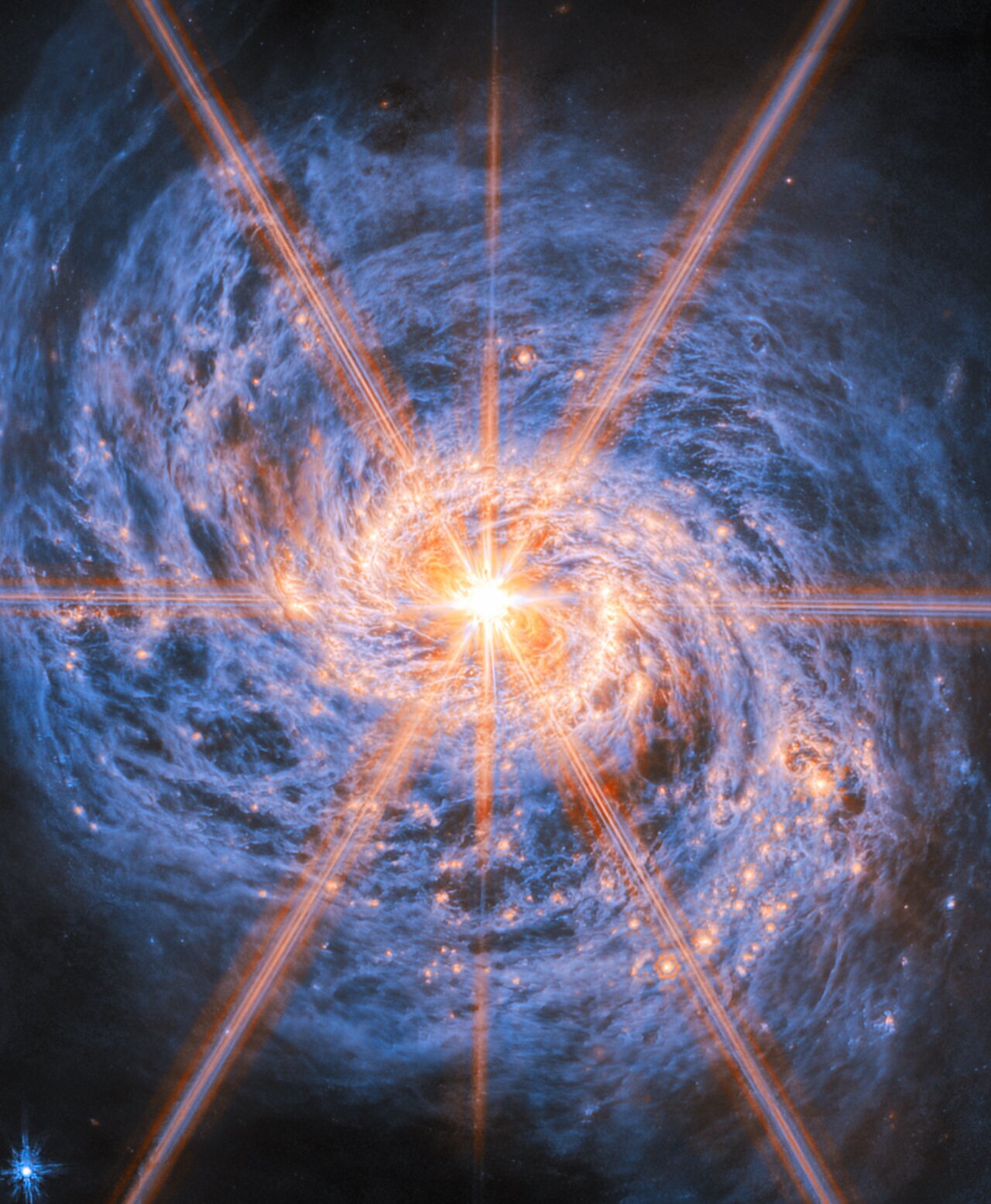
Using spectroscopic data from the ALMA telescope in Chile, astronomers have determined that interstellar comet 3I/Atlas is enriched in deuterium (sometimes called “heavy water”), with quantities as much as 30 times that found in ordinary solar system comets and 40 times that found in Earth’s oceans.

You can read the peer-reviewed paper here. From its abstract:

3I/ATLAS shows a deuterium enrichment exceeding Earth’s ocean value by more than a factor of about 40 and typical Solar System cometary values by more than a factor of about 30. The elevated deuterium enrichment points to water that formed under colder, less irradiated conditions and from less thermally processed material, consistent with an origin in a planetary system that formed under different physical and chemical conditions than our own.

In other words, the conditions in which Comet 3I/Atlas’ solar system formed were very different from those when our own solar system formed.

This conclusion is wonderful, but it raises more questions than it answers. Since we do not know how old the comet is, nor do we really know where it came from, there is little else we can glean from this result, other than it proves the conditions when solar systems form can vary widely.

7 comments

Blue Origin opens (secretly) its first foreign office, in Luxembourg

Blue Origin last week opened its first office in another country, in Luxembourg, though the company made no official announcement and the fact only became public when a Luxembourg official mentioned it at a conference in Colorado.

In an unexpected twist, the opening of the European HQ was eventually announced on 15 April 2026, not by the company but by Luxembourg Economy Minister Lex Delles – and not at the Grand Duchy office, but on his visit to the 41st annual Space Symposium, held in Colorado Springs in the US.

Blue Origin’s office on the capital’s Avenue de la Liberté had, in fact, opened right on schedule, Tim Collins, the company’s Vice- President of Global Operations and Supply Chain, told the Luxembourg Times in interview on Wednesday.

…Asked why Blue Origin declined to confirm its opening schedule until April, despite media follow-up requests, Collins said there was no cover-up: the company merely wanted to have something to show off before officially opening. The process has been roughly on schedule throughout, he stressed.

The office will work with Blue Origin’s European customers as well as manage its foreign supply chain, not just in European but globally.

8 comments

Genesis cover

On Christmas Eve 1968 three Americans became the first humans to visit another world. What they did to celebrate was unexpected and profound, and will be remembered throughout all human history. Genesis: the Story of Apollo 8, Robert Zimmerman's classic history of humanity's first journey to another world, tells that story, and it is now available as both an ebook and an audiobook, both with a foreword by Valerie Anders and a new introduction by Robert Zimmerman.

The print edition can be purchased at Amazon or any other book seller. If you want an autographed copy the price is $60 for the hardback and $45 for the paperback, plus $8 shipping for each. Go here for purchasing details. The ebook is available everywhere for $5.99 (before discount) at amazon, or direct from my ebook publisher, ebookit. If you buy it from ebookit you don't support the big tech companies and the author gets a bigger cut much sooner.


The audiobook is also available at all these vendors, and is also free with a 30-day trial membership to Audible.
 

"Not simply about one mission, [Genesis] is also the history of America's quest for the moon... Zimmerman has done a masterful job of tying disparate events together into a solid account of one of America's greatest human triumphs."--San Antonio Express-News

China launches another “set of test satellites promoting internet technology”

China today successfully placed what its state-run press described merely as “a new set of test satellites promoting internet technology”, its Long March 2D rocket lifting off from its Xichang spaceport in southwest China.

No word on where the rocket’s lower stages, using very toxic hypergolic fuels, crashed inside China. The state-run press did add this about the payloads:

These satellites will be mainly used to carry out technology tests and verifications, including direct satellite-to-phone broadband connectivity and space-ground network integration.

The leaders in the 2026 launch race:

49 SpaceX
22 China
7 Russia
6 Rocket Lab

For the third straight year SpaceX continues to lead the entire world combined in total launches, 49 to 40.

0 comments

Ted Nugent – Cat Scratch Fever

An evening pause: Performed live 1979. I had never heard of this real disease caused from an infected cat scratch, until my knee surgeon warned me about it prior to surgery. As our two cats are gentle and have never scratched me, and are also indoor cats, I wasn’t concerned.

Then Diane sent me this song. Heh. You learn something new every day.

Hat tip Diane Zimmerman.

Note: At present I have almost no suggestions for evening pauses, not even from my regular contributors. If you’ve suggested pauses in the past you know the drill and have the guidelines. If you haven’t done so before but want to, just mention this fact in the comments below. I will contact you with the guidelines. Don’t include your suggestion in your comment or then I can’t really use it.

9 comments

Conscious Choice cover

Now available in hardback and paperback as well as ebook!

From the press release: In this ground-breaking new history of early America, historian Robert Zimmerman not only exposes the lie behind The New York Times 1619 Project that falsely claims slavery is central to the history of the United States, he also provides profound lessons about the nature of human societies, lessons important for Americans today as well as for all future settlers on Mars and elsewhere in space.

 
Conscious Choice: The origins of slavery in America and why it matters today and for our future in outer space, is a riveting page-turning story that documents how slavery slowly became pervasive in the southern British colonies of North America, colonies founded by a people and culture that not only did not allow slavery but in every way were hostile to the practice.  
Conscious Choice does more however. In telling the tragic history of the Virginia colony and the rise of slavery there, Zimmerman lays out the proper path for creating healthy societies in places like the Moon and Mars.


“Zimmerman’s ground-breaking history provides every future generation the basic framework for establishing new societies on other worlds. We would be wise to heed what he says.” —Robert Zubrin, founder of the Mars Society.


All editions are available at Amazon, Barnes & Noble, and all book vendors, with the ebook priced at $5.99 before discount. All editions can also be purchased direct from the ebook publisher, ebookit, in which case you don't support the big tech companies and the author gets a bigger cut much sooner.


Autographed printed copies are also available at discount directly from the author (hardback $29.95; paperback $14.95; Shipping cost for either: $6.00). Just send an email to zimmerman @ nasw dot org.

Isaacman before Congress: Speaking the truth to power

Jared Isaacman at House hearing yesterday

There has been a lot of attention given by the propaganda press to the testimony yesterday by NASA administrator Jared Isaacman before the House Science Committee, with almost all of that coverage focused on two issues, Trump’s proposal to cut NASA’s budget significantly, and the public statement by Isaacman that two Lunar Gateway modules were delivered “corroded.”

On the corrosion issue, much of the press focused on whether Isaacman’s statement is true (contractors are denying it). I instead was struck by how little pushback there was overall from Congress about Isaacman’s proposal to cancel Gateway entirely. In two hours of testimony, only one congressman brought it up, and even he did not challenge Isaacman’s decision very strongly.

Put simply, it really didn’t matter whether these modules were corroded or not. Congress is not going to challenge Isaacman on this decision. Some politicians might use it in fund-raising letters or at press events as a hammer to win votes or donations, but when it comes time to approve NASA’s budget, they are willing to accept Isaacman’s overall judgment. Gateway will be gone.

As for the budget cuts, I was also struck by the lack of hard opposition from Congress, despite reporting from the propaganda press (like this story) suggesting the cuts were rejected outright. Though repeatedly Isaacman was questioned about those cuts — especially from Democrats — repeatedly he fought back hard, to good effect. He supports Trump’s cuts and does not want more money, because in reviewing NASA’s budget and recent actions, he has found there is ample cash available in Trump’s reduced budget by simply shutting down bad or duplicative projects and focusing his resources more effectively.

The only threatened program that seemed to generate any passion from Congress was Trump’s effort to eliminate NASA’s education STEM program. “We need this program to inspire kids!” they would say. Isaacman would bluntly respond “No we don’t,” noting that NASA issues millions in education grants outside that program (making that program duplicative and unnecessary), and that the best way NASA can inspire kids is to actually fly missions, not send money to some bureaucratic program. Isaacman wants to use that money to make building the lunar base more likely.

Over and over again Isaacman pulled the rug out from under this big-spending congress critters by simply pointing out the truth to them, with one exchange with Zoe Lofgren (D-California) quite typical. She clearly was opposed to Trump’s cuts and wanted to challenge any cancellations being put forth. To do so, however, she wanted Isaacman to provide more detailed information about those cuts. Issacman said sure, I’m glad to provide you everything you want, but then added this:
» Read more

33 comments

ESA: Full-sized model of its Space Rider reusable capsule is ready for landing drop tests

Artist rendering of Space Rider in orbit
Artist rendering of Space Rider in orbit. Click for original.

My heart be still! The European Space Agency (ESA) yesterday announced that a full-sized model of its Space Rider reusable capsule is now ready for landing drop tests from a helicopter.

The avionics – Space Rider’s ‘brain’ – were installed in the second week of March. This computer hosts the Guidance, Navigation and Control algorithms that will steer the parafoil, adapting to the wind – including any gusts– to guide Space Rider to a soft landing.

Roughly the size of a mini-van, the drop-test model is a full-size stand-in for the 4.6-m long reentry module, Space Rider lands on skis with the landing gear permanently open on this model as the mechanism is not part of the drop test.

To get an idea how unserious ESA is, we need to review this project’s overall schedule. This reusable capsule concept — which appears to be a variation of either Varda’s returnable capsule or Boeing’s X-37B — was first tested by ESA in 2015. By 2017 the agency was promising it would be flying commercially by 2025. A decade later and they have not yet begun testing a full scale spacecraft.

And the development pace now is glacial. Last summer ESA did helicopter drop tests of just the “brain” and parafoil. It is now going to do those drop tests again, a year later, with this full scale model. Expect another year to pass — at a minimum — before it tries another set of helicopter drop tests, this time with the first actual Space Rider capsule.

At this pace, Space Rider might fly by 2030, maybe. In the meantime, expect at least a half dozen private capsules to fly commercially, for profit. Following Varda’s success investment capital has poured into this industry. All will go from a blank sheet of paper to a flight model in less than five years.

And even if ESA finally gets Space Rider operational, it has established some very complex rules about who can use it commercially, rules so complex I predict few will be interested.

8 comments

Leaving Earth cover

Leaving Earth: Space Stations, Rival Superpowers, and the Quest for Interplanetary Travel, can be purchased as an ebook everywhere for only $3.99 (before discount) at amazon, Barnes & Noble, all ebook vendors, or direct from my ebook publisher, ebookit.

If you buy it from ebookit you don't support the big oppressive tech companies and I get a bigger cut much sooner.


Winner of the 2003 Eugene M. Emme Award of the American Astronautical Society.

 
"Leaving Earth is one of the best and certainly the most comprehensive summary of our drive into space that I have ever read. It will be invaluable to future scholars because it will tell them how the next chapter of human history opened." -- Arthur C. Clarke

Russia launches the smallest version of its Angara rocket

Russia today successfully launched the smallest version of its Angara rocket, dubbed Angara-1.2, from its Plesetsk spaceport in northeast Russia, placing a number of classified payloads into orbit.

Russia’s state-run press released almost no information about this launch, partly because of its military nature but also because it has discovered recently that the Plesetsk spaceport is within range of Ukrainian drones, with one attack causing a launch to be scrubbed.

The leaders in the 2026 launch race:

49 SpaceX
21 China
7 Russia
6 Rocket Lab

For the third straight year SpaceX continues to lead the entire world combined in total launches, 49 to 39.

3 comments

China picks two Pakistanis to train for a future Tiangong-3 mission

As part of its Soviet-style propaganda effort to promote its space program, China yesterday announced the names of the two Pakistanis who will train for a future short mission to its Tiangong-3 space station.

The agency said in a statement that Muhammad Zeeshan Ali and Khurram Daud will come to China soon as reserve astronauts for training. After completing all training and evaluations, one of them will participate in a space mission as a payload specialist, becoming the first foreign astronaut onboard the Tiangong space station.

This flight is part of Pakistan’s partnership with China in its International Lunar Research Station (ILRS) project to build a lunar base, created by China to counter the U.S.’s Artemis Accords alliance. Pakistan will also fly a small demo rover on China’s Chang’e-8 unmanned lunar mission, scheduled presently for a 2029 launch.

While the American alliance has now signed 63 nations covering most of the world’s major nations, only thirteen nations and about eleven eleven academic or governmental bureaucracies — mostly third world — have joined China.

This Chinese international manned mission mirrors largely what the Soviets would do during the Cold War, flying someone from one of its captured countries to garner international propaganda points. Do not expect these astronauts to do much concrete work. During the Soviet era, the Russians would joke that these foreign astronauts would all get “red hands” disease, caused whenever they tried to touch anything and a Russian astronaut would then slap their hands, saying firmly “Don’t touch that!”

1 comment

SpaceX launches 24 more Starlink satellites

SpaceX this evening followed up Rocket Lab with its own launch of 24 more Starlink satellites, its Falcon 9 rocket lifting off from Vandenberg Space Force Base in California.

The first stage completed its fifth flight, landing on a drone ship in the Pacific.

The leaders in the 2026 launch race:

49 SpaceX
21 China
6 Russia
6 Rocket Lab

For the third straight year SpaceX continues to lead the entire world combined in total launches, 49 to 38.

3 comments

Rocket Lab launches satellites for Japan’s space agency JAXA

Rocket Lab today successfully placed eight smallsats for Japan’s space agency JAXA, its Electron rocket lifting off from one of its two launchpads in New Zealand.

Because all of JAXA’s rockets are presently grounded due to technical failures, Japan’s space agency has had to turn to Rocket Lab. In fact, these eight satellites were originally supposed to launch on JAXA’s Epsilon-S rocket, which remains grounded after an explosion during a static fire test. There have been no updates on the status of Epsilon-S since December 2024.

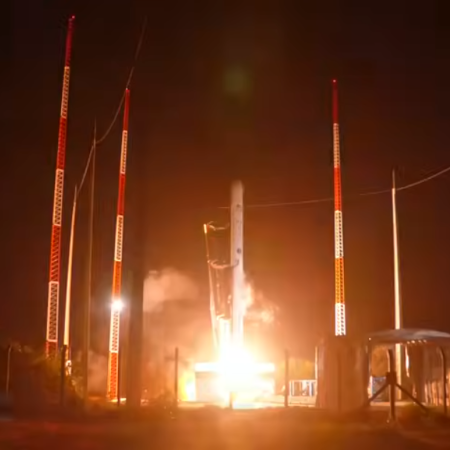
Rocket Lab was also supposed to do a suborbital hypersonic test flight yesterday out of Wallops Island in Virginia, using the first stage of Election in its HASTE suborbital configuration. As this is a test for the War Department, little information is generally released. This video from a distance confirms the launch apparently took place, but whether it was a success or not remains unknown. That Rocket Lab’s announcers did not tout its success either before or after today’s JAXA launch — as they have routinely done in the past — suggests something might have gone wrong, though this too is pure speculation.

The leaders in the 2026 launch race:

48 SpaceX
21 China
6 Russia
6 Rocket Lab

For the third straight year SpaceX continues to lead the entire world combined in total launches, 48 to 38.

10 comments
1 17 18 19 20 21 2,928