Indian rocket startup Agnikul completes static fire test of three-engine cluster

The Indian rocket startup Agnikul has now released a video of a 40-second static fire test of three-engine cluster it hopes to use on its Agnibaan orbital rocket.

The engines, powered by electric motor-driven pumps, were designed and manufactured in-house at Agnikul’s Rocket Factory-1. All three were fully 3D-printed as single-piece hardware units, reflecting the startup’s focus on advanced manufacturing and indigenous engineering.

Co-founder and chief executive Srinath Ravichandran said that increasing the number of engines improves rocket performance and that a three-engine system is required for commercial missions. The clustered test involved calibrating six pumps and six motors and fine-tuning six independent speed control algorithms to function in synchronisation. The goal was to achieve uniform startup, steady-state operation and shutdown performance across all three engines, a technically complex process given the precision required in semi-cryogenic propulsion systems.

The company has completed one suborbital test launch in May 2024, and in September 2025 said its orbital rocket’s first stage will land vertically and be reused.

Agnikul however has not released any schedule for launch, and based on this static fire test appears years from a first launch. It is making progress, but slowly. At the same time, it says it has raised $500 million in private investment capital, giving it the resources to build the rocket.

Based on testing and published progress, Agnikul appears to be trailing India’s other rocket startup Skyroot, though this could change in the coming year.

0 comments

Rocket Lab completes in-space commissioning of two Escapade Mars orbiters

Built by Rocket Lab for NASA and launched in November 2025, the company has now completed the in-space commissioning of two Escapade Mars orbiters and is about to hand operations over to the University of California Berkeley Space Sciences Laboratory (UC-Berkeley).

With both spacecraft now fully commissioned and successfully operating at the Earth–Sun Lagrange Point 2 (L2), Rocket Lab is preparing to hand over operational control to [UC-Berkeley], who will lead science operations at L2 and prepare the mission for its cruise to Mars.

Under contract from [UC-Berkeley], Rocket Lab was selected to design, build, and provide commissioning operations of the two high delta-V Explorer-class interplanetary spacecraft for ESCAPADE. Rocket Lab moved from concept to launch readiness in just over three years, proving commercial collaboration can deliver important science key to supporting future human and robotic exploration of Mars on ambitious schedules and for significantly smaller budgets than typical interplanetary missions. This speed was made possible through Rocket Lab’s vertically integrated spacecraft production, with key components including solar arrays, reaction wheels, propellant tanks, star trackers, radios, avionics, and flight software designed and built in-house.

Launched from Cape Canaveral Space Force Station in November 2025, the twin ESCAPADE spacecraft, known as Blue and Gold, completed spacecraft commissioning and executed two precise trajectory correction maneuvers, placing both spacecraft into their loiter trajectory near L2, approximately 1.5 million kilometers from Earth.

Both spacecraft will be sent on their way to Mars in December 2026 when orbital mechanics between the Red Planet and Earth are right for the journey. Once in Mars orbit the two orbiters will allow for a three-dimensional study of the interaction between the solar wind and Mars’ atmosphere.

Though this is a NASA-funded mission, note that it was built a commercial company and operated not by NASA but by a university. For this reason, it was not only built fast and at a low cost, it uses an innovative flight path that allowed it to be launched anytime and wait in orbit for the right moment to go to Mars. This last innovation provides for a lot more flexibility.

1 comment

SpaceX completes its second Starlink launch today; Firefly scrubs launch

SpaceX successfully placed another 29 Starlink satellites in orbit this evening during its second launch today, its Falcon 9 rocket lifting off from Cape Canaveral Space Force Station in Florida.

The first stage completed its 26th launch, landing on a drone ship in the Atlantic.

Firefly meanwhile scrubbed its launch of its Alpha rocket due to high winds. No new launch date as yet been scheduled. This would be Firefly’s first launch since it had a launch failure in April 2025, followed by a static fire test explosion in September 2025. According to the company, this Alpha launch will be the last of this version before it begins flying an upgraded rocket.

The 2026 launch race:

27 SpaceX
8 China
2 Rocket Lab
2 Russia
1 ULA
1 Europe (Arianespace)

As it did in both ’24 and ’25, SpaceX in ’26 so far has more launches than the entire rest of the world combined.

0 comments

SpaceX launches 25 more Starlink satellites

SpaceX early this morning successfully placed another 25 Starlink satellites in orbit, its Falcon 9 rocket lifting off from Vandenberg Space Force Base in California.

The first stage completed its 20th flight, landing on a drone ship in the Pacific.

The 2026 launch race:

26 SpaceX
8 China
2 Rocket Lab
2 Russia
1 ULA
1 Europe (Arianespace)

As it did in both ’24 and ’25, SpaceX in ’26 so far has more launches than the entire rest of the world combined.

Both SpaceX and Firefly have launches scheduled for later today. The Japanese rocket startup Space One has now rescheduled the third launch attempt of its Kairos rocket for March 3, 2026.

2 comments

Cargo Dragon successfully returns to Earth

A cargo Dragon capsule successfully splashed down in the Pacific late Thursday, February 26, 2026, bringing back several thousand pounds of hardware and experiments.

The ship had been docked at ISS for the past six months, during which it used its engines six different times to raise the station’s orbit. That capability has traditionally been done by Russian Progress freighters, but NASA has been testing other options as they are unsure Russia will remain with the station after 2028. Furthermore, there are risks using Progress to do these reboosts, as the burns take place when Progress is docked to its Zvezda module port, and the hull of the Zvezda module has been developing stress fractures in the past five years that could catastrophically fail.

Not only has Dragon now demonstrated this boost capability, so has Northrop Grumman’s Cygnus capsule.

I strongly expect Russia to stick with ISS for as long as it can, mainly because its own proposed new space station is not likely to launch as presently scheduled later this decade. Since the fall of the Soviet Union, Roscosmos has consistently been unable to complete almost any new proposed projects, and the few it has completed launched literally decades late.

Figure 3 from September Inspector General report
Figure 3 from September 2024 Inspector General report, showing Zvezda’s location on ISS, as well as the station’s leak rate at that time. The leaks in Zvezda now appear to have been sealed, but there is no guarantee more stress fractures will not appear as dockings continue at its port.

16 comments

Mars’ fast moving gigantic lava floods

A Martian crater broken by flowing lava
Click for original image.

Cool image time! The picture to the right, rotated, cropped, and reduced to post here, was taken on December 12, 2025 by the high resolution camera on Mars Reconnaissance Orbiter (MRO).

The science team labels this a “crater interrupted by flow.” And what a flow! This unnamed 1.4-mile wide crater was not only filled and partly buried by the flow, that flow was so strong it cut through the crater’s rim at two points, refusing to let that rim block it in any way.

The flow in this case is lava, coming down from the Tharsis Bulge where four of Mars’ biggest volcanoes arose. And that flow was quite vast, as the nearest of those volcanoes, Arsia Mons, is almost 800 miles away. Because of Mars’ relative light gravity, about 39% that of Earth’s, lava on Mars can flow across large distances in a very short time. It might have only taken a few weeks for that flow to cover that 800 miles.
» Read more

7 comments

Japanese rocket startup Space One to attempt third orbital launch this weekend

Japanese spaceports
Japanese spaceports indicated by red dots

UPDATE: Launch scrubbed due to weather. No new launch date as yet been announced.

The Japanese rocket startup Space One has now scheduled the third launch attempt of its Kairos rocket for this coming Sunday, March 1, 2026, lifting off from its private Spaceport Kii launchpad.

Space One said Friday that it would launch the No. 3 unit of its Kairos small rocket carrying artificial satellites on Sunday morning. The Tokyo-based space development startup canceled the initially scheduled launch on Wednesday, citing a forecast for unfavorable weather conditions.

According to Space One, the Kairos No. 3 unit is set to lift off from the company’s Spaceport Kii launch site in the town of Kushimoto, Wakayama Prefecture, between around 11 a.m. and 11:20 a.m. on Sunday. The rocket will carry five satellites, including one developed by the Taiwan Space Agency.

The two previous launch attempts, in March and December 2024, both failed almost immediately after launch.

A success now by this private company is crucial for Japan, as its government-owned H3 and Epsilon rockets are both grounded due to launch failures.

0 comments

China outlines plans for manned space program

China’s state-run press today outlined a short update on the status of its manned space station program as well as its planned manned lunar landing, still targeting a 2030 launch.

For the space station, these are its upcoming plans:

China is scheduled to launch two crewed missions and one cargo spacecraft mission for its space station operation in 2026, according to the China Manned Space Agency (CMSA). An astronaut from the Hong Kong or Macao special administrative region is expected to carry out a space station flight mission as early as this year, the CMSA noted.

One astronaut from the Shenzhou-23 crew will conduct a year-long in-orbit stay experiment, the CMSA said.

I am willing to bet that China is planning an even longer station mission that will break Valeri Polyakov’s 14.5 month record mission, set in the 1990s on Mir.

As for China’s lunar landing plans, nothing new was announced:

China is targeting a crewed lunar landing by 2030. The development of major flight products, including the Long March-10 carrier rocket, the Mengzhou crewed spacecraft, and the Lanyue lunar lander, is proceeding smoothly. Key tests have been completed, including the zero-height abort test for the Mengzhou spacecraft, the landing and takeoff test for the Lanyue lunar lander, the static fire test and the low-altitude demonstration and validation test for the Long March-10 rocket system, and the maximum dynamic pressure escape test for the Mengzhou spacecraft system.

In 2026, the country will intensify efforts to advance the construction of supporting facilities and equipment for the lunar mission at the Wenchang Spacecraft Launch Site in southern Hainan Province, as well as the development of ground support systems.

China has not yet outlined a program of missions leading up to that lunar landing. Like Apollo and now Artemis, it makes sense to do low orbit rendezvous and docking tests of these various spacecraft before heading to the Moon. It also makes sense to do these same tests first in lunar orbit, before landing. Expect China to announce such a program soon, for launch in the 2027-2029 timeframe.

2 comments

Isaacman announces major reshaping of Artemis program

Major reshaping of the program
The program is being changed

During a update press conference today on the status of SLS, NASA administrator Jared Isaacman announced some major changes to the next three Artemis missions.

Isaacman began his remarks by blasting the slow launch cadence of the SLS rocket, noting that all previous NASA launch vehicles averaged about three months between launches, not three years. In order to shorten the SLS cadence to as short as ten months, he has eliminated the upgraded upper stage for SLS, required for the Artemis-3 lunar landing mission. They will standardize the equipment now being used for all further missions. It also suggests the upgraded mobile launcher — needed for that upgraded upper stage — is being canceled, though the officials refused to confirm this. It is far behind schedule and over budget.

Second, Artemis-3 will no longer be a lunar landing. It will instead fly in ’27 as a manned low-Earth-orbit mission to test rendezvous and docking with one or both of the lunar landers being built by SpaceX and Blue Origin. The flight will also test the spacesuits the astronauts will use on the later lunar mission, including possibly a spacewalk.

This change also appears to eliminate the need for Lunar Gateway, though this decision was not stated. Without that upgraded first stage, SLS cannot reach lunar orbit as intended. It appears the plan is to launch crew in Orion and transfer them to the lander in Earth orbit, and transport them to the Moon in those vehicles.

Third, the goal will then be to do two lunar landings in ’28 on Artemis-4 and Artemis-5. It was also clear that this is merely a target, and things could change after the ’27 mission.

These changes all make great sense and face basic reality. It never made sense to attempt the lunar landing after only one manned Artemis mission. The changes also shift focus from SLS and Orion to the rockets and spacecraft being made by the private sector. It attempts to meet Trump’s goal of landing on the Moon by ’28, but also gives the last three budgeted SLS missions a better and more realistic program. Whether SLS as designed can do this remains unclear, but no matter what, this clearly lays the groundwork for that shift from SLS to the private sector.

The officials also made it clear that this plan is still in flux, and will change depending on what happens in the next year or so.

39 comments

Europe’s Jupiter probe Juice releases its first image of interstellar comet 3I/Atlas

Comet 3I/Atlas as seen by Juice
Click for original image.

The European Space Agency’s (ESA) probe Juice, presently on its way to Jupiter, yesterday released its first image of interstellar comet 3I/Atlas from the data it gathered in November 2025 but only now has been able to send back to Earth.

That picture is to the right, cropped and reduced to post here. From the press release:

[T]he science camera on ESA’s Jupiter Icy Moons Explorer (Juice) shows interstellar comet 3I/ATLAS spewing dust and gas. The tiny nucleus of the comet (not visible) is surrounded by a bright halo of gas known as the coma. A long tail stretches away from the comet, and we see hints of rays, jets, streams and filaments. The inset in the image shows the same data, but processed to highlight the coma structure.

As also noted in the release, though this comet is from outside our solar system, “its behaviour is completely in line with that expected from a ‘normal’ comet.”

The picture was taken on November 6, 2025, just seven days after the comet made its closest pass to the Sun. At that time Juice took 120 images, which could not be sent back until now because the Sun was in the way. The science team is presently analyzing that data, and plans a full release of its work next month.

0 comments

SpaceX launches 29 Starlink satellites; another booster reaches thirty flights

SpaceX early this morning successfully launched another 29 Starlink satellites, its Falcon 9 rocket lifting off from Cape Canaveral Space Force Station in Florida.

The first stage (B1069) completed its 30th flight, landing on a drone ship in the Atlantic. With this flight, B1069 becomes the fourth SpaceX first stage to fly thirty times:

39 Discovery space shuttle
33 Atlantis space shuttle
33 Falcon 9 booster B1067
31 Falcon 9 booster B1071
31 Falcon 9 booster B1063
30 Falcon 9 booster B1069
28 Columbia space shuttle

Sources here and here.

The 2026 launch race:

25 SpaceX
8 China
2 Rocket Lab
2 Russia
1 ULA
1 Europe (Arianespace)

As it did in both ’24 and ’25, SpaceX in ’26 so far has more launches than the entire rest of the world combined.

Rocket Lab’s suborbital launch from two days ago had been scrubbed due to weather, and is now scheduled for later today, lifting off from Wallops Island in Virginia and carrying an Australian hypersonic test vehicle. This won’t count in the totals above, but I will report the results after launch.

0 comments

NASA’s corrupt Aerospace Safety Advisory Panel: NASA must be bigger and have more control!

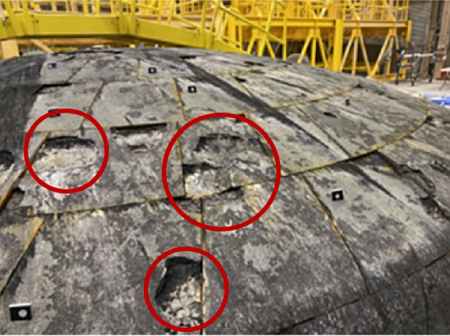
Orion's damaged heat shield
Orion’s damaged heat shield after 2022 flight.
ASAP “Move along! Nothing to see here.”

NASA’s Aerospace Safety Advisory Panel (ASAP) today released its annual report, and once again it demonstrated why I have been calling it corrupt and a waste of money for years.

The report can be read here [pdf], but let me warn you that its findings have nothing to do with ASAP’s original purpose (created after the 1967 Apollo 1 launchpad fire that killed three astronauts), to look at NASA projects to make sure the agency is not ignoring specific safety issues.

Instead, as it has done repeatedly in recent years, the panel focused on management goals and larger strategic issues, and as usual concluded that the best way to do things is to make NASA bigger with more control over the entire space industry.
» Read more

6 comments
1 27 28 29 30 31 1,354