Cryptic terrain in Martian high southern latitudes
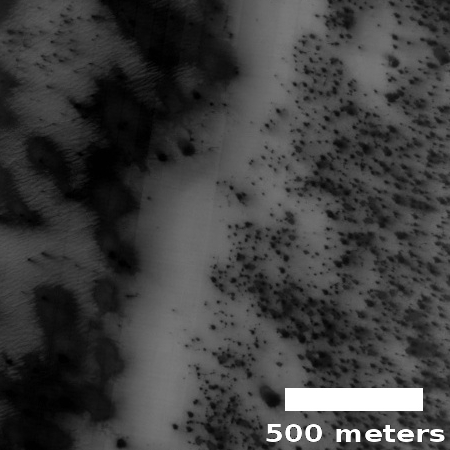
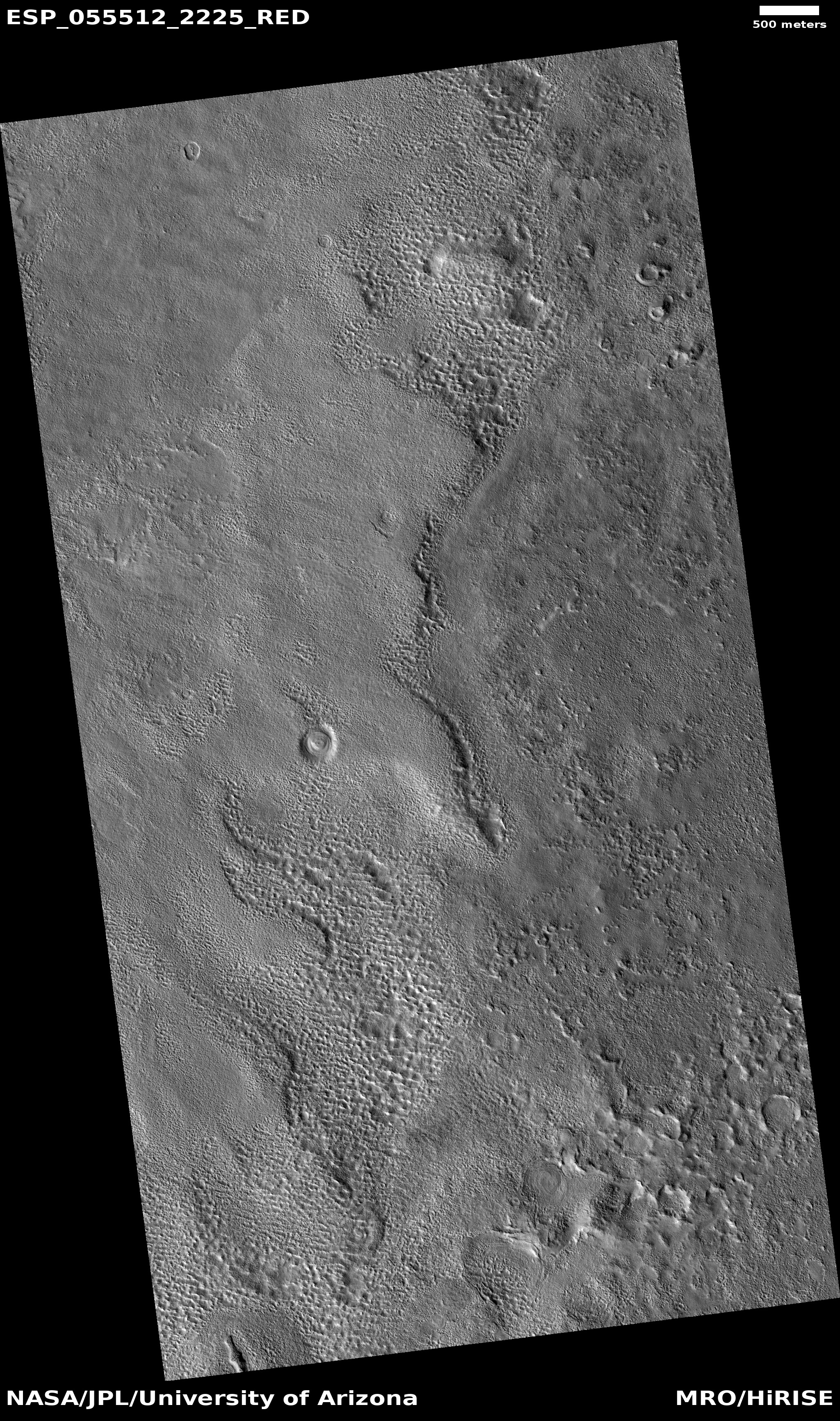
Cool image time! The image on the right is a small cropped section from a larger image taken of the floor of Reynolds Crater, near the margins of the Martian southern polar carbon dioxide icecap.
The image was part of the August 1, 2018 image release from the high resolution camera on Mars Reconnaissance Orbiter (MRO) and was taken on July 5, 2018. Because that was during the peak of now clearing global dust storm, a large majority of MRO’s images were obscured. Only images taken at high latitudes appeared clear and sharp.
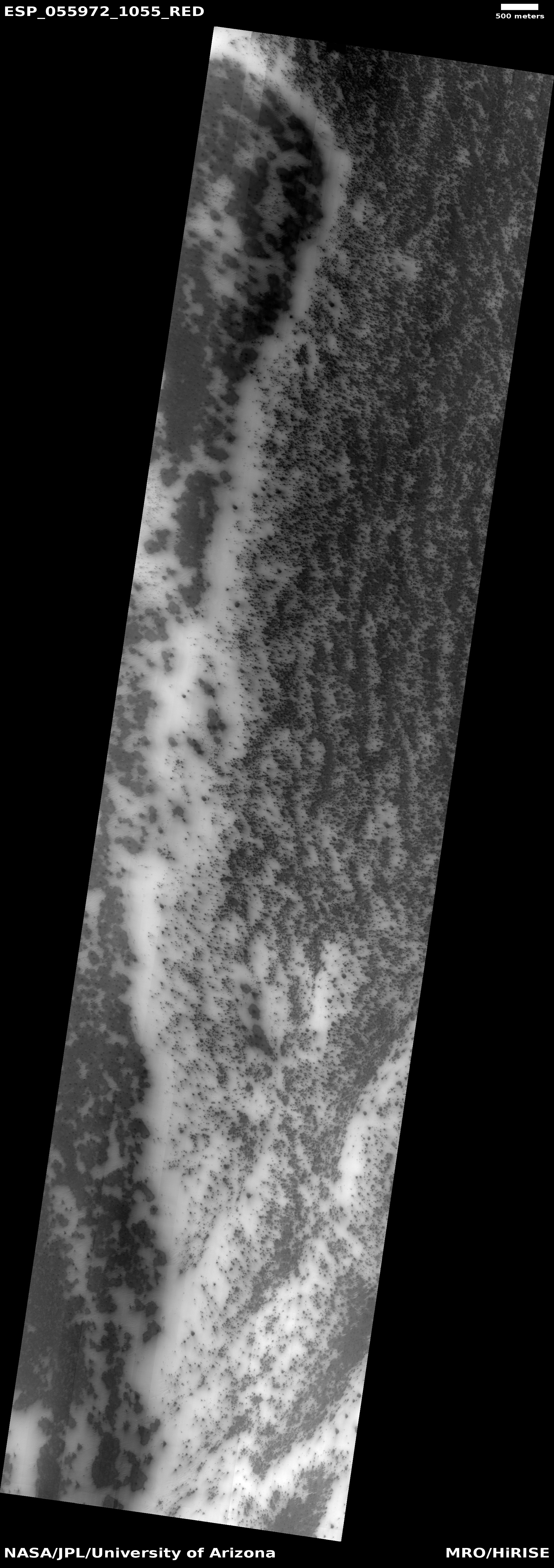
The image link, which has no caption, calls this “cryptic terrain.” Since this is at the margin of the polar cap, the white areas are almost certainly still-frozen dry ice. The white strip down the center of the image appears to be a low drainage gully, made even more evident on the full image.
What are the dark spots however? These are probably related to the dark spiders that appear wherever the carbon dioxide starts to melt and evaporate into gas, releasing the darker dust from below to coat the surface. The dark spots in this image are probably that same darker dust, but why it is scattered about as spots and splotches is a mystery. It does appear that the dark areas more completely cover the higher terrain, but why and if so is definitely unclear.
Back in 1999 I attended a press conference just prior to the failure of Mars Polar Lander. One of the mission’s investigators explained that, based on the orbiter images available at the time, they expected the lander to see some very weird land forms once it reached the surface, shaped in ways that are not seen on Earth. Unfortunately, contact with the spacecraft was lost just before it entered the Martian atmosphere, and was never recovered.
This image however remains me of that scientist’s lost expectation. The seasonal growth and retreat of the Martian icecaps will likely create some strange geology, which is only hinted at in this particular MRO image.
Cool image time! The image on the right is a small cropped section from a larger image taken of the floor of Reynolds Crater, near the margins of the Martian southern polar carbon dioxide icecap.
The image was part of the August 1, 2018 image release from the high resolution camera on Mars Reconnaissance Orbiter (MRO) and was taken on July 5, 2018. Because that was during the peak of now clearing global dust storm, a large majority of MRO’s images were obscured. Only images taken at high latitudes appeared clear and sharp.
The image link, which has no caption, calls this “cryptic terrain.” Since this is at the margin of the polar cap, the white areas are almost certainly still-frozen dry ice. The white strip down the center of the image appears to be a low drainage gully, made even more evident on the full image.
What are the dark spots however? These are probably related to the dark spiders that appear wherever the carbon dioxide starts to melt and evaporate into gas, releasing the darker dust from below to coat the surface. The dark spots in this image are probably that same darker dust, but why it is scattered about as spots and splotches is a mystery. It does appear that the dark areas more completely cover the higher terrain, but why and if so is definitely unclear.
Back in 1999 I attended a press conference just prior to the failure of Mars Polar Lander. One of the mission’s investigators explained that, based on the orbiter images available at the time, they expected the lander to see some very weird land forms once it reached the surface, shaped in ways that are not seen on Earth. Unfortunately, contact with the spacecraft was lost just before it entered the Martian atmosphere, and was never recovered.
This image however remains me of that scientist’s lost expectation. The seasonal growth and retreat of the Martian icecaps will likely create some strange geology, which is only hinted at in this particular MRO image.