UAE hires Japanese company as partner for its ’22 lunar rover mission

Capitalism in space: The United Arab Emirates (UAE) has chosen the private Japanese company Ispace to provide the lander bringing its Rashid rover to the Moon in 2022.

ispace’s 240 kg lander is 2.3 meters tall and 2.6 meters wide. It will be launched by SpaceX, Elon Musk’s rocket company, on a Falcon 9 rocket. Once the iSpace lander is placed in the Earth’s orbit, it will travel to the moon on its own, land and unload the rover.

The lander will use solar panels for power, which will also allow the rover to communicate with Earth. It will also carry a solid-state battery made by NGK Spark Plug, which intends to examine its battery’s lunar performance.

This UAE project is similar but a step up from its Al-Amal Mars orbiter. In that case UAE used its money to have the orbiter mostly built by U.S. universities as they taught UAE’s students how to do it. In this case, UAE engineers appear to be building the rover itself, with the purchased help of others to provide the lander..

Japan’s new H3 rocket is almost ready for launch in ’21

The H3 rocket, jointly made by Mitsubishi and Japan’s space agency JAXA, is almost ready for launch and will be shipped to is launch site shortly for a launch later this year.

According to the link, it will cut the cost of launch by half when compared with Japan’s H2A rocket. They hope this cost reduction will garner them international customers, though I wonder as the rocket is not reusable. To get those international customers they have done something interesting. Rather than putting “Nippon” on the side of the rocket, which is what the Japanese call their country, they have put “Japan” on it instead.

U.S. and Japan formalize partnership on Gateway

NASA announced yesterday the signing of a formal agreement between the U.S. and Japan detailing exactly how the two countries will partner in the building of NASA’s lunar space station Gateway.

Under an arrangement with Northrop Grumman, Japan also will provide batteries for the Gateway’s Habitation and Logistics Outpost (HALO), the initial crew cabin for astronauts visiting the Gateway. Additionally, Japan is investigating enhancements to its HTV-X cargo resupply spacecraft, which could result in its use for Gateway logistics resupply.

…The agreement also marks NASA’s intent to provide crew opportunities for Japanese astronauts to the Gateway, which will be determined following additional discussions, and documented in a future arrangement.

Japan is one of the seven countries that has also signed the Artemis Accords, which covers the legal and international rights under the project. This new agreement is more technical in nature, outlining who will do what during construction.

Of course, much of this assumes that money will be forthcoming from Congress for Gateway. Right now that budget does not really exist, and its allocation remains quite uncertain.

Hayabusa-2 begins journey to two asteroids

On January 5, 2021, after successfully delivering its samples of Ryugu to Earth, Hayabusa-2 fired up its ion engines and began its ten-year journey to two different asteroids.

Hayabusa2’s first extended-mission destination is the roughly 2,300-foot-wide (700 meters) asteroid (98943) 2001 CC21, which the probe will fly by at high speed in 2026, if all goes according to plan. A more in-depth rendezvous with yet another space rock, 1998 KY26, is scheduled to follow in 2031.

In a previous post I had mistakenly left out the first target asteroid. However, their primary target remains the tiny 100-foot-wide 1998 KY26, since it is so small. This will be the first close-up view of such a small asteroid, in space. Since such asteroids are many, it will tell us much about the make-up and history of the solar system.

First look at Ryugu samples

Japanese scientists have taken their first look at the Ryugu sample material brought back by Hayabusa-2 and found they resemble charcoal.

The samples Japanese space officials described Thursday are as big as 1 centimeter (0.4 inch) and rock hard, not breaking when picked up or poured into another container. Smaller black, sandy granules the spacecraft collected and returned separately were described last week.

…The sandy granules the Japan Aerospace Exploration Agency described last week were from the spacecraft’s first touchdown in April 2019.

The larger fragments were from the compartment allocated for the second touchdown on Ryugu, said Tomohiro Usui, space materials scientist. To get the second set of samples in July last year, Hayabusa2 dropped an impactor to blast below the asteroid’s surface, collecting material from the crafter so it would be unaffected by space radiation and other environmental factors.

Usui said the size differences suggest different hardness of the bedrock on the asteroid. “One possibility is that the place of the second touchdown was a hard bedrock and larger particles broke and entered the compartment.”

The analysis of these samples has only just begun. Dating them is likely next, and that will probably reveal some startling results.

Subaru Telescope photographs Hayabusa-2’s next target asteroid

In order to better constrain its orbit, the Subaru Telescope in Hawaii has obtained new photographs of Hayabusa-2’s next target asteroid, 100-foot-wide 1998 KY26.

This asteroid is predicted to approach to within 0.47 AU of Earth in mid to late December 2020, giving us a rare opportunity that comes only once every three and a half years. However, the diameter of 1998 KY26 is estimated to be no more than 30 meters, and thus its brightness is so dim that ground-based observations of the asteroid are difficult without a very large telescope.

The observations with the Subaru Telescope were conducted upon the request of the Institute for Space and Astronautical Science (ISAS), JAXA. And as a result, 1998 KY26 was photographed in the direction of the constellation Gemini as a 25.4-magnitude point of light with a measurement uncertainty of 0.7 mag. The positional data collected during these observations will be used to improve the accuracy of the orbital elements of the asteroid. Similar observations were conducted with the Very Large Telescope (VLT) of the European Southern Observatory (ESO).

If all goes right Hayabusa-2 will rendezvous with 1998 KY26 in the summer of 2031.

Scientists confirm ample Ryugu material in first Hayabuse sample chamber

Japanese scientists have opened the first chamber that stored the Ryugu asteroid samples obtained during its first touch-and-go sample grab, and confirmed that it holds ample material.

They also noted that the chamber itself contained gas from the asteroid as well.

The Japan Aerospace Exploration Agency (JAXA) has confirmed that the gas collected from the sample container inside the re-entry capsule of the asteroid explorer, Hayabusa2, is a gas sample originating from asteroid Ryugu.

The result of the mass spectrometry of the collected gas within the sample container performed at the QLF (Quick Look Facility) established at the Woomera Local Headquarters in Australia on December 7, 2020, suggested that the gas differed from the atmospheric composition of the Earth. For additional confirmation, a similar analysis was performed on December 10 – 11 at the Extraterrestrial Sample Curation Center on the JAXA Sagamihara Campus. This has led to the conclusion that the gas in the sample container is derived from asteroid Ryugu.

They think that this gas must have outgassed from the samples themselves. I suspect it was released either during the long journey or when the samples were subjected to the high accelerations and impact during its return to Earth. Research is going to have to try to pin this down, however.

They plan to open the two remaining sample chambers containing material sometime next week.

Scientists confirm Hayabusa-2’s return capsule brought back material from Ryugu

Based on their first observations of the return capsule from Hayabusa-1, Japanese scientists yesterday confirmed that it successfully has returned material from the asteroid Ryugu.

JAXA said in a statement that they observed the sandy material at the entrance of the collection chamber, but have yet to look inside to see if more asteroid dust is lurking there. It is only the second time that scientists have returned material from an asteroid.

This find in the entrance portends a gold mine of material in the collection chamber itself.

Pearl Harbor: The Last Word

A evening pause: On the anniversary of Japan’s unprovoked sneak attack on the United States, let’s hear what it was like to be a sailor on the U.S. battleships sunk during that attack, from interviews recorded four years ago for the 75th anniversary of the attack.

And did I mention it was an unprovoked sneak attack? The Japanese of that time brought the war upon themselves. Hiroshima and Nagasaki was their fault, not ours.

I wonder, would today’s Americans have the will to win, for freedom and the rule of law, as 1940s Americans did? Based on our response to 9/11, I think not. Based on our terror of a flu-like illness today, I know not. The tragedy of this is beyond words.

Hayabusa-2’s samples from Ryugu land in Australia

The return capsule carrying the asteroid samples grabbed by Hayabusa-2 from Ryugu successfully parachuted down in the outback of Australia today.

Officials from the Japan Aerospace Exploration Agency, or JAXA, confirmed shortly after 1 p.m. EST (1800 GMT) that the Hayabusa 2’s nearly 16-inch (40-centimeter) sample carrier landed in Australia. Touchdown likely occurred several minutes earlier.

Recovery teams dispatched via helicopter began hunting for the 35-pound (16-kilogram) capsule using estimates of its landing site derived from a radio beacon signal. Mission managers expected it could take several hours to find the capsule and recover it. The landing occurred before dawn in Australia.

Since the article above was posted the capsule was located, and it was found much quicker than first expected.

This was the second sample return mission by the Japanese. The first, Hayabusa-1, successfully returned its capsule in 2010, but because of many technical problems during the mission it only brought back a few microscopic samples. In fact, the technical problems were so bad it was really a miracle the capsule came back at all.

Hayabusa-2 however has been a complete success, showing that they learned from the first mission and applied those lessons to the second.

Problems discovered in new Japanese H3 rocket engine

Engineers at Mitsubishi have discovered technical problems in the engine for Japan’s new H3 rocket, forcing its first test launch to be delayed into 2021.

The Japanese space agency JAXA told SpaceNews that problems were found with the new LE-9 engine’s combustion chamber and turbopump. “Fatigue fracture surfaces were confirmed in the apertural area of the combustion chamber inner wall and the FTP blade of the turbo pump,” according to a JAXA spokesperson.

JAXA and Mitsubishi Heavy Industries (MHI), the prime contractor for the H3, were aiming to hold the inaugural launch by the end of 2020 before the discovery of issues in May. However engineers testing the LE-9 cryogenic liquid hydrogen and liquid oxygen engine for the H3 first stage encountered a potential issue back in May. This led JAXA to announce in September that the first flight would slip to some time in Japanese fiscal year 2021, beginning April 1, 2021. The rocket’s second launch likewise slipped to Japanese fiscal year 2022.

The H3 is intended as a cheaper and more competitive version of Mitsubishi’s H2 rocket, which has failed to garner much business outside of Japanese government launches because of its cost. That the H3 isn’t being built to be reusable however means it will likely not achieve that goal, as it will not be able to lower it enough to compete with SpaceX.

This launch delay further weakens its ability to compete, as it gives more time for other cheaper alternatives to hit the market.

Mercury probe BepiColombo probe flies past Venus

Venus during BepiColombo fly-by
Click for full image.

The two-pronged European and Japanese probe BepiColombo today has completed its first of two fly-bys of Venus on its way to an arrival at Mercury in 2025.

The image to the right is one of 64 taken during the fly-by. The science team has created a movie from those images, showing Venus slide past as the spacecraft slewed to view it. During the fly-by the instruments on board its Japanese and European orbiters, both of which will separate and operate independently once they reach Mercury, gathered data of Earth’s sister planet.

The spacecraft still needs one more Venus fly-by plus six past Mercury to get it on a trajectory that will put it in orbit around Mercury. It has also already completed one fly-by past Earth in this complicated route.

Ryugu, like Bennu, appears to have rocks from other asteroids

Japanese scientists today announced that 21 rocks identified by Hayabusa-2 on the asteroid Ryugu have a composition that suggests they were formed on another asteroid.

Although Ryugu’s surface is uniformly dark [because it is a C-type asteroid], the scientists behind the new research found numerous boulders scattered across the asteroid that were 1.5 or more times brighter than their surroundings — that is, they reflected at least 50% more light than most of the rest of Ryugu. This contrast made the researchers suspect these boulders may have come from outside the asteroid.

By analyzing the spectrum of light reflected off 21 of these boulders, the scientists deduced they were made of minerals known as anhydrous silicates. Prior studies have suggested that such water-poor, silicon-rich rocks make up silicaceous or S-type asteroids, the most common kind of asteroid found in the inner main asteroid belt. The brightness of these boulders also matches the brightness of S-type asteroids.

This result compliments the result yesterday from scientists studying Bennu with OSIRIS-REx, and was in fact released at the same time. Both asteroids apparently contain material from other asteroids, suggesting that asteroids in their initial formation (as rubble piles) are routinely a mixture of material from many asteroids, thrown out during impacts and then recaptured.

Japan chooses Hayabusa-2’s next asteroid target

The new colonial movement: It appears that Japan has chosen the next asteroid that its probe Hayabusa-2 will visit in 2031, after it releases its samples to Earth in December from Ryugu.

Japan’s Hayabusa2 space explorer will aim to probe the asteroid “1998KY26” located between the orbits of Earth and Mars in 2031 after completing its current mission of collecting samples from another asteroid, the country’s science minister said Tuesday.

It is hoped Hayabusa2 will approach the ball-shaped asteroid, which has a diameter of around 30 meters and rotates about every 10 minutes, in July 2031, Education, Culture, Sports, Science and Technology Minister Koichi Hagiuda said.

It will not obtain samples from this second asteroid, only observe it close up by camera.

Japan delays launch of new rocket one year

Capitalism in space: Because of a problem discovered in the development of its new first stage engine, Japan has now delayed the first launch of its new H3 rocket one year, to ’21.

Mitsubishi is building the rocket for Japan’s space agency JAXA, Since you design and build your rocket around your rocket engines, having a problem with that rocket engine puts a serious crimp on construction. Thus, identifying and dealing with such engine issues early in development is wise.

Still, Japan continues to lag behind the other space-faring nations in the development of its space industry.

Private Japanese lunar lander redesigned, flight delayed one year

Capitalism in space: The privately financed Japanese lunar landing company Ispace has redesigned its lander and delayed the first flight by one year, to 2022.

Since a preliminary design review in 2018, ispace has reduced the size of Hakuto-R. Previously 3.5 meters high and 4.4 meters wide with its landing legs deployed, the lander is now 2.3 meters high and 2.6 meters wide. The spacecraft’s mass has decreased from 1,400 to 1,050 kilograms, primarily by reducing the amount of propellant on board.

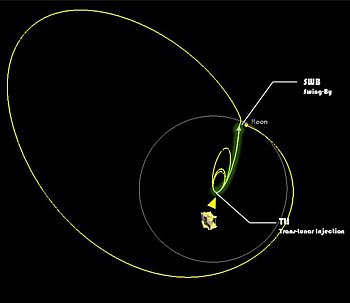
A smaller lander is less expensive to develop, said Ryo Ujiie, manager of the lander system engineering group at ispace, during a call with reporters July 30. It also reduces the size and complexity of the landing legs. The spacecraft will use a different trajectory to go to the moon, employing a low-energy transfer orbit that requires less propellant but takes roughly twice as long as previously planned. “We had to pick a more propellant-efficient orbit” given the reduction in propellant, said Chit Hong Yam, manager of the mission design and operations group. “We’re confident that, with enough checking, we should be able to execute this orbit.”

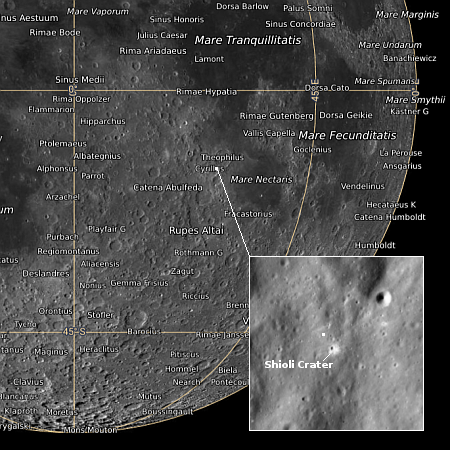
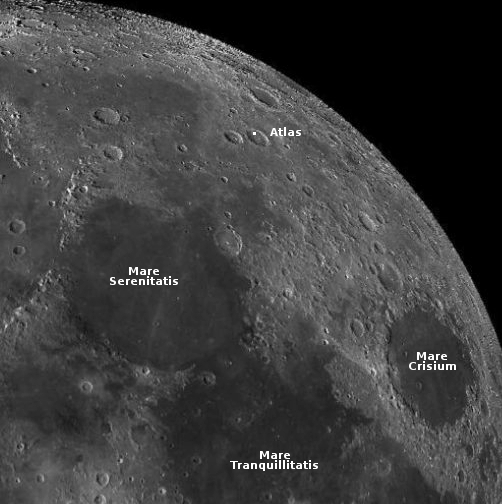
While the overall lander is smaller, it still maintains a payload capacity of 30 kilograms. Once on the surface, likely at one of several mid-latitude sites on the moon under consideration by ispace, it will operate for 12 days.

That first flight will launch on a Falcon 9. The company raised $95 million in private capital in 2017, and still plans a second lander launch in 2023.

After releasing its Ryugu samples Hayabusa-2’s mission will continue

Japan’s space agency JAXA has revealed that it is looking at two fast-spinning asteroids as possible destinations for its Hayabusa-2 spacecraft after it has dropped off its samples from the asteroid Ryugu on December 6.

The candidate asteroids on the agency’s list are asteroid 2001AV43 which Hayabusa2 would reach in November 2029 after flying by Venus, and asteroid 1998KY26 which the probe would reach in July 2031 after passing by another asteroid.

JAXA says both asteroids are rotating on their axis once every 10 minutes. The high-speed spinning indicates that the asteroids’ inner structures are likely different from that of asteroid Ryugu on the first mission, which consists of pieces of rocks.

The spacecraft will no longer have the equipment for returning additional samples, but everything else is functioning and it has the fuel.

UAE’s Hope Mars Orbiter successfully launched

The new colonial movement: The United Arab Emirates first interplanetary probe, its Hope Mars Orbiter, was successfully launched by a Mitsubishi H-2A rocket today from Japan, and is now on its way to Mars.

It will arrive in February 2021, when it will attempt to inject itself into orbit, where it will then be used to study the Martian weather.

The leaders in the 2020 launch race:

16 China
10 SpaceX
7 Russia
3 ULA
3 Japan

The U.S. still leads China in the national rankings, 17 to 16.

Privately-built Japanese smallsat successfully tests new technology

Capitalism in space: A privately-built Japanese smallsat has successfully tested seven new technologies on a six-month long mission that was launched in January on Japan’s newest low-cost Epsilon rocket.

For the first time, the Japanese space agency turned over development of one of its satellites to a startup. Axelspace Co. developed RAPIS-1 for the agency is a short time period, going from design to launch in only about two years, the agency said. The satellite bus features a standardized interface that made attaching instruments and equipment easier. The mission equipment and bus were independently designed to prevent failures of the former from affecting the latter, JAXA said.

The article at the link provides details about the technologies tested, all of which increase significantly the capabilities of smallsats to replace standard larger and heavier satellites.

Interstellar suborbital launch ends in failure

Capitalism in space: A suborbital launch attempt today by Interstellar, a private Japanese smallsat rocket company, failed one minute into flight, with the rocket falling into the sea.

It apparently failed at about 12 kilometers elevation, when it began tumbling. I have embedded the video of the launch below the fold, cued to just before liftoff.

This was their fifth launch attempt. Only the third launch reached their target altitude of 100 kilometers.
» Read more

Japan launches HTV cargo ship to ISS

Japan today successfully launched to ISS the last of its first generation HTV cargo ships.

This was the ninth such cargo ship launched by Japan. The mission was also the last launch of Mitsubishi’s H-2B rocket, Japan’s most powerful. It is being replaced with the H-3 rocket, which they hope to fly for the first time before the end of this year. They also hope that the H3 will be cheaper to operate, and will allow Mitsubishi to garner some commercial business with it, something they failed entirely to do with the H-2B.

This was also Japan’s second launch in 2020, which means they remain outside the leaders in the 2020 launch race:

8 China
6 SpaceX
6 Russia
3 ULA

The U.S. continues to lead China 11 to 8 in the national rankings.

Evidence suggests Ryugu was once closer to Sun

The uncertainty of science: Spectral data collected of the surface of Ryugu by Japan’s Hayabusa-2 probe suggests that the asteroid once spent a period of time much closer to the Sun.

The combined data show an oddly striated world. Ryugu’s equator and poles are tinged blue and are brighter compared with its darker, reddish mid-latitudes. These color differences wouldn’t be obvious to the human eye, although the brightness changes might be.

…As Tomokatsu Morota (University of Tokyo) and colleagues write in the May 8th Science, Ryugu’s boulders likely start bluish. Then a combination of solar wind exposure, meteoroid impacts, and solar heating reddens them. This redder stuff migrates to the asteroid’s mid-latitudes over time, because topographically those are the lowest on Ryugu’s surface. That movement leaves the higher equator and polar regions relatively bluer and brighter.

Based on this data, the scientists posit that Ryugu was closer to the Sun from 800,000 to 8 million years ago, and that the evidence also suggests that the asteroid is only at most 17 million years old.

To put it mildly, there are great uncertainties to these conclusions.

Japan tests new engine for new rocket

Capitalism in space: Mitsubishi has successfully tested the new engine it will use in the new rocket, the H3, that it is building for Japan’s space agency, JAXA.

JAXA reports that the engine fired for the planned duration of 240 seconds (4 minutes) at the space agency’s Tanegashima Space Center. It was the seventh hot fire of the new engine, which is powered by liquid oxygen and liquid hydrogen.

JAXA plans H-3’s first test launch by the end of the nation’s 2020 fiscal year, which began on April 1 and will end on March 31, 2021. It is not known whether work slow downs resulting from the coronavirus (COVID-19) pandemic will affect the schedule.

The two-stage H3 is intended to be a more affordable and flexible replacement for the H-IIA and H-IIB boosters now in use. The new rocket is designed to place payloads weighing 4,000 kg (8,818 lb) or more into sun-synchronous orbit at 500 km (310.7 miles) or 6,500 kg (14,330 lb) into geosynchronous transfer orbit.

I do wish JAXA or Mitsubishi would give this rocket a more interesting name. It would help their woeful marketing attempts to sell it to other customers.

Japan suspends funding to TMT

The Japanese government has confirmed that it has suspended payment of its annual contribution to the budget of the Thirty Meter Telescope (TMT) because of the project’s inability to begin construction on Mauna Kea in Hawaii.

Japanese astronomers strongly prefer placing TMT on Mauna Kea because it is relatively close to Japan, unlike the proposed replacement site in the Grand Canary Islands in the Atlantic.

I would say this is the next nail in the coffin for TMT in Hawaii. The National Science Foundation (NSF) has money to fund construction of a big telescope for U.S. astronomers, but has not been able to decide on whether to give the money to TMT, or to the Giant Magellan Telescope (GMT), already under construction in Chile, or to both.

Astronomers have been lobbying for dual funding, using the argument that the two telescopes are in the opposite north and south hemispheres. Moving TMT to the Grand Canaries, at a higher latitude than Hawaii, strengthens this argument. With the apparent exit of Japan it could be that the way is now cleared to give up on Hawaii and for TMT to make the move to a more welcoming site.

Hawaii’s protesters, supported by the state’s Democratically-controlled government, will of course celebrate. What they will be celebrating however will be the death-knell of science in Hawaii.

Japan to establish its own military space unit

Working in conjunction with the new U.S. Space Force, Japan now plans to establish its own defense-oriented space unit.

The space unit will be added to an existing air base at Fuchu in the western suburbs of Tokyo, where about 20 people will be staffed ahead of a full launch in 2022. The role of the space unit is to conduct satellite-based navigation and communications for other troops in the field, rather than being on the ground.

Abe’s Cabinet in December approved 50.6 billion yen (U.S. $459.2 million) budget in space-related projects, pending parliamentary approval. [emphasis mine]

The highlighted words indicate the unit’s purpose, to provide support from space for the operations of Japan’s allies. This makes sense, as Japan itself has no real army.

Animal life thriving in Fukushima radioactive zone

The uncertainty of science: Despite fears that the radioactivity released from the Fukushima nuclear accident would make life difficult if not impossible within the 80-mile radius exclusion zone surrounding the reactor, animals are thriving there, in large unexpected numbers.

Now, nearly a decade after the nuclear accident, the wildlife populations appear to be thriving. Animals are most abundant in areas still devoid of humans, with more than 20 species captured in the UGA’s camera study.

Particular species that often find themselves in conflict with humans, especially Fukushima’s wild boar, were most often photographed in human-evacuated areas. Without the threat of humankind, wildlife is flourishing. In the years since the nuclear accident, Japan’s wild boar seems to have taken over abandoned farmland — even moving into abandoned homes. The government hired boar hunters to cull the population prior to re-opening parts of the original exclusion zone in 2017.

This phenomenon has happened before. Life inside the Chernobyl exclusion zone in Ukraine became an accidental wildlife preserve after humans left following the nuclear disaster there in April 1986. [emphasis mine]

This story, and that of Chernobyl, does not prove that radioactivity is harmless. Not at all. What it shows is that we know diddly-squat about its effects on life. For example, one study has shown changes in the weight and size of one species of monkey at Fukushima has shrunk, but have flourished nonetheless.

Hayabusa-2 fires main ion engines for return to Earth

After spending two weeks testing its main ion engines just beyond the gravitational sphere of influence of the asteroid Ryugu, Japanese engineers today initiated full engine operation, beginning the spacecraft’s journey back to Earth.

Hayabusa-2 is expected to return to Earth space in December 2020, where it will release a small capsule containing the two samples it obtained of Ryugu will be released to land on Earth and be recovered. At that point, if Hayabusa-2 is still in good condition it will be available to send to other locations in the solar system.

1 4 5 6 7 8 16