H3 failure delays Japan’s entire space program

According to one official of Japan’s space agency JAXA, the failure of the first launch of its new H3 rocket in early March now threatens the schedule of much of Japan’s entire space program, even those missions being launched on the older H2A rocket.

The investigation into the launch failure, when the upper stage of the H3 rocket failed to ignite, remains unfinished with no word when it will be completed.

The H3 upper stage uses an engine designated LE-5B-3 developed by MHI [Mitsubishi Heavy Industries] and similar to the LE-5B engine used on the existing H-2A rocket. That is putting launches of the H-2A on hold while the investigation continues.

That may delay the upcoming launch of two science missions sharing an H-2A. The X-Ray Imaging and Spectroscopy Mission (XRISM), an X-ray astronomy spacecraft, and the Smart Lander for Investigating Moon (SLIM), a lunar lander, were scheduled to launch together as soon as May on an H-2A.

The article notes that XRISM replaces a 2016 Japanese X-ray telescope that failed immediately after launch. That failure then was bad, but just as bad is the seven years it has taken JAXA to have a replacement ready.

The H3 failure also threatens a JAXA Mars mission scheduled for launch in 2024, during the next launch window to Mars.

Japan’s space program more and more resembles Russia’s. It is controlled entirely by the government, which it appears does not allow competition within Japan, as all major rocket work is apparently confined to Mitsubishi. There have been unending quality control problems, within many probes as well as in the development of both the H3 and the Epsilon rockets. And the pace of operations is slow, much slower than other nations or companies.

It seems a major reform is needed, and it should start with Japanese government officials reading Capitalism in Space. They need to open up competition and release their space program from the control of JAXA, especially because JAXA is not doing a very good job. Like NASA, it would be better if JAXA stopped being a designer and builder, and become merely a customer obtaining products from many different competing private companies.

4 comments

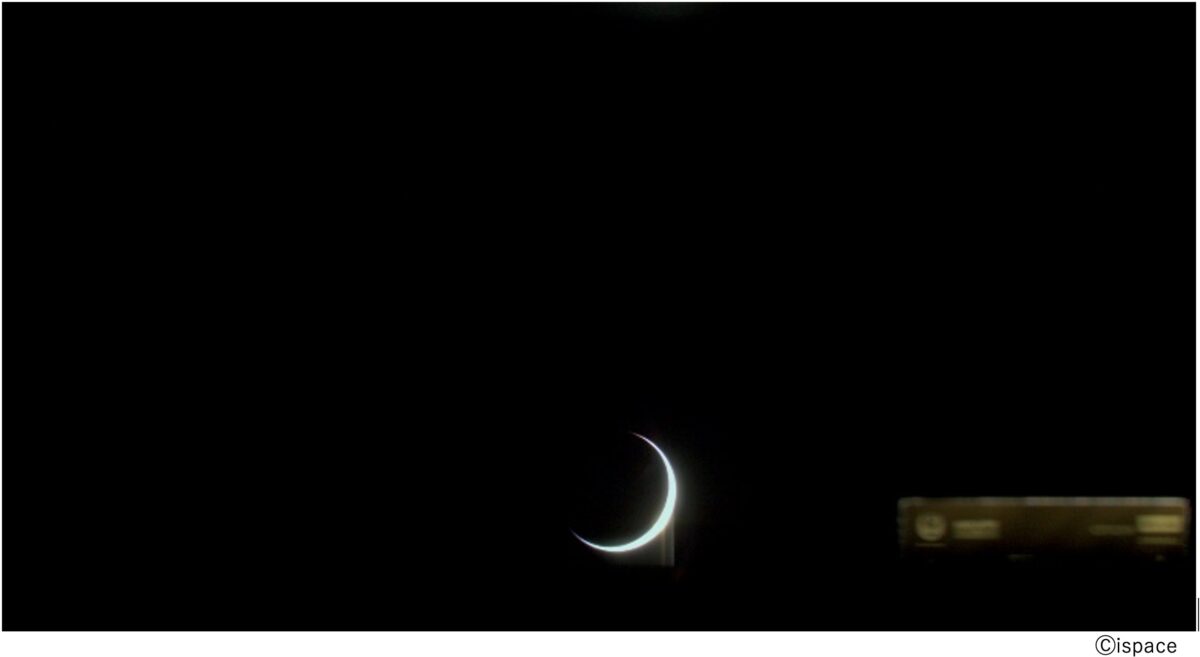
Hakuto-R1 snaps first picture of Moon from lunar orbit

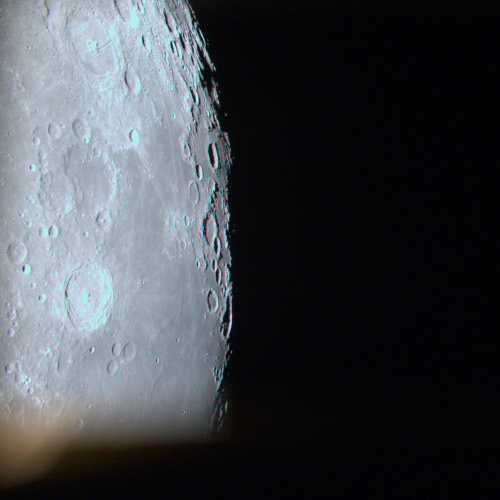
Hakuto-R1's first released image from lunar orbit
Click for original image.

The science team for Ispace’s Hakuto-R1 privately-built lunar orbiter/lander earlier this week released the spacecraft’s first picture of the Moon since entering lunar orbit on March 20, 2023.

That image is to the right, cropped and reduced to post here. The photo resolution is quite good. It also demonstrates that the spacecraft’s attitude control systems for pointing the camera are working correctly.

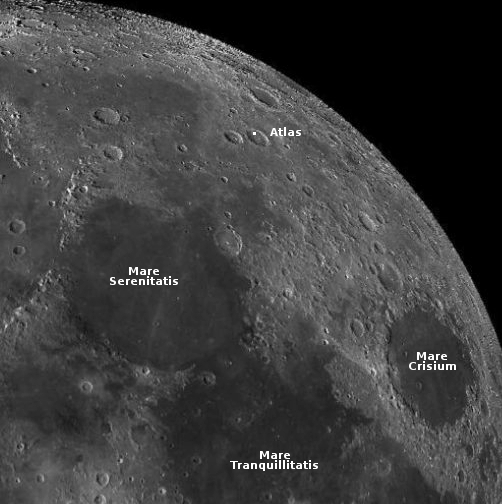
Launched on December 11, 2022 by a Falcon 9 rocket, Hakuto-R1 will land in Atlas Crater on the northeast quadrant of the Moon’s visible hemisphere sometime in April, making it the first successful private commercial planetary lander to reach another world. If successful, it will then release the United Arab Emirates Rashid rover, that nation’s first planetary lander but its second planetary mission, following the Mars orbiter, Al-Amal, now circling Mars.

6 comments

Japan’s new H3 rocket’s second stage fails during first launch

Japan’s new H3 rocket failed today on its first launch when something went wrong at second stage ignition, after separation from first stage.

Once controllers realized the rocket would not reach orbit, they initiated a self-destruct sequence, ending the mission.

This is very bad news for Japan’s space effort. Right now it does not have a viable competitive commercial rocket industry. All rocket construction is supervised and controlled by its space agency JAXA, which almost exclusively uses Mitsubishi to build what it wants. With the H3 failing (built by Mitsubishi) and the H2A and H2B (both also built by Mitsubishi) slated for retirement, JAXA does not have a rocket it can use for future missions.

1 comment

JAXA reschedules first H3 rocket launch following investigation

Japan’s space agency JAXA has rescheduled its second attempt to launch its new H3 rocket for March 6, 2023, following the completion of its investigation into the launch abort at T-0 on February 16, 2023.

As a result of the investigation, it is estimated that the first-stage flight controller malfunctioned due to transient fluctuations in the communication and power lines that occurred during electrical separation between the rocket and the ground facilities.

As a result, the solid rocket strap-on boosters did not ignite as planned, and the rocket’s computer, sensing this anomaly, shut down its main engines. The press release says they are installing “countermeasures” but provides no other information.

0 comments

Japanese startup enters the high altitude balloon space tourism business

A Japanese startup, Iwaya Giken, announced yesterday that it is building a two-person capsule that will carry two persons, a pilot and passenger, on high-altitude stratospheric tourist balloon flights for about $180K per ticket.

The company, Iwaya Giken, based in Sapporo in northern Japan, has been working on the project since 2012 and says it has developed an airtight two-seat cabin and a balloon capable of rising up to an altitude of 25 kilometers (15 miles), where the curve of the Earth can be clearly viewed. While passengers won’t be in outer space — the balloon only goes up to roughly the middle of the stratosphere — they’ll be higher than a jet plane flies and have an unobstructed view of outer space.

The company teamed up with major Japanese travel agency JTB Corp., which announced plans to collaborate on the project when the company is ready for a commercial trip. Initially, a flight would cost about 24 million yen ($180,000), but Iwaya said he aims to eventually bring it down to several million yen (tens of thousands of dollars).

No date for the first launch was mentioned. This company now joins two American balloon companies as well as a Spanish balloon company, all planning to offer rides to the edge of space.

4 comments

First launch of Japan’s H3 rocket aborts at T-0

In its first attempt to launch its new H3 rocket today the rocket’s main liquid-fueled engines ignited, but then the two strap-on solid rockets failed to ignite at T-0, causing that main engine to shut down to protect the rocket and payload.

I have embedded the live stream below, cued to about T-39. At the end of the broadcast the rocket appeared in good condition, though it was still unclear what the caused the problem.

At the moment there is no word when JAXA, Japan’s space agency, will attempt another launch. The H3 is years behind schedule, and was developed in the hope it would be more efficient and cost less to launch than the H2A rocket Japan presently uses.
» Read more

5 comments

Japan’s H3 rocket’s first launch delayed due to problem in “flight system”

Japan’s space agency JAXA announced today that it will delay the first launch of its new H3 rocket for two days, to February 15, 2023, in order to fix an unidentified problem in the rocket’s “flight system.”

The H3 rocket’s first launch is already three years behind schedule. In 2022 the launch was delayed for a full year due to the discovery of defects in its main engines.

This government-controlled rocket was supposed to allow Japan to compete in the international launch market. It does not appear at this point that it will be able to do a very good job at that task. Though Mitsubishi is the main contractor, it appears JAXA is in charge and owns it. Such arrangements rarely produce a cheap, efficient, and reliable product for the commercial market.

1 comment

Japan’s H2A rocket successfully launches radar surveillance satellite

Japan’s space agency JAXA today successfully launched a radar surveillance satellite using its H2A rocket, built by Mitsubishi.

This was Japan’s first launch since December 2021, a gap of more than a year, with no launches in 2022. JAXA hopes to finally launch its unimaginatively named H3 rocket, the replacement for the H2A, on February 12, 2023, after a two year delay because of cracks found in the engines.

The 2023 launch race:

5 China
5 SpaceX
1 Rocket Lab
1 Japan

0 comments

Hakuto-R successfully completes second mid-course correction

Lunar map showing Hakuto-R's landing spot
Hakuto-R’s planned landing site is in Atlas Crater.

According to Ispace, the private lunar lander company based in Japan, its Hakuto-R lander has now successfully completed second mid-course correction, and is functioning as expected on its way to the Moon.

The maneuver was carried out shortly after midnight on Jan. 2, 2023 (Japan Standard Time) and operations were managed from ispace’s mission control center located in Nihonbashi, Tokyo. This orbital control maneuver is the second maneuver to occur while the lander has been traveling to the moon. The first orbital control maneuver was completed on December 15, 2022. The second maneuver was carried out at a greater distance from Earth and lasted for a longer period than the first maneuver, verifying the company’s capability to carry out orbital maneuvers under various conditions.

As of Jan. 2, 2023, the lander has traveled approximately 1.24 million kilometers from the Earth and is scheduled to be at its farthest point of approximately 1.4 million km from the Earth by Jan. 20, 2023. Once the lander reaches its farthest point from Earth, a third orbital control maneuver may be performed, depending on its navigational status.

While Hakuto-R carries a number of commercial payloads — including Rashid, the first lunar rover built by the United Arab Emirates (UAE) — its primary goal is engineering. Ispace is using this mission to demonstrate its ability as a company to do this, in anticipation of later commercial planetary missions.

0 comments

Hakuto-R sends first image back to Earth

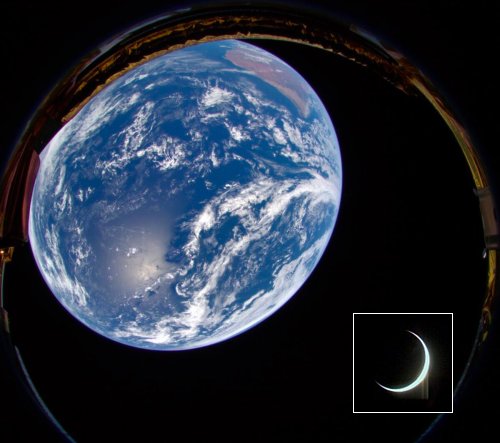
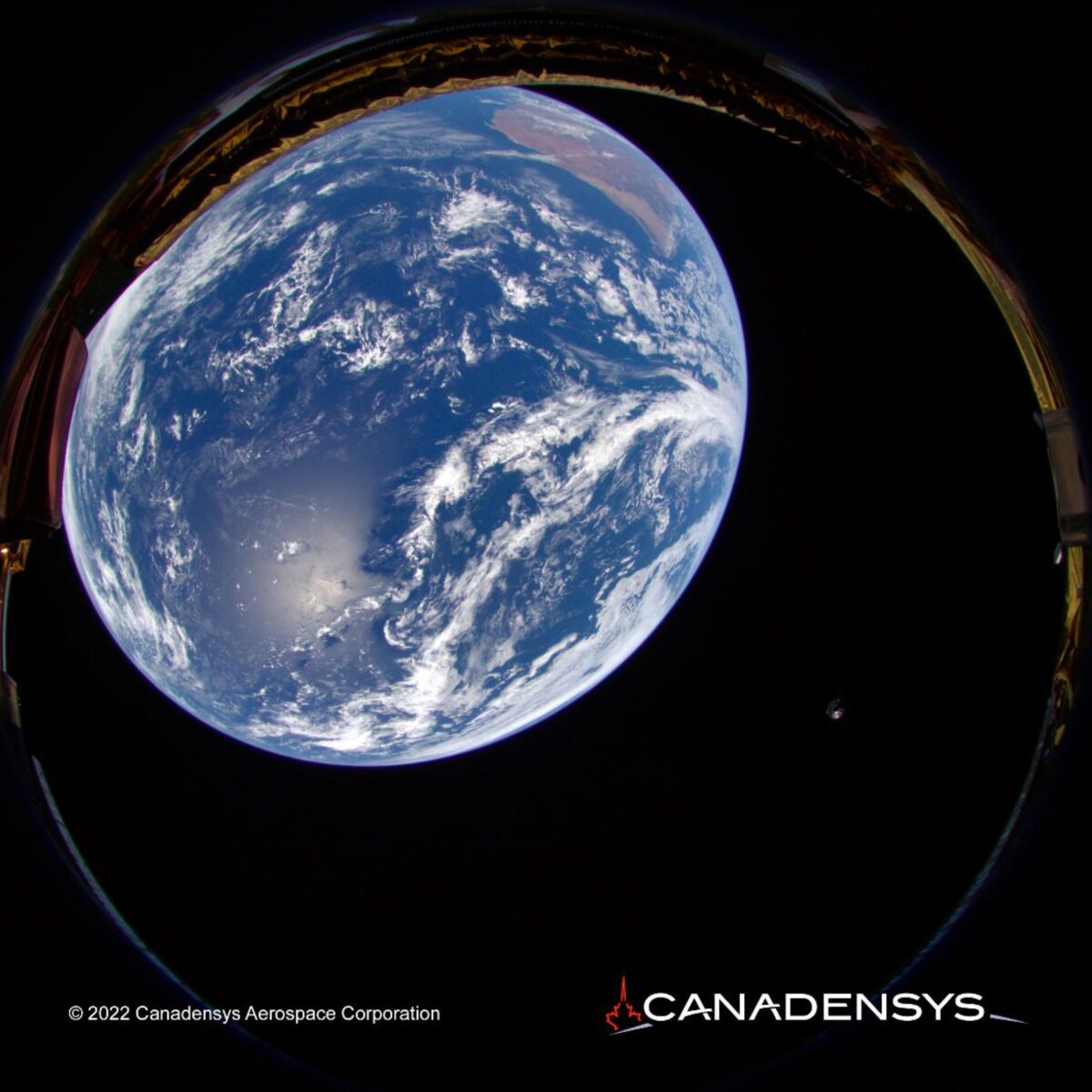
Hakuto-R's first released images
Go here and here for original images.

The private Hakuto-R lunar lander, owned and built by the Japanese-based company Ispace, is operating as planned and has sent back its first images from two different cameras.

The larger image to the right was taken by a camera on one of Canada’s payloads. It shows the Earth two minutes after launch, with the rocket’s upper stage acting as a frame. The inset, reduced to insert here, was taken 19 hours after launch by the lander’s main camera, and shows the Earth at night. Both images demonstrate that the spacecraft is stable and functioning perfectly.

The goals of the mission remain mostly engineering. Its focus is demonstrating first that Ispace’s lander can do what it says so that future customers will be confident buying payload space. Similarly, the payloads, such as the UAE’s Rashid rover, are doing the same thing.

0 comments

JAXA: one of Japan’s astronauts fabricated data in ground-based experiment

According to Japan’s space agency JAXA, one of its astronauts, Satoshi Furukawa, falsified and fabricated the research results of a ground-based experiment run from 2015 to 2017.

The experiment asked a total of 42 test subjects to spend 14 days in a mock space station, during which blood and urine samples were collected.

A JAXA probe later found multiple misconduct with the research, including creating data without a supervisory researcher and intentionally rewriting evaluations. The study also lacked sufficient assessment methods and adequate research notes, and the credibility of the data wasn’t assured.

These wrongdoings were discovered after the experiments had been completed, and since the research was subsequently suspended no papers were published.

Furukawa is scheduled to fly to ISS in ’23. Though JAXA says he and his research team will be punished, it is unclear whether that means his flight has been canceled.

2 comments

Launch of Ispace’s Hakuto-R lunar lander delayed two days

Ispace yesterday announced that the launch of its Hakuto-R lunar lander, carrying a number of private and government payloads including the UAE’s Rashid rover, has been delayed two days to November 30, 2022 due to weather and scheduling issues.

The spacecraft will be launched from Cape Canaveral on a Falcon 9 rocket. The weather and the Thanksgiving holiday forced NASA and SpaceX to push back the launch of a cargo Dragon to ISS to November 26th. This in turn impacted Hakuto-R’s launch date.

0 comments

Japan to stay on ISS to 2030 in exchange for an astronaut flight to Gateway

NASA yesterday announced that Japan has agreed to remain on ISS through 2030, the first international partner to do so, and in exchange will get a Japanese astronaut flight to the Lunar Gateway station.

Under the Gateway Implementing Arrangement, NASA will provide an opportunity for a Japan Aerospace Exploration Agency (JAXA) astronaut to serve as a Gateway crew member on a future Artemis mission. This formally represents the first commitment by the U.S. to fly a Japanese astronaut beyond low-Earth orbit aboard NASA’s Space Launch System (SLS) rocket and Orion spacecraft.

I remain very doubtful in the long run these flights will occur on SLS, which simply cannot launch frequently enough to make the entire program viable. More likely with time the rocket will be replaced by other commercial carriers.

4 comments

The Battle of Samar

An evening pause: For Veterans Day, a story about the men who in World War II risked their lives and died to make it possible for freedom to reign for the next three-quarters of a century.

Hat tip Mike Nelson. For a much longer and more detailed documentary describing this battle, go here.

11 comments

Japan issues license allowing Ispace to do private business on Moon

With the launch of Ispace’s first lunar lander, Hakuto-R, only two weeks away, the private company has obtained a license from the Japanese government to conduct private transactions on the Moon.

The license allows Ispace to complete a contract awarded by NASA in December 2020, to acquire regolith from the lunar surface to sell to the space agency. During M1, Ispace is expected to collect regolith that accumulates on the footpad of the landing gear during the touchdown on the surface, photograph the collected regolith and conduct an “in-place” transfer of ownership of the lunar regolith to NASA. After ownership transfer, the collected material becomes the property of NASA, under the Artemis program. Under the contract, the lunar regolith will not be returned to Earth.

Under a second contract awarded to Ispace’s subsidiary [Ispace EU] … Ispace EU will acquire the lunar material on its second mission scheduled for 2024 as part of the HAKUTO-R program. An application for Mission 2 will be submitted to obtain a separate authorization.

This mission will also land the UAE’s first lunar rover, Rashid.

According to the Outer Space Treaty, it is the responsibility of each nation to regulate the private operations of its citizens in space. This action thus follows the laws that Japan has passed to supervise commercial space companies.

0 comments

JAXA test fires Japan’s new H3 rocket

Delayed two years because of engine cracks, Japan’s space agency JAXA yesterday successfully completed a static fire test of its new H3 rocket.

JAXA aims to conduct the first launch of an H3 rocket before the end of this fiscal year. The space agency will spend about two weeks analyzing data from the latest test to determine whether it was successful.

Two first-stage engines were fired for about 25 seconds during the test, causing smoke to billow from the base of the rocket towards the sea.

Assuming no new issues are found in the test data, Japan hopes to complete the first H3 launch in 2023.

0 comments

Japanese private lunar lander HAKUTO-R now scheduled for launch on November 22nd

The private lunar lander HAKUTO-R, built by the Japanese company Ispace, has now been scheduled for a November 22, 2022 launch on a Falcon 9 rocket.

The launch of the first commercial lunar lander mission to attempt a landing on the Moon was originally scheduled between November 9 -15. However, ispace stated that after consulting with SpaceX, the new tentative launch date would be moved to November 22 because it “allows for best preparation for the mission when considering the fuel-loading schedule for the lander and launch date availability.” SpaceX has a busy schedule at the Cape and NASA still has the Artemis 1 launch scheduled for November 14.

HAKUTO-R’s primary mission is to test the lander. However, it also includes several customer payloads, the most significant of which is the Rashid rover from the United Arab Emirates. Rashid, which is about the size of a Radio Flyer red wagon, will operate for one lunar day, about two weeks. While its main mission is to test the engineering and to train the engineers who built it, it will have two cameras for taking pictures. In addition, on its wheels are test adhesive patches of different materials, designed to see how each material interacts with the Moon’s abrasive dust.

3 comments

JAXA reveals cause of Epsilon rocket failure

Japan’s space agency JAXA yesterday announced the results of its investigation into the launch failure of its Epsilon rocket on October 12, 2022, pinpointing the cause to the attitude control system in the solid-fueled second stage.

After the launch of the three-stage solid-propellant rocket, the first-stage rocket engine worked normally and was detached as scheduled. The second-stage engine showed no combustion problem, but an abnormal attitude was confirmed immediately after the engine used up its fuel, JAXA told a science ministry meeting.

The attitude was off to the lower right by some 21 degrees more than planned, according to JAXA. The space agency judged that the rocket could not enter Earth orbit and sent a self-destruction signal to the rocket 6 minutes and 28 seconds after liftoff.

Analyses of flight and other data showed that one function of a reaction control system, which uses thrusters to control attitude and other factors, did not work after the combustion of the second-stage engine, according to JAXA.

Epsilon is Japan’s attempt to produce a low cost rocket, though it has only launched a handful of times since its first launch in 2013, suggesting it has not been attracting many customers.

0 comments

Ispace targets November 9-15 launch window for first commercial lunar lander

The private Japanese company Ispace has now scheduled the launch of its commercial lunar lander Hakuto-R on a SpaceX Falcon 9 rocket for a November 9-15, 2022 launch window.

Though the lander’s primary goal is to see if this lander will work, it also includes several customer payloads, the most significant of which is the Rashid rover from the United Arab Emirates. Rashid, which is about the size of a Radio Flyer red wagon, will operate for one lunar day, about two weeks. While its main mission is to test the engineering and to train the engineers who built it, it will have two cameras for taking pictures. In addition, on its wheels are test adhesive patches of different materials, designed to see how each material interacts with the Moon’s abrasive dust.

0 comments

Japan’s Epsilon rocket fails during launch

Early this morning Japan’s Epsilon rocket failed during a launch intended to put eight satellites into orbit.

Live coverage by JAXA of the launch showed what appeared to be a stage 3 ignition failure, followed by a callout that the flight termination system (FTS) was activated. It’s the first Epsilon launch not to reach orbit.

This rocket was developed by Japan to offer a lower cost option to his H2 and new H3 rockets. The first launch of the H3 is set for March 2023 after several long delays due to problems with the rocket’s engine.

0 comments
1 5 6 7 8 9 24