Japan’s H3 rocket launches successfully for the second time

Japan’s space agency JAXA today successfully completed the second successive launch of its new H3 rocket, placing an Earth observation satellite into orbit.

This was the third launch of the H3, with the first in May 2023 a failure, and the second a success in February 2024.

I have embedded the video of the launch below, cued to T-15 seconds. This was Japan’s third launch in 2024, exceeding last year’s total of two and matching its total from 2024.

The leader board for the 2024 launch race remains unchanged:

69 SpaceX
29 China
8 Russia
8 Rocket Lab

American private enterprise still leads the world combined in successful launches, 80 to 44, while SpaceX by itself still leads the entire world, including other American companies, 69 to 55.
» Read more

1 comment

Japan’s space agency reveals it was hacked in 2023

Japan’s space agency JAXA today revealed that beginning in 2023 and periodically into this year it has been attacked repeatedly by hackers, with data from more than 10,000 files stolen.

Attacks occurred in June 2023 and multiple times a year, although investigations are ongoing regarding whether more information was stolen in this year’s attacks.

In addition to internal data, potentially compromised entities include NASA, Toyota Motor Corp., Mitsubishi Heavy Industries Ltd. and the Defense Ministry, with which JAXA has nondisclosure agreements. Information from numerous aerospace and defense-related organizations and companies was also exposed.

JAXA stated that no sensitive information related to national security or rocket technologies was stolen in last year’s breach. Personal data of approximately 5,000 JAXA personnel and employees from partner companies was used to access the Microsoft 365 accounts of JAXA executives.

It appears JAXA officials only found out about the attack when police told them about it months after the June 2023 attack. Agency officials now say no sensitive rocket or satellite data was stolen. Instead, it appears the attack targeted personal communications as well as research facilities.

The report provided no indication about the source of these attacks, but noted that a 2016 attack is known to have come from China.

1 comment

Engineers lose contact with Japan’s Akatsuki Venus orbiter

According to a terse announcement by Japan’s space agency JAXA on May 29, 2024, engineers from its Institute of Space and Astronautical Science (ISAS) have lost contact with Japan’s Akatsuki Venus orbiter.

ISAS has lost contact with Akatsuki after an operation in late April due to an extended period of low attitude stability control mode, and is currently making efforts to reestablish communication with the spacecraft.

Akatsuki has had a spotty and complex life. It was launched in 2010, but failed to enter Venus orbit as planned in two attempts in 2010 and 2011 because of a failure in its main engine. Engineers then improvised and — after orbiting the Sun for several years — were able to get it into Venus orbit in 2015 using only its attitude thrusters. Its primary mission ended in 2018, but it continued to study Venus’ atmosphere since.

Assuming Akatsuki is not recovered, as of now there are no operating orbiters at Venus. A mission by the private company Rocket Lab is expected to launch before the end of this year, followed by an orbiter from India in 2026. A NASA mission meanwhile is in limbo and will likely never fly, due to budget decisions at the agency, which took its funding and gave it to the troubled Mars Sample Return mission.

1 comment

SLIM goes dark

SLIM's landing zone
Map showing SLIM landing zone on the Moon.
Click for interactive map.

The Japanese lunar lander SLIM has failed to respond to ground commands sent soon after dawn, ending the lander’s fourth night on the Moon.

SLIM was never expected to survive the harsh conditions of even a single 14-day-long lunar night after landing on the Moon in January 2024. Its primary mission had been to test precision autonomous landings, which it did successfully (though it landed on its side when one nozzle fell off just before touchdown). Yet, it then survived three lunar nights, resuming communications at dawn.

Its failure now is therefore no surprise, and actually marks a magnificent engineering success. The spacecraft’s hardware was proven robust enough to survive the very cold temperatures during lunar night, and suggests that future Japanese lunar landers using SLIM designs will function as well.

1 comment

XRISM X-ray space telescope functioning despite closed “aperture door”

XRISM, a joint X-ray space telescope built by NASA and Japan’s space agency JAXA, is collecting data despite the failure on one instrument of an aperture door to open.

In January, project scientists said that XRISM was working well except for an aperture door, also called a gate valve, for the Dewar on its imaging instrument, Resolve, which failed to open. The instrument can still operate with the door closed, although the door, made of beryllium, does attenuate some X-rays at lower energies.

At the time, efforts were underway to try and open the gate valve. However, speaking at a May 7 meeting of the National Academiesโ€™ Board on Physics and Astronomy, Mark Clampin, director of NASAโ€™s astrophysics division, said those efforts were on hold for the next year and a half.

Instead, the science team decided to proceed with science operations, since the telescope has two other working instruments, and can get data even from this hindered third.

XRISM is a replacement of a previous JAXA X-ray telescope that launched in 2016 but failed immediately.

0 comments

Astroscale releases image of abandoned upper stage taken by its ADRAS-J orbital tug during rendezvous operations

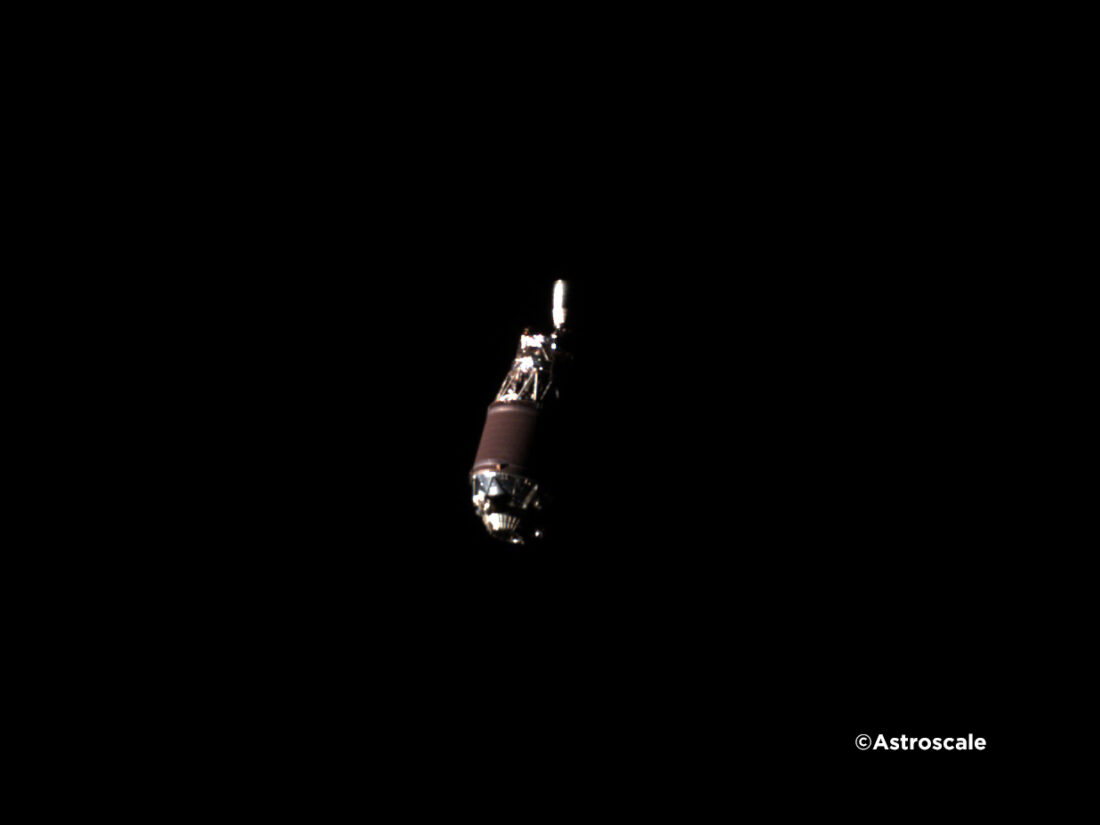
abandoned upper stage, taken by ADRAS-J
Click for original image.

Capitalism in space: The Japanese orbital tug startup Astroscale today released an image its ADRAS-J spacecraft took of an abandoned rocket upper stage during rendezvous operations.

That image is to the right, cropped to post here. ADRAS-J’s mission is to test autonomous rendezvous and close proximity operations as well as obtain images of the stage in order to prepare for a second mission that will grab the abandoned stage with a robot arm and de-orbit it.

Both missions have been funded by Japan’s space agency JAXA. The mission however is unprecedented by that agency, in that it did not design the mission, but instead hired this private startup to do it, signaling that agency’s shift from being the designer, builder, and owner of such projects to becoming simply a customer. If successful, the mission will be the first to capture a very large piece of space junk and remove from orbit.

2 comments

Astroscale wins contract to complete removal of large piece of space junk

Capitalism in space: Japan’s space agency JAXA has now awarded the orbital tug startup Astroscale a contract to complete the removal of an abandoned upper stage from a previously launched rocket.

Astroscale has already flown the first phase of this project, with its ADRAS-J tug flying in March and April a demo rendezvous mission with the rocket stage, getting to within several hundred meters of the stage. The second phase, now approved, will grab the stage with a robot arm and then de-orbit it. No date for the launch of that second phase was announced.

0 comments

Japan awards development agreements with four rocket startups

Capitalism in space: Japan’s space agency this week awarded development agreements to four Japanese rocket startups, signaling that nation’s attempt to shift from depending on JAXA’s government-built rockets to becoming a customer of an industry of competing commercial rocket companies.

Japan Aerospace Exploration Agency (JAXA) and Interstellar signed a basic agreement in March. Space One, whose Kairos solid rocket exploded seconds after liftoff earlier this month, was also selected under the JAXA-SMASH (JAXA-Small Satellite Rush Program) initiative. Two further companies also signed basic agreements. These are Space BD and Mitsui Bussan Aerospace, which offer services aimed at the commercial utilization of space.

The agreements mean the companies will have priority for future contracts. These are designed to support private-sector entities capable of launching satellites developed under JAXAโ€™s small satellite missions and advance the commercialization of space transportation services.

These deals are part of a new policy announced in November that includes $6.6 billion to help encourage the growth of a Japanese commercial space sector, independent of that nation’s space agency.

It remains uncertain whether JAXA will let go the purse strings and actually allow these new companies ownership of what they do. The deals as described sound like the agency is using its power to attempt to capture the companies, rather than encourage their independent growth.

We shall have to wait and see. On its face this announcement is very good news for Japan’s space industry, as it suggests that things might be changing.

0 comments

SLIM survives its second lunar night, re-establishes contact

SLIM's view after surviving its 2nd night on the Moon
Click for original image.

According to Japan’s space agency JAXA, the SLIM lunar lander has successfully survived its long night on the Moon, re-establishiing contact with ground controllers yesterday.

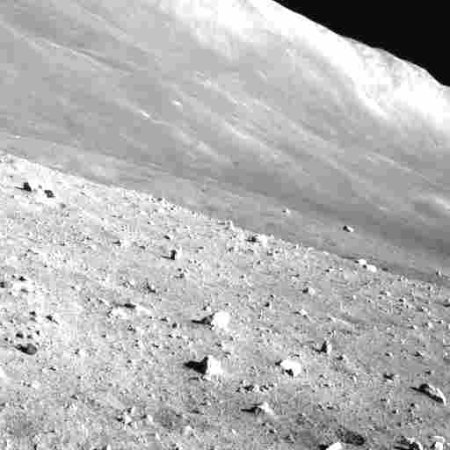
Last night, we received a response from #SLIM, confirming that the spacecraft made it through the lunar night for the second time! Since the sun was still high and the equipment was still hot, we only took some shots of the usual scenery with the navigation camera

One of those pictures is to the right, reduced slightly to post here. It looks west across the floor of Shioli Crater, with the far rim about a thousand feet away. The picture is identical to previous images, tilted because the spacecraft landed on its side and has limited scientific capabilities, being primarily an engineering test mission.

That this engineering test has now survived two lunar nights speaks well for its design. It tells us that future Japanese lunar landers (and rovers) will have a good chance of surviving for a long time on the Moon.

5 comments

SLIM put back to sleep for second lunar night

Engineers at Japan’s space agency JAXA have put their SLIM lunar lander back to sleep on February 29, 2024 with the hope it might survive its second night on Moon.

“Although the probability of failure will increase due to repeated severe temperature cycles, SLIM plans to try operation again the next time the sun shines (in late March),” the update from JAXA read, automatically translated from Japanese to English by Google.

Like Intuitive Machines Odysseus lunar lander, SLIM’s overall mission was a success, as it proved it could land automatically within a very small target zone and do so softly enough that it could send back data to Earth. The failures and problems experienced by SLIM, such as having a nozzle fall off causing it land sideways are simply fixes that can be instituted on future missions.

0 comments

SLIM survives lunar night!

SLIM's view after surviving lunar night
Click for original image.

Japan’s space agency JAXA yesterday announced in a tweet that its SLIM lunar lander had survived the harsh lunar night, and that engineers had resumed communications.

The picture to the right was taken after communications were resumed. It shows SLIM’s view of 885-foot-wide Shioli Crater, the opposite rim the bright ridge in the upper right about a thousand feet away. From this news report:

The mission team received telemetry from SLIM around 5:00 a.m. Eastern (1000 UTC). The temperature of the communication equipment was extremely high, according to JAXA, due to the sun being high over the landing area. Communication was terminated after only a short period of time, JAXA stated.

The SLIM team is however now preparing to conduct observations with SLIMโ€™s multiband spectroscopic camera (MBC) later in the lunar day. MBC is designed to ascertain the composition of the lunar surface and could provide insights into the moonโ€™s history. Sunset over Shioli crater, on the rim of which SLIM landed, will occur Feb. 29.

Surviving the long lunar night is a major achievement. It means Japan’s technology here is capable of doing long missions on the Moon.

0 comments

Rocket Lab successfully launches Japanese commercial space junk demo satellite

Rocket Lab today successfully launched a commercial test mission of commercial space junk removal satellite, dubbed ADRAS-J and built by the Japanese company Astroscale, in partner with Japan’s space agency JAXA. It is designed to demonstrate the ability to make a close rendezvous of a large piece of space junk and then photograph and inspect it closely to determing it precise condition to facilitate later removal efforts.

The leaders in the 2024 launch race:

15 SpaceX
8 China
2 Iran
2 Russia
2 Japan
2 India
2 Rocket Lab

A lot of launch entities grouped at 2. Expect Iran and Japan to fall away as Russia, India, and Rocket Lab continue to launch regularly this year, with Russia and Rocket Lab eventually outpacing India.

American private enterprise now leads the entire world combined in successful launches 18 to 16, with SpaceX still trailing the entire world combined (excluding American companies) 15 to 16.

2 comments
1 2 3 4 5 6 10