Testing new high speed rotors for the next generation of Mars helicopters
Ingenuity with missing blade
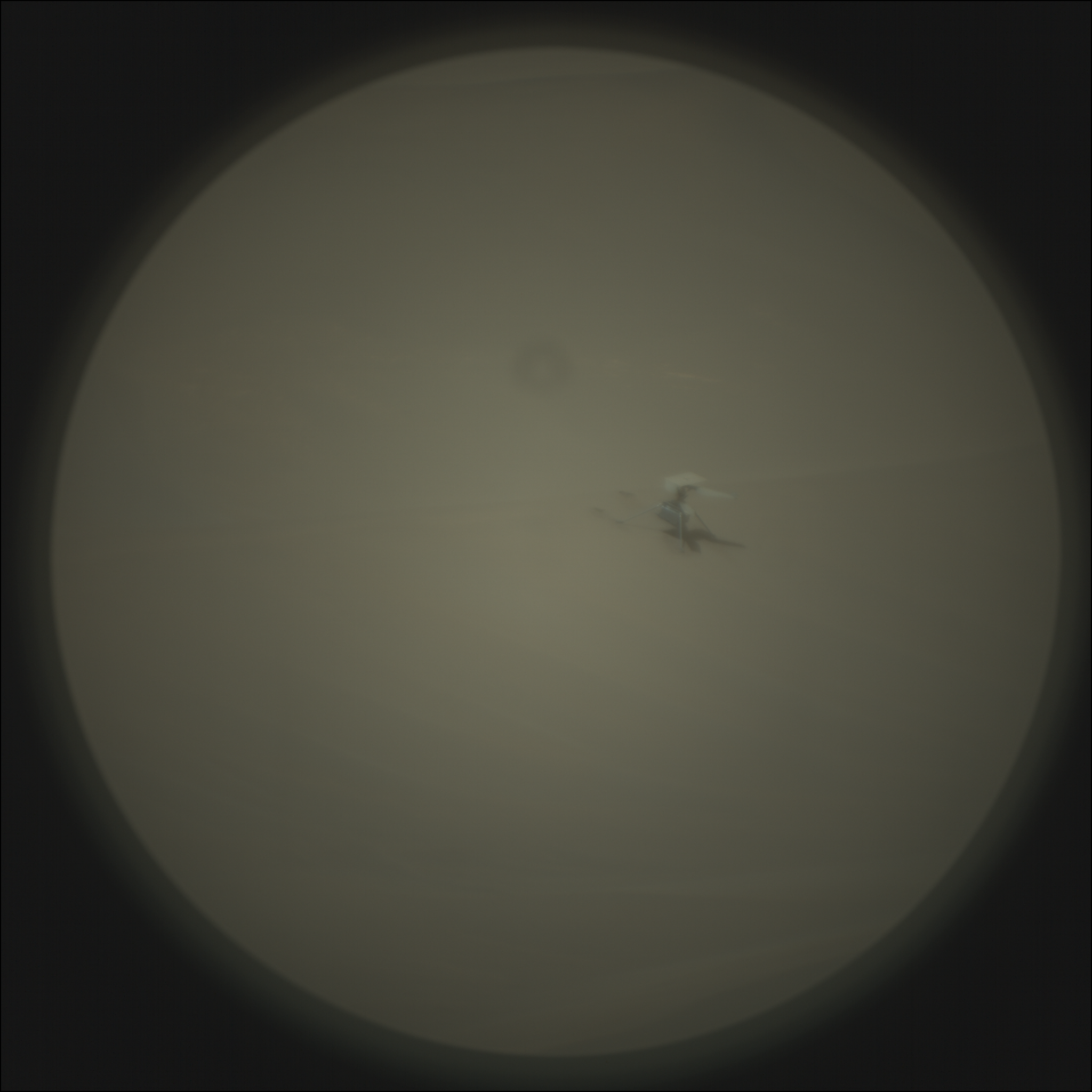
Ingenuity with its missing blade, at its final resting place on Mars.
Click for original image.

Engineers from JPL and the aerospace company AeroVironment have been testing a new set of high speed rotors that they hope to use on the next generation Mars helicopters, designed to increase their payload capacity by as much as 30%.

The rotors of Ingenuity — the first helicopter to fly on Mars — never spun faster than 2,700 rpm, because at faster speeds it would be approaching the speed of sound (on Mars), when unpredictable things could happen. Engineers are pushing those limits with these new rotors, in a chamber mimicking the thin Martian atmosphere.

The test engineers had taken the precaution of lining part of the chamber with sheet metal in case the blades broke apart during the supersonic experiment. From a control room a few yards away from the chamber, the team watched displays showing data and a view inside the chamber as the rpm climbed as high as 3,750. At that rate, the tips were traveling at Mach 0.98 [just under the Martian speed of sound]. Then the engineers activated a fan inside the chamber that pelted the rotors with headwinds. After each run, they increased in wind velocity for the next run.

The team pushed rotor tip speeds to Mach 1.08, boosting the Mars vehicle’s lift capability by 30%. This breakthrough allows future missions to support heavier scientific payloads, including advanced sensors and larger batteries for extended flight. Next the team tried their luck with the two-bladed SkyFall rotor. Because it is slightly longer than the three-bladed version, only 3,570 rpm was needed to achieve the same near-supersonic speed at the rotor tips prior to introducing the headwinds.

NASA administrator Jared Isaacman has said he wants to send a fleet of helicopters to Mars in 2028, on that first nuclear-powered mission. Whether or not that mission happens as he proposed, there is ample evidence scientists plan on sending more helicopters there in the next few years (see here, here, here). These tests lay the groundwork for those future missions.

2 comments

Someone is apparently considering putting a helicopter on Starship when it goes to Mars

Potential Starship helicopter location

In my regular trolling through the images sent down from Mars Reconnaissance Orbiter (MRO), I sometimes come across things that imply truly exciting future missions. That happened when in 2019 I found a bunch of photos each labeled as a “candidate landing site for SpaceX Starship”. Without fanfare SpaceX had begun researching locations for where it intended to land Starship on Mars, in the northern lowland plains, research that it later solidified considerably.

Similarly, I have found MRO images in 2022 suggesting scientists were thinking of running a helicopter mission inside Valles Marineris, the largest canyon in the solar system. Another image in 2024 suggested that a helicopter mission might go to another region in Mars’s southern cratered highlands.

The image to the right, cropped, reduced, and sharpened to post here, is another new example of a potential Martian helicopter mission. It was taken on August 19, 2025 and is labeled provocatively “Characterize Possible Rotorcraft Landing Site.” Unlike the previous two proposed helicopter locations, however — which appeared to be aimed at uncertain NASA funding — this image’s location suggests it is far more certain, and might launch far sooner than you can imagine.
» Read more

11 comments

Another helicopter mission under development for Mars?

Another helicopter mission for Mars?
Click for original image.

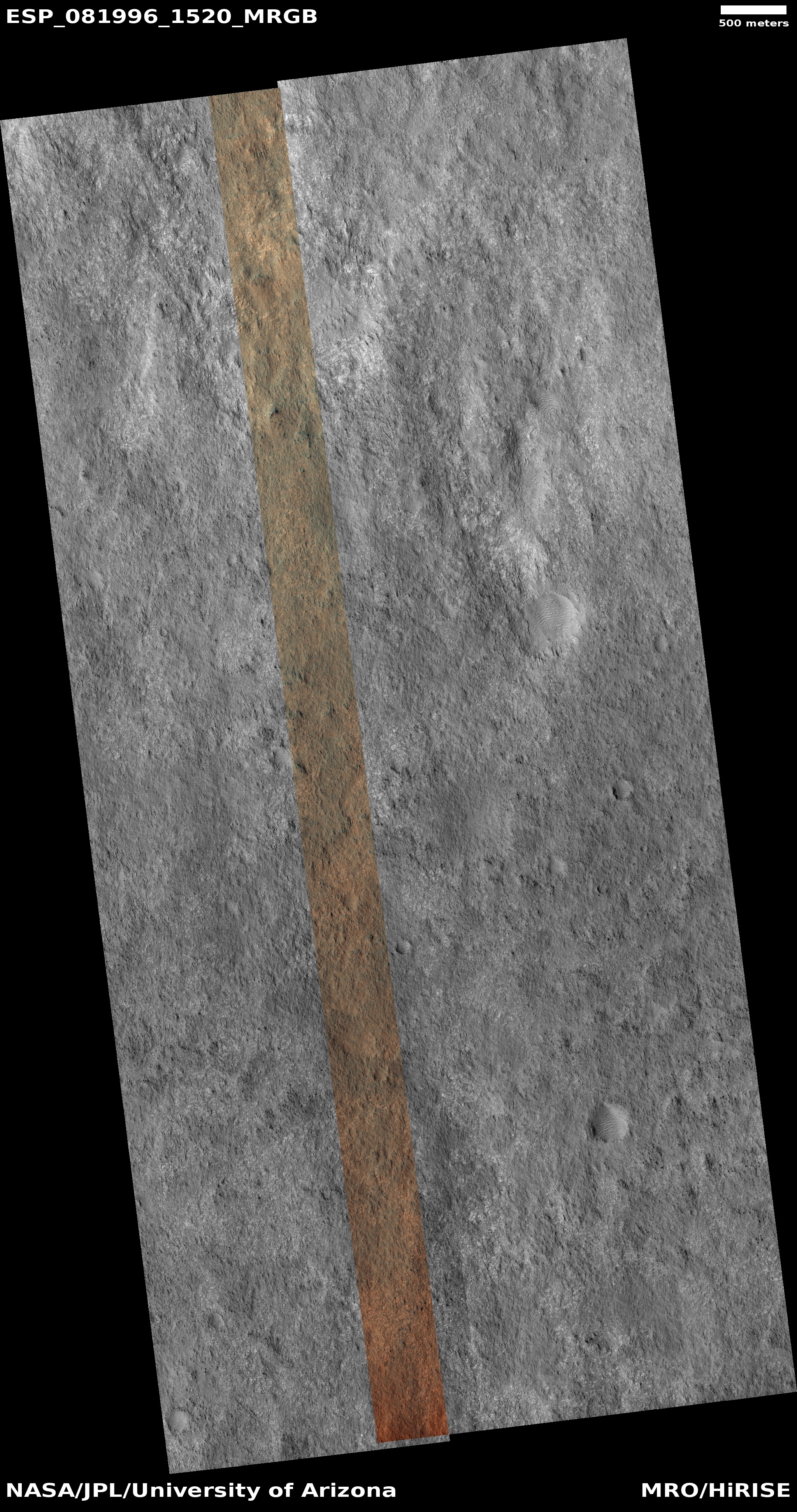
Today’s cool image to the right, cropped to post here, is probably on its own one of the more boring cool images I have posted over the years, a generally featureless plain with some ripple dunes within a few low hollows.

What makes this picture cool however is the label for the image: “Sample Landing and Traverse Hazards at Possible Helicopter Landing Site.” The picture was taken on January 23, 2024 by the high resolution camera on Mars Reconnaissance Orbiter (MRO), with the obvious goal of seeing whether this location can serve as a landing site for a helicopter mission to Mars.

The site is relatively uninteresting because the first goal is to find a safe place to land, but to do so near a location where there is rough geology which only a helicopter can explore. And it appears, from the overview map below, that is exactly what this location is.
» Read more

2 comments

Has work begun on a dedicated helicopter mission to Mars?

Overview map

The easternmost point in the Mars Helicopter traverse
Click for full image.

In my routine searches through the image archive for the high resolution camera on Mars Reconnaissance Orbiter, I recently came upon several images labeled “Candidate Mars Science Helicopter Traverse” that I at first thought referred to Ingenuity’s extended mission in Jezero Crater.

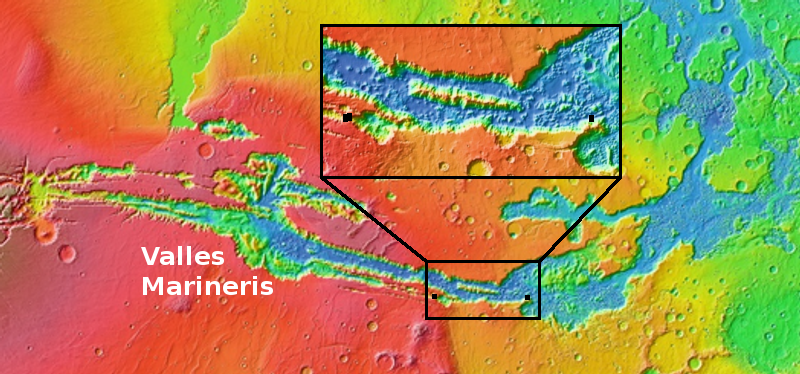
A closer look however revealed these photos have nothing to do with Ingenuity or Jezero Crater. Taken in November ’21, January ’22, and March ’22, the images instead cover parts of the south rim of Valles Marineris, the solar system’s largest canyon, and appear to be research for a future dedicated Mars helicopter mission. The overview map above shows the location of these photos by the black dots. Three locations have each been imaged twice to produce a stereoscopic view that can precisely measure the topography.

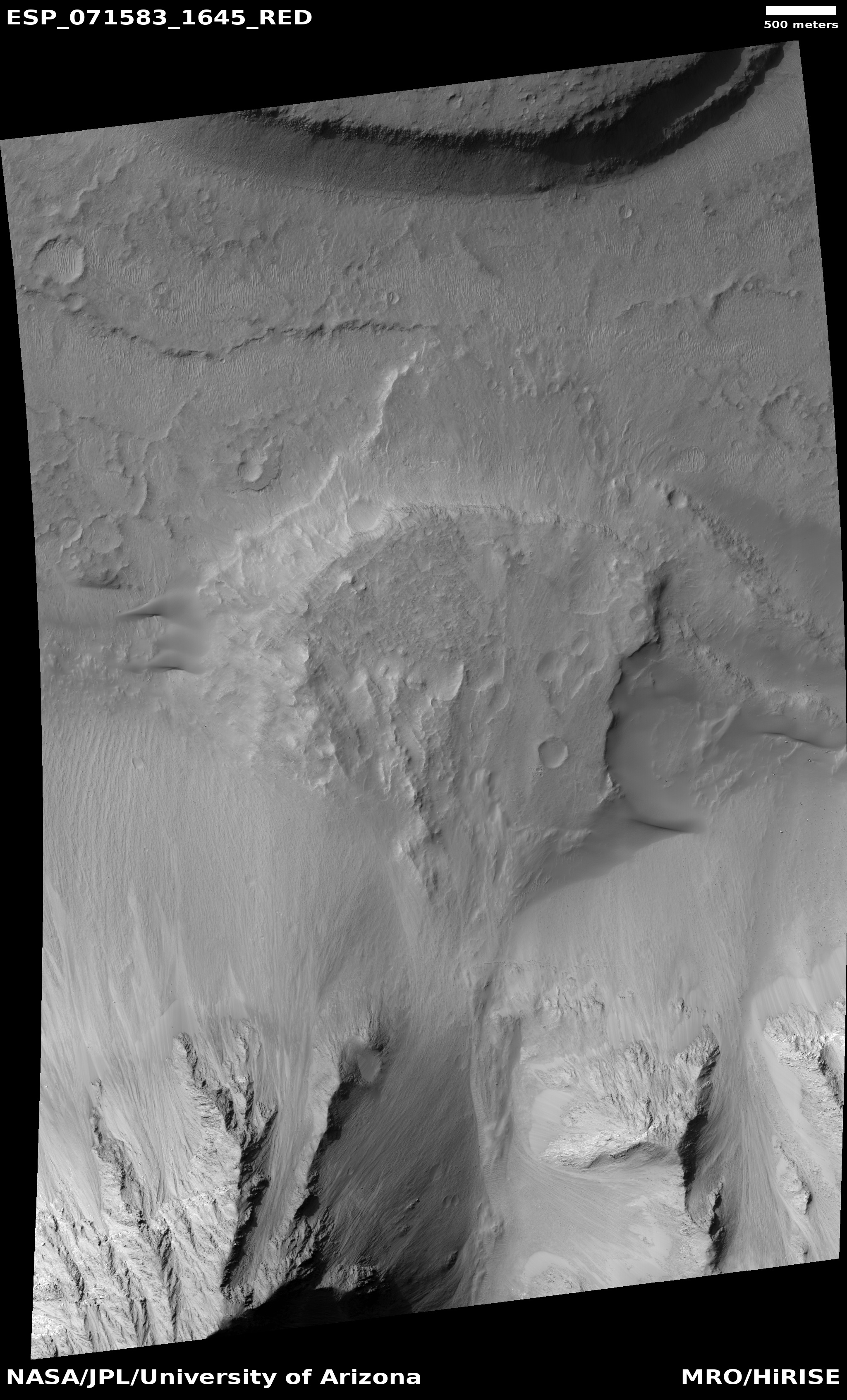
The photo to the right, cropped and reduced to post here, shows the easternmost image, taken November 3, 2021. Not only does it show ample flat areas, the picture captures an impressive avalanche flow coming down from that southern interior canyon slope.

All the images were requested by planetary scientist Edwin Kite of the University of Chicago. Though I tried several times to contact Dr. Kite to get more information, he unfortunately did not respond. It could be this work is still too preliminary and thus he does not wish to comment.

Nonetheless, the extent of the three sets of images give us a fair idea of the kind of missions Kite and others might be considering. From east to west the distance between the images is about four hundred miles, and covers a traverse of the southern interior slopes of Valles Marineris along that entire length. The photos look mostly at the base of the canyon’s slope, each showing clearly that a helicopter flying there would have plenty of landing spots.

Obviously this first dedicated Mars helicopter mission might not cover this entire distance. Right now these images could simply be the first tentative research on choosing potential landing areas. Regardless, it appears that at least one scientist has already concluded that Ingenuity has proven such helicopter missions make sense, and is beginning to target one of Mars’s most spectacular locations, Valles Marineris, for that mission.

6 comments

Engineers attach test helicopter to Mars 2020

Engineers have now attached to the Mars 2020 rover the test helicopter that will attempt to make the first air-born flight on another world.

The Mars Helicopter is considered a high-risk, high-reward technology demonstration. If the small craft encounters difficulties, the science-gathering of the Mars 2020 mission won’t be impacted. If the helicopter does take flight as designed, future Mars missions could enlist second-generation helicopters to add an aerial dimension to their explorations.

“Our job is to prove that autonomous, controlled flight can be executed in the extremely thin Martian atmosphere,” said JPL’s MiMi Aung, the Mars Helicopter project manager. “Since our helicopter is designed as a flight test of experimental technology, it carries no science instruments. But if we prove powered flight on Mars can work, we look forward to the day when Mars helicopters can play an important role in future explorations of the Red Planet.”

If this works on Mars, MiMi Aung will be in a position to win contracts for similar helicopters for the rest of her life. It seems to me that this project has been her baby from the beginning.

0 comments

Mars helicopter completes first test flight

The small helicopter that will fly autonomously as part of the Mars 2020 rover mission has successfully completed its first test flights here on Earth.

“We only required a 2-inch (5-centimeter) hover to obtain all the data sets needed to confirm that our Mars helicopter flies autonomously as designed in a thin Mars-like atmosphere; there was no need to go higher. It was a heck of a first flight,” [said Teddy Tzanetos, test conductor for the Mars Helicopter at JPL.]

The Mars Helicopter’s first flight was followed up by a second in the vacuum chamber the following day. Logging a grand total of one minute of flight time at an altitude of 2 inches (5 centimeters), more than 1,500 individual pieces of carbon fiber, flight-grade aluminum, silicon, copper, foil and foam have proven that they can work together as a cohesive unit.

This helicopter drone is a technology experiment, more focused on testing helicopter flying on Mars that doing science. If it proves to work, it will open up a whole new unmanned option for exploring the Martian surface. Imagine a helicopter that takes short hops from point to point. It will be able to reach locations a rover never could, and do it faster.

4 comments

NASA will fly a test drone on 2020 Mars rover mission

NASA today announced that a test drone, dubbed Mars Helicopter, will be flown on the 2020 Mars rover mission.

Once the rover is on the planet’s surface, a suitable location will be found to deploy the helicopter down from the vehicle and place it onto the ground. The rover then will be driven away from the helicopter to a safe distance from which it will relay commands. After its batteries are charged and a myriad of tests are performed, controllers on Earth will command the Mars Helicopter to take its first autonomous flight into history.

“We don’t have a pilot and Earth will be several light minutes away, so there is no way to joystick this mission in real time,” said Aung. “Instead, we have an autonomous capability that will be able to receive and interpret commands from the ground, and then fly the mission on its own.”

The full 30-day flight test campaign will include up to five flights of incrementally farther flight distances, up to a few hundred meters, and longer durations as long as 90 seconds, over a period. On its first flight, the helicopter will make a short vertical climb to 10 feet (3 meters), where it will hover for about 30 seconds.

As a technology demonstration, the Mars Helicopter is considered a high-risk, high-reward project. If it does not work, the Mars 2020 mission will not be impacted. If it does work, helicopters may have a real future as low-flying scouts and aerial vehicles to access locations not reachable by ground travel.

The only word I can think of to express my thoughts on this is “Cool!”

5 comments