Hakuto-R1 snaps first picture of Moon from lunar orbit
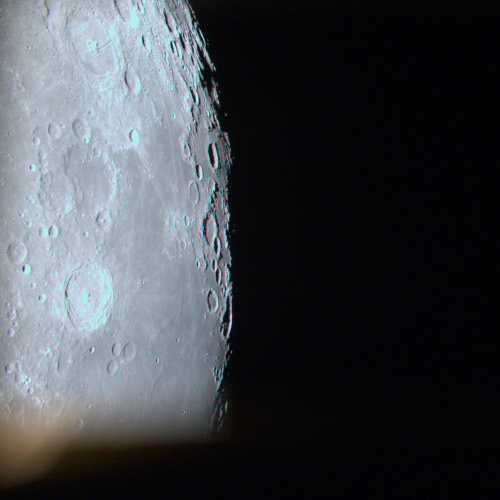
Hakuto-R1's first released image from lunar orbit
Click for original image.

The science team for Ispace’s Hakuto-R1 privately-built lunar orbiter/lander earlier this week released the spacecraft’s first picture of the Moon since entering lunar orbit on March 20, 2023.

That image is to the right, cropped and reduced to post here. The photo resolution is quite good. It also demonstrates that the spacecraft’s attitude control systems for pointing the camera are working correctly.

Launched on December 11, 2022 by a Falcon 9 rocket, Hakuto-R1 will land in Atlas Crater on the northeast quadrant of the Moon’s visible hemisphere sometime in April, making it the first successful private commercial planetary lander to reach another world. If successful, it will then release the United Arab Emirates Rashid rover, that nation’s first planetary lander but its second planetary mission, following the Mars orbiter, Al-Amal, now circling Mars.
Hakuto-R1 enters lunar orbit

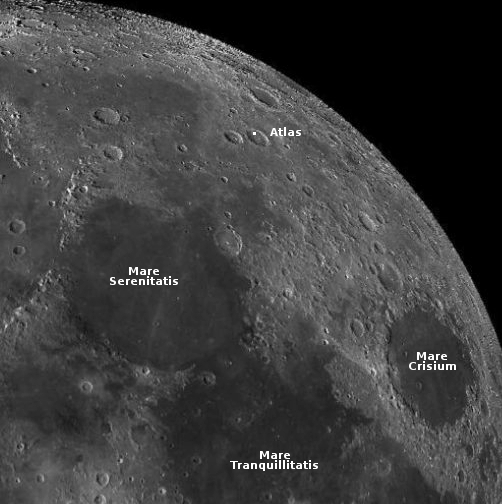
Lunar map showing Hakuto-R1's landing spot
Hakuto-R1’s planned landing site is in Atlas Crater.

The lunar lander Hakuto-R1, privately-built by the Japanese company Ispace, has now successfully entered lunar orbit in anticipation of its landing sometime next month.

Tokyo-based ispace said that its HAKUTO-R Mission 1 lander entered orbit at 9:24 p.m. Eastern March 20 after a burn by its main engine lasting several minutes. The company did not disclose the parameters of the orbit but said that the maneuver was a success.

…Entering orbit is the seventh of 10 milestones ispace set for the mission that started with launch preparations. The final three milestones are completing “orbital control maneuvers,” the landing itself and going into a steady state of activities after landing.

The spacecraft carries several payloads, the most significant of which is the United Arab Emirates Rashid rover.

If Hakuto-R1 completes its 10 milestones successfully, it will lay the groundwork for Ispace’s second Hakuto-R mission to the Moon in 2024, and an even larger lander on a third mission to follow, this time built in partnership with the American company Draper and carrying NASA payloads.

Hakuto-R successfully completes second mid-course correction

Lunar map showing Hakuto-R's landing spot
Hakuto-R’s planned landing site is in Atlas Crater.

According to Ispace, the private lunar lander company based in Japan, its Hakuto-R lander has now successfully completed second mid-course correction, and is functioning as expected on its way to the Moon.

The maneuver was carried out shortly after midnight on Jan. 2, 2023 (Japan Standard Time) and operations were managed from ispace’s mission control center located in Nihonbashi, Tokyo. This orbital control maneuver is the second maneuver to occur while the lander has been traveling to the moon. The first orbital control maneuver was completed on December 15, 2022. The second maneuver was carried out at a greater distance from Earth and lasted for a longer period than the first maneuver, verifying the company’s capability to carry out orbital maneuvers under various conditions.

As of Jan. 2, 2023, the lander has traveled approximately 1.24 million kilometers from the Earth and is scheduled to be at its farthest point of approximately 1.4 million km from the Earth by Jan. 20, 2023. Once the lander reaches its farthest point from Earth, a third orbital control maneuver may be performed, depending on its navigational status.

While Hakuto-R carries a number of commercial payloads — including Rashid, the first lunar rover built by the United Arab Emirates (UAE) — its primary goal is engineering. Ispace is using this mission to demonstrate its ability as a company to do this, in anticipation of later commercial planetary missions.

Hakuto-R sends first image back to Earth

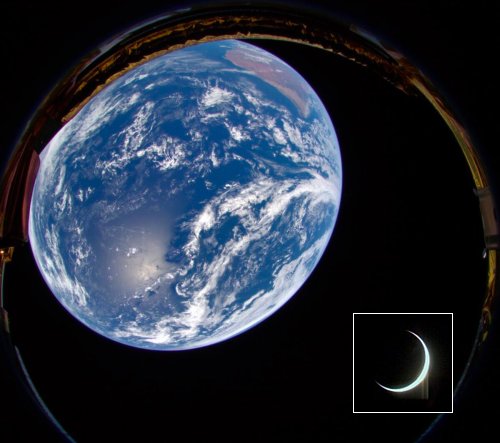
Hakuto-R's first released images
Go here and here for original images.

The private Hakuto-R lunar lander, owned and built by the Japanese-based company Ispace, is operating as planned and has sent back its first images from two different cameras.

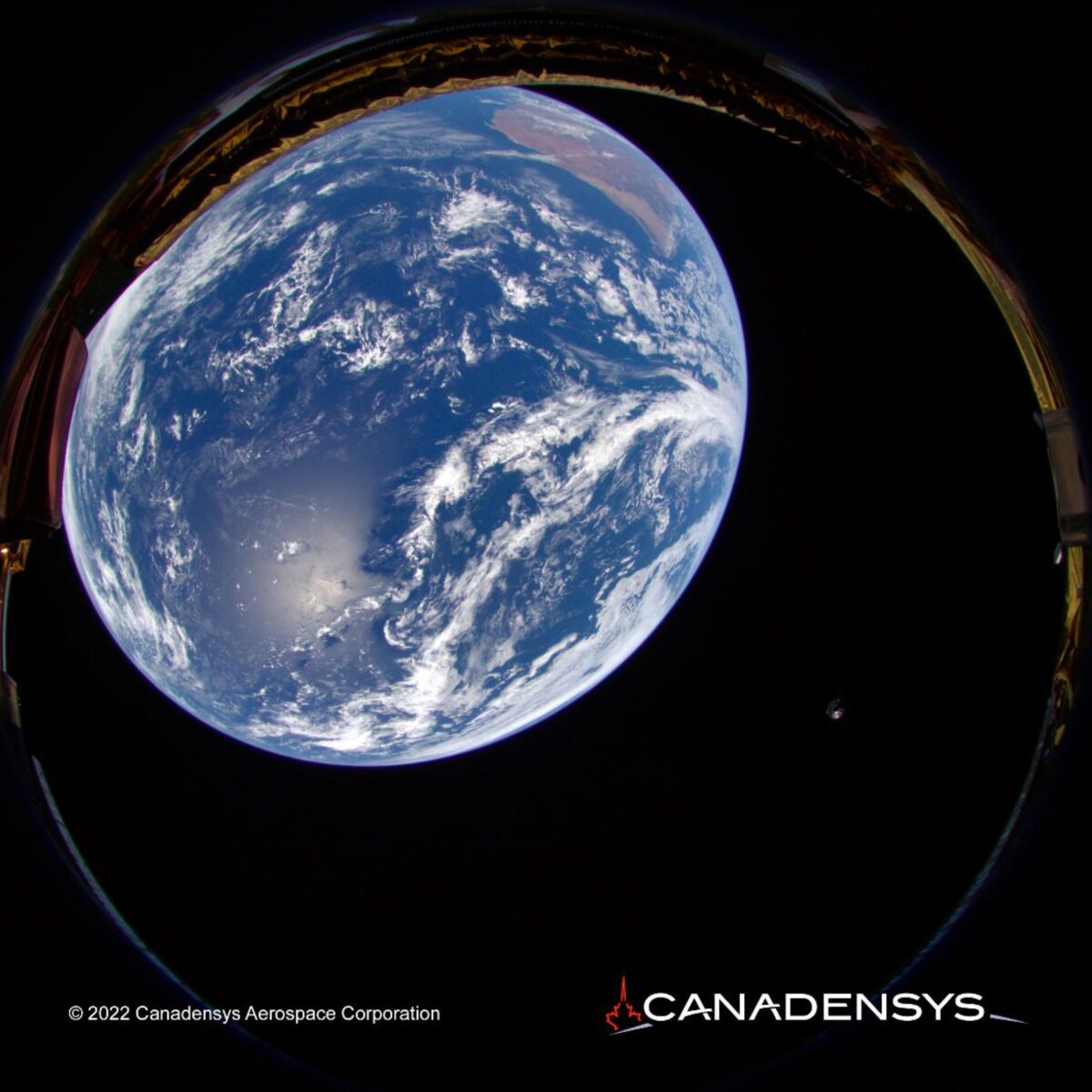
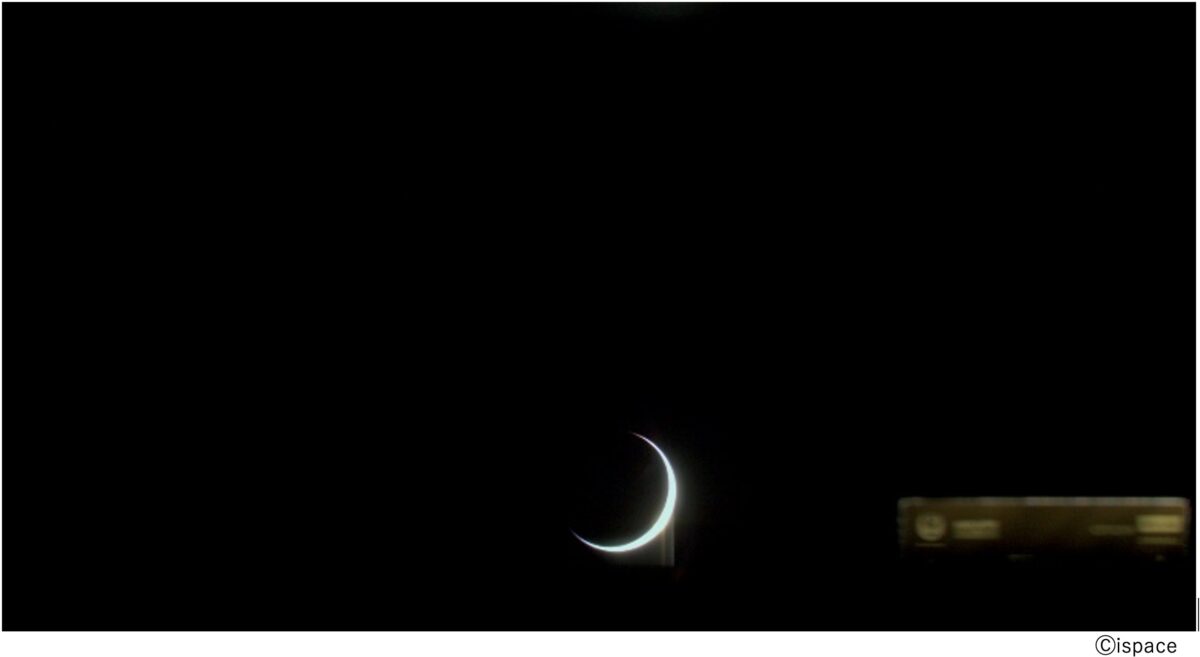
The larger image to the right was taken by a camera on one of Canada’s payloads. It shows the Earth two minutes after launch, with the rocket’s upper stage acting as a frame. The inset, reduced to insert here, was taken 19 hours after launch by the lander’s main camera, and shows the Earth at night. Both images demonstrate that the spacecraft is stable and functioning perfectly.

The goals of the mission remain mostly engineering. Its focus is demonstrating first that Ispace’s lander can do what it says so that future customers will be confident buying payload space. Similarly, the payloads, such as the UAE’s Rashid rover, are doing the same thing.

SpaceX successfully launches Ispace’s Hakuto-R private mission to Moon

Lunar map showing Hakuto-R's landing spot
Hakuto-R’s planned landing site is in Atlas Crater.

Using its Falcon 9 rocket, SpaceX tonight successfully launched Ispace’s Hakuto-R lunar lander, the first private mission attempting to softly land on the Moon.

The Falcon 9 first stage completed its fifth flight, landing successfully at Cape Canaveral.

Hakuto-R, which is actually the first of two missions, carries seven payloads, including two small rovers, Rashid, which is the United Arab Emirates first lunar mission, and a smaller rover built by Ispace. Both will operate for about a week, one lunar day. Hakuto-R will land on the Moon in April, 2023.

A second payload is a cubesat from JPL, called Lunar Flashlight. It will go into lunar orbit, testing new fuel technologies while also attempting to identify water in the permanently shadowed craters at the lunar south pole.

The leaders in the 2022 launch race:

57 China
56 SpaceX
21 Russia
9 Rocket Lab
8 ULA

The U.S. now leads China 80 to 57 in the national rankings, but trails the entire world combined 87 to 80.

SpaceX postpones launch of Ispace’s Hakuto-R lunar lander

SpaceX tonight canceled the Falcon 9 launch of the private Hakuto-R lunar lander, built by the Japanese company Ispace and carrying the UAE’s Rashid rover.

After further inspections of the launch vehicle and data review, SpaceX is standing down from Falcon 9’s launch of ispace’s HAKUTO-R Mission 1 from Space Launch Complex 40 (SLC-40) at Cape Canaveral Space Force Station in Florida. A new target launch date will be shared once confirmed.

The first stage had flown four times previously. Apparently during their standard dress rehearsal countdown and fueling before launch they detected something that cannot be immediately resolved.

Launch of Ispace’s Hakuto-R lunar lander delayed two days

Ispace yesterday announced that the launch of its Hakuto-R lunar lander, carrying a number of private and government payloads including the UAE’s Rashid rover, has been delayed two days to November 30, 2022 due to weather and scheduling issues.

The spacecraft will be launched from Cape Canaveral on a Falcon 9 rocket. The weather and the Thanksgiving holiday forced NASA and SpaceX to push back the launch of a cargo Dragon to ISS to November 26th. This in turn impacted Hakuto-R’s launch date.

Japan issues license allowing Ispace to do private business on Moon

With the launch of Ispace’s first lunar lander, Hakuto-R, only two weeks away, the private company has obtained a license from the Japanese government to conduct private transactions on the Moon.

The license allows Ispace to complete a contract awarded by NASA in December 2020, to acquire regolith from the lunar surface to sell to the space agency. During M1, Ispace is expected to collect regolith that accumulates on the footpad of the landing gear during the touchdown on the surface, photograph the collected regolith and conduct an “in-place” transfer of ownership of the lunar regolith to NASA. After ownership transfer, the collected material becomes the property of NASA, under the Artemis program. Under the contract, the lunar regolith will not be returned to Earth.

Under a second contract awarded to Ispace’s subsidiary [Ispace EU] … Ispace EU will acquire the lunar material on its second mission scheduled for 2024 as part of the HAKUTO-R program. An application for Mission 2 will be submitted to obtain a separate authorization.

This mission will also land the UAE’s first lunar rover, Rashid.

According to the Outer Space Treaty, it is the responsibility of each nation to regulate the private operations of its citizens in space. This action thus follows the laws that Japan has passed to supervise commercial space companies.

Japanese private lunar lander HAKUTO-R now scheduled for launch on November 22nd

The private lunar lander HAKUTO-R, built by the Japanese company Ispace, has now been scheduled for a November 22, 2022 launch on a Falcon 9 rocket.

The launch of the first commercial lunar lander mission to attempt a landing on the Moon was originally scheduled between November 9 -15. However, ispace stated that after consulting with SpaceX, the new tentative launch date would be moved to November 22 because it “allows for best preparation for the mission when considering the fuel-loading schedule for the lander and launch date availability.” SpaceX has a busy schedule at the Cape and NASA still has the Artemis 1 launch scheduled for November 14.

HAKUTO-R’s primary mission is to test the lander. However, it also includes several customer payloads, the most significant of which is the Rashid rover from the United Arab Emirates. Rashid, which is about the size of a Radio Flyer red wagon, will operate for one lunar day, about two weeks. While its main mission is to test the engineering and to train the engineers who built it, it will have two cameras for taking pictures. In addition, on its wheels are test adhesive patches of different materials, designed to see how each material interacts with the Moon’s abrasive dust.

Ispace targets November 9-15 launch window for first commercial lunar lander

The private Japanese company Ispace has now scheduled the launch of its commercial lunar lander Hakuto-R on a SpaceX Falcon 9 rocket for a November 9-15, 2022 launch window.

Though the lander’s primary goal is to see if this lander will work, it also includes several customer payloads, the most significant of which is the Rashid rover from the United Arab Emirates. Rashid, which is about the size of a Radio Flyer red wagon, will operate for one lunar day, about two weeks. While its main mission is to test the engineering and to train the engineers who built it, it will have two cameras for taking pictures. In addition, on its wheels are test adhesive patches of different materials, designed to see how each material interacts with the Moon’s abrasive dust.

Ispace now aiming for a November ’22 launch of its lunar lander

Capitalism in space: The private Japanese company Ispace today announced that it is targeting November 2022 for the launch of its Hakuto-R lunar lander, carrying commercial as well as governmental payloads.

The launch will be on a Falcon 9 rocket. The payload includes two small rovers, one built by Ispace and a second, Rashid, built by the United Arab Emirates (UAE).

Rashid has already been delivered to SpaceX. This announcement indicates that Hakuto-R is on schedule for delivery in time for that November launch.

Both rovers are engineering tests, and will are expected to only function on the Moon for one lunar day.

UAE’s Rashid lunar rover getting ready for November launch

The new colonial movement: Engineers have now delivered the United Arab Emirates’ (UAE) first lunar rover, Rashid, to France for testing and preparation for its early November launch on a Falcon 9 rocket.

The 10-kilogram rover will now spend a few weeks in Toulouse for vibration and thermal vacuum testing, a series of final checks to ensure it can survive the extreme environment during a rocket launch and spaceflight. It will then be moved to Germany, so it can be integrated with a Japanese lander, called Hakuto-R Mission 1, built by private company ispace inc, which will deliver the rover to the lunar surface.

Once completed, it will be shipped to the launch site in Florida’s Kennedy Space Centre in September.

Unlike the UAE’s Al-Amal Mars orbiter — which was mostly built in the U.S. by American companies and universities as part of a training program for UAE citizens, Rashid appears to have largely built in the UAE by those engineers.

Ispace secures first insurance deal for private lunar lander

Capitalism in space: The Japanese startup Ispace has now obtained the first insurance plan ever for a private lunar lander.

The startup has signed a Memorandum of Understanding with Mitsui Sumitomo Insurance (MSI), a Tokyo-based firm that started working with Ispace in 2019, to insure its first attempt to send a lander to the moon later this year. The agreement outlines intentions to finalize terms for the insurance in the months leading up to Ispace’s Mission 1 (M1), which is currently slated to fly on a Falcon 9 rocket no earlier than the fourth quarter of 2022.

According to Ispace, the insurance would cover any damage the lander takes between separating from the rocket in a trans-lunar orbit (TLO) and touching down on the moon. As well as covering a failed landing, the insurance would guard against issues stemming from radiation exposure as the lander travels through the Van Allen belts to its destination.

The insurance does not cover the payloads Ispace’s lander will carry, including a rover from the United Arab Emirates.

UAE hires Japanese company as partner for its ’22 lunar rover mission

Capitalism in space: The United Arab Emirates (UAE) has chosen the private Japanese company Ispace to provide the lander bringing its Rashid rover to the Moon in 2022.

ispace’s 240 kg lander is 2.3 meters tall and 2.6 meters wide. It will be launched by SpaceX, Elon Musk’s rocket company, on a Falcon 9 rocket. Once the iSpace lander is placed in the Earth’s orbit, it will travel to the moon on its own, land and unload the rover.

The lander will use solar panels for power, which will also allow the rover to communicate with Earth. It will also carry a solid-state battery made by NGK Spark Plug, which intends to examine its battery’s lunar performance.

This UAE project is similar but a step up from its Al-Amal Mars orbiter. In that case UAE used its money to have the orbiter mostly built by U.S. universities as they taught UAE’s students how to do it. In this case, UAE engineers appear to be building the rover itself, with the purchased help of others to provide the lander..

United Arab Emirates announce plans for lunar rover mission

The new colonial movement: The United Arab Emirates (UAE) has announced plans to launch its first unmanned probe to the Moon, a small rover dubbed Rashid with a target launch date in 2024.

The Mohammed Bin Rashid Space Centre (MBRSC) in Dubai says its in-house teams will develop, build and operate the 10-kilogram rover, which is named after the late Sheikh Rashid bin Saeed Al Maktoum, who ruled Dubai at the UAE’s creation in 1971.

The team will hire an as-yet unannounced space agency or commercial partner to carry out the launch and landing, the riskiest part of the mission. If successful Rashid would be one of several rovers made by private firms and space agencies that are set to populate the Moon by 2024.

This project is a great opportunity for the various new private aerospace companies in the U.S. developing interplanetary capabilities for sale to others.

UAE leader confirms goal to land rover on Moon by ’24

The new colonial movement: The ruler of the United Arab Emirates (UAE) has confirmed the initiation of a project to land a rover on the Moon by 2024, and have it built entirely by UAE engineers.

The Emirates Lunar Mission will be a 100 percent Emirati-built lunar rover that will land on the moon by 2024, according to a series of tweets by Sheikh Mohammed bin Rashid Al Maktoum, the UAE Prime Minister and Vice President and Ruler of Dubai.

The lunar rover has been named “Rashid” in honour of Sheikh Rashid bin Saeed Al Maktoum who ruled Dubai for 32 years from 1958 until his death in 1990 and who “sparked” the emirate’s advancement.

This is an ambitious goal, but not completely unreasonable. Their engineers were closely involved in the construction of their Hope Mars orbiter, mostly built by U.S. universities and subcontractors. That knowledge can now be applied to their own spacecraft. I also suspect that their 2016 agreement with India to invest billions there in exchange for space-related engineering assistance included technical information about India’s own lunar rover missions.