Zhurong data suggests a more watery Martian environment more recently that previously thought

The Martian obliquity over the past 80 million years
The graph comes from this paper [pdf], and shows the shift of Mars’
rotational tilt, or obliquity, for the past 80 million years.

Scientists analyzing data obtained by China’s Zhurong rover during its first four months on Mars have concluded that the Martian atmosphere in the northern lowland plains of Utopia Planitia has been more active hydrologically much more recently than previously believed.

You can read the paper here. From its conclusions:

Unlike the weak and friable thin veneer or crusty clods at previous landing sites for Mars Exploration Rovers and InSight lander, these rocks are more akin to the fractured duricrust observed at the Viking Lander 1 site. The thin and brittle layer of duricrust has been proposed to form by salt cementation via water vapor diffusion from the atmosphere. In contrast, duricrusts at Zhurong landing site appear to be more resistant to erosion, forming cliffs perched through loose soils in the surroundings, which require a substantial amount of liquid water rather than water vapor.

…The morphology and spatial extent of platy and bright-toned rocks investigated by the Zhurong rover argue for in situ formation and degradation of these rocks in the Amazonian-aged geological unit in southern Utopia Planitia. These observations suggest that aqueous activities may have persisted much longer than previously thought. Periodical climate cycles on Mars driven by obliquity oscillations are expected to result in a latitude-dependent distribution of ground ice over geologic history. Higher obliquities (>45°) could mobilize polar ice and form glaciers and water ice sheets at midlatitudes and stabilize ground ice at Zhurong landing site for extended periods of tens of thousand years when the obliquity exceeded 29° to 33°. The hydrated minerals and widespread salt cementations imply the presence of briny liquid water in the subsurface, which may have been generated by melting the ground ice during temporary climate perturbations (e.g., volcanism and impacts).

Obliquity refers to the planet’s rotational tilt, which fluctuates from 11 to 65 degrees, and is presently tilted at 25 degrees, only slightly different than Earth’s 23 degree tilt. Since Mars’ obliquity has exceed 29 degrees numerous times in the past 80 million years, as shown by the graph above, that means it was possible that this now dry equatorial region on Mars had seen plenty of surface water or ice as recently as a few million years ago, far more recently than the three billion years previously estimated.

For liquid water to have existed on the surface is still difficult, because Mars’ atmosphere would have been too thin and cold. However, if ice sheets had existed here, there is the possibility that the ice would have become liquid at the sheet’s base, and interacted with the ground in some manner to produce the duricrust now observed.

1 comment

First radio image of event horizon of Milky Way’s central black hole

Sagittarius A*
Click for full image.

Using an array of eight radio telescopes worldwide, dubbed the Event Horizon Telescope because its purpose is to study black holes, scientists have obtained the first radio image of the event horizon of Sagittarius A* (pronounced “A-star”), the supermassive black hole at the center of the Milky Way.

The image to the right, reduced to post here, is that photo.

The image is a long-anticipated look at the massive object that sits at the very centre of our galaxy. Scientists had previously seen stars orbiting around something invisible, compact, and very massive at the centre of the Milky Way. This strongly suggested that this object — known as Sagittarius A* (Sgr A*, pronounced “sadge-ay-star”) — is a black hole, and today’s image provides the first direct visual evidence of it.

Although we cannot see the black hole itself, because it is completely dark, glowing gas around it reveals a telltale signature: a dark central region (called a “shadow”) surrounded by a bright ring-like structure. The new view captures light bent by the powerful gravity of the black hole, which is four million times more massive than our Sun.

This is the second supermassive black hole that the Event Horizon array has imaged. In 2019 it captured the central black hole of the galaxy M87, 55 million light years away. Like that first image, much of what we see here is created by computer, since the data from the eight radio telescopes needs to be massaged to create something as smooth and as complete as this.

9 comments

Boeing and Aerojet Rocketdyne fight over cause of Starliner valve problem

In a Reuters story today, it was revealed that Boeing and Aerojet Rocketdyne are in a fight over the cause of Starliner valve problem, where thirteen valves failed to work and caused the scrub of a launch attempt last summer, delaying almost a year to next week.

A team of Boeing and NASA engineers is in general agreement that the cause of the stuck valves involves a chemical reaction between propellant, aluminum materials and the intrusion of moisture from Starliner’s humid Florida launch site.

Aerojet engineers and lawyers see it differently, blaming a cleaning chemical that Boeing has used in ground tests, two of the sources said.

It appears that Aerojet is attempting to put the blame on Boeing because it might be liable for the cost of redesigning the valves, as well as other costs associated with the delays since last year.

The article also reveals that the valves being used in the Starliner capsule to be launched next week have only a temporary fix for the problem, and that Boeing intends to redesign them to prevent the problem in the future.

All in all, this whole fiasco does not speak well for either Boeing or Aerojet. It remains completely inexplicable for any spacecraft to be built with this kind of valve problem, now, after six decades of launches from wet and humid Florida. The problem reeks of bad design or poor quality control procedures by both companies.

The article further confirms these quality control problems by this tidbit in its last paragraph:

In 2017, Starliner had an accident during a ground test that forced the president of a different subcontractor to have his leg medically amputated. The subcontractor sued, and Boeing subsequently settled the case.

That this accident has been kept out of the news is somewhat shocking. For it to happen at all reveals a lot about the sloppy way Boeing operates these days.

9 comments

Mountains, Mesas, and Box Canyons on the floor of Valles Marineris

Mountains, Mesas, and Box Canyons
Click for full image.

Overview map

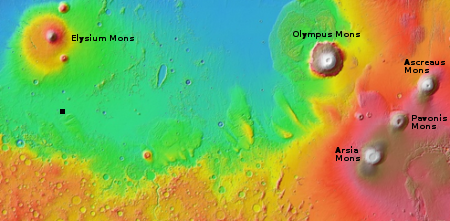
Cool image time! The photo above, cropped, reduced, and rotated to post here, was taken on March 12, 2022 by the high resolution camera on Mars Reconnaissance Orbiter (MRO). It shows a small section of the floor of the giant 2,550-mile-long and 400-mile-wide Valles Marineris canyon on Mars. In fact, this section, as indicated by the black rectangle in the overview map below, is practically in the center of the canyon, at its widest point.

The geology here hints at several Martian processes. The mesas and closed canyons in the north are typical of chaos terrain, where it erosion appears to form along fault lines to create the random intersecting canyons. In other places on Mars, in the mid-latitudes, that erosion appears mostly formed by glacial activity. Here, in Valles Marineris at only 7 degrees north latitude, little ice had been expected.

However, this spot is also in the dead center of a region where orbital data from Europe’s Trace Gas Orbiter (TGO) suggests there is a surprisingly large underground reservoir of hydrogen, which is assumed could only exist if it was locked in water molecules.

In fact, at this spot the data suggests up to 40% of the near-surface material might be composed of water (by weight). If so, that underground reservoir of ice could be causing the erosion that is creating this massive chaos terrain.

Meanwhile, the light-colored mountain in the south is the westernmost nose of a 50-mile-long ridgeline coming down from the canyon’s rim, about 30,000 feet higher. Its dendritic nature, like the hollows that form in the mountains of wet regions on Earth, suggest rainfall and water flowing downhill, wearing away these hollows over eons.

Rain however is almost certainly not the cause. Instead, we could be seeing erosion from wind, or maybe dry ice snow that fell long ago when this region was at a higher latitude when Mars’ rotational tilt was different.

Either way, the massive geology here illustrates the monumental nature of this largest canyon in the solar system, as well as the difficulties of exploring it.

1 comment

The evidence keeps pouring in showing the utter failure of all COVID mandates

Since March 2020 I have repeatedly written that the response to the Wuhan flu was an utter mindless panic that had little to do with the facts. Right off the bat, the facts, not the models, suggested the virus would resemble the flu most of all, a possible mortal threat to the sick and elderly but generally nothing more than a short sickness to the general population, with it being almost utterly harmless to the young.

Nothing that has happened since has really changed these early conclusions. I have compiled below a collection of recent studies and reports that illustrate what we have learned following the epidemic and the panic that accompanied it. Sadly, that panic did little to stop the virus, but it left us with destroyed businesses, a crushed economy, many uneducated and damaged children, and a broken Bill of Rights.

The COVID jab

The failure of the jab in the United Kingdom
Study from November 2021showing the overall uselessness of the jab
in the United Kingdom last year.

The first set of stories show some recent studies analyzing the effectiveness and safety of the COVID shots, which are not vaccines because they simply do not prevent you from getting the virus. At best — though not yet proven — they might reduce the severity of the disease should you get it. The data however now suggests that though the overall risks are not large, the jab carries enough risk that in many cases, it makes no sense to get it. To require it, as many governments and businesses have done, is downright stupid and immoral. To fire nurses and doctors for refusing the shots is beyond stupid or immoral. It is evil.

Worse, these facts were known right from the initial tests, as the last story below shows. In the company’s initial trials they found that 1,223 people died within the first 28 days after taking the Pfizer shot. Such a result in past drug trials would have made impossible the approval of that drug.
» Read more

22 comments

Pushback: Arizona parents sue over school board’s attempt to silence and intimidate them

Owned by government
What the Scottsdale school board apparently thinks of your kids.

Today’s pushback story is another follow-up of an earlier blacklist story that I posted in November 2021. At that time several parents with students in the Scottsdale Unified School District (SUSD) had discovered that the then school board president Jann-Michael Greenburg had, with the aid of his parents, compiled a secret Google drive containing personal information of 47 parents, including social security numbers, financial information, pictures of themselves and their children.

The discovery occurred because Greenburg had begun using this information to intimidate the parents — who had been protesting the school board’s mask mandates and the introduction of the racist critical race theory into the curriculum.

Three of those parents are now suing Greenburg, his parents Mark Alan and Dagmar Greenburg, and the Scottsdale school district.
» Read more

11 comments

Virgin Orbit to expand its fleet of 747s used with its LauncherOne rocket

Capitalism in space: Virgin Orbit has signed a deal with L3 Harris Technologies to buy two more 747s airplanes to airlift its LauncherOne rocket during launches.

L3Harris will modify one of the newly acquired aircrafts to serve as an additional airborne launch pad for Virgin Orbit’s small satellite launch service, with delivery expected in 2023. L3Harris will also overhaul the platform with a new cargo configuration, which is expected to allow Virgin Orbit to deliver its rockets and ground support equipment in the same aircraft that will launch from foreign spaceports.

The companies previously collaborated to produce Virgin Orbit’s flagship aircraft “Cosmic Girl,” the first customized 747-400 aircraft to carry and deploy payloads to Low Earth Orbit under Virgin Orbit’s LauncherOne program.

This deal once completed will give Virgin Orbit a fleet of three 747s for launching its rocket. The deal also suggests the company now has enough launch business to justify this expansion.

6 comments

Orbex unveils a full-scale prototype of its Prime smallsat rocket

Prime rocket prototype on launchpad

Capitalism in space: Orbex today unveiled a full-scale prototype of its Prime smallsat rocket, positioned on its own launchpad at the Sutherland Space Hub spaceport in Scotland, now under construction.

The photo to the right shows that prototype, held vertical with its own strongback. From the press release:

With the first full integration of the Orbex rocket on a launch pad now complete, the company is able to enter a period of integrated testing, allowing dress rehearsals of rocket launches and the development and optimisation of launch procedures. Orbex recently revealed their first test launch platform at a new test facility in Kinloss, a few miles from the company’s headquarters at Forres in Moray, Scotland.

Note that Sutherland Space Hub is not the SaxaVord Shetland Island spaceport also being developed in Scotland. The two are competing with each other to successfully complete the first launch from the United Kingdom in history. Also competing for this honor is an airport in Cornwall, which has a deal with Virgin Orbit to do its own launch later this year. And regardless who wins this race, the three sites will likely give the UK the first European-based spaceports in history.

The United Kingdom’s decision in 2016 to shift from a single government-run spaceport to competition and capitalism appears to be now finally paying off.

6 comments

The future factions in space become clearer

Based on two stories yesterday, it appears that the future alliances between nations in space are now beginning to sort themselves out.

First there was the signing ceremony announcement of Columbia becoming the nineteenth nation to sign the Artemis Accords with the U.S. and the third Latin American country to do so.

The Artemis Accords were created by the Trump administration as an international treaty to bypass the restrictions on private property imposed by the Outer Space Treaty. By signing bilateral agreements with as many nations as possible, the U.S. thus creates a strong alliance able to protect those rights in space.

The full list of signatories so far: Australia, Bahrain, Brazil, Canada, Columbia, Israel, Italy, Japan, Luxembourg, Mexico, New Zealand, Poland, Romania, Singapore, South Korea, the United Kingdom, the United Arab Emirates, the Ukraine, and the United States.

In the second story, France and India — both of whom have so far resisted signing the Artemis Accords — announced their own bilateral agreement intended to strengthen their partnership across many fronts, from security to economic development to the Ukraine war. The agreement also included this paragraph on the subject of space:
» Read more

7 comments
1 770 771 772 773 774 2,930