Four launches, two by China, one by SpaceX, and one by Arianespace

The beat goes on. Since yesterday the global rocket industry completed four separate launches on three separate continents.

First, China’s Long March 3B rocket placed “an experimental satellite” into orbit, lifting off yesterday from its Xichang spaceport in southwest China. The state-run press provided no information as to where the rocket’s lower stages, using very toxic hypergolic fuels, crashed inside China.

China followed up with the launch of another nine satellites in the Guowang (Satnet) internet constellation, its Long March 12 rocket lifting off today from its coastal Wenchang spaceport. This was the 22nd launch for this constellation, bringing the total number of operational satellites in orbit to 175, according to the report at the link, which also added this:

This year, it is planned that 310 satellites will be deployed, followed by 900 in 2027, and 3,600 every year beginning in 2028 to sustain and grow the constellation. In the 2030s, up to 13,000 satellites could be in operational orbit.

Though launched over the ocean, the rocket’s lower stages fell within the territorial waters of the Philippines, requiring its space agency to issue a warning to local residents and boat owners.

Next SpaceX in the early morning hours successfully launched three Bluebird satellites for AST SpaceMobile’s cell-to-satellite constellation, its Falcon 9 rocket lifting off from Cape Canaveral Space Force Station in Florida. AST now has 10 satellites in orbit. It needs to launch 45 to become operational, something it now hopes to achieve by early 2027.

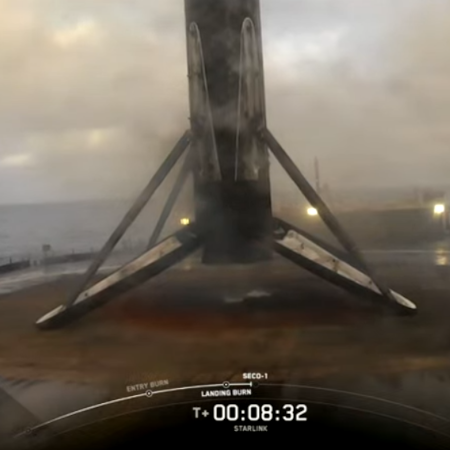
The rocket’s two fairings completed their 16th and 33rd flights respectively. The first stage (B1077) completed its 29th flight (27 days after its previous flight), landing on a drone ship in the Atlantic. With this flight the stage moved past the space shuttle Columbia, putting it in seventh place in the rankings for the most reused launch vehicle:

39 Discovery space shuttle
35 Falcon 9 booster B1067
34 Falcon 9 booster B1071
33 Atlantis space shuttle
32 Falcon 9 booster B1063
31 Falcon 9 booster B1069
29 Falcon 9 booster B1077
28 Columbia space shuttle
28 Falcon 9 booster B1078

Sources here and here.

Finally, several hours later Arianespace launched 36 Leo satellites for Amazon, its Ariane-6 rocket lifting off from French Guiana. This launch was the most powerful configuration of Ariane-6 yet launched and the third in Arianespace’s 18-launch Amazon contract. With this launch, Amazon now has 367 satellites in orbit. It needs to get 3,232 in orbit by July 30, 2029 to meet its FCC license requirements.

This was Arianespace’s third launch this year. The leaders in the 2026 launch race:

72 SpaceX
39 China
8 Russia
8 Rocket Lab (plus two suborbital HASTE launches)

For the third straight year SpaceX leads the entire world combined in total launches, 72 to 67.

3 comments

Two launches yesterday

Both SpaceX and Arianespace successfully completed orbital launches yesterday. First, SpaceX placed another 24 Starlink satellites into orbit, its Falcon 9 rocket lifting off from Vandenberg Space Force Base in California. The first stage completed its 13th flight, landing on a drone ship in the Pacific.

Next, Arianespace placed 32 more Amazon Leo satellites in orbit, its Ariane-6 rocket lifting off from France’s French Guiana spaceport in South America. The expendable Ariane-6 launched for the second time in its most powerful configuration, with four side boosters. This was also Arianespace’s second launch this year, so it remains off the leader board below. It is also the second launch in Arianespace’s 18-launch contract with Amazon to launch Leo satellites. The satellites were placed at an orbit of 465 kilometers, which SpaceX has claimed violates its Starlink orbital territory. Amazon has agreed what it is doing is a violation, but says it will continue to do so for this and two more launches.

With this launch, Amazon now has 302 Leo satellites in orbit, out of the 1,616 it needs to launch by July to meet its FCC license requirement. The company’s request for a time extension is presently pending at the FCC.

The leaders in the 2026 launch race:

52 SpaceX
23 China
8 Russia
6 Rocket Lab

For the third straight year SpaceX continues to lead the entire world combined in total launches, 52 to 44.

Russia was also supposed to do a test suborbital launch of its new Soyuz-5 rocket. As of posting I have not been able to confirm whether the launch took place.

8 comments

ESA paid Arianespace about $96 million for an Ariane-6 launch

According to a story today on European Spaceflight, the European Space Agency (ESA) paid its commercial division Arianespace €82 million [about $96 million] for its Ariane-6 launch in November 2025 of ESA’s Earth observation Sentinel-1D satellite.

The European Space Agency has disclosed that launching the Sentinel-1D Earth observation satellite aboard an Ariane 62 rocket in November 2025 cost €82,070,773. As part of its involvement in the development of the European Union’s Copernicus Earth observation satellite constellation, ESA is responsible for placing contracts with European industry for the development, launch, and operation of satellites. As part of this responsibility, the agency publishes an annual list of all contracts awarded with a value of more than €15,000. In 2025, this included the disclosure of the cost of launching Sentinel-1D aboard an Ariane 6 rocket in its two-booster variant [dubbed Ariane-62].

This is the first time ESA or Arianespace have revealed any price figures for using Ariane-6, and shows that Arianespace is attempting to price Ariane-6 competitively with SpaceX’s Falcon 9 rocket. The article notes that SpaceX charged ESA about $90 million for an earlier Sentinel launch.

Because Falcon 9 is mostly reusable, SpaceX’s profit margin is far higher than Arianespace’s. Ariane-6 is expendable, and thus costs more. Thus, if necessary SpaceX could significantly lower its price, but hasn’t because it hasn’t yet felt any competitive pressure to do so. When the new reusable rockets from Stoke Space and Rocket Lab begin launching sometime this year, then launch prices will drop considerably, and Ariane-6 will find itself very over-priced, with no way to lower its cost enough to compete.

3 comments

Amazon responds to SpaceX’s FCC complaint about its last Leo satellite launch

Amazon Leo logo

Amazon yesterday submitted a letter [pdf] to the Federal Communications Commission (FCC) responding to SpaceX’s FCC complaint earlier this week that accused it of using Arianespace’s Ariane-6 rocket to place 32 Leo satellites in a 450 kilometer orbit — 50 kilometers more than its license allowed — causing SpaceX to maneuver 30 of its own Starlink satellites to avoid any collisions.

In its response, Amazon claimed the higher orbit was not a violation, that its original license allowed for orbits “at or above 400 kilometers”, and that the problem was really caused by SpaceX’s decision in the past few months to lower the orbits of its Starlink satellites to a 462 to 485 kilometers. It also accused SpaceX of refusing to compromise when Amazon proposed a solution. Instead, SpaceX demanded Amazon stop launching at this orbit height, a change that Amazon claimed would delay the next few Ariane-6 launches by months.

Despite these claims, Amazon then backed off:

Even so, Amazon Leo has made significant operational changes in response to SpaceX’s concerns. Working with Arianespace, Amazon Leo has committed to lowering its target insertion altitude, beginning with its fourth Ariane mission. Similarly, Amazon Leo is working with its other launch providers to determine if they can lower insertion altitudes without impacting Amazon Leo’s schedule.

In other words, Amazon will do as SpaceX requests, but only do so after it completes three more Ariane-6 launches at this higher orbit.

The FCC now has a choice. If it demands Amazon immediately concede SpaceX’s point, this will likely cause a delay in three Ariane-6 launches of approximately 100 Leo satellites. Amazon’s FCC license requires it to launch 1,616 Leo satellites by July 2026, and at present it only has a little more than 200 satellites in orbit. Because Amazon doesn’t expect to meet this goal, it has already asked the FCC for a time extension.

Thus, it appears this dispute with SpaceX might actually benefit Amazon. If the FCC denies Amazon’s request to launch the next three Ariane-6 missions at this higher orbit, it will also be agreeing to a delay in Leo satellite launches. It will thus be forced to grant Amazon’s request for that time extension. And even if it does allow Amazon to launch at the higher orbit, requiring the two companies to work out any orbital conflicts, that permission will confirm the FCC is going to grant Amazon’s time extension request as well.

7 comments

Satellite repair startup Katalyst awards Arianespace and its Ariane-6 rocket a launch contract

The satellite repair startup Katalyst has chosen Arianespace’s Ariane-6 rocket to launch its first Nexus servicing satellite to geosynchronous orbit in late 2027, where it will demonstrate its capabilities by servicing a Space Force satellite.

The choice of Ariane-6 is intriguing, as it is much more expensive that a Falcon-9. Either the satellite is too heavy for the Falcon-9 (unlikely), or the Space Force for political reasons pressured Katalyst to use Europe’s rocket. It is also possible Katalyst choose Arianespace to stimulate interest in its robotic repair satellites within Europe, thus increasing its chances of winning contracts from there.

Either way, this is one of the few contracts outside of Amazon’s Leo constellation and European government launches that Ariane-6 has gotten. As I already mentioned, it costs more to use than other rockets, as it is entirely expendable. I think it is only surviving at this point because there are not a lot of options available. This is going to change, however, in the next decade as new rocket companies gear up to meet the demand.

0 comments

Four launches today with mostly positive results

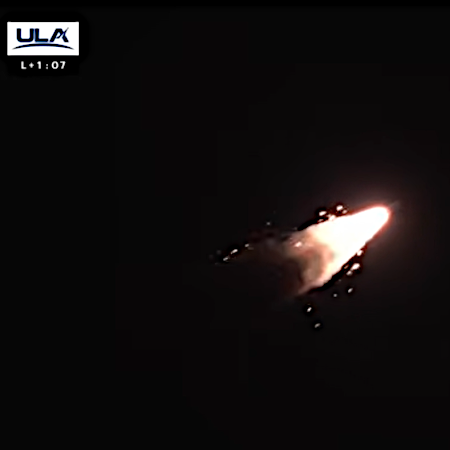
This morning saw a string of launches from China, Russia, America, and Europe, with all four appearing to get their payloads into orbit though the American launch, by ULA’s Vulcan rocket, appeared to have a problem with one of its solid-fueled boosters.

First, a Chinese pseudo-company owned entirely by a Chinese government agency successfully placed seven satellites in orbit, its Smart Dragon-3 rocket (also called Jielong-3) lifting off from a platform off the coast of northeast China. Of the satellites, the prime payload was a Pakistani Earth observation satellite.

Though this launch was from a pseudo-company, I think I can safely say that the pause in launches by China’s so-called commercial market continues. Smart Dragon-3 was built by the China Aerospace Science and Technology Corporation (CASC), which while structured as a private company is owned and controlled by several agencies of the Chinese government.

Next, Russia successfully launched a new weather satellite, its Proton rocket launching from Baikonur in Kazakhstan. This was the first Proton launch in three years, a pause partly because Russia is in the process of retiring that rocket. The lower stages crashed in a range of spots in Kazakhstan and across southern Russia, just missing China in two places.

The American company ULA then followed with its first launch in 2026, its Vulcan rocket lifting off from Cape Canaveral in Florida and carrying two military satellites designed to track other satellite operations in high geosynchronous orbit.

Unexpected debris falling from rocket at about T-1:00

While it appears the launch was able to get the satellites into their correct orbits, the Vulcan rocket had an issue during the launch. According to ULA, one of the rocket’s four solid-fueled boosters had a problem during its flight. More details can be found here, suggesting the booster, built by Northrop Grumman, might have had a been a failure of the booster’s nozzle, similar to the same burn-through that occurred on a booster during Vulcan’s second launch in 2024, and also occurred during a Northrop Grumman static fire test in 2025.

This issue is likely going to delay further Vulcan launches, and will likely make it impossible for ULA to meet its goal of launching 16 to 18 Vulcan missions this year. It will also raise hackles within the Pentagon, which certified Vulcan for military launches in 2025. That certification will likely be questioned, and possibly even pulled.

Finally, Arianespace sent 32 Leo satellites into orbit for Amazon, its Ariane-6 rocket lifting off from French Guiana. This was the first Ariane-6 launch in its most powerful variant, using four strap-on boosters.

Amazon has now launched 212 Leo satellites. Its FCC license however requires it to have 1,616 in orbit by July. The company has requested a waiver on that requirement, and is likely to get it, since it is now demonstrating that it is serious about launching the constellation.

The 2026 launch race:

16 SpaceX
8 China
2 Rocket Lab
2 Russia
1 ULA
1 Europe (Arianespace)

10 comments

Amazon buys ten more launches from SpaceX to place its Leo satellites in orbit

Amazon Leo logo

Hidden in Amazon’s submission last week to the FCC, requesting more time to launch its Leo internet constellation, was this tidbit:

Less than two years after the Commission granted its authorization, Amazon Leo announced the largest commercial launch procurements in history to deploy its initial constellation. It has since added to this launch capacity, and today has contracted for 102 launches across four providers: 18 launches on Arianespace’s Ariane 6, 24 launches on Blue Origin’s New Glenn, 38 launches on ULA’s Vulcan Centaur, 9 launches on ULA’s Atlas V, and 13 launches on SpaceX’s Falcon 9. [emphasis mine]

The highlighted phrases indicate the significant changes. In my initial post last week I was focused solely on whether the FCC would grant Amazon the time extension to get its constellation in orbit. At the moment it has only 180 satellites operating in orbit, and to meet its license requirement it must have 1,616 launched by July.

Thus, I didn’t look closely at these launch contract numbers. While the number of launches for Arianespace (18) and ULA (47) appears to match Amazon’s contract numbers from its original 2022 announcement, Blue Origin’s total has dropped by three launches, 27 to 24.

SpaceX in turn has gained another ten launches, on top of its original already completed 2023 three-launch contract. (In 2023, faced with a stockholder lawsuit for ignoring SpaceX’s Falcon 9, the only operational rocket among all of these at the time and by far the cheapest, Amazon’s management quickly signed SpaceX to that three-launch contract.)

The submission last week tells us that sometime recently Amazon signed SpaceX to a new contract for ten more launches. The numbers also suggest that the company took three launches away from Blue Origin’s New Glenn. Apparently, Amazon is not happy with Blue Origin’s launch pace, and signed SpaceX to help get more satellites in orbit. Without question, SpaceX will get these ten additional launches off faster than ULA, Arianespace, or Blue Origin combined. In fact, I bet it gets all ten done before the middle of this year, assuming Amazon can deliver it the satellites.

6 comments

Ariane-6 gets a new government launch contract

The European Space Agency, one agency among many
The European Space Agency, one European
agency among many

The government rocket of the European Space Agency (ESA), the Ariane-6, yesterday won a new launch contract to place a pair of Galileo GPS-type satellites into orbit for the European Union (EU).

Arianespace announced today at the European Space Conference in Brussels the signature of the launch contract with the European Union Agency for the Space Programme (EUSPA), under the delegation of the European Commission, to orbit the second pair of second-generation satellites of the Galileo constellation (Galileo L18) on board an Ariane 6 launcher. With this signature, the European Commission and the EUSPA are formalizing the launch contract of Galileo L18, following the initial mission allocation to Arianespace made in April 2024.

All told this will be Ariane-6’s fifth launch of GPS-type satellites for the EU, which appears committed to Ariane-6, even though this expendable rocket costs much more than SpaceX’s Falcon 9, in order to promote European sovereignty. Eventually Europe will develop more cost effective private rockets (in about a decade), but until then its access to space will be limited by cost.

And the extra cost is not simply the expendable nature of Ariane-6. Note also the many layers of bureaucracy listed in the quote above. For the European Union there the European Union Agency for Space Programme, working under the supervision of the EU’s European Commission. It signed a deal with Arianespace, which represents the European Space Agency as its commercial rocket division.

That’s four different bureaucracies, two within the European Union and two more related to Europe’s space effort. Each adds cost to the launch, as well as the need for complex negotiations that delay any deal.

Not

6 comments

Three launches and one scrub overnight

Falcon 9 1st stage after landing for 30th time

In the past twelve hours there was one launch abort at T-0 and three successful launches.

First, Japan’s space agency JAXA attempted to launch a GPS-type satellite using its H3 rocket, built by Mitsubishi. The countdown reached T-0 but then nothing happened. The launch was then scrubbed because of an issue in the ground systems. No new date was announced.

Next, Arianespace, the commercial division of the European Space Agency (ESA), launched two European Union GPS-type satellites, Galileos 33 and 34, its Ariane-6 rocket lifting off from French Guiana.

This was Arianespace’s seventh launch in 2025, the most it has achieved since 2021, though still about 20-30% lower than the numbers it generally managed in the 2010s.

Finally, SpaceX followed with two launches on opposite coasts. First, its Falcon 9 rocket launched 29 Starlink satellites from the Kennedy Space Center in Florida, the first stage completing its sixth flight by landing on a drone ship in the Atlantic.

Shortly thereafter the company launched another 27 Starlink satellites, its Falcon 9 rocket lifting off from Vandenberg Space Force Base in California. The first stage (B1063) completed its 30th flight, landing on a drone ship in the Pacific. This stage is now the third Falcon 9 booster to reach 30 reuses:
» Read more

11 comments

Components for the first Ariane-6 Amazon’s Leo launch shipped to French Guiana

The components for the first Ariane-6 launch in its 18-launch contract with Amazon are now on their way by boat to French Guiana for a launch earlier in 2026.

Amazon’s low Earth orbit satellite network, Amazon Leo, reached another milestone this week as Arianespace’s hybrid industrial cargo ship, Canopée, departed from Bordeaux, France, transporting essential components of the Ariane 6 rocket for its first Amazon mission planned for early next year.

…Canopée’s voyage is supporting Amazon Leo’s inaugural mission on Ariane 64—an Ariane 6 variant featuring four additional boosters for maximum satellite launch capacity. The vessel will transport the rocket’s central core stage, upper stage, and other critical components on a weeks-long journey across the Atlantic to the European Spaceport in Kourou, French Guiana. Once there, the components will undergo final assembly and integration in preparation for the LE-01 mission.

Though Ariane-6 has successfully launched four times, none of those versions were this most powerful version. The plan is for it to place in orbit 32 Leo satellites, some of which Amazon has already shipped to French Guiana.

Arianespace plans six Ariane-6 launches in 2026, though it is unclear how many of these launches will be for Amazon. Amazon, which has about 154 satellites in orbit, needs to get about 1,450 more launched by July to meet its FCC license obligations. Both ULA and Blue Origin say they will be ramping up their launch pace in 2026 to meet this need, but it remains unclear if all three rocket companies can get the job done on time.

4 comments

ArianeGroup confirms it is targeting about six Ariane-6 launches in 2026

According to an official with ArianeGroup, the company that builds and owns the Ariane-6 rocket, it hopes in 2026 to double the launch rate from 2025, from four this year to as many as eight launches next.

The Group is ramping up production at its sites in France and Germany for this purpose. The main stage will be manufactured in Les Mureaux, France, and the upper stage in Bremen, Germany. The latter is considered the heart and brain of the rocket, as it is responsible for controlling the final flight section and reaching the target.

In Bremen, the Group developed a serial production process – similar to assembly line production in car manufacturing. Six upper stages are to be produced in parallel at the plant in future. Ten to twelve upper stages are to be completed and delivered each year. “The target of around ten missions per year should be achieved by 2027,” said Franzeck.

Franzeck’s prediction matches that made two weeks ago by the head of Arianespace, which manages Ariane-6 for ArianeGroup.

It is likely that these companies will get at least six launches off in 2026. Whether they can achieve eight is less likely, based on their past recent record. Reaching 10 launches in 2027 is probably more certain however. They have a big 18-launch contract with Amazon to launch its Amazon LEO satellites (formerly Kuiper), and there is great pressure to achieve those launches quickly because of Amazon’s FCC license requirements.

After this however the future of Ariane-6 remains uncertain. It is too expense (being expendable) to compete in the present launch market. Few European companies want to buy it, and there are numerous new reusable rockets about to begin operations.

2 comments

Europe finalizes transfer of Vega-C rocket back to its builder, Italian company Avio

European Space Agency logo

In an agreement signed on November 14, 2025, the European Space Agency (ESA) completed the transfer of the Vega-C rocket, formerly controlled by the government-owned company Arianespace, back to the Italian company Avio.

Following decisions taken by the ESA Council in 2023, the revision of the Launchers Exploitation Declaration (LED) was finalized on 10 July 2025 and the Guiana Space Centre Agreement was signed on 23 October 2025. The LEAs signed today translate the LED mandate to ESA into concrete detailed implementation arrangements between ESA and the launch operators.

The two arrangements signed today – one with Arianespace and ArianeGroup for Ariane 6, and one with Avio for Vega-C – define the roles and responsibilities of each operator and ESA’s role in monitoring its implementation. They also establish the framework for cooperation between the parties to ensure Europe’s continued autonomous access to space through the exploitation of ESA-developed launchers from Europe’s Spaceport in French Guiana.

The quote above also details other changes. The Ariane-6 rocket is now controlled by a partnership of Arianespace and ArianeGroup, with the bulk of control by the latter, a private company that owns the rocket. Though Arianespace retains some management rights, its part in the rocket’s future has been reduced significantly.

Meanwhile, ownership and control of the French Guiana spaceport has now been transferred entirely from Arianespace and back to France’s space agency CNES. CNES has been running things more or less for the past year or so, but this makes the change official.

All in all, these agreements continue ESA’s shift in the past two years away from the government-run model, centralized under Arianespace control, to the capitalism model, where the government is merely a customer, buying what it needs from independent, competing, privately-owned companies. While these agreements highlight Avio and ArianeGroup, Europe also has a flock of new rocket startups (Isar, Rocket Factory Augsburg, PLD) on verge of their first launches.

If Europe maintains its commitment to this shift, it should see some exciting developments in space in the coming years.

0 comments

Arianespace launches European radar satellite

The commercial arm of the European Space Agency, Arianespace, yesterday successfully launched Europe’s Sentinel-1D radar satellite, its Ariane-6 rocket lifting off from France’s French Guiana spaceport.

As noted here,

The 2,184-kilogram Sentinel-1D satellite is a twin of Sentinel-1C, which was launched aboard a Vega C rocket in December 2024. Given that the Ariane 62 can deliver more than 10 tonnes to low Earth orbit, launching the 2.3-tonne Sentinel-1D on a dedicated flight appears excessive, particularly as its twin was launched on a Vega C rocket.

Officials claimed the reason was a need to get the satellite in orbit because one in orbit had failed, and because of the delay in Vega-C launches because of a launch failure. Since Vega-C however has fixed the nozzle issue that caused the failure and resumed launches, this argument is unconvincing. I suspect the real reason is that Arianespace has had problems getting customers for Ariane-6. Other than Amazon, which purchased 18 launches, European companies and nations have been generally reluctant to use Ariane-6 because it is too expensive (it is expendable).

This was only the fifth launch by Europe in 2025, so the leader board for the 2025 launch race remains unchanged:

143 SpaceX
67 China
13 Russia
13 Rocket Lab

SpaceX still leads the rest of the world in successful launches, 143 to 111.

0 comments

Lawsuit against Amazon for favoring Blue Origin over SpaceX to launch Kuiper satellites gets new hearing

The lawsuit originally filed in 2023 against Amazon because it favored other less reliable rockets, including Blue Origin’s forever-delayed New Glenn, instead of using SpaceX to launch its Kuiper constellation of satellites, got a new hearing yesterday after the suit was dismissed in February.

The suit is now being pursued a pension fund that apparently invested in the Kuiper constellation, and claims Jeff Bezos used his influence to convince Amazon to avoid using SpaceX when it signed launch contracts with ULA, Arianespace, and Blue Origin in 2022, even though none of those rockets were even operational at the time. Even now they appear unable to meet Amazon’s launch requirements.

Amazon has until 2026 to send up the first 1,600 satellites and three more years to launch the next batch. That broader backdrop barely came up during the appeal proceedings, which zoomed in on allegations that the board made no effort to oversee self-dealing by Bezos as he directed billions from Amazon to his own rocket company, Blue Origin, despite SpaceX’s superior capabilities.

Vivek Upadhya, counsel for the pension fund, stressed the “billions of dollars flowing directly from Amazon to a company owned and controlled by Amazon’s CEO and chairman.” The sheer scale of the conflict of interest made the Blue Origin contract “a truly exceptional transaction” requiring attentive board supervision, regardless of the actual role Bezos played in negotiations, according to Upadhya. “Delaware law doesn’t require that directors harbor some innate suspicion” before taking steps to manage conflicts, but the board “failed to lift a finger,” he said.

Following the filing of the 2023 lawsuit, Amazon signed SpaceX to a three-launch contract, which SpaceX has now completed. Meanwhile, only ULA has managed any of the other launches, three also. As for Arianespace and Blue Origin, it is not clear when either will begin doing any Kuiper launches.

It does appear Amazon’s board played favorites here, and did so in a way that was harmful to the company’s bottom line. Whether this can be proved to the satisfaction of the court however is very uncertain.

0 comments

Two launches today less than 20 minutes apart

Arianespace and ULA both successfully completed launches today, less less than 20 minutes apart.

First Arianespace placed in orbit a new European weather satellite, its Ariane-6 lifting off from French Guiana in South America on its second commercial launch and third launch overall.

Next, ULA launched a Space Force national security classified payload, its Vulcan rocket lifting off from Cape Canaveral in Florida. This was the Vulcan’s third launch, and the first in 2025. It is also its first commercial launch, and the first since the military certified the rocket for its use. It was also the first since a nozzle fell off a strap-on booster during its last launch in October 2024. On this launch it used four boosters, all of which functioned as planned.

For Arianespace (and Europe) this was its fourth launch in 2025 so it does not make the leader board for the 2025 launch race. Similarly, this was ULA’s third this year, so it also does not make the leader board.

The leaders in the 2025 launch race:

98 SpaceX (with another Starlink launch scheduled for later today)
43 China
11 Rocket Lab
9 Russia

SpaceX still leads the rest of the world in successful launches, 98 to 76.

3 comments

French official lauds Ariane 6 launch; demands Europe have its own launch capability

Philippe Baptiste, France’s Minister for Higher Education and Research, yesterday loudly touted the second successful launch of Ariane 6 rocket, even though it occurred years late and costs far more than any other rocket on the market today.

Baptiste did so even as he insisted the Europe must continue to have its own launch capability so that it need not depend on rockets from other countries.

Europe must have sovereignty in space and “not yield to the temptation of preferring SpaceX or another competitor that may seem trendier, more reliable, or cheaper,” Baptiste [said]. “This first commercial launch of Ariane 6 is not just a technical and one-off success. It marks a new milestone, essential in the choice of European space independence and sovereignty. In the labyrinth of the global space race, Ariane 6 is the guiding thread of our strategic autonomy for the years to come.

“We must also collectively advance, as Europeans, on the governance of Europe’s space ambitions. We must ask ourselves all the questions, without taboos. For Europe in space, I am convinced that the European Union must fully assume its role as the political leader in this matter. The challenges are immense, no one knows this better than we do.”

Note Baptiste’s focus on having the European Union (EU) run things, with a focus on Ariane-6, despite its high cost. He was previously head of France’s space agency CNES, which for years has used the EU and the European Space Agency’s (ESA) partners help pay for France’s space program by requiring that all rocket launches be run by ESA’s commercial division, Arianespace.

That situation is now changing, with other ESA nations (Germany, Italy, Spain, and the United Kingdom) all breaking free from Arianespace and instead encouraging the development of competing private rocket startups independent of ESA or Arianespace. Moreover, these ESA partners have aggressive reduced Arianespace’s areas of control. It no longer runs the French Guiana spaceport. Its management of the Vega-C rocket has been transferred back to the Italian company Avio, which builds it. All it now has is Ariane-6, which has limited value because it is so expensive.

So while Baptiste desire for European autonomy matches the efforts of these European countries, his apparent desire to keep all control within the continent’s centralized government authority has been rejected. Europe has a chance to compete, but only because it is freeing its rocket startups from government control.

6 comments

Ariane-6 successfully launches for the second time

The European Space Agency’s (ESA) commercial arm, Arianespace, today successfully launched from French Guiana its new Ariane-6 rocket for the second time, this time placing its first commercial payload, a military Earth imaging satellite, into orbit.

As of posting the satellite has not yet been deployed by the upper stage, as several additional engine burns are required over then hour or so to place it in the right orbit. As there were some issues with this upper stage on the rocket’s first launch, the successful completion of these burns is critical for the rocket’s future. So far the first major burn has been completed as planned. UPDATE: The payload has been successfully deployed in the proper orbit.

This was Europe’s first launch in 2025, so there is no change in leader board for the 2025 launch race:

26 SpaceX
9 China
3 Russia
2 Rocket Lab

0 comments

Ariane-6 gets more launch contracts

Despite high launch cost of the Ariane-6 rocket, the European Space Agency (ESA) this week arranged three more launch contracts with Arianespace, which manages the rocket.

During the 17th European Space Conference, held in Brussels on 28 and 29 January, Arianespace was awarded contracts to launch PLATO [an ESA science mission to study exoplanets], Sentinel-1D [an ESA Earth observation satellite], and a pair of second-generation Galileo satellites. [part of ESA’s GPS-type satellite constellation]. Arianespace currently has a backlog of 30 Ariane 6 launches, 18 of which are for Amazon’s Kuiper constellation.

These new launch deals are expressly because ESA wants to force feed contracts to Ariane-6 to keep it whole, as part of its policy to launch its European payloads on European rockets. The result is that ESA is also forced to pay too much for its launches. Note too that these payloads are expressly ESA science or research projects, which also applies to most of Ariane-6’s backlog of launches outside of its Kuiper launches. Profit is not the main goal of these payloads. I doubt this rocket will get much additional business from commercial satellite companies that must make a profit to survive. It costs too much.

This is also the reason ESA member nations Germany, Italy, France, and the United Kingdom are pushing hard to get new European private rocket startups operational. They don’t like being forced to pay too much for launches, and want commercial options outside of Ariane-6.

For the moment however ESA is propping up Ariane-6 and Arianespace. It means Ariane-6 will be around for awhile, even as it limits what ESA can do in space.

0 comments

Arianespace to launch Ariane-6 five times in 2025, with the first launch targeting February 26th

Arianespace now plans to launch the Ariane-6 rocket five times in 2025, with the first launch scheduled for February 26, 2025.

On 13 and 14 January, the Ariane 6 core stage stack and two solid-fuel boosters were successfully brought together on the ELA-4 launch pad. While this process was occurring, an Antonov transport plane touched down at Felix Eboué Airport carrying the rocket’s payload, the CSO-3 reconnaissance satellite.

This will be the first commercial payload launched by Ariane-6, a military reconnaissance satellite for France.

In addition, the Vega-C rocket is scheduled for six flights, though some of those flights might be arranged and controlled by the rocket’s Italian builder, Avio, not the European Space Agency’s commercial arm, Arianespace. Sometime in the next two years Arianespace’s responsibiilty for Vega-C is being phased out, so that Avio will own and sell all further launches.

0 comments

Report predicts both Boeing and Airbus will sell off their space divisions this year

According to an analysis of industry trends by the company Space Capital, it predicts that both Boeing and Airbus will sell off their space divisions this year.

According to Space Capital’s latest investment trends report released Jan. 23, these aerospace giants are struggling to maintain pace with the rapidly evolving space sector. “These divestitures by entrenched government contractors marks a pivotal moment in the space economy, as it changes the competitive landscape, establishes a new power broker system, and creates new opportunities and risks in the government’s extended capabilities in space,” the report states.

This prediction for Boeing is not a surprise, especially as the company has also recently announced it expects to take a $1.7 billion loss in the fourth quarter of 2024 from five different program in its Defense, Space and Security business unit.

Most of those charges will go towards two programs: $800 million for the KC-46A tanker and $500 million for the T-7A trainer aircraft. That leaves $400 million in charges for Starliner as well as the VC-25B presidential aircraft and MQ-25 drone.

Airbus’s space division is likely in trouble because of the failure of its Ariane-6 to compete successfully in the modern launch market. It has obtained some launch contracts, but not as many as expected because, as an expendable rocket, it costs too much to launch.

4 comments
1 2 3 8