New cost estimate for Trump’s Golden Dome exceeds $1 trillion over 20 years

According to the Congressional Budget Office’s (CBO) new estimates, the cost to build Trump’s proposed Golden Dome defense plan will be about $1.2 trillion over the next 20 years, double what the CBO predicted last year and more than six times what the program’s head has predicted.

The Congressional Budget Office issued an updated estimate today of the cost of President Trump’s Golden Dome missile defense system. Lacking detailed data from the Administration, CBO based its analysis on the capabilities called for in Trump’s January 2025 Executive Order and concluded the total cost over 20 years is $1.2 trillion, about twice its estimate last year, with the bulk of it for Space-Based Interceptors.

Trump issued the Iron Dome for America Executive Order on January 27, 2025, seven days after his second term began. He soon renamed it Golden Dome in part to distinguish it from Israel’s Iron Dome system which has more limited capabilities. Trump appointed Gen. Michael Guetlein to lead the project and in an Oval Office meeting on May 20, 2025, said it would cost $175 billion and be completed in three years, before he leaves office.

By then CBO had estimated the cost at $524 billion based on information available at the time.

Guetlein has since raised his estimate to $185 billion, but it is widely viewed as far too low.

Several important points: First, the CBO’s cost estimates are usually wrong, in either direction, which means the cost could be a lot less, or a lot more. Odds are that in this case its estimate is trending in the right direction. Guetlein’s cost estimate is absurdly too low.

Second, the high cost helps explain why a lot of investment money is pouring into a lot of new space startups, for both rocket and satellite companies. Wall Street sees the federal government spending a lot of money on Golden Dome, and wants to get into the action. For the same reason this is why a lot of space companies have shifted their focus from civilian projects to the military.

Finally, the idea of Golden Dome is perfectly reasonable, as its concept has already been proven both by the U.S.’s Patriot missile system and Israel’s Iron Dome. The implementation however is going to be bad, because the people in Washington being asked to do it have a terrible track record. They routinely waste money and manage projects badly.

8 comments

House Appropriations committee approves NASA budget, with some cuts proposed by Trump

In what is no surprise if one watched last week’s House hearing about the NASA budget, the House Appropriations committee yesterday approved a NASA budget for fiscal year 2027, giving the agency the same funding it had in 2026, just over $24 billion, rejecting Trump’s proposed major reduction in the budget of over $5 billion.

The vote was along party lines, with the Republicans approving and the Democrats opposing. As expected, while the overall budget was maintained, the Republicans went along with the sense of Trump’s cuts — and the desires of NASA administrator Jared Isaacman — by shifting money from science to exploration within the budget.

The subcommittee bill provides $8.926 billion for human exploration, an increase of about $400 million above the request, and the request itself favors exploration. … The subcommittee’s bill raises the FY2027 level for [NASA science] to $6 billion, but that’s still a $1.3 billion reduction from current spending as Ranking Member Grace Meng (D-New York) pointed out.

The bill also agreed with Trump’s proposal to eliminate NASA’s STEM education office, something Isaacman had repeatedly testified was redundant and a waste of money.

In other words, the committee is giving Isaacman more flexibility with the money it is giving him, as I predicted.

This is only the first step in the budget process. The budget still has to be approved by the full House, the Senate, and the President. Expect changes.

3 comments

Propaganda vs reporting in describing the battle over NASA’s budget

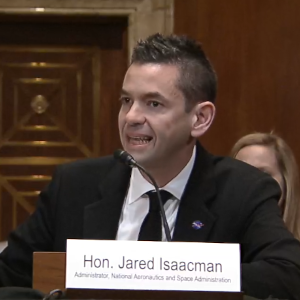
Jared Isaacman before the Senate

NASA administrator Jared Isaacman yesterday appeared before a subcommittee of the Senate Appropriations committee, and as happened last week when Isaacman appeared before a House committee, the reality of what happened at the hearing differed greatly from what most new sources reported.

The main topic of both hearings were the proposed $5.6 billion cut in NASA’s budget, proposed by President Trump. Isaacman has made it clear he does not oppose this cut, stating repeatedly in public that he has plenty of money to do what he wants, that there is much waste and needless spending at NASA that needs reform, and by trimming that out he will find the cash he needs.

As I noted in reporting about that House hearing, I was struck by the lack of hard opposition to those cuts. The Republicans generally made little of the issue, though they seemed generally opposed to the cuts. And though the Democrats as expected blasted the cuts, they did so in a generally subdued manner, only showing passion in noting the elimination to NASA STEM education office. Isaacman’s willingness to push back hard against more spending took the wind out of their demands for more money, and so they muted their protests.

Unfortunately, if you relied on our propaganda press for an honest report of this House hearing, you would have been misinformed. As shown below, that propaganda press distorted this reality to back big government spending without question.

The Senate hearing yesterday followed the exact same pattern. The questioning was generally friendly, and Isaacman aggressively pushed back at the demands for more spending by Democrats. This made their push for more spending more difficult, because Isaacman knows what he is talking about, supports an ambitious space program at NASA, and if he says he doesn’t need the extra money, they look foolish throwing it at him.

Yet, the propaganda press once again tried to spin the hearing to promote more spending. Though this hearing got less coverage, the following two stories were typical:

Only one news source (outside of my reporting here), R&D World, reporting this hearing accurately: Senate largely hearing splits on party lines over proposed $5.6 billion NASA cut

Now, I am not naive. I fully expect Congress to restore most of the proposed cuts to NASA’s budget. At the same time, both hearings suggest that Congress will also afford Isaacman more leeway on how he uses the money. He will be able to cut or reshape major projects. He will be able to shut down some offices that he considers wasteful or redundant. And above all, he will be given the freedom to reform NASA in ways no Congress has allowed in decades.

10 comments

Trump fires the entire governing board of the National Science Foundation

In a move that should surprise no one at this point in Trump’s second term, yesterday President Trump informed all 24 members of the National Science Board, the committee that runs the National Science Foundation (NSF), that they have been fired.

“On behalf of President Donald J Trump, I am writing to inform you that your position as a member of the National Science Board is terminated, effective immediately,” reads a 24 April email from Mary Sprowls of the presidential personnel office to each NSB member. “Thank you for your service.”

The article at the link, from the journal Science, takes the typical one-sided propaganda press anti-Trump view, interviewing only those who oppose Trump and spending most of its time screaming “He’s destroying science!”

A wider view would ask this: Is there a reason that the president of the United States, elected by the American people, might have reasons to question the management of this board? At the moment the federal government is running a deficit that is back-breaking, and this board publicly criticized Trump’s effort to rein in spending when he proposed a 55% cut in NSF’s budget. If they are not going to cooperate with their boss, then maybe they should leave, and not let the door hit them as they head out.

The Science article also included this howler: “the mass firing is the latest indication that the White House is ignoring the board’s authority and dictating policies at NSF.” Um, who elected them? No one. In fact, they were appointed by the president himself, and he is the only one with the constitutional authority to decide these matters.

Expect court suits of course, with some lower level unelected judge somewhere attempting to take over running the executive branch by demanding these board members remain in power, defying the elected president of the U.S.

20 comments

Isaacman before Congress: Speaking the truth to power

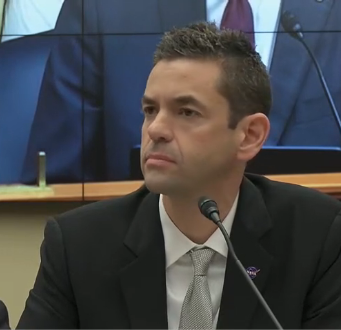
Jared Isaacman at House hearing yesterday

There has been a lot of attention given by the propaganda press to the testimony yesterday by NASA administrator Jared Isaacman before the House Science Committee, with almost all of that coverage focused on two issues, Trump’s proposal to cut NASA’s budget significantly, and the public statement by Isaacman that two Lunar Gateway modules were delivered “corroded.”

On the corrosion issue, much of the press focused on whether Isaacman’s statement is true (contractors are denying it). I instead was struck by how little pushback there was overall from Congress about Isaacman’s proposal to cancel Gateway entirely. In two hours of testimony, only one congressman brought it up, and even he did not challenge Isaacman’s decision very strongly.

Put simply, it really didn’t matter whether these modules were corroded or not. Congress is not going to challenge Isaacman on this decision. Some politicians might use it in fund-raising letters or at press events as a hammer to win votes or donations, but when it comes time to approve NASA’s budget, they are willing to accept Isaacman’s overall judgment. Gateway will be gone.

As for the budget cuts, I was also struck by the lack of hard opposition from Congress, despite reporting from the propaganda press (like this story) suggesting the cuts were rejected outright. Though repeatedly Isaacman was questioned about those cuts — especially from Democrats — repeatedly he fought back hard, to good effect. He supports Trump’s cuts and does not want more money, because in reviewing NASA’s budget and recent actions, he has found there is ample cash available in Trump’s reduced budget by simply shutting down bad or duplicative projects and focusing his resources more effectively.

The only threatened program that seemed to generate any passion from Congress was Trump’s effort to eliminate NASA’s education STEM program. “We need this program to inspire kids!” they would say. Isaacman would bluntly respond “No we don’t,” noting that NASA issues millions in education grants outside that program (making that program duplicative and unnecessary), and that the best way NASA can inspire kids is to actually fly missions, not send money to some bureaucratic program. Isaacman wants to use that money to make building the lunar base more likely.

Over and over again Isaacman pulled the rug out from under this big-spending congress critters by simply pointing out the truth to them, with one exchange with Zoe Lofgren (D-California) quite typical. She clearly was opposed to Trump’s cuts and wanted to challenge any cancellations being put forth. To do so, however, she wanted Isaacman to provide more detailed information about those cuts. Issacman said sure, I’m glad to provide you everything you want, but then added this:
» Read more

33 comments

A very interesting and revealing interview of NASA administrator Jared Issacman

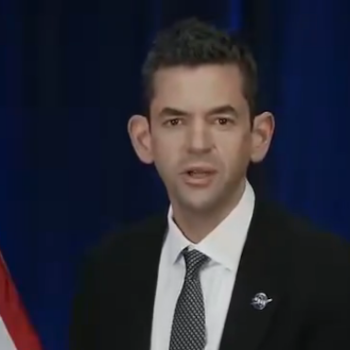
Jared Isaacman
NASA administrator Jared Isaacman

Link here. I found this interview with NASA administrator Jared Issacman to be very informative and worth reading, especially in regards to his comments on the proposed cuts to NASA’s budget.

First, he admits right off the bat that the heat shield was his biggest concern during the Artemis-2 mission. He also took a swipe at past NASA management over this issue. After noting that the initial inspection of the Artemis-2 shield after recovery showed it experienced little serious damage, he added this: “All that aside, if you’re going to wait three and a half years between missions, just replace the heat shield.” In other words, after Artemis-1 NASA management dithered when it saw the damaged heat shield. It should have immediately moved to replace it.

As for the proposed Trump budget cuts and the opposition to those cuts by many in Congress, Issacman said this:

There’s a lot of passionate people out here [referring I think to the space industry and its advocates]. They can do incredible things, from a scientific perspective. I don’t know how many of them have ever pulled together a financial model, and driven execution on some of these things to say what should or shouldn’t be the right budget.

Now, all that said, of course, we will maximize every dollar that Congress affords to the agency. But it is not healthy, for the agency, to get in this mindset that we have to spend our way out of every problem. And I don’t think it’s good for the country to think we have to print our way out of every problem. [emphasis mine]

This is not the first time Isaacman has indicated he thinks NASA can survive these cuts, and in fact can do as well if not better by using what it gets more wisely. It is however the first time he has put NASA’s budget in the context of the entire federal budget, which is badly out of control. Isaacman does not want more money from Congress because he thinks it is bad for the nation to spend itself into debt. He thinks he has enough to do the job.

The entire interview is worth reading. It indicates a very practical and honest mindset. Everyone might not agree with every proposal Isaacman has put forth, but he is clearly approaching things from a very good place.

31 comments

SpaceX wants revisions to federal rural grant program that has awarded it $733 million

SpaceX is presently asking for changes in the Broadband Equity Access and Deployment (BEAD) program that awards grants to companies that provide internet in rural areas and has already awarded the company $733 million in grants.

BEAD was part of the Biden administration’s bipartisan infrastructure act – originally a $42 billion program to bring broadband internet to areas of the country with little or no broadband access. The Trump administration eliminated other infrastructure act programs, and cut BEAD outlays to $21 billion, along with rule changes to allow satellite providers.

SpaceX applied for BEAD funds in 2025. The company won $733 million worth of BEAD projects nationwide, including $109 million in Texas.

Initially the Biden administration awarded SpaceX almost a billion dollar grant, because its Starlink constellation was the only broadband outlet actually doing the job. Then Musk began to campaign for Republicans, and suddenly the Biden administration pulled that grant, saying absurdly that SpaceX was failing to provide its service to rural areas, when that was exactly what it was doing.

Now SpaceX wants BEAD to ease some of its requirements, and wants these grant funds upfront.

I say, this whole BEAD program is a waste of taxpayer money and a perfect example of crony capitalism. I’m glad Trump cut it in half, but that wasn’t good enough. It should be shut down entirely. SpaceX doesn’t need this handout. It is making money hand-over-fist on its own.

14 comments

FAA lifts airline and rocket launch restrictions

The Federal Aviation Administration (FAA) earlier today announced it is lifting the restrictions on airline traffic as well as rocket launch limitations imposed due to the government shutdown.

The change will go into effect 6 am (local time) on November 17, 2025.

The restrictions had limited flights out of 40 major airports across the country. Normal flight schedules should resume tomorrow. For rockets, this means launches can once again take place at any time of the day. The restrictions had placed a curfew on any launches from 6 am to 10 pm local time.

The press release included this intriguing tidbit:

The FAA is aware of reports of non-compliance by carriers over the course of the emergency order. The agency is reviewing and assessing enforcement options.

If the FAA does anything to penalize any airline or rocket company it would be a very typical example of government pettiness. But then, I have learned never to expect anything better from bureaucracies.

0 comments

SpaceX launches 29 more Starlink satellites

Note: My original post mistated the time of launch. Below is a corrected text:

SpaceX tonight at 10:21 pm (Eastern) successfully launched another 29 Starlink satellites, its Falcon 9 rocket lifting off from Cape Canaveral in Florida.

The first stage completed its third flight, landing on a drone ship in the Atlantic.

I specify the launch time because it occurred just outside the FAA’s so-called curfew banning all launches from 6 am to 10 pm local time, due to the government shutdown and a shortage of air traffic controllers to coordinate aviation and rocket launches. Though the Senate today voted to end the shutdown, that shutdown has not yet ended, and won’t until the House passes the Senate budget version and Trump signs it.

Thus, it appears Blue Origin has negotiated an exemption for its now planned launch of New Glenn on November 12, 2025 in the afternoon.

The leaders in the 2025 launch race:

147 SpaceX (a new record)
70 China
14 Rocket Lab
13 Russia

SpaceX now leads the rest of the world in successful launches, 147 to 115.

Note that I had made an error in entering my numbers earlier this week in regards to China, and have now corrected the mistake, thus revising the numbers in the last few launch reports.

2 comments

Profits for Luxembourg satellite company SES drop due to U.S. budget cuts and shutdown

According to its third quarter report, the profits of Luxembourg satellite company SES were impacted negatively because of the budget cuts of the Trump administration, and were then further impacted because of the extended government shutdown.

Revenue over the first nine months of this year rose 20% to €1.75 billion while losses mounted to €55 million so far in 2025. Part of the problem was the Trump administration reassessment of spending that had been decided last year, including the delay of contract renewals and decisions on new awards, Chief Executive Officer Adel Al-Saleh said. Large contracts have also been delayed by the longest congressional budget standoff in US history, now in its sixth week, he said. “We’re experiencing timing delays in some contract awards due to the continuing resolution and subsequent government shutdown,” Al-Saleh said on a conference call with stock analysts.

The company remains in the black, and it expects to make up these losses from other customers. It is also in the process of completing its purchase of the satellite company Intelsat, which has also impacted its profits.

The article notes one interesting aspect of this Luxembourg company, that reflects the unique approach to tax dollars by that nation’s government: “Luxembourg taxpayers own one-sixth of SES shares, but wield a third of the voting power after underwriting its creation four decades ago.” The government doesn’t simply spend its tax revenue, like most governments. It treats that revenue as investment capital, and uses it to make money for the benefit of its citizens.

If only more governments would take this approach!

8 comments

U.S. budget cuts shifts Blacksky’s satellite imaging business to international customers

Because of budget cuts by the Trump administration, the revenues of the satellite imaging company Blacksky fell in the third quarter of 2025, but the company expects to make up that loss with new income from international customers.

The administration’s fiscal 2026 budget proposal includes a one-third reduction to the National Reconnaissance Office’s commercial imagery procurement, a move that has rippled through companies like BlackSky that rely heavily on government intelligence contracts. The cuts specifically affect the Electro-Optical Commercial Layer (EOCL) program — an NRO initiative to buy satellite imagery from commercial providers.

BlackSky reported $19.6 million in third-quarter revenue, missing analyst expectations and down from the previous quarter. Chief Executive Brian O’Toole told analysts the reduction stemmed from adjustments to the company’s EOCL contract “to reflect the potential baseline budget submitted by the administration.”

Sound terrible, eh? Not so fast.

Despite the domestic headwinds, BlackSky is seeing a sharp uptick in overseas business. The company said international sales now account for about half of total revenue, up from 40% a year ago. O’Toole said foreign demand is “outpacing our U.S. government business” and that the company expects international sales to exceed U.S. sales for the first time in 2026.

Blacksky is of course blocked from selling its high resolution reconnaissance imagery to hostile powers, but there are plenty of American allies out there who want this data.

The situation is simple. When American companies are given the freedom to produce, they will create products of value. And the sky won’t fall if the federal government can no longer be their main customer.

0 comments

FAA issues a launch curfew due to the shutdown

The Federal Aviation Administration (FAA) today issued a launch curfew that will ban all launches and re-entries from 6:00 am to 10:00 pm local time.

Accordingly, with respect to commercial space launches and reentries, under the authority provided to the FAA Administrator by 49 U.S.C. §§ 40103, 40113, and 46105(c), and authority delegated to the FAA Administrator under 51 U.S.C. § 50909(a), it is hereby ordered that, beginning at 6:00 a.m. EST on November 10, 2025, and until this Order is cancelled, Commercial space launches and reentries will only be permitted between 10:00 p.m. and 6:00 a.m. local time.

It appears the curfew has been imposed because of a shortage of air traffic controllers due to the government shutdown. Each launch needs to be coordinated with air traffic control, and it appears the FAA won’t have the people it needs to do this during the day. This is part of the overall 10% reduction in flights at forty of the busiest airports nationwide imposed at the same time, also due to the shutdown.

This order is going to probably impact planned launches by SpaceX, Rocket Lab, and others, with SpaceX likely affected the most.

Note: I got the curfew times backwards initially, and was corrected by my readers. Post is now correct.

14 comments
1 2 3 107