Vast signs deal with Colombia’s space agency

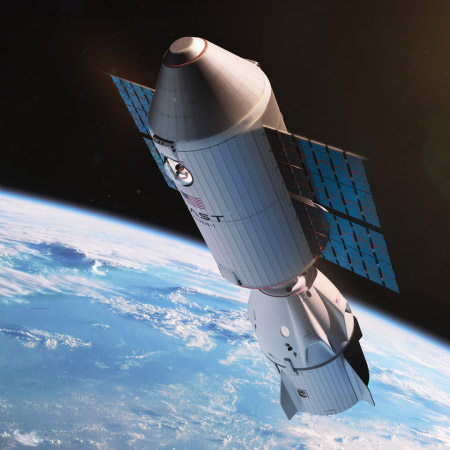
Haven-1 with docked Dragon capsule

The space station startup Vast last week signed an agreement with the space agency of the South American country of Colombia to do cooperative research, linked to Vast’s planned space stations.

The agreement suggested it would be used mostly to encourage educational and research opportunities for Colombia’s universities and schools. However, the press release added this tidbit:

Both organizations intend to work together to identify joint initiatives that leverage Vast’s spacecraft, including Haven-1, scheduled to be the world’s first commercial space station, with AEC’s [Columbia’s space agency] growing ecosystem of data analytics, connectivity, and science education programs.

Vast already has similar agreements with Uzbeckistan, the Czech Republic, and the European Space Agency. Its Haven-1 single module station, set to launch next year for a three-year mission during which it will be occupied four different times for several weeks, still has no confirmed passengers or crews. One can’t help wondering if these international deals hint at the possibility that one or all of these international partners will fly astronauts there.

It is also possible Vast has been hunting for passengers, and as yet has not been able to convince anyone to buy a ticket. I expect everyone is waiting to see the condition of Haven-1, after it launches.

There is one problem that might make any final deal with Colombia difficult: Its Marxist president does not have a very good relationship with the Trump administration.

The recovered diary of Columbia’s Israeli astronaut now on loan to Israel’s national library

One page from Ilon Ramon's space diary
One page from Ilon Ramon’s space diary

According to a May 29, 2024 announcement by the National Libary of Israel, the recovered diary of astronaut Ilan Ramon — who died when the space shuttle Columba broke up on its return to Earth — has now been transferred from the Israel Museum to the National Library of Israel so that it can finally be put on display.

The diary, a personal and national treasure, should have disintegrated along with the shuttle and its crew, but a few weeks after the disaster, to the surprise of the search party, someone found the remains of the diary on a muddy patch of land in Texas.

How is it possible that it survived? It withstood the explosion, and then a journey of several kilometers till it hit the earth. No one knows for sure, but leading researchers in the field believe that due to the light weight of the pages, the diary didn’t fall directly to the ground but probably glided slowly downwards, carried on wind currents that eventually allowed for a soft landing. Most of the damage to its pages probably only happened after it reached the ground, resulting from the humid conditions in the marshy area where it landed.

Since then the Israel Museum has been carefully documenting its contents, which included daily accounts by Ramon of his experience in space. One example:
» Read more

The future factions in space become clearer

Based on two stories yesterday, it appears that the future alliances between nations in space are now beginning to sort themselves out.

First there was the signing ceremony announcement of Columbia becoming the nineteenth nation to sign the Artemis Accords with the U.S. and the third Latin American country to do so.

The Artemis Accords were created by the Trump administration as an international treaty to bypass the restrictions on private property imposed by the Outer Space Treaty. By signing bilateral agreements with as many nations as possible, the U.S. thus creates a strong alliance able to protect those rights in space.

The full list of signatories so far: Australia, Bahrain, Brazil, Canada, Columbia, Israel, Italy, Japan, Luxembourg, Mexico, New Zealand, Poland, Romania, Singapore, South Korea, the United Kingdom, the United Arab Emirates, the Ukraine, and the United States.

In the second story, France and India — both of whom have so far resisted signing the Artemis Accords — announced their own bilateral agreement intended to strengthen their partnership across many fronts, from security to economic development to the Ukraine war. The agreement also included this paragraph on the subject of space:
» Read more