New Trump executive order today guarantees major changes coming to NASA’s Moon program

Change is coming to Artemis!

The White House today released a new executive order that has the typically grand title these type of orders usually have: “Ensuring American Space Superiority”. That it was released one day after Jared Isaacman was confirmed as NASA administrator by the Senate was no accident, as this executive order demands a lot of action by him, with a clear focus on reshaping and better structuring the entire manned exploration program of the space agency.

The order begins about outlining some basic goals. It demands that the U.S. return to the Moon by 2028, establish the “initial elements” a base there by 2030, and do so by “enhancing sustainability and cost-effectiveness of launch and exploration architectures, including enabling commercial launch services and prioritizing lunar exploration.” It also demands this commercial civilian exploration occur in the context of American security concerns.

Above all, the order demands that these goals focus on “growing a vibrant commercial space economy through the power of American free enterprise,” in order to attract “at least $50 billion of additional investment in American space markets by 2028, and increasing launch and reentry cadence through new and upgraded facilities, improved efficiency, and policy reforms.”

To achieve these goals, the order then outlines a number of actions required by the NASA administrator, the secretaries of Commerce, War, and State, as well as the Director of the Office of Management and Budget (OMB) and the Assistant to the President for Domestic Policy (APDP), all coordinated by the assistant to the President for Science and Technology (APST).

All of this is unsurprising. Much of it is not much different than the basic general space goals that every administration has touted for decades. Among this generality however was one very specific item, a demand to complete within 90 days the following review:
» Read more

Jared Isaacman confirmed as NASA administrator

Jared Isaacman during his spacewalk
Jared Isaacman during his spacewalk in September 2024

The Senate today finally confirmed Jared Isaacman to be the next NASA administrator, by a vote of 67 to 30.

All of the opposition came from Democrats, who fear Isaacman will eliminate several NASA centers in their states, centers that for decades have accomplished little but be jobs programs sucking money from the American taxpayer.

During hearings and private meetings with the senators Isaacman denied he had any intention to do this. In fact, the 62-page policy document Isaacman had written outlining his plans when he was first nominated for this position back in the spring makes it clear that is not his goal.

Instead, an honest read of that document shows that Isaacman has approached this position as administrator like the businessman he is. He intends to review every aspect of NASA’s operations and to restructure them to run more efficiently. For one example, he plans to eliminate the numerous “deputies” that every manager at NASA has been given. The managers should do the work, not hire a flunky to do it for them.

He also plans to review the next two Artemis missions, specifically looking at the Orion capsule and the questions relating to its heat shield and its untested environmental system. The concern that I and many others have expressed is that this capsule is not ready yet for a manned mission. The heat shield showed significant and unexpected damage on its return to Earth from its first unmanned mission around the Moon in 2022. Rather than replace it or redesign it, NASA has decided to push ahead and fly four astronauts on it around the Moon no later than April 2026. The agency’s solution will be to change the capsule’s flight path to reduce stress on the shield, a solution that might work but remains untested. It is also willing to fly the astronauts in a capsule with a untested environmental system. This NASA decision to push ahead is so it can meet the goal of Trump and Congress to get humans back on the Moon ahead of the Chinese, and hopefully within Trump’s present term of office.

In other words, NASA management is once again putting schedule ahead of safety and engineering, as it did with Challenger and again with Columbia.

It appears that Isaacman will at least review this situation. Whether he will have the courage to take the astronauts off that mission however remains unknown. He will certainly face fierce opposition from Trump and Congress if he does so.

House joins Senate in proposing a new space bureaucracy here on Earth

Gotta feed those DC pigs!

In mid-November a bi-partisan group of senators introduced legislation they claimed would help the U.S. beat China in space by creating a new government agency called the “National Institute for Space Research.”

The absurdity of creating a new agency to do this was obvious. Don’t we already have something called NASA that is tasked with this job? As I noted then, “This is just pork.”

Rather than funding real research or development in space, this legislation simply creates another Washington government agency supposedly functioning independent of presidential or even congressional oversight (a legal structure the courts have increasingly declared unconstitutional).

Well, it appears two congress critters in the House have decided they had to keep up with the Jones in the Senate, and have now introduced their own variation of this legislation.

Yesterday, Congresswoman Valerie Foushee [D-North Carolina], Ranking Member of the House Subcommittee on Space and Aeronautics, and Congressman Daniel Webster [R-Florida] introduced H.R. 6638, the Space Resources Institute Act, bipartisan legislation which directs the National Aeronautics and Space Administration (NASA) Administrator and the Secretary of Commerce to report to Congress on the merits and feasibility of establishing a dedicated space resources institute relating to space resources, the surface materials, water, and metals often found on the Moon, Mars, and asteroids.

The bill would give NASA 180 days to submit its report.

This is just more junk from Congress that will do nothing but distract NASA from its real business, fostering a new American aerospace industry capable of colonizing the solar system for profit. Note too that like the Senate bill, this House bill is a bi-partisan effort in stupidity.

As I said in reporting on the Senate version of this proposal, “Ugh. There are times I wish I didn’t have to read the news from DC. It almost always depresses me.”

Senate committee approves Isaacman’s nomination as NASA administrator

The Senate Commerce, Science, and Transportation Committee today approved the nomination of Jared Isaacman for NASA administrator, doing so for the second time after his first nomination was withdrawn by Trump in May and then re-instated his nomination in November.

All 15 committee Republicans and three of the 13 Democrats voted in favor: Senators Ted Cruz (Chairman, R-Texas), John Thune (R-South Dakota), Roger Wicker (R-Mississippi), Deb Fischer (R-Nebraska), Jerry Moran (R-Kansas), Dan Sullivan (R-Alaska), Marsha Blackburn (R-Tennessee), Todd Young (R-Indiana), Ted Budd (R-North Carolina), Eric Schmitt (R-Missouri), John Curtis (R-Utah), Bernie Moreno (R-Ohio), Tim Sheehy (R-Montana), Shelley Moore Capito (R-West Virginia), Cynthia Lummis (R-Wyoming), Maria Cantwell (Ranking Member, D-Washington), Tammy Baldwin (D-Wisconsin), and John Fetterman (D-Pennsylvania).

Ten of the 13 Democrats voted no: Senators Amy Klobuchar (D-Minnesota), Brian Schatz (D-Hawaii), Ed Markey (D-Massachusetts), Gary Peters (D-Michigan), Tammy Duckworth (D-Illinois), Jacky Rosen (D-Nevada), Ben Ray Luján (D-New Mexico), John Hickenlooper (D-Colorado), Andy Kim (D-New Jersey), and Lisa Blunt Rochester (D-Delaware).

In the previous April 2025 confirmation vote two Democrats, Kim and Hickenlooper, had voted yes. Now they voted no. In turn in April Fetterman had voted no and now changed his vote to yes.

Isaacman’s nomination still has to be confirmed by the Senate. No vote has been scheduled, but there have been indications that it will be scheduled in the next week or so. If not, the vote will have to wait until after the New Year. In either case, it is expected Isaacman will be approved handily.

House hearing on Artemis yesterday signals strong doubts about the program in Congress

Artemis logo

The space subcommittee of the House Science, Space, and Technology Committee yesterday held a hearing on space, one day after the Senate held its own hearing on the nomination of Jared Isaacman as NASA administrator.

The House hearing however was not about Isaacman, but was apparently staged to highlight what appears to be strong reservations within Congress about NASA’s Artemis program, as presently structured. Its timing, just after the Isaacman hearing, was clearly aimed at garnering as much publicity as possible.

Video of the hearing can be seen here.

The focus of the hearing was also on China, and how there is real fear in Congress that its space program is outstripping NASA’s. Both the Republican committee chairman and the ranking Democrat stressed these concerns, and the need to beat China to the Moon and beyond.

More important, all four witnesses pushed the same point.

The rallying cry at this hearing as well as yesterday’s is the “race” with China.

…Foushee asked each of the witnesses for one-word answers to the question: is NASA on track to get back to the Moon before Chinese taikonauts arrive?

Not all succeeded with one word, but their sentiment was similar. Cheng replied “no, I am very pessimistic.” Swope: “worried.” Besha: “maybe.” Griffin: “no possible way…with the present plan.”

Former NASA administrator Mike Griffin was the most blunt in his criticism of NASA.
» Read more

Yesterday’s Senate nomination hearing for Jared Isaacman was irrelevant; America’s real space “program” is happening elsewhere

Jared Isaacman
Billionaire Jared Isaacman

Nothing that happened at yesterday’s Senate hearing of Jared Isaacman’s nomination to be NASA’s next administrator was a surprise, or very significant, even if most media reports attempted to imply what happened had some importance. Here are just a small sampling:

To be fair, all of these reports focused on simply reporting what happened during the hearing, and the headlines above actually provide a good summary. Isaacman committed to the Artemis program, touted SLS and Orion as the fastest way to get Americans back to the Moon ahead of the Chinese, and dotted all the “i”s and crossed all the “t”s required to convince the senators he will continue the pork projects they so dearly love. He also dodged efforts by several partisan Democrats to imply Isaacman’s past business dealings with Musk and SpaceX posed some sort of conflict of interest.

What none of the news reports did — and I am going to do now — is take a deeper look. Did anything Isaacman promise in connection with NASA and its Artemis program mean anything in the long run? Is the race to get back to the Moon ahead of China of any importance?

I say without fear that all of this is blather, and means nothing in the long run. The American space program is no longer being run by NASA, and all of NASA’s present plans with Artemis, using SLS, Orion, and the Lunar Gateway station, are ephemeral, transitory, and will by history be seen as inconsequential by future space historians.
» Read more

The DC swamp proposes beating China in space by creating another bureaucracy here on Earth

Gotta feed those DC pigs!

My heart be still: A bi-partisan group of senators, led by Senator John Cornyn (R-Texas), yesterday introduced legislation they claim will help the U.S. beat China in space by creating a new government agency called the “National Institute for Space Research,” designed to encourage research in space tied to the proposed commercial space stations.

Reports indicate that China is launching new modules to its Tiangong space station to meet growing demands for science and to boost international cooperation and is developing a new-generation crew spacecraft with two variants: one for low Earth orbit (LEO) and one for crewed lunar missions. China has been actively promoting international cooperation through Tiangong, offering countries like Oman, Egypt, Pakistan, and others opportunities to participate in space research largely for free or at an extremely low cost. China has also offered to train foreign astronauts, garnering interest from countries like Saudi Arabia, Pakistan, and the UAE to train engineers, scientists, and mission operators for satellite development, and to launch services in which Egypt, Algeria, and Argentina are actively involved. This is a part of China’s broader Belt and Road Initiative, where space cooperation is bundled with tech transfer, loans, development projects, and the like.

This underscores strategic and accelerating investment by foreign adversaries in space-based infrastructure, research, and exploration. China’s ability to offer space-based partnerships to other nations allows it to build soft power and potentially shift international norms in space governance and tech standards.

In response, the Space RACE Act would create a National Institute for Space Research, a federally controlled but independently operated entity designed to coordinate and advance U.S. microgravity research in LEO using next-generation space platforms after the retirement of the ISS.

The last thing this bill will achieve is a stronger American space industry. Rather than funding real research or development in space, this legislation simply creates another Washington government agency supposedly functioning independent of presidential or even congressional oversight (a legal structure the courts have increasingly declared unconstitutional).

This is just more pork. It is also symbolic of the stupidity of our elected officials, who still do not really understand the real reasons beyond the on-going renaissance in America’s space effort. It hasn’t been the government that made it happen. It has been the private dreams of competing companies and individuals, figuring out ways they could make money launching rockets, often with the government acting as a major obstacle. Rather than streamline our bloated government to get it out of the way of this new private sector, these senators want to create more government to dictate how that sector functions.

Ugh. There are times I wish I didn’t have to read the news from DC. It almost always depresses me.

FAA lifts airline and rocket launch restrictions

The Federal Aviation Administration (FAA) earlier today announced it is lifting the restrictions on airline traffic as well as rocket launch limitations imposed due to the government shutdown.

The change will go into effect 6 am (local time) on November 17, 2025.

The restrictions had limited flights out of 40 major airports across the country. Normal flight schedules should resume tomorrow. For rockets, this means launches can once again take place at any time of the day. The restrictions had placed a curfew on any launches from 6 am to 10 pm local time.

The press release included this intriguing tidbit:

The FAA is aware of reports of non-compliance by carriers over the course of the emergency order. The agency is reviewing and assessing enforcement options.

If the FAA does anything to penalize any airline or rocket company it would be a very typical example of government pettiness. But then, I have learned never to expect anything better from bureaucracies.

SpaceX launches 29 more Starlink satellites

Note: My original post mistated the time of launch. Below is a corrected text:

SpaceX tonight at 10:21 pm (Eastern) successfully launched another 29 Starlink satellites, its Falcon 9 rocket lifting off from Cape Canaveral in Florida.

The first stage completed its third flight, landing on a drone ship in the Atlantic.

I specify the launch time because it occurred just outside the FAA’s so-called curfew banning all launches from 6 am to 10 pm local time, due to the government shutdown and a shortage of air traffic controllers to coordinate aviation and rocket launches. Though the Senate today voted to end the shutdown, that shutdown has not yet ended, and won’t until the House passes the Senate budget version and Trump signs it.

Thus, it appears Blue Origin has negotiated an exemption for its now planned launch of New Glenn on November 12, 2025 in the afternoon.

The leaders in the 2025 launch race:

147 SpaceX (a new record)
70 China
14 Rocket Lab
13 Russia

SpaceX now leads the rest of the world in successful launches, 147 to 115.

Note that I had made an error in entering my numbers earlier this week in regards to China, and have now corrected the mistake, thus revising the numbers in the last few launch reports.

Profits for Luxembourg satellite company SES drop due to U.S. budget cuts and shutdown

According to its third quarter report, the profits of Luxembourg satellite company SES were impacted negatively because of the budget cuts of the Trump administration, and were then further impacted because of the extended government shutdown.

Revenue over the first nine months of this year rose 20% to €1.75 billion while losses mounted to €55 million so far in 2025. Part of the problem was the Trump administration reassessment of spending that had been decided last year, including the delay of contract renewals and decisions on new awards, Chief Executive Officer Adel Al-Saleh said. Large contracts have also been delayed by the longest congressional budget standoff in US history, now in its sixth week, he said. “We’re experiencing timing delays in some contract awards due to the continuing resolution and subsequent government shutdown,” Al-Saleh said on a conference call with stock analysts.

The company remains in the black, and it expects to make up these losses from other customers. It is also in the process of completing its purchase of the satellite company Intelsat, which has also impacted its profits.

The article notes one interesting aspect of this Luxembourg company, that reflects the unique approach to tax dollars by that nation’s government: “Luxembourg taxpayers own one-sixth of SES shares, but wield a third of the voting power after underwriting its creation four decades ago.” The government doesn’t simply spend its tax revenue, like most governments. It treats that revenue as investment capital, and uses it to make money for the benefit of its citizens.

If only more governments would take this approach!

FAA issues a launch curfew due to the shutdown

The Federal Aviation Administration (FAA) today issued a launch curfew that will ban all launches and re-entries from 6:00 am to 10:00 pm local time.

Accordingly, with respect to commercial space launches and reentries, under the authority provided to the FAA Administrator by 49 U.S.C. §§ 40103, 40113, and 46105(c), and authority delegated to the FAA Administrator under 51 U.S.C. § 50909(a), it is hereby ordered that, beginning at 6:00 a.m. EST on November 10, 2025, and until this Order is cancelled, Commercial space launches and reentries will only be permitted between 10:00 p.m. and 6:00 a.m. local time.

It appears the curfew has been imposed because of a shortage of air traffic controllers due to the government shutdown. Each launch needs to be coordinated with air traffic control, and it appears the FAA won’t have the people it needs to do this during the day. This is part of the overall 10% reduction in flights at forty of the busiest airports nationwide imposed at the same time, also due to the shutdown.

This order is going to probably impact planned launches by SpaceX, Rocket Lab, and others, with SpaceX likely affected the most.

Note: I got the curfew times backwards initially, and was corrected by my readers. Post is now correct.

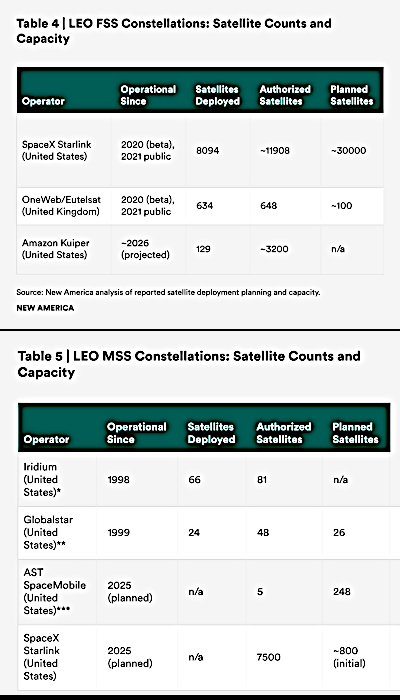
A think tank releases its detailed review of the American satellite communications industry

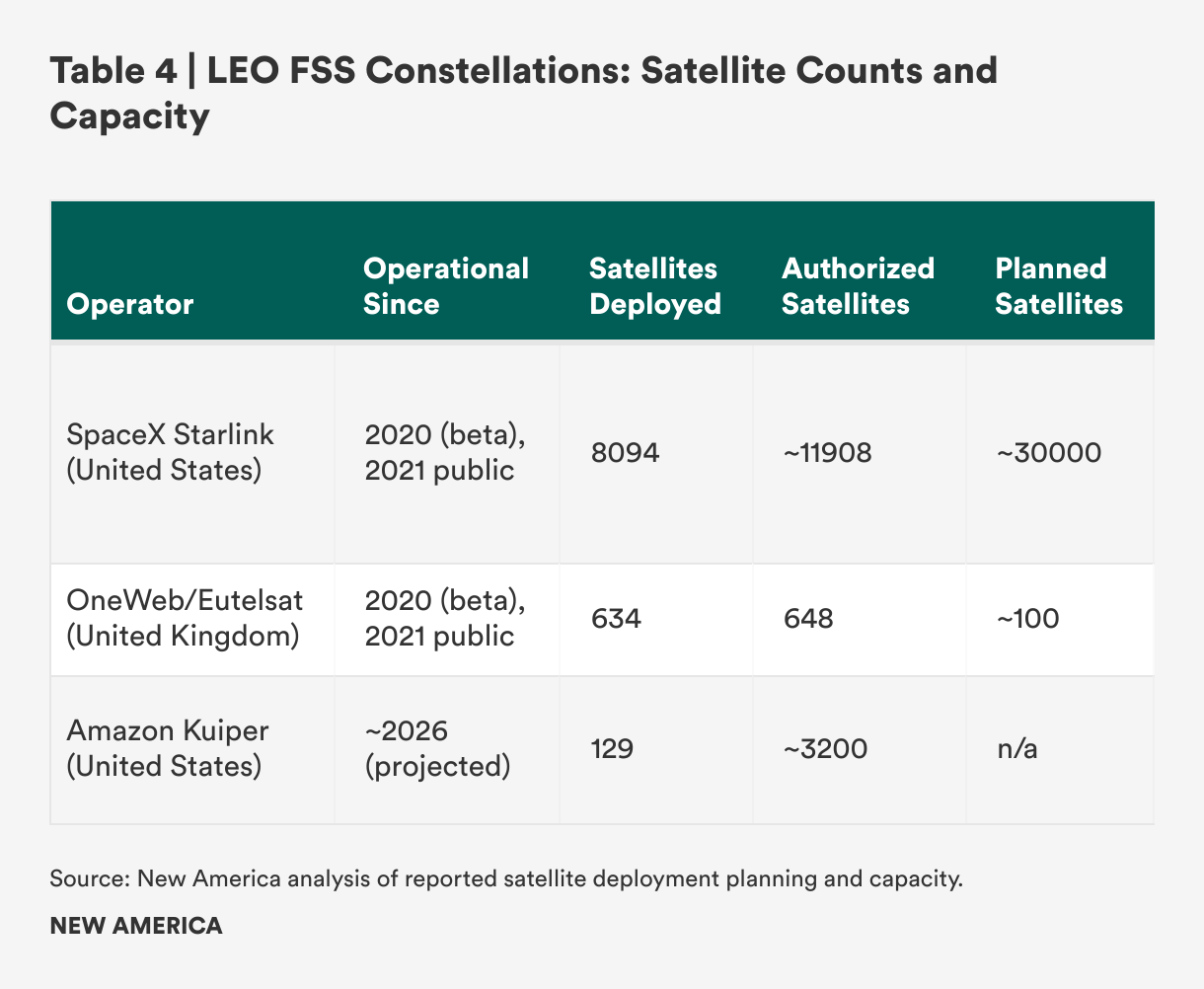
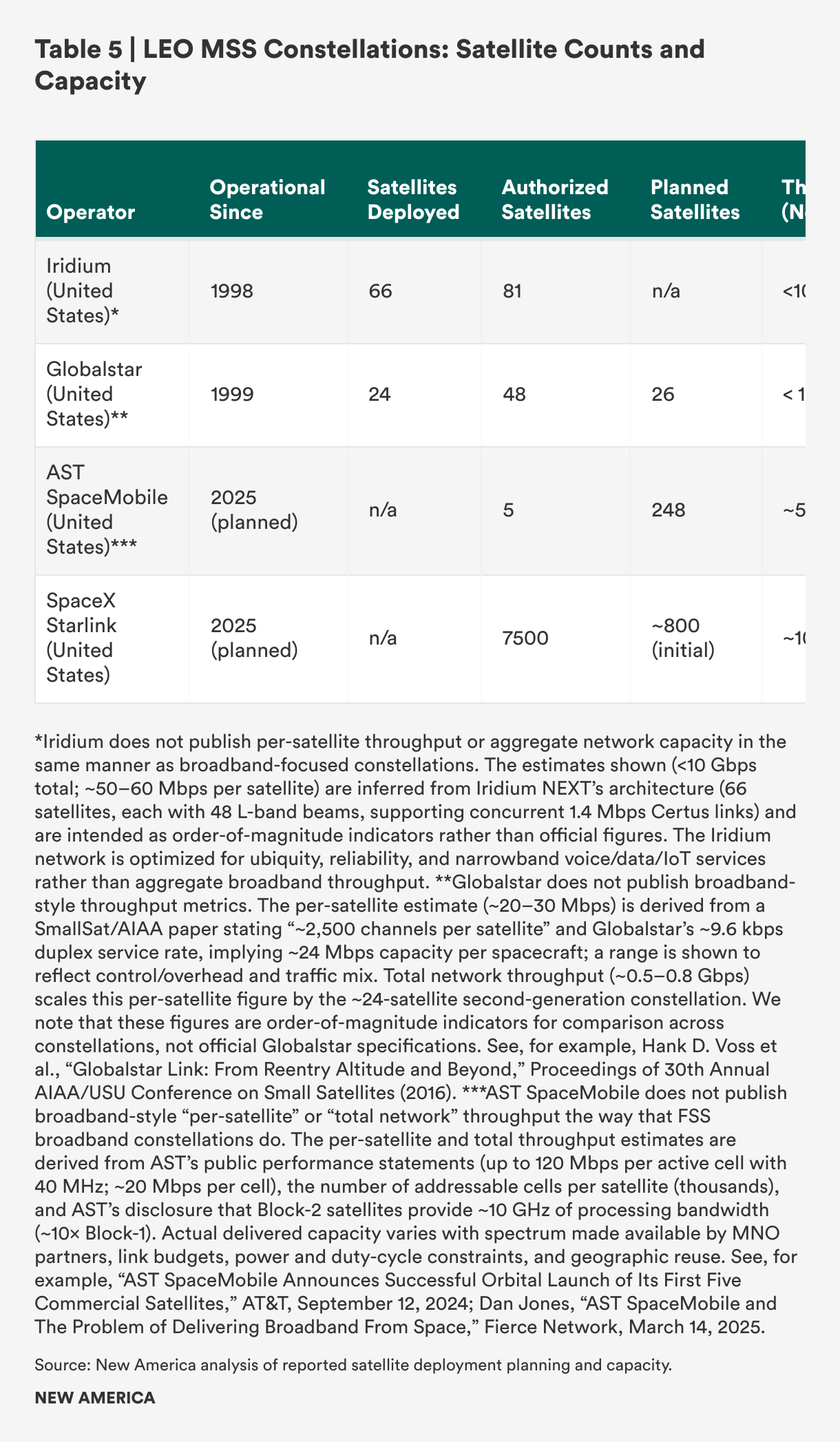
The state of the satellite constellation industry
Go here and here for originals.

Link to the press release is here. To read the actual report go here.

The report was issued by the LEO Policy Working Group, which calls itself “an independent body dedicated to providing forward-looking, data-driven analysis and policy recommendations to ensure the successful and sustainable deployment of next-generation Low Earth Orbit satellite systems.” In reviewing the membership of this group, I noticed that only one member appeared drawn from the industry itself (a former OneWeb advisor). The rest of the members were from lobbying groups, government agencies, academia, or DC think tanks.

Thus, I immediately wondered if this report was aimed against SpaceX and its present dominance, designed to justify further government regulation against it.

In reviewing the report however it does not seem so, at least on the surface. The report very accurately and detail describes the present state of the industry and all the players, including all the present constellations in orbit or under construction. It also describes the state of the launch industry on which they depend, including the risks entailed by SpaceX’s present dominance. At the same time it also notes at length that there is no evidence that SpaceX is doing anything to take advantage of that dominance.

Its recommendations are generally vague, and can be summed up simply as “Government should remain vigilant but do nothing drastic at this time.”

The report’s main benefit however its overall summary of the industry, as well as its detailed description of how the spectrum is regulated by government agencies.
» Read more

Colorado sues the Trump administration over its decision to move Space Force headquarters to Alabama

The Democratic Party attorney general of Colorado yesterday announced he is suing the Trump administration over its decision to relocate the headquarters of the Space Force from Colorado Springs to Huntsville, Alabama.

Colorado Attorney General Phil Weiser is suing President Donald Trump’s administration over its “retaliatory” decision to relocate U.S. Space Command from Colorado Springs to Huntsville, Alabama.

In a lawsuit filed in the U.S. District Court of Colorado on Wednesday, Weiser wrote that the president “could not have been clearer about his motivations” for the move, citing Trump’s comments during the Oval Office announcement last month acknowledging that Colorado’s elections, which he falsely described as “crooked,” were a “big factor” in his decision.

That admission makes Trump’s decision to vacate Space Command’s temporary location in Colorado — the latest twist in a years-long battle over the permanent home of Space Force headquarters — an unconstitutional violation of state sovereignty, Weiser said in a press conference. “The executive branch isn’t allowed to punish, retaliate, or seek to coerce states who lawfully exercise powers that are reserved to them,” Weiser said. “And that includes the power to oversee the time, place and manner of elections.”

Weiser’s lawsuit has little chance of winning in court. No state can tell the federal government where to place its facilities, no matter what the reason. The suit is mainly a crumb Weiser is throwing to his local Democratic Party supporters, showing them he as is equally controlled by Trump Derangement Syndrome as they are.

I should note that I also strongly disagree with Trump’s decision in this case. It will cost a lot of money, and will gain us nothing. The military’s space operations have been based in Colorado for more than a half century. Though a major reorganization of this bureaucratic structure is warranted, it would be far better to reorganize it there, rather than try to recreate it elsewhere.

Congressional budget action appears to just save two of seventeen on-going NASA missions

Though no final budget has yet been approved, based on the language in the budget the House has approved and sent to the Senate, only two of the seventeen on-going missions presently in space are specifically allocated money, thus allowing the Trump administration to zero out funding for the remaining fifteen.

The two missions saved are Osiris-Apex, on its way to the potentially dangerous asteroid Apophis, and the Magnetospheric Multiscale Mission (MMS), four satellites in orbit that observe the Earth’s magnetosphere.

The article at the link is typical of our propaganda press. It clearly opposes any cuts to NASA, and lobbies repeatedly for all funding to be reinstated. This pattern has gotten quite boring and tedious. It would be so refreshing to see a more objective take, at least one in a while.

However, its reporting confirms my own reporting from mid-September, where I noted that the vague language in the House budget bill would allow Trump to cut these missions. Congress wants to preen itself as supporting all funding for NASA, while carefully allowing Trump to go ahead with large cuts.

It is a good thing these two missions have been saved, though it does appear their funding has been trimmed. Of the fifteen missions in limbo, the only two that seem worth keeping is the Chandra X-Ray Observatory and New Horizons, though the second should likely be set up similar to the two Voyager spacecraft, with a very small crew aimed mainly at keeping the spacecraft functioning and able to send back data periodically.

We are in great debt. It is time that the federal government make some real choices. We can no longer afford to buy all the candy in the store.

The Juno mission at Jupiter is almost certainly over

An article yesterday at Space.com speculated that the Juno mission to Jupiter is likely over, but added that we cannot yet be sure because the government shutdown has prevented NASA from making any definitive announcement.

NASA’s management had previously extended the orbiter’s mission several times, with the last extension going until the end of the 2025 fiscal year, that ended on September 30, 2025. No new budget has yet been approved, and the proposed Trump budget had included no money for extending the mission farther.

Due to the government shutdown, NASA is currently unable to say whether Juno is still operating or already powered down. At the time of publication, responses from agency officials state that “NASA is currently closed due to a lapse in government funding … Please reach back out after an appropriation or continuing resolution is approved.”

Under shutdown rules, only missions that fall under “excepted activities” — those required to protect life, property, or national security — can continue operations or communications. NASA’s continuity plans also specify that carryover funding may only be applied to “presidential priorities,” which limits what science programs can proceed during a lapse.

Juno does not fall into those protected categories, and was also zeroed-out on the President’s fiscal year 2026 budget request — making the mission, presumably, not a priority. So, until normal government operations resume, the spacecraft’s future is uncertain.

I think Juno’s future at this point is not uncertain in the least. While other active missions that the Trump proposed shutting down might get revived, Juno is unlikely to be one of them. I suspect the science team has put it in hibernation, and is already beginning to move on to other projects and work. They are being coy about this in the faint hope Congress will save Juno, but this should not be a priority. At this point I think NASA would be wiser to spend its resources elsewhere.

The swamp comes up with a swamp solution for promoting space

Like pigs at the trough

A group of senators last week announced the re-introduction of a bill they had proposed previously in 2023 that they claim would encourage new spaceport development across the United States. From their press release:

Today, U.S. Senators John Hickenlooper, John Cornyn, Ben Ray Luján, and Roger Wicker introduced the bipartisan Spaceport Project Opportunities for Resilient Transportation (SPACEPORT) Act, which would encourage the development of commercial spaceports through the modernization of the Federal Aviation Administration’s (FAA) Space Transportation Infrastructure Matching (STIM) grant program.

Spaceports, including the Colorado Air and Space Port in Adams County, are ground-based launch and reentry sites that can be used to support public and private ventures into space. “Spaceports are Colorado’s gateway to the commercial space boom, and we need to prioritize that infrastructure if we want to stay at the top of the space industry,” said Hickenlooper. “American space exploration has come a long way, but we can and should go even further,” said Cornyn. “By investing in our spaceport infrastructure, this legislation helps ensure the U.S. space industry remains competitive and is prepared to handle future national security threats.”

Though two of these four senators are Republicans (Cornyn and Wicker), the political leanings of this group is decidedly uni-party and establishment based. Polls for example show that Cornyn is not liked by conservatives in Texas, and will lose a primary challenge from the state’s attorney general Ken Paxton. Wicker doesn’t have the same polling issues, but he has also taken positions that suggests he is a willing member of the Republican establishment that has resisted change for decades.

And the actual bill [pdf] itself proves that all four senators are pure swamp. It doesn’t do anything to directly support spaceport development, as Hickenlooper and Cornyn claim. Instead, it would create a $10 million grant fund that the transportation secretary could hand out willy-nilly each year to political friends and buddies. It would also require the heads of Transportation, Defense, Commerce, and NASA to issue a report every four years that simply reviews the state of America’s space industry and describes it.

The bill does nothing to reduce regulation, the main obstacle blocking the U.S. rocket and space industry. If anything, it allows that red tape to flourish by creating this slush fund that politicians can later use to bribe private companies. The report itself will require more bureaucrats and paperwork, and will act to prevent that bureaucracy from doing its regulatory responsibilities, thus slowing license approvals further.

Introducing a bill like this does not guarantee passage of course. It failed previously in 2023. I suspect it is even more likely to fail now, because the trend appears to be moving away from this kind of funding and legal gabblygook.

House committee support for threatened NASA missions is actually quite questionable

According to a House appropriations committee spending bill that it approved this week, it appears on the surface that it is canceling the proposed 24% cut by Trump to NASA’s budget as well as endorsing continued funding for some threatened missions. A close look however suggests this congressional support for NASA is somewhat superficial, and might actually be ephemeral.

The key is the language of the bill. From the link above:

The bill was largely unchanged from what the CJS [commerce, justice and science] subcommittee approved July 14. It includes $24.838 billion for NASA, nearly the same as the $24.875 billion the agency received in fiscal 2024 and 2025, and far above the $18.8 billion the administration proposed for fiscal 2026 in May.

Members adopted a manager’s amendment, a package of noncontroversial changes and corrections, on a voice vote. That amendment also made additions to the report accompanying the bill. The report includes language expressing support for several NASA missions targeted for cancellation, including the Chandra X-ray Observatory, the Juno mission at Jupiter and the New Horizons mission in the Kuiper Belt.

The report does not specify funding levels for those missions, but the “continues support” language signals to NASA that it should fund continue operations within the agency’s science budget. [emphasis mine]

It is the vagueness of this language that suggests the support is ephemeral. The courts recently have consistently ruled that if Congress doesn’t specifically mandate spending on a project, the White House is free to move money around as it sees fit. By not expressly outlining funding for Chandra, Juno, and New Horizons, these congressmen are playing a shell game, whereby to their constituents they can point to this vote and claim they wholeheartedly supported NASA and these missions. At the same time, they also appear to be allowing Trump the freedom to go ahead and shut the missions down, as his budget has already proposed.

None of this is yet real. The bill still must be passed by the full House, as well as the Senate. It then has to be signed by Trump. A lot of changes would happen in that process.

Either way, it appears that within the House at least, there is some movement to at least make some budget cuts possible. The sad thing is that the House is not actually cutting the budget, even as it is allowing Trump a way to cut these relatively inexpensive on-going missions. Considering the debt, it would have been much better had the committee actually trimmed NASA’s budget, even a little, while at the same time allocating specific funds to keep these very cost-effective missions alive.

New study of 300,000 people in Italy proves COVID jab caused gigantic increase in cancer cases

Figure 1 from the study
Figure 1 from the study. Click for original. Anything
to the right of the vertical line indicates an increase
cancer diagnoses.

As noted bluntly by Health & Human Services secretary Robert Kennedy, Jr. at a Senate hearing last week, “We were lied to about everything:” A new study of the entire population 11 years and older of a single province in Italy, 300,000 people in total, has now proven that the mRNA COVID jab results in a terrifying and skyrocketing increase in the numbers of cancer cases.

The researchers found that “vaccinated” individuals had far higher hospitalization rates for new cancer diagnoses than the unvaccinated, particularly for breast, bladder, and colorectal cancers. Hospitalizations for cancer were 35% higher in the vaccinated (HR 1.23). The risk spike was strongest among men and those with no prior COVID infection.

  • Overall Cancer Risk: +23% after just one dose
  • Breast Cancer: +54% increased risk
  • Bladder Cancer: +62% increased risk
  • Colorectal Cancer: +35% increased risk

The researchers warn that the danger persisted and continued increasing after multiple doses.

In other words, the entire world is now facing a possibly major increase in cancer cases and a significant lowering of life expectancy, because it panicked in 2020 over a respiratory virus comparable to the flu. Those few voices (such as mine) that tried to resist that panic and call for a reasoned response were routinely blacklisted and silenced, and the result is now an impending disaster, on top of the catastrophes we have already suffered due to lockdowns, social distancing, and mask and jab mandates.

Kennedy summed up this situation quite well at that Senate hearing on September, 4, 2025. He was attacked ruthlessly over and over again by Democratic Party senators, only to hit them back twice as hard, noting how they are all in the pay of the pharmaceutical companies that make the jab, bribes totaling millions. He started however with this stark condemnation:
» Read more

Yesterday’s Senate hearing on Artemis: It’s all a game!

Ted Cruz, a typical
Ted Cruz, a typical Congressional porkmeister

The Senate hearing that was held yesterday, entitled “There’s a Bad Moon on the Rise: Why Congress and NASA Must Thwart China in the Space Race”, was clearly organized by Senator Ted Cruz (R-Texas) to promote a continuation of the SLS, Orion, and Lunar Gateway parts of NASA’s Artemis program. And he was able to do so because senators from both parties felt the same way. They all want to continue this pork, and don’t really care whether those expensive assets can really accomplish what they promise.

Furthermore, the hearing was also structured to allow these politicians to loudly proclaim their desire to beat China back to the Moon, using this pork. They want the U.S. first, but they are almost all want to do this through a government-run program.

As such, the choice of witnesses and the questions put to them were carefully orchestrated to push this narrative. To paraphrase: “We have to beat China to the Moon! And we have make sure a NASA program runs the effort! And above all, we mustn’t let Donald Trump cut any of NASA’s funding, anywhere!”

It was therefore not surprising that the most newsworthy quote from the hearing was the comments by former NASA administrator Jim Bridenstine about Starship and how its choice as a manned lunar lander was a bad one, and that it was likely going to the prime reason China will put humans back on the Moon ahead of us.
» Read more

Trump once again moves Space Force HQ from Colorado to Alabama

During his first term as president, Donald Trump attempted to move the headquarters of the Space Force Colorado to Alabama. That move, announced in January 2021, never happened, first because it came so late in his term and second because Biden had no interest in making it happen and eventually rescinded it in 2023.

Today Trump reinstated that decision, once again announcing that the Space Force headquarters will move to Huntsville, Alabama.

The politics for this change have been and will continue to be complicated. Alabama’s lower cost of living would save the government money, but the defense industry is also well clustered in Colorado due to the military’s space operations that have been there for many decades.

In general I have never quite understood Trump’s desire to do this. I suspect there are some quid pro quo agreements in the background with Alabama politicians: “If you bring the Space Force to Alabama, Mr. Trump, we will back you on your other plans.” Then again, Trump might simply want to punish the increasingly leftist haven of Colorado.

Either way, it is now likely to finally happen. Trump 47 has been moving fast on all his initiatives, and is aided in this by a staff that is largely supportive (unlike during Trump 45).

New Horizons placed in hibernation, possibly forever

The science team running the New Horizons probe, now more then 5.7 billion miles from Earth, has placed the spacecraft into what will be its longest hibernation period so far, with the possibility that it could even last forever.

New Horizons, which had been in active data-collection mode since April, will now remain in hibernation. Pending a final Fiscal Year 2026 budget, the spacecraft may be awoken in late June 2026. This will be the longest hibernation period of the mission so far, surpassing the previous mark of 273 days from June 2022 to March 2023.

But the spacecraft won’t be completely at rest; New Horizons will continue to take round-the-clock measurements of the charged-particle environment in the Sun’s outer heliosphere and the dust environment of the Kuiper Belt using three different onboard scientific instruments. These data will be transmitted back to Earth when New Horizons wakes up. [emphasis mine]

Though the NASA press release puts up an optimistic front, it is very likely that this hibernation period will last significantly longer than planned, due to those budget negotiations. Trump’s budget proposes eliminating all funding for New Horizons, which will mean this hibernation period will be permanent. There will be no money to hire anyone to reactivate it.

Even if the budget is cut, it is probable that NASA management in the future will provide some cash. At the moment there is little for it to observe on a daily basis. All that needs to be done is to turn it on for short periods to download the heliosphere data. Management could simply decide to turn it on once every five years or so.

Oh by the way, the FAA has approved the August 24th launch of Starship/Superheavy

Increasingly irrelevant in the right places

My headline reflects the sense of utter irrelevance of the FAA in announcing its approval of the launch licence for the tenth test launch of Starship/Superheavy (now scheduled for August 24, 2025) as well as its “closing” of its “investigation” into the failure during test flight nine.

As per the FAA in its statement, “There are no reports of public injury or damage to public property. The FAA oversaw and accepted the findings of the SpaceX-led investigation. The final mishap report cites the probable root cause for the loss of the Starship vehicle as a failure of a fuel component. SpaceX identified corrective actions to prevent a reoccurrence of the event.”

The FAA did not “oversee” SpaceX’s investigation. No one at the FAA has the slightest qualifications for doing so. All its bureaucrats did is sit in and watch, and when SpaceX’s engineers completed their work and “identified corrective actions,” the FAA paper-pushers pushed some paper to rubber stamp those conclusions.

Moreover, unlike during the Biden administration, the FAA did not waste any time or money retyping the SpaceX investigation. They simply approved it as is, and issued the launch license. And they apparently instantly agreed to the schedule proposed by SpaceX. In fact, it appears almost as if SpaceX announced the date before the FAA announced the license approval.

Elections matter. And they would matter less if we had had the sense in the past century to not cede so much power to an unelected federal bureaucracy that is really unfit to do the work we gave them. The goal now should be to take that power away from them, and to do it as quickly as it is humanely possible.

It appears at least when it comes to FAA launch licenses, Trump has made some significant progress towards this goal.

Virginia’s politicians whine about a NASA plan to close the visitor center at Wallops

Chicken Little on the march! Virginia’s representatives are now in a panicked tizzy because it appears NASA is considering closing the visitors center at the Wallops Island spaceport on the Eastern Shore of Virginia.

Members of Virginia’s congressional delegation were shocked by news of the potential closure of the NASA Wallops Flight Facility Visitor Center and worry it will negatively impact the Eastern Shore’s economy.

Employees at Goddard Space Flight Center and Wallops received word last week that management planned to close several facilities, including NASA Wallops Flight Facility Visitor Center — and federal workers asked for congressional support to preserve the local landmark.

Congresswoman Jen Kiggans, a Republican who represents Virginia’s 2nd District, said the proposed closure came as a shock. In a statement, she said was committed to supporting NASA Wallops staff. “This is an unacceptable and drastic step that will have a significant impact on local employees, residents, and visitors,” Kiggans said. “My staff and I are in contact with NASA to better understand the reasoning behind this reported decision as it is contradictory to the proposed House budget. Wallops has long been a vital part of our community, and we will do everything we can to support the work that’s done there and the people who work there.”

Nor is Kiggans the only politican whining. The article includes similar quotes from Democrat senators Mark Warner and Tim Kaine, as well as local state representative Rob Bloxom. All make the absurd claims that closing this one visitor center will destroy American civilization in Virginia.

And as usual for our propaganda press, no alternative opinions are offered. The only side that gets pushed is the pro-spending side.

What crap. NASA’s job is to foster a vibrant American space industry, by either developing or encouraging the development of actual technologies that can be used for this purpose. A visitor center has nothing to do with this job.

Moreover, such a visitor center employs a relatively small number of people. The economy of the Eastern Shore is not going to collapse by its closure. In fact, the economy won’t really notice it is gone in any significant way.

If we can’t cut the budget in this small way, we will never cut anything, and the country is doomed.

Sending Juno to fly past interstellar comet 3I/Atlas?

3I/Atlas as seen by Hubble on July 21, 2025
Hubble’s most recent image of comet 3I/Atlas.
Click for original image.

It’s all clickbait! In what appears to be an example of silliness, a scientist, Avi Loeb of Harvard, has proposed repurposing the Jupiter orbiter Juno by using its remaining fuel and its main engine (unused since 2016 because it is feared it will explode if ignited) to send the spacecraft on a path allowing it to fly past the interstellar comet 3I/Atlas that is presently zipping through out solar system.

Not surprisingly, a politician, congresswoman Anna Paulina Luna (R-Florida), immediately latched onto this idea to garner her own publicity.

Loeb believes Juno, which is scheduled to plunge into Jupiter’s atmosphere at the end of its mission in Sept. 2025, could be repurposed. He suggests using its remaining fuel to redirect it toward 3I/ATLAS when the object passes within about 34 million miles of Jupiter in March 2026.

Florida Congresswoman Anna Paulina Luna has backed the proposal in a letter [pdf] to interim NASA Administrator Sean Duffy, urging the agency to explore extending Juno’s mission. “It is recommended that NASA conduct a study to assess how much fuel is left in Juno’s engine, and I support an extension of the Juno mission at least until mid-March 2026 at a cost of about $15M per 6 months from the current expiration date of mid-September 2025,” Luna wrote.

The problem with this idea is that it isn’t realistic. Juno really doesn’t have sufficient fuel, and as I mentioned, its main engine is suspect, so suspect that the science team decided in 2016 to never use it again, thus leaving Juno in a higher than planned orbit that required twice as much time at Jupiter to get the same work done.

There is also one more reason to doubt Loeb’s proposal. He has also proposed that 3I/Atlas is an alien probe, ignoring or dismissing the images and data that make if very clear that it is nothing more than a comet, albeit interstellar in origin. It appears therefore that he might very well represent the quality of scientists that Harvard is hiring these days.

Confusion reigns as to what shuttle will be moved to Houston, if any

Despite amendments in the reconciliation bill that said the space shuttle Discovery held by the Smithsonian in DC would be transferred to Houston for display, it appears there is uncertainty and confusion as to what shuttle will be moved, above and beyond the Smithsonian’s opposition to this transfer.

The legislation that required Duffy to choose a “space vehicle” that had “flown in space” and “carried people” did not specify an orbiter by name, but the language in the “One Big Beautiful Bill” that President Donald Trump signed into law last month was inspired by Cornyn and fellow Texas Senator Ted Cruz’s bill to relocate Discovery. “The acting Administrator has made an identification. We have no further public statement at this time,” said a spokesperson for Duffy in response to an inquiry by collectSPACE.

It appears Duffy’s options are limited. NASA no longer has any title or ownership rights to the shuttles held by the Smithsonian and the California Science Center in Los Angeles. It owns the only remaining shuttle, Atlantis, which it has on display in Florida, but moving that to Houston would entail big political warfare.

The word that best describes our present NASA lunar program is “delusional.”

Artemis, a program based on fantasy

Increasingly it appears everyone in Congress, the White House, and NASA, as well as our bankrupt mainstream press, has become utterly divorced from reality in talking about NASA’s Artemis lunar program. The claims are always absurd and never deal with the hard facts on the ground. Instead, it is always “Americans are piorneers! We are great at building things! We are going to beat China to the Moon!”

An interview of interim NASA administration (and Transportation secretary) Sean Duffy yesterday on the Sean Hannity Show made all these delusions very clear. First Hannity introduced Duffy by stating with bald-faced ignorance that “NASA has a brand-new program. It is called Artemis that aims to get astronauts back on the Moon in the next couple of years.”

I emphasize “brand-new” because anyone who has done even two seconds of research on the web will know that Artemis has existed now for more than a decade. Hannity illustrates his incompetence right off the bat.

Duffy then proceeds to insist that the next Artemis mission, dubbed Artemis-2, will fly in April 2026 and send four astronauts around the Moon, followed by the Artemis-3 manned landing one year later.

Being an incompetent member of the propaganda press, Hannity of course accepts these claims without question. He fails to question Duffy about the serious issues with the Orion heat shield, which experienced extensive unexpected damage that is still not understood during its return on the first Artemis mission in 2022.

Nor does either Duffy or Hannity mention the fact that for Artemis to land humans on the Moon SpaceX’s Starship not only has to become operational for human passengers, it needs an in-orbit refueling capability that does not yet exist. I have full confidence that SpaceX will eventually succeed in achieving these benchmarks, but I also doubt it will be able to do it by mid-2027, as claimed by Duffy.

Duffy and Hannity however are not alone in living in this dream world. » Read more

Smithsonian opposes order to transfer space shuttle Discovery to Houston

The recent passed reconciliation bill included a provision ordering the Smithsonian Air and Space Museum to transfer the space shuttle Discovery back to NASA so that it could be shipped to Houston for display, budgeting $85 million for the task.

The Smithsonian however is now opposing that provision, claiming Congress and the President had no authority to do so as it owns Discovery and had not agreed to the transfer.

In a formal response, the Smithsonian Institution says it owns Discovery, which, like the rest of its collection, is held in trust for the American public. The Smithsonian asserts that NASA transferred “all rights, title, interest and ownership” of the shuttle to the Institution in 2012, and that it is “part of the National Air and Space Museum’s mission and core function as a research facility and the repository of the national air and space collection.”

It does appear the Smithsonian might have a case, based on past precedent and the laws that established the institution as an independent entity. At the same time, Congress provides two-thirds of its funding, which surely gives Congress a say in its actions. Moreover, recent court rulings have generally ruled against such independent institutions, ruling that the Constitution does not allow Congress to cede either its authority or the President’s in such cases.

So, even if the Smithsonian should win in court, its funding could be threatened if it defies Congress. It will be entertaining to watch this kerfuffle play out.

NASA’s work force is shrinking by about 4,000

The number of NASA employees that have accepted the Trump offer to leave has now grown to more than 4,000 people, reducing the entire workforce from 18,000 to 14,000.

Nearly 4,000 employees, or more than 20% of NASA’s workforce, have applied to leave the agency, NASA confirmed to CBS News Friday. About 3,870 employees have applied to depart NASA over two rounds through the Trump administration’s deferred resignation program, NASA disclosed. The deadline for applications to the program is midnight Friday.

With those deferred resignations, NASA’s civil servant workforce would shrink from about 18,000 to 14,000 personnel. This figure also includes about 500 employees who were lost through normal attrition, the agency said.

It is certain that while Trump is office these workers will not be replaced. While most of the press and pro-government activists will claim this is terrible news, it is actually the best thing that can happen. Since NASA is now trying to use the capitalism model across the board, it doesn’t need that many employees. It is hiring the private sector to do most of its work. It doesn’t take that many people to review and issue a contract.

So, even if Congress rejects Trump’s proposed 24% cut to NASA’s 2026 budget and funds it entirely at the same levels as in 2025, the money will be more effectively used.

Like the Senate the House appropriation committee rejects Trump’s NASA cuts, but differently

The NASA 2026 budget approved this week by the House appropriation committee has rejected the 24% cut proposed by the Trump administration, in a similar manner as the parallel Senate committee.

However, the two congressional committees are not in agreement on any of their spending proposals.

The totals recommended by the two committees are similar — $24.8 billion in the House, $24.9 billion in the Senate — but the specifics are different in many cases.

For example, the House wants to spend $300 million for NASA’s very messed-up Mars Sample Return project, while the Senate eliminated it entirely. The House also increases NASA’s manned exploration budget over Trump’s proposal, while the Senate cuts it. In science spending the House is less generous than the Senate, though both houses reject Trump’s cuts. In education the House agrees with Trump, zeroing out that funding, while the Senate wants to increase the ’25 budget slightly.

Before the 2026 budget is approved the two houses will have to negotiate an agreement to make their numbers match. What has usually happened in past negotiations is that the houses agree to approve the highest spending numbers in any budget item so that nothing gets cut and the budget continues to go up uncontrollably. We should not be surprised if our corrupt Congress does exactly that.

Even so, we should expect Trump to force significant changes at NASA, including budget reductions. Recent Supreme Court rulings have confirmed the president’s right to reorganize and even eliminate bureaucracies, as long as Congress doesn’t specify a particular spending item.

Government employees: The most spoiled and privileged individuals on Earth

NASA: home to the privileged and perfect

Timed to coincide with the anniversary of the Apollo 11 lunar landing, NASA employees and many of their supporters gathered yesterday for protests, demanding that their jobs be saved and that Congress not only cancel Trump’s proposed budget cuts to NASA, that Congress even consider increasing the budget because the work they do is so so SO vital.

The protests appeared to be organized by several groups, all claiming to be “grassroots” but all seeming to be well funded and comparable to other recent government protest groups at other agencies, issuing sanctimonious “declarations” that claim the cuts “to waste public resources, compromise human safety, weaken national security.”

Yet, the Trump cuts would only reduce NASA’s staffing of 17,000 by about 2,600 employees. How horrible!

This quote from the first link above is typical of the attitude of these government workers:
» Read more

1 2 3 42