
The up and down tale of two rocket startups, Vector and Phantom
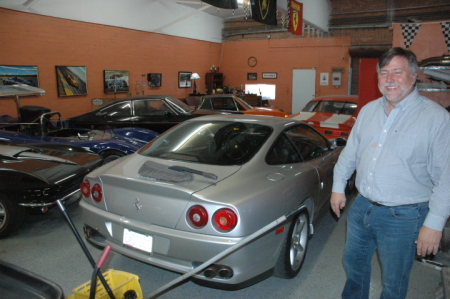
Jim Cantrell and cars
Jim Cantrell at Vector in 2017, shown in front of
one of his side businesses, fixing and refurbishing race
cars and rare luxury sports cars (located then at Vector).

The tales of rocket startups are often fraught with ups and downs of all kinds, often traveling in circles that no one can ever predict. This is one such tale.

In the mid-2010s there was a rocket startup called Vector, based here in Tucson, founded by a guy named Jim Cantrell. At that time Cantrell pushed the company in the style of Elon Musk, going very public for publicity and to raise investment capital.

He was remarkable successful at both. Unfortunately, his engineers were not as successful at engine building. After years of effort they all realized that their rocket engines were under-powered, and wouldn’t be able to get the rocket into orbit. In 2019 the company’s biggest investor backed out, Cantrell left the company, and new owners took over, hoping to rebuild.

Flash forward to 2021, and Jim Cantrell has reappeared with a new rocket company, Phantom Space, also based in Tucson, raising $6 million in seed capital. In the next four years he obtained a small development contract from NASA, completed two more investment rounds raising first $22 million and then around $37 million, and began development of a new orbital rocket, dubbed Daytona. The company also began work on its own small satellite constellation, PhantomCloud (more on this later).

As for Vector, there was little to report during those four years. The only update said the company was buying engines from the rocket engine startup Ursa Major, the same company Phantom was using.

It is now the end of 2025, and the fate of these two companies has once again intertwined, in a most ironic manner. Last week I learned from Jim Cantrell that Vector had closed shop, and that its last remaining assets, some of which Cantrell himself had helped develop when he headed Vector, had been bought by Phantom. This includes several unused rocket stages, the vertical rocket test stands, a lot of computers, and hardware.
» Read more
Rocket startup Phantom Space completes another investment capital funding round

The Tucson-based rocket startup Phantom Space has successfully completed another investment capital funding round, bringing the total funding it has raised to $37 million.

Balerion Space Ventures led the round, which also included participation from the Reaser Family Office, KOLH Capital, and a handful of existing and new investors.

The company hopes to do its first test launch of its Daytona rocket next year, lifting off from Vandenberg. The article at the link says the launch permits from Vandenberg have been obtained, but as of about a month ago my sources said the company was still awaiting approvals from various agencies.

Smallsat rocket startup Phantom Space gets NASA launch contract

The smallsat rocket startup Phantom Space has been awarded a NASA launch contract designed to encourage new companies.

Phantom Space Corp. announced today it has been awarded four new NASA task orders to launch CubeSat satellites into space as part of the new VADR contract. NASA’s VADR missions (for Venture-class Acquisition of Dedicated and Rideshare) missions intend to meet the agency’s needs for NASA payloads while also fostering the development of new launch vehicles from both emerging and established launch providers. VADR increases access to space by significantly reducing costs using less NASA oversight to achieve lower launch costs with payloads that can accept a higher risk tolerance.

…The company plans to stage the first space flights in 2024, and the NASA CubeSats will be among the first payloads. Two will be onboard the second Phantom flight, and the other two will be on the fourth flight. The CubeSat launches for NASA will occur at the Vandenberg Space Force Base’s Space Launch Complex 8.

The Tucson-based company’s Daytona rocket will use ten Hadley engines being built by the rocket engine startup Ursa Major.

One of Phantom’s founders, Jim Cantrell, gave me a tour of their facility in May. Cantrell had been head of the rocket startup Vector, and when that failed because its own engines were underpowered, formed Phantom. Phantom however does not build its own engines but gets them from Ursa Major, a company founded by former SpaceX engineeers.

Phantom Space orders more than 200 rocket engines from Ursa Major

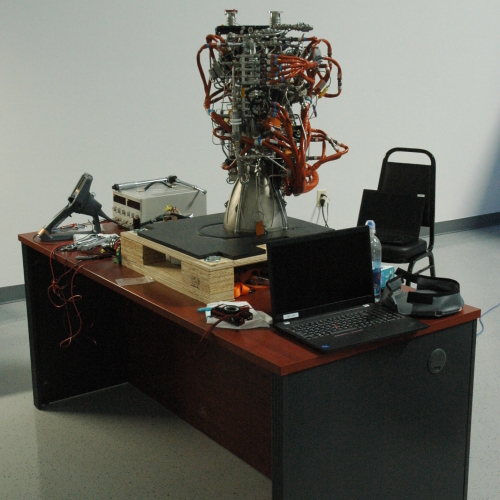
Hadley engine from Ursa Major

Capitalism in space: The smallsat startup rocket company Phantom Space today announced it has ordered more than 200 rocket engines from the rocket engine company Ursa Major.

The order includes Ursa Major’s 5,000-Pound Thrust Hadley engines and the new 50,000-pound thrust Ripley engines. By using Ursa Major’s Hadley engines, Phantom’s Daytona rocket is slated for orbital launch in 2023, just three years after Phantom Space was formed. Under the terms of the agreement, Ursa Major will supply hundreds of its Hadley engines in different configurations including ground test and upper-stage vacuum variants, as well as numerous Ripley engines for planned upgrades to the Daytona vehicle.

The CEO of Phantom Space, Jim Cantrell, gave me a tour of its facility here in Tucson only three weeks ago, during which I took the picture above of a Hadley engine being tested and prepared for further static fire tests.

Cantrell had been the founder of Vector, his earlier failed attempt to create a smallsat rocket company. He clearly has not let that failure stop him.

A tour at rocket startup Phantom Space

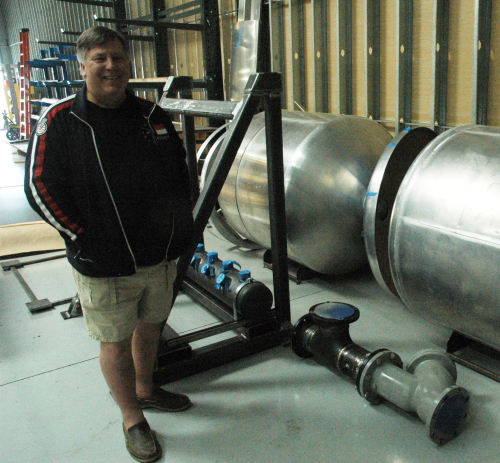
Jim Cantrell at Phantom

Creating a new rocket company is not something anyone can do. Nor is it something that even smart people can do, nonchalantly. The history of rocketry is littered with hundreds of attempts, almost all of which failed.

Jim Cantrell, pictured on the right standing next to one of the first test prototypes for a new rocket being made by his new company, Phantom Space, is one such person. In the mid-2010s Cantrell partnered with a number of others to found the company Vector, hoping to be one of the first smallsat rocket companies to launch a cheap and efficient rocket placing tiny satellites into orbit. At the time, Cantrell and Vector were racing neck and neck with Rocket Lab for the honor of being the first to do so.

While Rocket Lab succeeded in 2018, and has since completed more than twenty launches, Vector ended up on the ash heap of history, going bankrupt in 2019. The company’s failure was mostly due to problems with its rocket engine, which in turn caused one of its major investors to back out.

Cantrell however is apparently someone who does not take defeat quietly. Using what he had learned at Vector, in 2021 he started a new rocket company, Phantom Space, with a target date for its first test launch the summer of 2023.

Today Cantrell gave me a quick tour of Phantom’s operations here in Tucson.
» Read more

Startup rocket company begins delivering engines

Capitalism in space: The startup rocket company, Ursa Major, announced today that it has completed qualification tests of its new Hadley rocket engine and has begun delivering flight worthy engines to two different companies.

Startup Ursa Major announced Wednesday that it had completed qualification of its Hadley rocket engine for use by both a space launch vehicle and a hypersonic launch system. The Colorado-based company said it has already started delivering flight-ready Hadley engines to two customers, Phantom Space and Stratolaunch, and plans to produce a total of 30 engines this year.

The engine is relatively small compared to most rocket engines. Phantom will use seven in the first stage of its smallsat Daytona rocket, designed to launch cubesats into orbit. What Stratolaunch will use the engine for is unclear.