India’s second spaceport to be completed next year
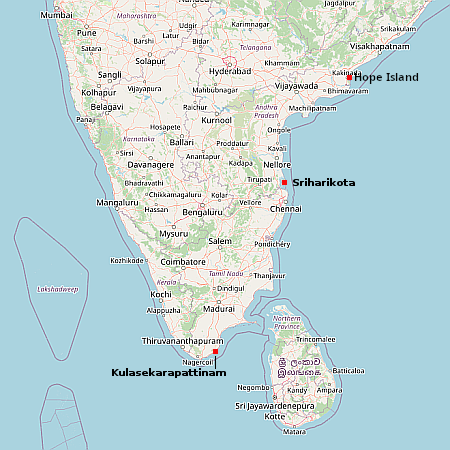
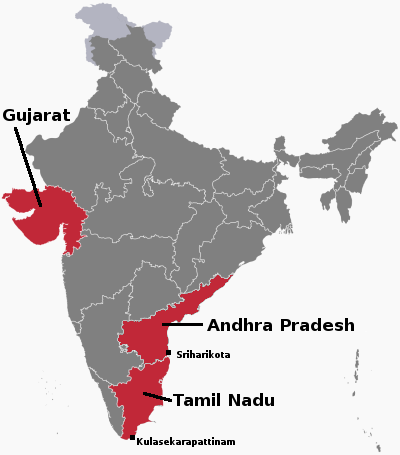
The existing and proposed spaceports in India
According to officials in India, the nation’s second spaceport at Kulasekarapattinam is on schedule to be completed by next year, when it will become available for polar launches of the SSLV rocket as well as other commercial rocket launches.
India is moving ahead with plans to operationalise a new launch facility at Kulasekarapattinam in Tamil Nadu. It is expected to be commissioned during the 2026–27 financial year, according to information shared in the Lok Sabha by Jitendra Singh.
The new facility, officially called the Small Satellite Launch Vehicle (SSLV) Launch Complex, is being developed as the country’s second space launch site. The Kulasekarapattinam complex will primarily handle launches of SSLV missions to Sun-synchronous Polar Orbit, a trajectory widely used for Earth observation satellites.
The SSLV rocket is at present controlled by India’s space agency ISRO, though there has been an effort by the Modi government to transfer it to the private sector. It is not clear whether that effort has been successful. ISRO and India’s large space bureaucracy has been resistant. There have also been indications that this new spaceport will be made available to the handful of Indian rocket startups that are developing their own rockets.
The Sriharikota spaceport is ISRO’s main launch site. The Hope Island site is a proposed commercial and private spaceport, whose future remains very uncertain.
The existing and proposed spaceports in India
According to officials in India, the nation’s second spaceport at Kulasekarapattinam is on schedule to be completed by next year, when it will become available for polar launches of the SSLV rocket as well as other commercial rocket launches.
India is moving ahead with plans to operationalise a new launch facility at Kulasekarapattinam in Tamil Nadu. It is expected to be commissioned during the 2026–27 financial year, according to information shared in the Lok Sabha by Jitendra Singh.
The new facility, officially called the Small Satellite Launch Vehicle (SSLV) Launch Complex, is being developed as the country’s second space launch site. The Kulasekarapattinam complex will primarily handle launches of SSLV missions to Sun-synchronous Polar Orbit, a trajectory widely used for Earth observation satellites.
The SSLV rocket is at present controlled by India’s space agency ISRO, though there has been an effort by the Modi government to transfer it to the private sector. It is not clear whether that effort has been successful. ISRO and India’s large space bureaucracy has been resistant. There have also been indications that this new spaceport will be made available to the handful of Indian rocket startups that are developing their own rockets.
The Sriharikota spaceport is ISRO’s main launch site. The Hope Island site is a proposed commercial and private spaceport, whose future remains very uncertain.