
British rocket startup Orbex goes under
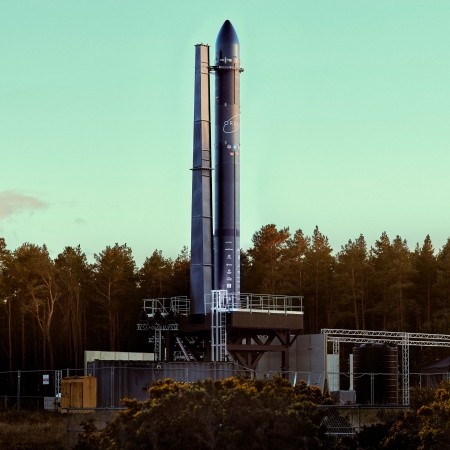
Prime rocket prototype on launchpad
The prototype of Orbex’s never-launched Prime rocket,
on the launchpad in 2022

After waiting four years to get the necessary launch licenses from the United Kingdom’s Civil Aviation Authority (CAA), delays that forced it to abandon its preferred spaceport in Sutherland to go to the SaxaVord spaceport in the Shetland Islands, the British rocket startup Orbex today announced its effort to find a buyer or new financing had failed and it is going into receivership with the goal of selling off its assets.

Orbex has filed a notice of intention to appointment Administrators and will continue trading while all options for the future of the company are explored, including potential sale of all or parts of its business or assets. The notice provides short-term protection and allows the business time to secure as positive an outcome as possible for its creditors, employees and wider stakeholders.

The funding required for Orbex to remain a viable business was sought from a variety of public and private investors during its Series D funding round, which has ultimately failed. Several merger and acquisition opportunities have also been explored, with none resulting in a favourable outcome.

To repeat this company’s sad story, Orbex had hoped to do its first launch from the proposed Sutherland spaceport on the north coast of Scotland in 2022, but was blocked for four years because of red tape. First, the UK’s Civil Aviation Authority would not issue the spaceport and launch licenses. Second, local opposition delayed approvals as well. Those delays ate into the company’s resources, until it became entirely dependent on grants from the UK government (some through the European Space Agency) to keep it afloat.

By 2024 Orbex realized launching from Sutherland was impossible, and it then switched to the Saxavord spaceport in the Shetland Islands. This forced more delays because the company had no facilities there. It had already spent a fortune building everything for Sutherland.

There will be many who will blame this failure on the difficulty of rocket science, but it appears the fault almost entirely lies with the UK government and its odious regulatory regime. Neither Sutherland nor SaxaVord have been able to get anything off the ground, and it appears right now that rocket companies are going everywhere else to find launch sites. New rockets must launch and fail so that they can eventually succeed. The sense I get from the CAA is that it is treating every launch not as a test but as an operational launch that must succeed. Orbex couldn’t meet that standard.

Nor can any other rocket startup. At the moment SaxoVord has only one customer planning to launch, the German startup Rocket Factory Augsburg, but after a static fire explosion in 2024 blocked the launch nothing has happened since. I suspect the company is having problems getting new launch approvals from the CAA.
Orbex failure occurred partly because UK government withheld promised funding

Prime rocket prototype on launchpad
The prototype of Orbex’s never-launched Prime rocket,
on the launchpad in 2022

It appears the government of the United Kingdom contributed to the bankruptcy and sale of the British rocket startup Orbex in more than one way.

Orbex had hoped to do its first launch from the proposed Sutherland spaceport on the north coast of Scotland in 2022, but was blocked for four years because of red tape. First, the UK’s Civil Aviation Authority would not issue the spaceport and launch licenses. Second, local opposition delayed approvals as well. Those delays ate into the company’s resources, until it became entirely dependent on grants from the UK government (some through the European Space Agency) to keep it afloat.

Orbex’s problems were further compounded when it became clear in 2024 that the Sutherland spaceport would never get clearance. Orbex then switched to the Saxavord spaceport in the Shetland Islands, but this forced more delays because the company had no facilities there. It had already spent a fortune building everything for Sutherland.

A new report today says that it was finally forced to shut down and sell its assets to the French startup The Exploration Company because the UK government had withheld some of that promised funding.

News of the potential sale came just a month after a European Space Agency document confirmed that €112 million of €144 million UK government funding, earmarked for the European Launcher Challenge (ELC) scheme, was still “to be distributed”.

As a result, Orbex received just €34.9 million from the scheme – one-fifth of the €169 million awarded to each of its rivals by European governments.

That shortfall equates to about $160 million, a substantial amount of cash. While it is perfectly reasonable for the UK government to withheld these funds if it thinks the money would be badly spent, none of this government funding would not have been necessary at all if the UK government had simply issued the launch permits in a timely manner, allowing Orbex to launch and earn revenue.

As I noted early, congratulations to the United Kingdom, the place where rocket companies go to die! This is now the second such company killed by UK red tape and government incompetence, the first being Virgin Orbit.

Orbex’s Danish subsidiary to file for bankruptcy

In what appears to confirm the story yesterday that the rocket startup Orbex was about to be bought out by the French startup The Exploration Company — thus likely ending operations in Great Britain — there was a second follow-up story later in the day that claimed Orbex’s Danish subsidiary is about to file for bankruptcy.

On 20 January, more than 15 Orbital Express Launch ApS employees announced at around the same time on LinkedIn that they were looking for work. Since then, European Spaceflight has received confirmation from three independent sources, who wished to remain anonymous, that the subsidiary has dismissed its entire workforce, with the company expected to officially file for bankruptcy on 22 January.

The article notes that this subsidiary had been losing millions in the past two years, and was entirely reliant on cash from its parent company. Unfortunately, Orbex has had no incoming revenue itself, because red tape in the United Kingdom had prevented it from launching for the past four years.

If true, this story confirms that Orbex’s negotiations with The Exploration Company is likely an attempt to make as much money from its remaining assets as possible before closing down.

Congratulations to the United Kingdom, the land where rocket companies go to die!

French startup The Exploration Company negotiating purchase of UK rocket startup Orbex

Prime rocket prototype on launchpad
The prototype of Orbex’s never-launched Prime rocket,
on the launchpad in 2022

In what appears to be a direct consequence of British red tape blocking Orbex from launching in the past four years, it is now in negotiations to sell its assets to the French startup The Exploration Company.

On 21 January, Orbex published a brief press release stating that a letter of intent had been signed and that negotiations had begun. The company added that all details about the transaction remain confidential at this stage. A statement from Orbex CEO Phil Chambers suggests that the company’s financial position factored into its decision to pursue a buyer. “Our Series D fundraising could have led us in many directions,” said Chambers. “We believe this opportunity plays to the strengths of both businesses, and we look forward to sharing more when the time is right.”

Let me translate: In 2022 Orbex had set up a factory close to the proposed Sutherland spaceport on the north coast of Scotland, had signed a 50 year lease with that facility to launch its Prime rocket there, had built a launch platform and tested a prototype of the rocket, and was poised to do its first launch. All it needed was license approvals from the United Kingdom’s Civil Aviation Authority (CAA).

And then it waited, and waited, and waited, and waited. By 2024 it gave up on Sutherland, because the authorities (local and national) kept rejecting its spaceport license for environmental and political reasons. It switched its launch site to the SaxaVord spaceport on the Shetland Islands, pushing back that first launch to 2026. Along the way the UK gave it a $25 million grant, likely to keep the company above water because the UK was blocking its ability to launch.

All for naught. It is very clear Orbex has run out of cash waiting, and is now looking to salvage its work by selling everything to the French company, which so far has focused on building a cargo capsule to supply the upcoming commercial space stations.

If the sale goes through, do not be surprised if Orbex’s assets exit the UK entirely. And at that point, the CAA’s red tape can be given credit for destroying a second rocket company, following Virgin Orbit.

Orbex delays first launch from Saxavord until 2026

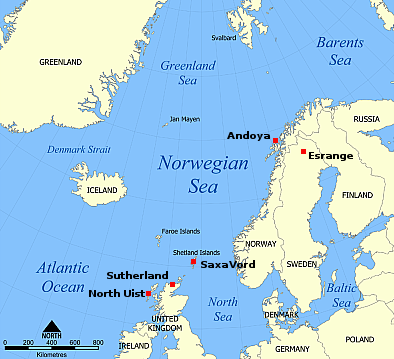
Map of spaceports surrounding Norwegian Sea
Proposed spaceports surrounding the Norwegian Sea

The rocket startup Orbex has now announced that “infrastructure requirements and engagement with regulators” has forced it to delay the first launch of its Prime rocket from 2025 until 2026.

Orbex at the start of this decade had signed a 50-year lease to launch its Prime rocket from the proposed Sutherland spaceport on the north coast of Scotland. In February 2022 it applied for a launch license, with the hope of launching before the end of that year. For three years it waited for the UK’s Civil Aviation Authority (CAA) to approve that license, to no avail.

Finally in December 2024 it gave up on launching from Sutherland and shifted its plans to the Saxavord spaceport in the Shetland Islands, apparently because that spaceport had been more successful in getting its CAA approvals (though even it had to wait years).

Though the company attributes this new delay as much to getting its launch facility ready at Saxavord, delays caused by British red tape continues to be a systemic and entrenched problem in the United Kingdom. It appears it remains so.

Orbex scouts Saxaford in advance of first launch

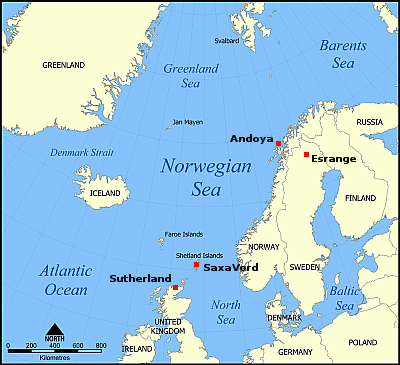
Map of spaceports surrounding Norwegian Sea
Spaceports surrounding the Norwegian Sea

Though no details have been released, a team from the British rocket startup Orbex has arrived at the Saxaford spaceport in the Shetland Islands to begin preparations for the company’s first launch there, now planned to occur before the end of this year.

Originally Orbex was going to do its launches from the United Kingdom’s other proposed spaceport in Sutherland on the northern coast of Scotland. It had obtained a 50-year-lease to build its own dedicated launch facility, had built its rocket manufacturing facility nearby, and had originally hoped to do the first test orbital launch of its Prime rocket in 2022.

Three years later the UK’s Civil Aviation Authority (CAA) had still not issued Orbex or Sutherland the necessary launch licenses. Faced with bankruptcy if it didn’t launch soon, in December the company announced it was switching its first launch to Saxaford, where the CAA had completed spaceport licensing. It hoped the CAA would thus be able to give it a launch license quickly. We shall see.

Note that the news is slow today. As much as I want to post lots of stuff, I can’t if nothing of significance appears to be happening.

British rocket start-up Orbex wins two-launch contract from Italian orbital tug company D-Orbit

The British rocket start-up Orbex, which hopes to complete its first test orbital launch of its Prime rocket this year, after years of regulatory delays, has gotten a two-launch contract from the Italian orbital tug company D-Orbit.

The contract appears to be part of Europe’s effort to have its European payloads launch on European rockets. Previously D-Orbit tugs have mostly been launched by SpaceX because the only available European rockets, Ariane-6 and Vega-C, have either not been operational or available. Moreover, all these rockets are too big for D-Orbit’s tugs, which thus have to fly as secondary payloads.

Orbex’s Prime rocket is small, and so the tugs can be launched as the primary payload. The rocket however is not yet operational, unlike for example Rocket Lab’s small Electron rocket. The decision to go with Orbex’s untested rocket suggests Europe is forcing D-Orbit to sign with a European rocket company.

Orbex gives up on the Sutherland spaceport, switches to SaxaVord

Map of spaceports surrounding Norwegian Sea
Spaceports surrounding the Norwegian Sea

In a very sudden decision, the rocket startup Orbex, based in Great Britain, has “paused” its long-delayed work to develop a launch facility at the Sutherland spaceport in northern Scotland and instead decided to launch its first rockets from the competing SaxaVord spaceport on the Shetland islands.

Orbex says it is halting construction work on the £20 million spaceport and instead is mothballing the project, which has received a £14.6 million public investment package. The space company, which was to have made the Sutherland Spaceport its home port, will now launch its rockets carrying commercial satellites from another north spaceport – SaxaVord on Unst, Shetland.

According to the company’s CEO, it will retain its 50-year lease at Sutherland to give it “flexibility to increase launch capacity in the future.”

The company had originally hoped to launch its Prime rocket from Sutherland in 2022, but has been faced with red tape from the Civil Aviation Authority (CAA), which has still not issued a launch licence, even though the application was submitted almost three years ago. Orbex has also faced lawfare opposition from local activists as well as a major local landowner, billionaire Anders Povlsen, who is also a major investor in SaxaVord.

That last detail might help explain this decision. In private talks Orbex might have learned that the red tape and opposition would disappear if it switched to SaxaVord. The timing is also suggestive, as only a few days ago construction started on a new spaceport in Scotland, located on the island of North Uist.

All told, Orbex might have decided that the stars were aligned against it at Sutherland, and it was better to move. It now hopes to complete the first test launch of its Prime rocket from SaxaVord next year.

Sutherland spaceport submits another revised plan to local council

Proposed spaceports surrounding Norwegian Sea
Proposed spaceports surrounding Norwegian Sea.

We’re from the government and we are here to help you! The long-delayed proposed Sutherland spaceport on the north coast of Scotland has now submitted another revised plan to its local Highlands council for approval.

The amended plans for Sutherland Spaceport include a smaller launch pad and launch services facility, and realigning an access road to avoid an area of deep peat. Highland Council planners said the changes would mean reducing the amount of peat that would have to be excavated by more than half. The soil is seen as important because it absorbs CO2.

Highland councillors meeting next week have been asked to approve the amendments. In a report, officials said the amount of peat to be dug up could be cut from 24,046 cubic metres to 9,895 cubic metres.

This is the second time the spaceport has had to submit revised plans to this council. It did so in December 2023, but apparently the council was not satisfied.

Meanwhile Sutherland’s main launch customer, Orbex, has still not gotten its launch licence from the UK’s Civil Aviation Authority, first applied for in February 2022. Orbex, which has a fifty year lease at Sutherland and has built its rocket factory nearby, had planned to do its first test launch of its Prime rocket two years ago. Didn’t happen.

Adding to these bureaucratic delays, Anders Holch Povlsen, a local billionaire — who is an investor in the Saxaford spaceport on the Shetland Islands — in July 2024 filed what appeared to be an absurd harrasment lawsuit against Sutherland, and this was the second time he had done so.

I think Orbex picked the wrong spaceport horse in this race, and is likely going to be killed by this red tape and opposition.

Rocket startup Orbex raises another $16.7 million in private investment capital

The British rocket startup Orbex has raised another $16.7 million in private investment capital, bringing the total it has raised now to over $100 million.

It remains unclear when the company’s Prime rocket will complete its first launch. It now says it will have its rocket and launch facility at the Sutherland spaceport ready by the end of this year, but it had previously hoped to launch the rocket in 2023. It appears that goal failed because the spaceport could not get either the spaceport license or its own launch license approved by the UK’s Civil Aviation Authority (CAA). Those licenses have still not been issued, even though the applications had been submitted in Feburary 2022, more than two years ago.

Those delays by the CAA probably explains why the company has had four different CEO’s in the past year. Though the fault of the delays lies with the government, others have had to take the blame. Meanwhile, company officials now state that it is now exploring using other launch sites, including its own near the equator.

Orbex signs 50-year lease at Sutherland spaceport

The British startup rocket company Orbex has signed a 50-year lease to operate its own launchpad at the Space Hub Sutherland spaceport in Scotland.

The company will lease Space Hub Sutherland from a local development agency for an initial period of 50 years with an option to extend for a further 25 years. Orbex will soon commence construction at the 10-acre launch site on the A’Mhoine peninsula in Sutherland. The bulk of the construction work will be contracted out to technology solutions company Jacobs, which also does a lot of work for NASA.

The company hopes to launch its Prime rocket in ’23. At present it is testing launch operations of a prototype on its launchpad. All told, Orbex has raised a little over $100 million in private investment capital.

Rocket startup Orbex raises another $45 million

The British-based rocket startup company Orbex announced today that it has successfully raised another $45 million in private investment capital, adding to the $63 million it had previously raised.

Orbex is developing Prime, a small launch vehicle designed to place up to 180 kilograms into low Earth orbit. The vehicle, built by the company at a factory in Forres, Scotland, will launch initially from Space Hub Sutherland, a new launch site under development in northern Scotland.

“With Orbex, we will have a rocket assembled in Scotland, launching from Scotland and likely transporting satellites built in Scotland into orbit,” said Nicola Douglas, executive director of the Scottish National Investment Bank, in a statement. “We’re building a full end-to-end commercial space ecosystem in Scotland and we’re proud to play our part in this funding round.”

The company is targeting 2023 for its first launch from the new spaceport in Sutherland, Scotland.

Orbex unveils a full-scale prototype of its Prime smallsat rocket

Prime rocket prototype on launchpad

Capitalism in space: Orbex today unveiled a full-scale prototype of its Prime smallsat rocket, positioned on its own launchpad at the Sutherland Space Hub spaceport in Scotland, now under construction.

The photo to the right shows that prototype, held vertical with its own strongback. From the press release:

With the first full integration of the Orbex rocket on a launch pad now complete, the company is able to enter a period of integrated testing, allowing dress rehearsals of rocket launches and the development and optimisation of launch procedures. Orbex recently revealed their first test launch platform at a new test facility in Kinloss, a few miles from the company’s headquarters at Forres in Moray, Scotland.

Note that Sutherland Space Hub is not the SaxaVord Shetland Island spaceport also being developed in Scotland. The two are competing with each other to successfully complete the first launch from the United Kingdom in history. Also competing for this honor is an airport in Cornwall, which has a deal with Virgin Orbit to do its own launch later this year. And regardless who wins this race, the three sites will likely give the UK the first European-based spaceports in history.

The United Kingdom’s decision in 2016 to shift from a single government-run spaceport to competition and capitalism appears to be now finally paying off.

Orbex installs launchpad at test site

Capitalism in space: Orbex has now completed the installation of the first launchpad build in Great Britain in more than a half century, and will use it for static fire tests of its Prime rocket.

Full ‘dress rehearsals’ of launch procedures for the Orbex ‘Prime’ rocket can now take place at the test site. Orbex Prime is a micro-launcher designed to transport small satellites weighing around 150kg to low Earth orbit. It will eventually launch from its ‘home’ spaceport at Sutherland in the North of Scotland.

Actual launches will occur on a different launchpad at Sutherland. Whether it will be this launchpad, moved to Sutherland, or a second new pad built at Sutherland, has not yet been decided by the company. Either way, according to earlier releases, the company is targeting that first launch before the end of the year. Since it took about two months to build this first launchpad and deliver it, the decision to build a second pad will not impact that schedule.

Orbex applies for UK launch license

Capitalism in space: The British smallsat rocket company Orbex has now submitted its application for a launch license to the United Kingdom’s Civil Aviation Authority (CAA).

The press release does not mention a launch date, but it does state that ground tests of Orbex’s Prime rocket, designed to launch smallsats, are about to begin.

The Orbex ‘Prime’ rocket is soon to be tested on the Orbex LP1 launch platform at a facility in Kinloss, close to the Orbex headquarters in Forres, where full ‘dress rehearsals’ of launch procedures will take place.

Actual launches will take place at Space Hub Sutherland in Scotland. A previous announcement in 2020 had suggested the first launch would occur in ’22. Whether that date can still be met is unclear, but without doubt Orbex is moving forward towards launch.

Orbex begins construction of launch platform

Capitalism in space: Orbex announced today that it has awarded a contract to a Scottish company to begin the construction of the launch platform it will use with its smallsat Prime rocket.

Orbex has commissioned Motive Offshore Group, a leading Scottish company specialising in the design and manufacture of marine and lifting equipment, to fabricate and install the Launch Platform at a dedicated test site near Kinloss, close to the Orbex headquarters in Forres, Scotland.

The Launch Platform, known as Orbex LP1, is expected to be fully operational by early 2022. … The new Launch Platform will support the testing of Orbex´s Prime rocket, a micro-launcher designed to transport small satellites weighing around 150kg to low Earth orbit. Although actual launches of the Orbex Prime rocket will not take place at the Kinloss site, the Launch Platform will be fully capable of launching an orbital rocket, allowing for full ‘dress rehearsals’ of launch procedures.

This platform is likely similar to the very transportable launch platform used by Astra. The present plan is to do launches from Orbex’s launch facilities at the Sutherland spaceport in Scotland, presently under construction and the first such launch facility being built in the United Kingdom in more than a half century. If designed to be portable, however, Orbex will also be able to ship the Prime rocket to other launch locations, depending on the orbital requirements of each launch.

ESA awards UK’s Orbex 7.45 million euros to fund rocket development

Capitalism in space: The European Space Agency (ESA) has awarded the new United Kingdom smallsat launch company Orbex 7.45 million euros to help fund the development of its Prime rocket.

This will supplement the 4.7 million euros that Orbex has raised from private capital.

The funds from the award will go towards the completion of spaceflight systems in preparation for the first launches of Orbex’s 19-metre ‘microlauncher’ rocket, Prime. €11.25 million of the total funding will be assigned to work undertaken in the UK, in particular the lightweight avionics designed in-house by Orbex in Forres, and the guidance, navigation and control (GNC) software subsystem being designed by Elecnor Deimos, a strategic investor and partner of Orbex. The remaining €900,000 of the total funding package will support the development of the GNC for the orbital phase being developed by Elecnor Deimos for Orbex in Portugal.

If all goes right, Prime will make its first launch from Sutherland, Scotland, in ’22.

The contract award signals the shift at ESA that resembles what happened at NASA in the past decade, moving from designing and building its rockets and spacecraft to buying the product from private companies. While ESA might be providing a large bulk of the capital to develop Prime, it appears ESA is not involving itself heavily in the development itself, leaving that instead to the company.

Smallsat rocket company Orbex signs two launch deals

Capitalism in space: The new smallsat rocket company Orbex today announced the signing of two different launch deals, one with In-Space and the other with Innovative Space Logistics both with companies focused on procuring launch services for smallsat companies.

Both are for its as yet untested Prime rocket, which they hope to launch by 2021 from the United Kingdom’s new spaceport in Scotland.