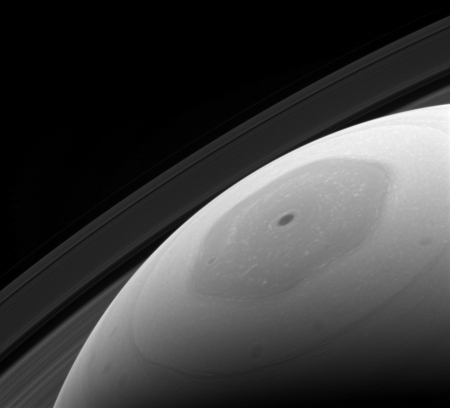
Hubble goes into safe mode

Due to a software issue, the Hubble Space Telescope shifted into safe mode early yesterday and stopped doing its programmed science observations.

The engineers seem confident all will eventually be well, but we must also remember the telescope’s infrastructure (not its instruments) was built in the early 1980s and has been in space since 1990. That makes many parts of this telescope 40 years old. We are increasingly faced with the possibility of a fatal fault occurring that shuts it down for good, with no way at the present time to reach it and fix it, and with the only comparable optical space telescope in the works one being built by China to fly in formation with its space station.

5 comments

Today’s blacklisted great literature: Shakespeare, Dr. Seuss, and Western Civilization itself

They’re coming for you next: In the past few days there has been a big uproar concerning the decision by Dr. Seuss Enterprises, the publisher of all of Dr. Seuss’s books, to cease publication of six of Seuss’s books — “And to Think That I Saw It on Mulberry Street”, “If I Ran the Zoo”, “McElligot’s Pool”, “On Beyond Zebra!”, “Scrambled Eggs Super!”, and “The Cat’s Quizzer” — because of imagined “racist and insensitive imagery.”

On its face this decision is ridiculous, especially because Dr. Suess, whose real name was Theodor Geisel, was an ardent defender of liberty who aggressively fought against bigots and Nazis and fascists his entire life.. As recently as a year ago the company that now manages his writing would have been laughed at and shamed so loudly and completely for this decision that it would have very quickly backed down.

No more. Rather than defy stupidity the world now embraces it, as indicated by Ebay’s decision only two days later to ban the sale of any used copies of these books on its auction website.

Nor is this attack on great literature the only example. There are others that are not getting the same coverage that are as bad if not more egregious.
» Read more

17 comments

Mars: Planet of many glaciers

Moraines on Mars
Click for full image.

Today’s cool image more than simply cool, it reveals a wider picture of Mars that should be quite exciting to future colonists. The photo to the right, rotated, cropped, and reduced to post here, was taken on January 30, 2021 by the high resolution camera on Mars Reconnaissance Orbiter (MRO). What drew my attention to it was the title given to this uncaptioned photo: “Moraine-Like Ridges in Nereidum Montes.”

Moraines are the debris pile pushed ahead of any glacier. The picture shows what appear to be a series of moraines, likely caused by different periods of glacier activity when the glacier was growing. It also suggests that past active periods were more active than later ones, as with each active period the moraine did not get pushed out quite as far.

The location, Nereidum Montes, intrigued me, as I am not that familiar with it. I emailed the scientist who requested the image, Dan Berman, senior scientist at the Planetary Science Institute in Arizona, and asked him for more information. He suggested I read a very recent paper he co-wrote entitled “Ice-rich landforms of the southern mid-latitudes of Mars: A case study in Nereidum Montes.” From that paper I was able to produce the map of Mars below that shows the regions on the planet where scientists now think hold the greatest concentrations of glaciers.
» Read more

0 comments

OSIRIS-REx begins last approach of Bennu

Approaching Bennu for the last time
Click for full image.

The science team for OSIRIS-REx released today the first picture taken as the spacecraft begins its last approach of the asteroid Bennu. To the right is that picture, cropped and expanded to post here. From the caption:

This image shows a top-down view of asteroid Bennu, with a portion of the asteroid’s equatorial ridge and northern hemisphere illuminated. It was taken by the PolyCam camera on NASA’s OSIRIS-REx spacecraft on March 4, from a distance of about 186 miles (300 km). The spacecraft’s cameras are pointed directly at Bennu’s north pole. Two large equatorial craters are visible on the asteroid’s edge (center and center left).

If all goes well, the probe will fly past the asteroid on April 7th, obtaining high resolution images of its entire surface as it rotates below, including very close-up images of the Nightingale sample grab location during its closest approach.

0 comments

Yutu-2 and Chang’e-4 reactivated for 28th lunar day on Moon

The new colonial movement: Engineers have reactivated both Yutu-2 and Chang’e-4 to begin their 28th lunar day on the far side of the Moon.

The article, from China’s state-run press, provides only one real tidbit of information, that Yutu-2 has now traveled 429 meters (1,378 feet) from the landing site. They still have about a mile to go to reach their next big geological target, which should take years at the pace the rover is setting.

Both spacecraft though have been unmitigated successes. Their nominal mission had been to survive three lunar day-night cycles, about 90 Earth days. They have survived 28, or more than two years since landing in January 2019.

This success suggests that China’s Mars rover has a good chance of doing as well. Its planned mission length is also 90 days, similar to the Spirit and Opportunity rovers, both of which lasted many years.

0 comments

Starship update: #11 about to roll out; #10 landing analysis

Link here. As has been the case now for almost a year, the cadence at this SpaceX facility continues to be brisk.

Just days after SN10 completed the first – albeit hard – Starship prototype landing, SN11 is set to rollout to the launch site for its own attempt. Incremental progress is being made with the test flights, with another tweak to the landing sequence set to be implemented, based on data gained from SN10. Meanwhile, the first Super Heavy prototype continues stacking operations while parts for up to Starship SN20 are being staged at the Production Site.

The update also includes details about the explosion of prototype #10 — which apparently landed harder than it should have which caused damage to tanks which then caused the explosion — as well as details about future expansion plans at the Boca Chica facility.

14 comments

February Birthday fund-raising campaign for Behind the Black: THANK YOU

Readers!

My annual February birthday month fund-raising campaign for Behind the Black is now over. It was the best February campaign ever, and the second best of all of my month-long fund-raising campaigns.

There were too many people who contributed to thank you all personally. If I did so I would not have time for the next day or so to actually do any further posts, and I suspect my supporters would prefer me posting on space and culture over getting individual thank you notes.

Let this public thank suffice. I say this often, but I must tell you all that you cannot imagine how much your support means to me. I’ve spent my life fighting a culture hostile to my perspective, a hostility that has often served to squelch my success. Your donations have now allowed me to bypass that hostility to reach a large audience.

Even though the February campaign is over, if you still wish to donate or subscribe you still can do so, by either clicking on the tip jar at the top of the column to the right (on desktops) or near the bottom of the page (on mobile phones), or mailing a check to the address shown in that tip jar.

This thank you post will remain at the top of the page for the next few days.

Yours sincerely,
Robert Zimmerman

Scroll down for new updates.

23 comments

Perseverance begins journey with 1st test drive

Perseverance's future planned route
Click for full image.

On March 4th the engineers on the Perseverance science team successfully completed the rover’s first test drive.

Ground teams commanded the rover to drive forward, turn in place, and then back up. The first 33-minute test drive covered just 21 feet, or 6.5 meters,but Perseverance will soon travel much farther. “Our first drive went incredibly well,” said Anais Zarifian, a Perseverance mobility test engineer at JPL.

Perseverance has six aluminum wheels, each with titanium spokes for support, and a suspension capable of traveling over rocks as big as the wheels themselves. The one-ton rover is based on the design of NASA’s Curiosity rover, which landed on Mars in 2012, but with some improvements.

The wheels on Perseverance are sightly narrower, have a larger diameter, and are made of thicker materials, Zarifian said. Engineers also changed the tread pattern on the wheels to reduce the risk of damage from sharp rocks, which created dings and cuts in Curiosity’s wheels.

The map above shows the route the science team has presently chosen for Perseverance, a revision from earlier routes created prior to landing. The white dot on the right is the rover’s present position, the blue and purple lines are two alternative routes they are considering for their route to the delta coming out of Neretva Vallis. The yellow route up the delta is especially exciting in that it gets them onto it much sooner than previous plans.

Which route they choose for the initial journey I think will partly depend on which provides the best location to test fly Ingenuity, the experimental helicopter on the rover. Scientists and engineers I am sure are presently poring over high resolution images from Mars Reconnaissance Orbiter (MRO) in order to make that choice. At this link, centered on Perseverance’s present location, you can take a look at all those images by MRO by selecting the arrow icon at the top and then clicking on any red box. Because so many photos have been taken there is a lot of overlap, so each click will give you many pictures to look at.

5 comments

Ice-filled Martian sinkhole

Ice-filled pit on Mars
Click for full image.

Cool image time! The pit shown in the high resolution photo to the right (image rotated, cropped, and reduced to post here) was taken on January 25, 2021 and labeled by the Mars Reconnaissance Orbiter (MRO) “Collapse Pit in Graben with Ice Fill.”

There is a lot of information in that title. First, a graben is a geological feature where a section of terrain drops relative to the surrounding terrain, producing a depression. Second, it appears the graben in this region is mostly filled with debris, probably wind-blown dust or sand or volcanic ash.

Third, at this particular spot the filling material sank, like a sinkhole on Earth, creating the pit.

And fourth, and maybe most intriguing, the scientists think that this pit is now filled with ice. At 47 degrees north latitude, the location is prime for such ice, and the interior material resembles similar glacial features seen in many other mid-latitude craters.
» Read more

2 comments

Today’s blacklisted American: YouTube strips Epoch Times from making money on its videos

They’re coming for you next: In late January Google’s YouTube stripped the news organization the Epoch Times from making any money on the videos it posts on that website, solely because of its conservative content.

As usual, YouTube claimed that this blacklisting was simply the company following its “Community guidelines.”

“All channels on YouTube need to comply with our Community Guidelines, and in order to monetize, channels must comply with the YouTube Partner Program policies, which include our Advertiser-Friendly Guidelines,” the spokesperson also said. “Channels that repeatedly violate these policies are suspended from our partner program.”

The spokesperson noted that channels removed from its partner program are able to appeal the decision or reapply to YPP in 30 days, provided the underlying issues that led to suspension have been addressed to YouTube’s liking.

Let me translate those guidelines into plain English: You can only publish material that agrees with Google’s leftist and bigoted identity politics. Anything else must be censored.

It is now more than thirty days since YouTube’s action, and as far as I can tell, the blacklisting of the Epoch Times remains unchanged.

Is Google still your search engine? If so, shame on you. It takes less than 30 seconds to change your browser’s go-to search engine to either DuckDuckGo or Qwant or Myprivatesearch or Startpage. If enough people did this Google’s power could be quickly dissipated.

0 comments

Rover update: Panorama from Curiosity; Perseverance unwinds

Summary: Curiosity has crept to the foot of Mt Sharp at last, while Perseverance checks out its equipment.

Curiosity

Curiosity panorama Sol 3049
Click for full resolution.

Overview map

This rover update will be short but very sweet. While the press and public has been oo’ing and ah’ing over the first panorama from Perseverance, Curiosity yesterday produced its own panorama above showing the looming cliffs of Mt. Sharp, now only a short distance away. The original images can be found here, here, here, and here.

The overview map to the right, from the “Where is Curiosity?” webpage, shows the rover’s location, with the yellow lines roughly indicating the view afforded by the panorama above. If you compare this panorama with the one I posted in my previous rover update on February 12, 2021, you can get a sense of how far the rover has traveled in just the past two weeks. It now sits near the end of the red dotted line pointing at the mountain, right next to what had been a distant cliff and now is only a short distance to the rover’s right.

Somewhere on the mountain slopes ahead scientists have spotted in orbiter images recurring slope lineae, seasonal streaks on slopes that appear in the spring and fade as they year passes. As Curiosity arrives at the next geological layer a short distance ahead at the base of these cliffs (dubbed the sulfate unit), it will spend probably several months studying both that sulfate unit as well as those lineae. Expect the rover to drill a few holes for samples as it watches to see any changes that might occur on that lineae.

Now, on to Perseverance!
» Read more

0 comments
1 969 970 971 972 973 2,927