
Hype in science papers on the increase

In the past forty years the use by scientists of descriptive words to positively hype their results in their papers has increased steadily.

Researchers at the University Medical Center Utrecht in the Netherlands say that the frequency of positive-sounding words such as ‘novel’, ‘amazing’, ‘innovative’ and ‘unprecedented’ has increased almost nine-fold in the titles and abstracts of papers published between 1974 and 2014. There has also been a smaller — yet still statistically significant — rise in the frequency of negative words, such as ‘disappointing’ and ‘pessimistic’.

…The most obvious interpretation of the results is that they reflect an increase in hype and exaggeration, rather than a real improvement in the incidence or quality of discoveries, says Vinkers. The findings “fit our own observations that in order to get published, you need to emphasize what is special and unique about your study,” he says. Researchers may be tempted to make their findings stand out from thousands of others — a tendency that might also explain the more modest rise in usage of negative words.

The word ‘novel’ now appears in more than 7% of PubMed paper titles and abstracts, and the researchers jokingly extrapolate that, on the basis of its past rise, it is set to appear in every paper by the year 2123.

This study was focused on the medical field, so it is unclear if its results could be extrapolated to other science fields. I suspect it can.

2 comments

ULA’s fight to use Russian engines continues

This article provides a detailed account of the political battle between ULA and Congress of its future use of Russian engines in its Atlas 5 rocket.

Congress has imposed a strict limit on the number of engines the company can use. ULA is still lobbying for an increase, claiming that the limit will mean that they will not be able to meet the government military launch needs for a few years when the engines on hand run out and its new American-built engines are not yet available.

In the long run I think this battle is irrelevant. What really matters is what it costs to launch a satellite, and ULA is simply not focused on reducing its costs. Consider this quote from the article, emphasis mine:

ULA has designed a new rocket dubbed Vulcan that features a U.S.-made engine, but this vehicle will not be available until around 2021, assuming the project gets funded — which is by no means a given.

They made a big deal earlier this year about how Vulcan will soon replace Atlas 5 at a lower cost, but it now appears that this was merely a public relations event. ULA wants someone else to pay for this new rocket, and thus has not yet committed any of its own money to begin actual development.

Other companies however are funding the development of their own new American-made rockets that will also be far cheaper to fly. Sooner rather than later our spendthrift Congress is going to mandate that the military use those cheaper rockets. If ULA doesn’t get moving it will be left in the dust, whether or not Congress allows it to use more Russian engines.

2 comments

New astronaut crew to ISS, including Brit

A Russian Soyuz rocket today successfully launched a new crew to ISS, including Great Britain’s first official astronaut.

Tim Peake is not the first Brit in space, but he is the first paid for by the British government. The first British citizen to fly in space, back in 1991, was Helen Sharman, whose flight was a publicity stunt mostly paid for by the Russians themselves.

The crew is expected to dock with ISS later today.

1 comment

Rosetta hi-res images released

Lots of cool images! The science team running Rosetta’s high resolution camera have finally made available to the public the camera’s large archive of images.

The images cover the period 20 June 2014 – 16 September 2014, corresponding to Rosetta’s approach to the comet, arrival, and insertion into orbit.

In exchange for creating and running the mission, the scientists had been given a 12 month period in which these hi-res images belonged entirely to them. This gave them the chance to use them to publish papers documenting their discoveries. While this is a reasonable arrangement — used by most planetary missions in some manner to reward the scientists who made the mission possible — with Rosetta the hi-res images were kept so close to the vest that practically none have been seen, until now. Moreover, this release is very late, anywhere from 15 to 18 months after the images were taken, not 12.

Most other planetary missions make sure that at least some images are released as the mission proceeds, since the images were paid for by the public. The European Space Agency should take a look at its future policies for publicly-funded missions to make sure the public gets better access in the future.

0 comments

Proton launch success

The competition heats up: Russia’s Proton rocket successfully launched a military communications satellite on Sunday.

The link provides a lot of interesting information about the satellite as well as some recent upgrades the Russians have installed in Proton, but for context the last two paragraphs are probably the most important:

Sunday’s launch was the seventy ninth orbital launch attempt of 2015 and the seventh Proton launch of the year. Five of the six previous launches were successful, with May’s launch of Mexsat-1 failing to achieve orbit. Proton has had eleven failures in the last ten years, with 2009 the only year since 2005 in which it has not suffered at least one anomaly.

The next Proton launch is scheduled for 23 December, with another Proton-M/Briz-M carrying the Ekspress-AMU1 communications satellite. Details of any future Garpun launches are not available.

The launch reliability for Proton has seriously fallen since 2005, and to compete in the changing launch market they will need to fix this.

5 comments

Obamacare squeezes the economy

Finding out what’s in it: A new Congressional Budget Office study has found that Obamacare will shrink the economy over the next ten years.

Not that this conclusion should surprise anyone. Tea party politicians (as well as Republicans) have been pointing out this consequence of adding new unneeded or unwanted regulations to businesses since the day Obamacare was proposed by Democrats. And from the moment the law was forced through by those Democrats the economy has remained stalled, with businesses forced to focus on avoiding the law’s unaffordable costs rather than focusing on expanding and increasing profits.

1 comment

A movie of Ceres

Cool movie time! The Dawn science team has released a movie compiled from images taken by the spacecraft, showing in false color the entire dwarf planet’s rotation as well as doing a fly-over of Occator Crater with its double bright spot.

I have posted the movie below the fold. The false colors illustrate the different materials so far detected on the surface, and help explain the nature and origin of the surface features.
» Read more

0 comments

Bright spots on Ceres likely salt deposits

Based on an analysis of Dawn images scientists now believe that the bright spots on Ceres are salt deposits, not water ice.

Le Corre and colleagues, using images from Dawn’s framing camera, suggest that these salt-rich areas were left behind when water-ice sublimated in the past. Impacts from asteroids would have unearthed the mixture of ice and salt. “The location of some bright spots also coincide with places where water vapor was detected by other spacecraft,” said Reddy, a PSI Research Scientist. “This gives us confidence that the bright spots are likely salt deposits left over by sublimating salty water.”

While the bright spots themselves are not ice, they are what is left over after salty water evaporates.

0 comments

Second Google Lunar X-Prize launch contract confirmed

The competition heats up: The Google Lunar X-Prize has now confirmed two launch contracts for sending a privately financed and built rover to the Moon by 2017.

Moon Express is now the second company to have a launch contract for their lunar lander spacecraft verified by the X Prize Foundation. An Israeli team, SpaceIL, had its contract to launch a lander on a SpaceX Falcon 9 verified by the foundation in October. SpaceIL will be one of the primary payloads on a launch purchased in September by Spaceflight Industries that will carry about 20 other spacecraft. That initial launch contract verification allowed the foundation to formally extend the competition’s deadline to the end of 2017. Teams have until the end of 2016 to submit their own launch contracts in order to continue in the competition.

Sixteen teams remain in the competition, announced in September 2007, to land a privately-developed spacecraft on the moon, travel at least 500 meters across its surface, and return high-resolution videos and other data. Some teams are cooperating with others for launch arrangements.

2 comments

French Mars’ instrument repair looks good

The head of France’s space agency announced today that repairs to their instrument for NASA’s InSight Mars lander will be completed in time to ship the instrument to the U.S. in time for the scheduled March launch.

Briefing reporters here at the COP21 United Nations Climate Change Conference, Jean-Yves Le Gall said the leak, which compromised the required high-precision vacuum chamber carrying InSight sensors, was caused by a defective weld that is applied to close off the tank.

The leak’s cause has been identified and a new weld performed, Le Gall said. Tests to confirm the new weld’s integrity are underway and, assuming no problems, will be completed in time to ship the instrument to the United States in the first week of January. It will then be integrated into the InSight lander in preparation for the March launch.

0 comments

Akatsuki’s Venus orbit confirmed

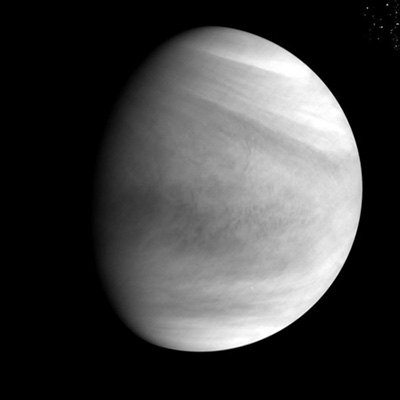
Venus in ultraviolet by Akatsuiki

Japanese engineers have confirmed that Akatsuki has entered orbit around Venus and can now begin science observations.

The image on the right was taken by the spacecraft’s ultraviolet camera, and clearly shows the as-yet unidentified dark material in Venus’s upper atmosphere. These dark streaks have been seen since the first Venus fly-by in the 1960s, but no observations have been able to determine what the material is that shows up as dark in ultraviolet light.

This success is a triumph for the engineers that operate Akatsuki. Kudos to them!

0 comments
1 1,107 1,108 1,109 1,110 1,111 1,775