Turkey and Somalia confirm spaceport plans

Somalia

In a public meeting of the presidents of Turkey and Somalia in Istanbul yesterday, Turkish President Recep Erdogan confirmed that Turkey has begun construction of a spaceport in Somalia.

Astrophysicist Umut Yildiz said the project, announced by President Recep Tayyip Erdogan and detailed by Industry and Technology Minister Mehmet Fatih Kacir, offers Türkiye significant geographic and technological opportunities.

…President Erdogan said the first phase of the three-stage project has been completed and construction has begun under the Türkiye Space Agency, adding that the goal is to establish significant infrastructure in space launch and satellite technologies.

Minister Kacir said the spaceport will become a strategic, revenue-generating infrastructure for Türkiye through growing commercial satellite launch services, testing activities and integration processes, while also contributing to Somalia’s development.

This spaceport plan had first been revealed by Turkish officials two weeks ago, but yesterday’s press conference now makes it official.

No press release from Turkey’s state-run press however revealed the spaceport’s precise location in Somalia. Nor is it confirmed that any actual construction has begun. I suspect it will be a very long time before anything actually launches from the site.

11 comments

Space Force requests proposals for new Vandenberg launchpad for heavy and super-heavy rockets

Vandenberg Space Force Base

The Space Force on December 29, 2025 released a request for information (RFI) from the private sector for building a new launchpad at the southern-most tip of Vandenberg Space Force Base, for use by “new” heavy and super-heavy rockets.

The Space Force said it prefers to use the site for new vehicles rather than ones that already have launch sites at Vandenberg, to “increase launch diversity” at the base. The service is also interested in vehicles with “unique capabilities,” such as point-to-point transportation or the ability to return payloads.

The RFI emphasizes the need for “technically mature” vehicles capable of operating from SLC-14 within five years of signing a lease agreement. Companies must also provide details about their operations to address safety concerns and minimize impacts on other launch operators at the base.

You can read the actual RFI here. The map to the right, taken from the RFI and annotated to post here, labels the area under consideration as “Sudden Flats”. SpaceX’s two launchpads are indicated, with SLC-6 presently under development.

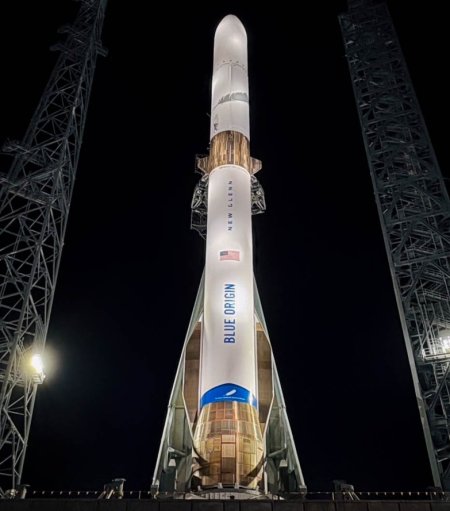
Though the description of the request appears to favor SpaceX, it could also apply to Blue Origin’s New Glenn as well as the company’s proposed larger versions of that rocket.

The request asks for proposals within 30 days.

11 comments

Genesis cover

On Christmas Eve 1968 three Americans became the first humans to visit another world. What they did to celebrate was unexpected and profound, and will be remembered throughout all human history. Genesis: the Story of Apollo 8, Robert Zimmerman's classic history of humanity's first journey to another world, tells that story, and it is now available as both an ebook and an audiobook, both with a foreword by Valerie Anders and a new introduction by Robert Zimmerman.

The print edition can be purchased at Amazon or any other book seller. If you want an autographed copy the price is $60 for the hardback and $45 for the paperback, plus $8 shipping for each. Go here for purchasing details. The ebook is available everywhere for $5.99 (before discount) at amazon, or direct from my ebook publisher, ebookit. If you buy it from ebookit you don't support the big tech companies and the author gets a bigger cut much sooner.


The audiobook is also available at all these vendors, and is also free with a 30-day trial membership to Audible.
 

"Not simply about one mission, [Genesis] is also the history of America's quest for the moon... Zimmerman has done a masterful job of tying disparate events together into a solid account of one of America's greatest human triumphs."--San Antonio Express-News

China launches two satellites for “new technology verification for space target detection”

China today successfully launched two technology test satellites designed to do “space target detection”, its Long March 7A rocket lifting off from its coastal Wenchang spaceport.

China’s state-run press provided no other information. It also appears the drop zones for the rocket’s lower stages were once again in Philippino waters, requiring that government to warn its citizens to avoid those zones and subsequent any rocket debris.

The leaders in the 2025 launch race:

168 SpaceX
90 China (a new record)
18 Rocket Lab
17 Russia

SpaceX still leads the rest of the world in successful launches, 168 to 150.

At this moment no other launches are scheduled before the end of the year, thus closing out the 2025 year in rocketry. I will publish my annual global report in the next few days. Stay tuned.

4 comments

Conscious Choice cover

Now available in hardback and paperback as well as ebook!

From the press release: In this ground-breaking new history of early America, historian Robert Zimmerman not only exposes the lie behind The New York Times 1619 Project that falsely claims slavery is central to the history of the United States, he also provides profound lessons about the nature of human societies, lessons important for Americans today as well as for all future settlers on Mars and elsewhere in space.

 
Conscious Choice: The origins of slavery in America and why it matters today and for our future in outer space, is a riveting page-turning story that documents how slavery slowly became pervasive in the southern British colonies of North America, colonies founded by a people and culture that not only did not allow slavery but in every way were hostile to the practice.  
Conscious Choice does more however. In telling the tragic history of the Virginia colony and the rise of slavery there, Zimmerman lays out the proper path for creating healthy societies in places like the Moon and Mars.


“Zimmerman’s ground-breaking history provides every future generation the basic framework for establishing new societies on other worlds. We would be wise to heed what he says.” —Robert Zubrin, founder of the Mars Society.


All editions are available at Amazon, Barnes & Noble, and all book vendors, with the ebook priced at $5.99 before discount. All editions can also be purchased direct from the ebook publisher, ebookit, in which case you don't support the big tech companies and the author gets a bigger cut much sooner.


Autographed printed copies are also available at discount directly from the author (hardback $29.95; paperback $14.95; Shipping cost for either: $6.00). Just send an email to zimmerman @ nasw dot org.

December 30, 2025 Quick space links

Courtesy of BtB’s stringer Jay. This post is also an open thread. I welcome my readers to post any comments or additional links relating to any space issues, even if unrelated to the links below.

8 comments

The up and down tale of two rocket startups, Vector and Phantom

Jim Cantrell and cars
Jim Cantrell at Vector in 2017, shown in front of
one of his side businesses, fixing and refurbishing race
cars and rare luxury sports cars (located then at Vector).

The tales of rocket startups are often fraught with ups and downs of all kinds, often traveling in circles that no one can ever predict. This is one such tale.

In the mid-2010s there was a rocket startup called Vector, based here in Tucson, founded by a guy named Jim Cantrell. At that time Cantrell pushed the company in the style of Elon Musk, going very public for publicity and to raise investment capital.

He was remarkable successful at both. Unfortunately, his engineers were not as successful at engine building. After years of effort they all realized that their rocket engines were under-powered, and wouldn’t be able to get the rocket into orbit. In 2019 the company’s biggest investor backed out, Cantrell left the company, and new owners took over, hoping to rebuild.

Flash forward to 2021, and Jim Cantrell has reappeared with a new rocket company, Phantom Space, also based in Tucson, raising $6 million in seed capital. In the next four years he obtained a small development contract from NASA, completed two more investment rounds raising first $22 million and then around $37 million, and began development of a new orbital rocket, dubbed Daytona. The company also began work on its own small satellite constellation, PhantomCloud (more on this later).

As for Vector, there was little to report during those four years. The only update said the company was buying engines from the rocket engine startup Ursa Major, the same company Phantom was using.

It is now the end of 2025, and the fate of these two companies has once again intertwined, in a most ironic manner. Last week I learned from Jim Cantrell that Vector had closed shop, and that its last remaining assets, some of which Cantrell himself had helped develop when he headed Vector, had been bought by Phantom. This includes several unused rocket stages, the vertical rocket test stands, a lot of computers, and hardware.
» Read more

9 comments

Leaving Earth cover

Leaving Earth: Space Stations, Rival Superpowers, and the Quest for Interplanetary Travel, can be purchased as an ebook everywhere for only $3.99 (before discount) at amazon, Barnes & Noble, all ebook vendors, or direct from my ebook publisher, ebookit.

If you buy it from ebookit you don't support the big oppressive tech companies and I get a bigger cut much sooner.


Winner of the 2003 Eugene M. Emme Award of the American Astronautical Society.

 
"Leaving Earth is one of the best and certainly the most comprehensive summary of our drive into space that I have ever read. It will be invaluable to future scholars because it will tell them how the next chapter of human history opened." -- Arthur C. Clarke

Colliding galaxies, as seen in the infrared and X-rays

Colliding galaxies in the infrared and X-rays
Click for original image.

Today’s cool image illustrates how beautiful images of heavenly objects don’t always have to be in wavelengths our eyes can see. With the wonders of modern technology, we can now see wondrous things in wavelengths that are invisible to us.

The picture to the right, cropped and reduced to post here, is a perfect illustration. It was released on December 1, 2025, and combines X-ray data from the Chandra X-ray Observatory with infrared data from the Webb Space Telescope. From the caption:

This view of NGC 2207 and IC 2163 takes a James Webb mid-infrared image (white, gray, and red) and adds the X-ray view from Chandra (blue). Together, it is quite an eye-catching result.

…Here, both spirals are shown face on, with the smaller of the two galaxies, IC 2163, at the upper left of the larger galaxy, NGC 2207, which dominates the center and lower right of the image. Both galaxies have long, spiraling, silver blue arms, dotted with specs of blue and red. Toward our upper left, the curving arms overlap, and bend toward their neighbors’ core.

In optical wavelengths the gossamer lines of structure would be lost, overwhelmed by the light of each galaxy’s stars.

0 comments

European Space Agency hacked

It appears some of the European Space Agency’s (ESA) servers have been hacked, with some of its internal data placed for sale on the web.

On 26 December, reports began to emerge on X claiming that ESA had suffered a significant data breach, with a hacker using the alias “888” offering more than 200 gigabytes of data for sale. According to the hacker’s listing, the allegedly compromised data included source code for proprietary software, sensitive project documentation, API tokens, and hardcoded credentials.

ESA has since issued a statement claiming the data breach was limited, but according to information posted on X, the breach included “Confidential internal documents (Airbus Defence & Space, Thales Alenia Space)” and “sensitive technical information related to space programs.”

I wouldn’t be surprised if China is bidding for this information right now. Then again, Europe’s space effort is so unimpressive compared to China that China might not see the information worth much.

14 comments

Russia’s early warning satellite constellation is apparently no longer functioning

The satellites in Russia’s constellation for giving its military early warning of missile attacks, dubbed EKS, have been one-by-one failing in recent years, and it now appears the last one has now experienced a malfunction as well.

After the launch of the 6th Tundra satellite in 2022, the Russian military seemingly gave up on the effort to deploy the EKS early warning constellation or, possibly, the industry was simply unable to build new satellites due to technical problems associated with the Western sanctions and/or financial problems. No fresh satellites were launched into the network in the following three years, while, according to an analyst of the Russian strategic nuclear forces Pavel Podvig, the orbital tracking indicated that from March 2025 to December of the same year, the number of operational Tundra satellites fell from three to just one, possibly as a result of in-orbit failures.

…As of December 2025, Kosmos-2552 (EKS-5) was the only satellite within the EKS system which did not show a clear sign of failure, according to Podvig, but the spacecraft did miss a maneuver expected in November 2025, based on the usual pattern of its detectable orbit adjustments.

None of this is a surprise. Russia’s invasion of the Ukraine has not only isolated the country, it has crippled it in numerous ways, both financially and technologically. It no longer has access to many western high tech components it had relied on, and the loss of all its international launch customers has left its rocket industry devoid of hard currency.

Thus, when Russia makes any grandiose claims about its future space plans, it is wise to harbor great doubts.

16 comments

China launches Earth mapping satellite

China yesterday successfully placed what it called a “geographic mapping” satellite, its Long March 4B rocket lifting off from its Jiuquan spaceport in northwest China.

Its state-run press provided no additional information about the satellite, nor did it provide any information about where the rocket’s lower stages, using very toxic hypergolic fuels, crashed inside China.

The leaders in the 2025 launch race:

168 SpaceX
89 China (a new record)
18 Rocket Lab
17 Russia

SpaceX still leads the rest of the world in successful launches, 168 to 149.

1 comment

December 29, 2025 Quick space links

Courtesy of BtB’s stringer Jay and reader Gary. This post is also an open thread. I welcome my readers to post any comments or additional links relating to any space issues, even if unrelated to the links below.

11 comments
1 75 76 77 78 79 2,929