SpaceX launch experiences a failure of upper stage

Second stage engine with leak

For the first time since June 2015, a SpaceX Falcon 9 launch experienced a failure today after lifting from Vandenberg in California. During a launch tonight of twenty Starlink satellites, the upper stage showed signs of a fuel leak during its initial burn, and according to a tweet from Elon Musk, it exploded when it relit to make a final orbital adjustment.

Upper stage restart to raise perigee resulted in an engine RUD [rapid unscheduled dissembly] for reasons currently unknown. Team is reviewing data tonight to understand root cause.

Starlink satellites were deployed, but the perigee may be too low for them to raise orbit. Will know more in a few hours.

The arrow on the screen capture from the live feed, taken during the upper stage’s initial burn, indicates that apparent leak.

The first stage however successfully completed its nineteenth flight, landing on a drone ship in the Pacific.

This failure ended an incredible string of 344 successful launches, a record unmatched by any rocket ever in the history of space exploration. It was also the very first launch failure of SpaceX’s Block 5 Falcon 9, the rocket’s final design that has allowed the first stages to be reused now more than twenty times.

The next SpaceX launch is presently scheduled for July 14, 2024, but we should expect that launch to be postponed while engineers investigate the failure tonight. We should also expect that delay to last no more than several weeks, at most.

SpaceX launches Turkey’s first homebuilt geosynchronous communications satellite

SpaceX today successfully launched Turkey’s first homebuilt geosynchronous communications satellite, its Falcon 9 rocket lifting off from Cape Canaveral.

The first stage completed its fifteenth flight, landing on a drone ship in the Atlantic. The fairings on this flight completed their tenth and sixteenth time, respectively.

The leaders in the 2024 launch race:

71 SpaceX
30 China
8 Russia
8 Rocket Lab

American private enterprise now leads the world combined in successful launches, 83 to 45, while SpaceX by itself still leads the entire world, including other American companies, 71 to 57.

In just over half a year, SpaceX has now exceeded the annual record of 70 launches by the entire United States, set in 1966 and held until 2022.

European Parliament member demands cancellation of launch deal with SpaceX

Christophe Grudler, a member of the European Parliament (MEP) has written a letter to the government-run weather satellite company Eumetsat, demanding that it cancel its decision on June 26, 2024 to use a Falcon 9 rocket rather than the Ariane-6 on its next launch.

In a letter headlined “Request to reconsider launch decision in favour of European strategic interests”, Grudler disputes the decision of EUMETSAT, the intergovernmental European Organisation for the Exploitation of Meteorological Satellites, to choose America rather than Europe for launching its new satellite. He argues it goes against the principle of giving preference to Europe, something the organisation denies.

“I am writing to urgently request that you reconsider the recent decision to allocate the MTG-S1 satellite launch to a non-EU launch provider, and instead await the results of the inaugural launch of Ariane-6, which was your first choice for this satellite,” the Liberal member of Parliament wrote in a letter to the board.

…Grudler’s requests are threefold: “Cancel the last Council decision regarding a specific launcher solution, Await the inaugural launch of Ariane-6 before making any final decisions for MTG-S1; Reaffirm your dedication to European strategic autonomy by supporting European launch solutions”.

Eumetsat’s decision was clearly a financial one. SpaceX charges much less than Ariane-6, and its Falcon 9 rocket is proven and launching routinely. Ariane-6 won’t have its first launch until next week, on July 9th.

Grudler’s demands are purely political, but since the EU has generally been run top-down, letting politics and power determine its policy, he could force a cancellation of the contract. In the short term this will help ArianeGroup, a partnership of the aerospace companies Airbus and Safran that own Ariane-6, while hurting Europe’s weather satellite capabilities. In the long run it however might aid the growth of Europe’s new competing rocket startups, as it will provide them a guaranteed market. At the same time, having a guaranteed market by government fiat tends to limit competition and thus raise costs.

It appears that some politicians in Europe are still not sold on capitalism and freedom.

Isaacman’s Polaris Dawn mission to launch July 31, 2024

Jared Isaacman
Jared Isaacman

According to a short notice on the Polaris Dawn webpage, Jared Isaacman’s manned orbital mission where he will do the first spacewalk by a private citizen is now targeting a launch date of July 31, 2024.

The four-person mission is planned to spend five days in orbit in SpaceX’s Resilience Dragon capsule, during which it will fly to as high as 870 miles, the highest orbit flown since Gemini 11 in 1966, and the farthest any human has flown from Earth since the Apollo lunar missions. That orbit will make possible some new radiation research:

[T]his is high enough to penetrate the inner band of the radioactive Van Allen Belts that encircle the Earth. This isn’t good for the crew consisting of Mission Commander Jared Isaacman, Mission Pilot Scott Poteet, Mission Specialist Sarah Gillis, and Mission Specialist and Medical Officer Anna Menon, but their initial orbit will be highly elliptical with a lower altitude of 120 miles (190 km), so their exposure will be minimal.

The purpose of this radiological game of chicken is to conduct 38 science experiments to study the effects of spaceflight and space radiation on human health. When these are completed, the altitude for the remainder of the five days in orbit will be reduced to 430 miles (700 km).

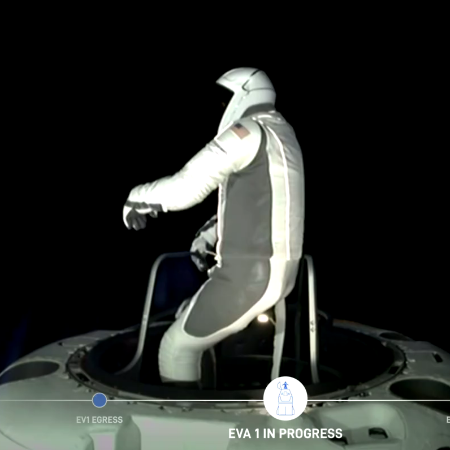
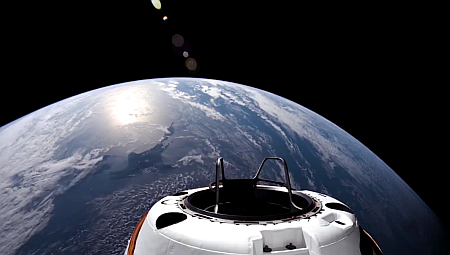
Isaacman will then attempt his spacewalk, opening a hatch on Resilience that replaced its docking port. While Isaacman will be the only one to exit the capsule, all four crew members will be in comparable spacesuits, since the capsule has no airlock and thus its entire atmosphere will escape during these activities.

If this mission is successful, I expect Isaacman will renew his push at NASA for making the goal of his next Polaris mission to replace the gyros on the Hubble Space Telescope. At the moment agency officials have expressed skepticism and seem uninterested. That might change however.

SpaceX gets NASA contract to launch gamma-ray space telescope

NASA yesterday announced that it has awarded SpaceX a contract to launch a new gamma-ray space telescope, dubbed the Compton Spectrometer and Imager (COSI), using its Falcon 9 rocket and targeting an August 2027 launch date.

The firm-fixed-price contract has a value of approximately $69 million, which includes launch services and other mission related costs. The COSI mission currently is targeted to launch August 2027 on a SpaceX Falcon 9 rocket from Cape Canaveral Space Force Station.

This wide-field gamma-ray telescope will study energetic phenomena in the Milky Way and beyond, including the creation and destruction of matter and antimatter and the final stages of the lives of stars. NASA’s COSI mission will probe the origins of the Milky Way’s galactic positrons, uncover the sites of nucleosynthesis in our galaxy, perform studies of gamma-ray polarization, and find counterparts to multi-messenger sources. The compact Compton telescope combines improved sensitivity, spectral resolution, angular resolution, and sky coverage to facilitate groundbreaking science.

The stated launch price gives us a sense of what SpaceX is charging these days for launches. The contract award also illustrates once again why the delays in developing ULA’s Vulcan and Blue Origin’s New Glenn rockets — caused by Blue Origin’s difficulties in manufacturing its BE-4 rocket engine — has ended up costing both companies a lot of money in sales. SpaceX keeps getting these launch contracts because Vulcan and New Glenn are not yet flying operationally. Vulcan has flown once, but it is probably isn’t capable of adding additional launches to is manifest. More important, the rocket is not yet reusable, and probably could not match SpaceX’s price.

As for New Glenn, it supposedly will make its first launch this fall, but we shall see. It remains four-plus years behind schedule, and though it is described as reusable, its first stage landing vertically like a Falcon 9, it is doubtful it will become doing this on its first launches. It needs to prove out its systems first.

SpaceX launches 20 Starlink satellites

SpaceX early this morning launched another 20 Starlink satellites, its Falcon 9 rocket lifting off from Cape Canaveral.

The first stage completed its sixteenth flight, landing on a drone ship in the Atlantic.

The leaders in the 2024 launch race:

70 SpaceX
29 China
8 Russia
8 Rocket Lab

American private enterprise now leads the world combined in successful launches, 81 to 44, while SpaceX by itself still leads the entire world, including other American companies, 70 to 55.

To get a sense of how incredible SpaceX’s launch pace this year has been, those 70 launches, completed in only days more than first half of the 2024, matches the American record for launches in a entire year, that was set in 1966 and remained the record until 2022.

SpaceX and China complete launches

Both SpaceX and China completed launches in the past 12 hours. First, SpaceX last night launched a package of National Reconnaissance Office reconnaissance satellites, its Falcon 9 rocket lifting off from Vandenberg in California. The first stage completed its eighth flight, landing on a drone ship in the Pacific. The two fairings completed their seventh and thirteenth flights respectively.

Then, early today China launched a new communications satellite, its new Long March 7A rocket lifting off from its coastal Wenchang spaceport. Video of the liftoff can be seen here.

The leaders in the 2024 launch race:

69 SpaceX
29 China
8 Russia
8 Rocket Lab

American private enterprise still leads the world combined in successful launches, 80 to 43, while SpaceX by itself still leads the entire world, including other American companies, 69 to 54.

European weather satellite company cancels launch contract with Ariane-6, switches to SpaceX

We now know the reason why an Arianespace official on June 26th demanded new legislation requiring all European payloads to launch on European rockets. Today it was revealed that the European weather satellite company Eumetsat has canceled a launch contract on an Ariane-6 rocket and instead switched to SpaceX’s Falcon 9.

Late yesterday, French news outlet Le Monde reported that the executive committee of Eumetsat, the European meteorological satellite agency, had asked the agency’s board of directors to cancel a contract it signed with Arianespace four years ago to launch its Meteosat MTG-S1 satellite. The mission would have been flown aboard the third Ariane 6 flight, which is expected to be launched in early 2025. The satellite will now be launched aboard a SpaceX Falcon 9 rocket.

Not surprisingly, another French official today — Philippe Baptiste, the head of France’s CNES space agency — once again demanded action to require European companies to use European rockets. In his whining however he revealed an amazing inability to understand why this decision was made.

“How far will we, Europeans, go in our naivety. … I am impatiently waiting to understand what reasons could have led Eumetsat to such a decision at a time [when] all major European space countries as well as the European Commission are calling for launching European satellites on European launchers.”

The reasons why are quite obvious, and if this guy can’t recognize them then there is little hope the European Ciommision will ever figure out how to compete. Not only is the cost for a Falcon 9 launch likely one third that of an Ariane-6, it is a proven launcher. Ariane-6, four years behind schedule, won’t make its first launch until July 9, 2024, assuming all goes as planned. Eumetsat officials probably decided they couldn’t afford the extra cost and risk.

SpaceX launches 23 Starlink satellites, using a first stage for the 22nd time

SpaceX early this morning launched another 23 Starlink satellites, its Falcon 9 rocket lifting off from Cape Canaveral and using a first stage on its record-setting 22nd flight.

That stage successfully landed on a drone ship in the Atlantic. The flight was so routinely boring for the launch crew that the flight director felt no need to even bother having anyone do a T-10 second countdown at launch.

The leaders in the 2024 launch race:

68 SpaceX
28 China
8 Russia
8 Rocket Lab

American private enterprise now leads the world combined in successful launches, 79 to 42, while SpaceX by itself still leads the entire world, including other American companies, 68 to 53.

SpaceX completes two launches today, from opposite coasts

The bunny marches on! SpaceX successfully completed two launches today.

First, its Falcon 9 rocket launched 22 Starlink satellites from Cape Canaveral in Florida. This was the launch that had been delayed several times by weather, and then by a tecnical launch abort at T-0. After several days of review, it lifted in the morning today with no problems, the first stage completing its eleventh flight, landing on a drone ship in the Atlantic.

Then, about ten hours later a Falcon 9 rocket lifted off in the evening Vandenberg in California, putting 20 Starlink satellites into orbit, 13 of which are said to be designed for direct cell-to-satellite capabilities. This first stage also completed its eleventh flight, landing on a drone ship in the Pacific.

This post is a bit late because we had a five hour power outage in my neighborhood tonight, caused apparently when someone drove into a utility pole and knocked it over.

The leaders in the 2024 launch race:

66 SpaceX
28 China
8 Russia
8 Rocket Lab

American private enterprise now leads the world combined in successful launches, 77 to 42, while SpaceX by itself still leads the entire world, including other American companies, 66 to 53.

SpaceX launches commercial geosynchronous satellite for SES

SpaceX today successfully launched a commercial geosynchronous satellite for the Luxembourg company SES, its Falcon 9 lifting off from Cape Canaveral.

The first stage completed its ninth flight, landing successfully on a drone ship in the Atlantic.

The leaders in the 2024 launch race:

64 SpaceX
27 China
8 Russia
8 Rocket Lab

American private enterprise now leads the world combined in successful launches, 75 to 41, while SpaceX by itself still leads the entire world, including other American companies, 64 to 52.

SpaceX launches 20 Starlink satellites

After a ten day pause in launches, which included one launch abort at T-0, SpaceX yesterday successfully launched 20 Starlink satellites, its Falcon 9 rocket lifting off from Vandenberg in California.

The pause is noteworthy because it is possibly SpaceX’s longest pause in launches this year (I haven’t gone back and checked). Consider this fact: A ten day pause between launches would have once been considered a fast launch pace. Now it seems like something is wrong.

The rocket’s first stage completed its fifth flight, landing on a drone ship in the Pacific.

The leaders in the 2024 launch race:

63 SpaceX (with another launch scheduled for later today)
27 China
8 Russia
7 Rocket Lab

American private enterprise now leads the world combined in successful launches, 73 to 41, while SpaceX by itself leads the entire world, including other American companies, 63 to 51.

SpaceX retrieves its Dragon debris that fell in Canada in February

SpaceX yesterday sent a crew and a U-Haul truck to five different farms in Saskatchewan, Canada, to retrieve eight pieces of debris that came from the service module trunk of a Dragon cargo capsule when the trunk was de-orbited to burn up in the atmosphere in February.

I am certain SpaceX engineers want to find out why this debris survived its fall through the atmosphere, so as to better predict what will happen on future de-orbits. If they determine that more of Dragon’s service module survives re-entry than previously predicted, it will require a rethinking on where such de-orbits are planned, making sure they always occur over the ocean.

It also appears that an academic who doesn’t know much about space engineering showed up during this retrieval to talk to the press and attack SpaceX.

Samantha Lawler, a University of Regina astronomy professor, was at the farm when SpaceX employees arrived on Tuesday. She said SpaceX needs to be transparent about how its operations are affecting the atmosphere, and how incidents like this are dealt with.

Lawler was quoted more fully (and more embarrassingly) in this other news report:

“SpaceX has over 6,000 Starlink satellites in orbit that they claim will burn up completely when they re-enter. That comes to 23 re-entries per-day when they are at full capacity. If those re-entries are all making it to the ground, dropping hundred pound pieces of garbage, that will kill lots of people,” Lawler explained.

To claim that any Starlink satellites are threat to hit the ground proves Lawler knowns nothing about space engineering and is acting merely as a anti-SpaceX “Karen” who wants to harass the company. Starlink satellites are too small to pose a threat. Moreover, SpaceX from day one has acted responsibly to de-orbit them under a controlled manner.

Nonetheless, this incident in Canada suggests that more material from larger orbiting objects can reach the ground, and requires a rethinking as to where to de-orbit them.

SpaceX completes two Starlink launches hours apart

SpaceX last night completed two Starlink launches hours apart from opposite coasts. First its Falcon 9 rocket took 23 Starlink satellites into orbit, lifting off from Cape Canaveral. The first stage completed its 16th flight, landing on a drone ship in the Atlantic.

Then, a Falcon 9 rocket lifted off from Vandenberg carried 20 Starlink satellites into orbit, its first stage completing its 21st flight (tying the record), landing safely on a drone ship in the Pacific.

The leaders in the 2024 launch race:

62 SpaceX
27 China
8 Russia
7 Rocket Lab

American private enterprise now leads the world combined in successful launches, 72 to 41, while SpaceX by itself leads the entire world, including other American companies, 62 to 51.

ESA signs deal with Vast to use its Haven-1 space station

Vast Haven-1 station inside Falcon-9 fairing

The European Space Agency (ESA) and the commercial space station startup Vast today signed an agreement that sets the initial terms for ESA to use Vast’s first space station, Haven-1, as well as any space stations to follow.

The agreement outlines the parties’ intention to foster human spaceflight, science, technology and commercialisation development and explore collaboration in low Earth orbit destinations other than the International Space Station. The collaboration will initially focus on exploring opportunities for access to space for Europe through the Vast Space Stations. These could include:

  • Access to the Vast Space Stations for ESA and its Member States, for astronaut missions and research activities as well as commercial business development.
  • Supporting European industry to supply subsystems and equipment for future Vast Space Stations.
  • Vast making use of future qualified European LEO cargo and/or crew transportation services, at market rates and commercially viable terms and conditions, also as a means for offsetting future ESA Astronaut Missions.
  • Vast and ESA jointly supporting European industry in getting certified for docking to future Vast Space Stations.

This deal is actually a very big deal, as Vast’s Haven-1 space station is the only one under construction that does not have a deal with NASA. It is being financed privately and will at first simply be a one module habitat set to launch as early as August 2025 on a Falcon 9 rocket, with the first 30-day 4-person manned mission to follow almost immediately on a Dragon capsule. Vast’s work is closely linked with SpaceX, as its station also has a deal to use Starlink for communications.

The plan is to add more modules in the coming years to build up to a full station.

This deal not only indicates that this independent station is going to give the NASA-supported stations some real competition, it indicates that Europe is committed to doing the same. Now that Europe has abandoned the government-owned and international cooperation model it has used for decades with decidedly mixed results and switched to the capitalism model, where it is merely a customer buying things from a competing private sector, it is doing so full speed ahead, without any hesitation.

The independence of this station also frees it and its customers from the heavy rules that NASA routinely imposes on anyone who deals with it. This aspect gives Vast a competitive advantage that many will clearly wish to take advantage of.

This deal is therefore a challenge that better be recognized by NASA and the other commercial stations. If they don’t react properly they could find themselves left in the dust completely.

SpaceX and Rocket Lab complete successful launches

This evening both SpaceX and Rocket Lab completed launches only about an hour apart but on opposite sides of the world.

First, SpaceX this evening successfully launched another 20 Starlink satellites, its Falcon 9 rocket lifting off from Cape Canaveral.

The first stage completed its 20th flight, landing safely on a drone ship in the Atlantic.

Next, Rocket Lab completed the second to two launches for NASA, placing the second Prefire climate satellite into orbit, following the first launch on May 25, 2024. Its Electron rocket lifted off from Rocket Lab’s launchpad in New Zealand.

The leaders in the 2024 launch race:

59 SpaceX
26 China
8 Russia
7 Rocket Lab

American private enterprise now leads the world combined in successful launches, 68 to 40, while SpaceX by itself leads the entire world, including other American companies, 59 to 49.

SpaceX last night launched 23 more Starlink satellites

Go bunny! Last night SpaceX successfully launched another 23 Starlink satellites, its Falcon 9 rocket lifting off from Cape Canaveral.

The first stage completed its 14th flight, landing on a drone ship in the Atlantic.

The leaders in the 2024 launch race:

58 SpaceX
26 China
8 Russia
6 Rocket Lab

American private enterprise now leads the world combined in successful launches, 66 to 40, while SpaceX by itself leads the entire world, including other American companies, 58 to 48.

SpaceX launches European/Japanese climate satellite

SpaceX today successfully launched a joint European/Japanese satellite designed to study the climate, its Falcon 9 rocket lifting off from Vandenberg in California.

The first stage completed its seventh flight, landing safely back at Vandenberg. This was also SpaceX’s second launch today, from opposite coasts.

The leaders in the 2024 launch race:

57 SpaceX
23 China
7 Russia
6 Rocket Lab

American private enterprise now leads the world combined in successful launches, 65 to 36, while SpaceX by itself leads the entire world, including other American companies, 57 to 44.

SpaceX launches more Starlink satellites

The bunny never stops. SpaceX this morning successfully placed another 23 Starlink satellites into orbit, its Falcon 9 rocket lifting off from Cape Canaveral.

The first stage successfully completed its tenth flight, landing on a drone ship in the Atlantic.

The leaders in the 2024 launch race:

56 SpaceX
23 China
7 Russia
6 Rocket Lab

American private enterprise now leads the world combined in successful launches, 64 to 36, while SpaceX by itself leads the entire world, including other American companies, 56 to 44.

SpaceX launches more Starlink satellites

More bunny action. SpaceX tonight successfully launched another 23 Starlink satellites, its Falcon 9 rocket lifting off from Cape Canaveral in Florida.

The first stage completed its thirteenth flight, landing on a drone ship in the Atlantic.

Increasingly, SpaceX is treating its rockets and launchpads like the airlines treat their airplanes: They only have value if they are flying, and SpaceX is trying to keep both rockets and launchpads flying at all times.

The leaders in the 2024 launch race:

55 SpaceX
23 China
7 Russia
5 Rocket Lab

American private enterprise now leads the world combined in successful launches, 62 to 36, while SpaceX by itself leads the entire world, including other American companies, 55 to 43.

SpaceX launches more Starlink satellites

March on bunny! SpaceX last night successfully launched another 23 Starlink satellites, its Falcon 9 rocket lifting off from Cape Canaveral in Florida.

The first stage completed its eighth flight, landing on a drone ship in the Atlantic.

The leaders in the 2024 launch race:

54 SpaceX
23 China
7 Russia
5 Rocket Lab

American private enterprise now leads the world combined in successful launches, 61 to 36, while SpaceX by itself leads the entire world, including other American companies, 54 to 43.

SpaceX launches NRO reconnaissance satellite(s)

SpaceX last night successfully placed a National Reconnaissance Office (NRO) reconnaissance payload into orbit, its Falcon 9 rocket lifting off from Vandenberg in California. Because of the classified nature of the flight, it is unclear whether the payload is one or several satellites.

The first stage completed its 16th flight, landing on a drone ship in the Pacific. The fairings completed their 12th and 3rd flights respectively.

The leaders in the 2024 launch race:

53 SpaceX
23 China
7 Russia
5 Rocket Lab

American private enterprise still leads the world combined in successful launches, 60 to 36, while SpaceX by itself still leads the entire world, including other American companies, 53 to 43.

SpaceX launches another 23 Starlink satellites

This bunny never stops. SpaceX today successfully launched 23 more Starlink satellites, its Falcon 9 rocket lifting off from Cape Canaveral.

The first stage set a new record for reflights, completing its 21st flight after landing on a drone ship in the Atlantic. The company has said it is upgrading these stages to last for 40 launches instead of 20, and this launch clearly is the first step in that direction.

The leaders in the 2024 launch race:

52 SpaceX
21 China
7 Russia
5 Rocket Lab

American private enterprise now leads the world combined in successful launches, 59 to 34, while SpaceX by itself still leads the rest of the world, including other American companies, 52 to 41.

SpaceX launches 20 more Starlink satellites

SpaceX last night successfully placed another 20 Starlink satellites into orbit, its Falcon 9 rocket lifting off from Vandenberg in California.

The first stage completed its eighteenth launch, landing on a drone ship in the Pacific.

The leaders in the 2024 launch race:

51 SpaceX
21 China
6 Russia
5 Rocket Lab

American private enterprise now leads the world combined in successful launches, 58 to 33. SpaceX by itself now leads the rest of the world, including other American companies, 51 to 40.

Air Force sends letter of concern about Vulcan to ULA

According to a report yesterday [behind a paywall], the Air Force has sent a letter of concern to ULA and its joint owners, Boeing and Lockheed Martin, about the long delays getting its new Vulcan rocket operational.

When the military chose in 2021 ULA and SpaceX to be its two launch providers for the first half of the 2020s, it expected ULA to complete 60% of the launches and SpaceX 40%. It also expected Vulcan to being launching within a year or two, at the latest.

Instead, the first launch of Vulcan did not occur until 2024, and its second launch — required by the military before it will allow Vulcan to launch its payloads — won’t occur until late this year. Worse, the military has a large backlog of launches it has assigned to Vulcan that need to launch quickly.

“I am growing concerned with ULA’s ability to scale manufacturing of its Vulcan rocket and scale its launch cadence to meet our needs,” [Air Force Assistant Secretary Frank] Calvelli wrote. “Currently there is military satellite capability sitting on the ground due to Vulcan delays. ULA has a backlog of 25 National Security Space Launch (NSSL) Phase 2 Vulcan launches on contract.”

These 25 launches, Calvelli notes, are due to be completed by the end of 2027. He asked Boeing and Lockheed to complete an “independent review” of United Launch Alliance’s ability to scale manufacturing of its Vulcan rockets and meet its commitments to the military. Calvelli also noted that Vulcan has made commitments to launch dozens of satellites for others over that period, a reference to a contract between United Launch Alliance and Amazon for Project Kuiper satellites.

ULA says that once operations ramp up, it plans to launch Vulcan twice a month. The Air Force doubts about whether that will be possible however are well founded. To meet that schedule ULA will need delivery per month of at least four BE-4 engines from Blue Origin, and so far there is no indication the Bezos company can meet that demand. Delays at Blue Origin in developing that engine are the main reason Vulcan is so far behind schedule in the first place.

In order to get Vulcan operational, ULA needs to fly a second time successfully. The second launch of Sierra Space’s Tenacity mini-shuttle is booked for that flight, and was originally supposed to launch this spring. Tenacity however was not ready, as it is still undergoing final ground testing. The launch is now set for the fall, but both ULA and the Pentagon are discussing replacing it with a dummy payload should Tenacity experience any more delays.

The source of all of these problems points to Blue Origin. Not only has it been unable to deliver its BE-4 rocket engine on schedule — thus blocking Vulcan — the long delays in developing its own New Glenn orbital rocket (which uses seven BE-4 engines) has given the military fewer launch options. As a result the military has been left with only one rocket company, SpaceX, capable of launching its large payloads.

To put Blue Origin’s problems in perspective, for Blue Origin to finally achieve its many promises and get both Vulcan and New Glenn flying regularly, it will need to begin producing a minimum of 50 to 150 BE-4 engines per year, with two-thirds for its own New Glenn rocket. Right now all evidence suggests the company is having problems building two per year.

In other words, the Pentagon might send a letter of concern to ULA, but it should instead be focusing its ire on Blue Origin.

SpaceX launches 23 more Starlink satellites

SpaceX tonight successfully launched 23 Starlink satellites, its Falcon 9 rocket lifting off from Cape Canaveral.

This was the 50th successful launch by SpaceX this year, in only a little more that five months. Reaching the company’s goal of 150 launches in 2024 (six of which were planned to be Starship/Superheavy test launches) remains a challenge, but if the company reaches even 80% of that goal (120) it will have set a record for launches greater than what the entire world achieved for every year of the space age until 2020.

This was also the 15th launch of the rocket’s first stage, landing successfully on a drone ship in the Atlantic.

The leaders in the 2024 launch race:

50 SpaceX
21 China
6 Russia
5 Rocket Lab

American private enterprise now leads the world combined in successful launches, 57 to 33. SpaceX by itself now leads the rest of the world, including other American companies, 50 to 40.

SpaceX launches 20 more Starlink satellites

SpaceX tonight successfully launched 20 more Starlink satellites, 13 of which were capable of direct cell phone use, its Falcon 9 rocket lifting off from Vandenberg in California.

The first stage completed its fourth flight, landing on a drone ship in the Pacific.

The leaders in the 2024 launch race:

49 SpaceX
20 China
6 Russia
5 Rocket Lab

American private enterprise now leads the world combined in successful launches, 56 to 32. SpaceX by itself now leads the rest of the world, including other American companies, 49 to 39.

SpaceX launches another 23 Starlink satellites

SpaceX today successfully launched another 23 Starlink satellites, its Falcon 9 rocket lifting off from Cape Canaveral.

The first stage completed its third flight, landing on a drone ship in the Atlantic.

The leaders in the 2024 launch race:

48 SpaceX
19 China
6 Russia
5 Rocket Lab

American private enterprise now leads the world combined in successful launches, 55 to 31. SpaceX by itself now leads the rest of the world, including other American companies, 48 to 38.

SpaceX launches 23 more Starlink satellites

It just keeps going and going: SpaceX today successfully launched another 23 Starlink satellites, its Falcon 9 rocket lifting off from Cape Canaveral.

The first stage completed its fifteenth flight, landing on a drone ship in the Atlantic.

The leaders in the 2024 launch race:

47 SpaceX
18 China
6 Russia
5 Rocket Lab

American private enterprise now leads the world combined in successful launches, 54 to 30. SpaceX by itself now leads the rest of the world, including other American companies, 47 to 37.

SpaceX last night launched another 23 Starlink satellites

The bunny is so fast I missed one: Last night, only a few hours after SpaceX launched two satellites for Maxar, out of Vandenberg in California, the company followed this with another launch of 23 Starlink satellites out of Cape Canaveral in Florida.

The first stage completed its 19th launch, landing successfully on a drone ship in the Atlantic.

The leader board that I posted earlier today for the Chang’e-6 launch thus gave the wrong totals for SpaceX and the American launch industry. Below are the corrected numbers for the 2024 launch race:

46 SpaceX
18 China
6 Russia
5 Rocket Lab

American private enterprise now leads the world combined in successful launches, 53 to 30. SpaceX by itself still leads the rest of the world, including other American companies, 46 to 37.

Hat tip to reader MDN to letting me know.

1 8 9 10 11 12 48