Pluto’s cratered glacial terrain
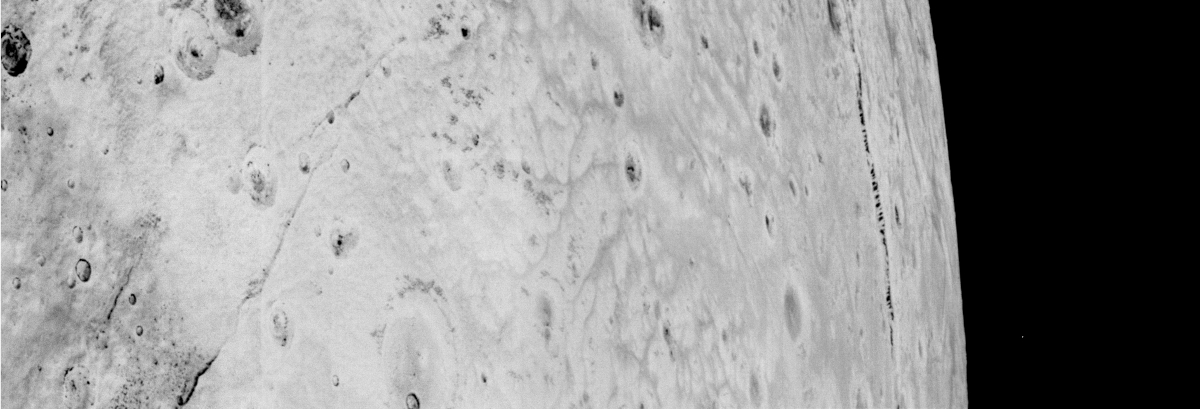
Click for full resolution. For original images go here, here, here, and here.
Click for original image.
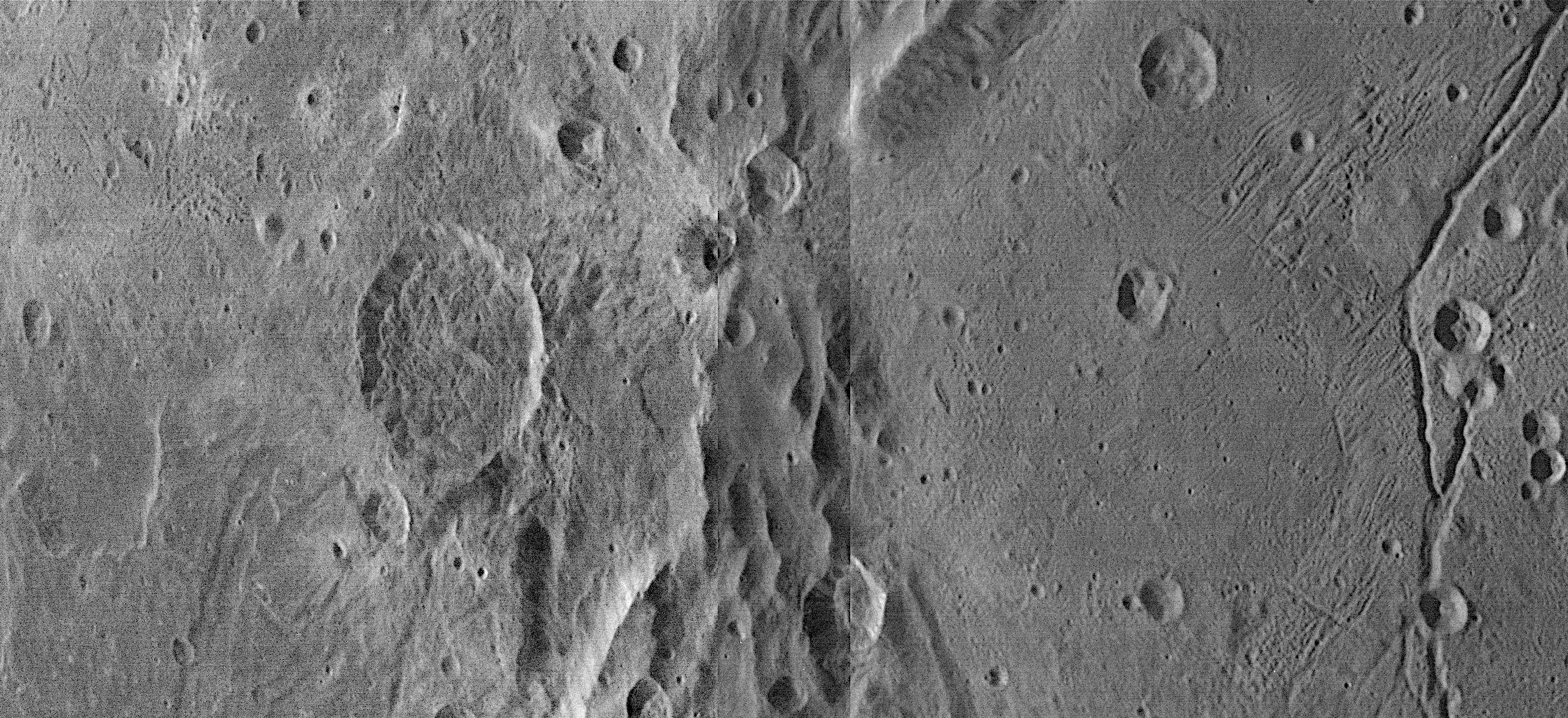
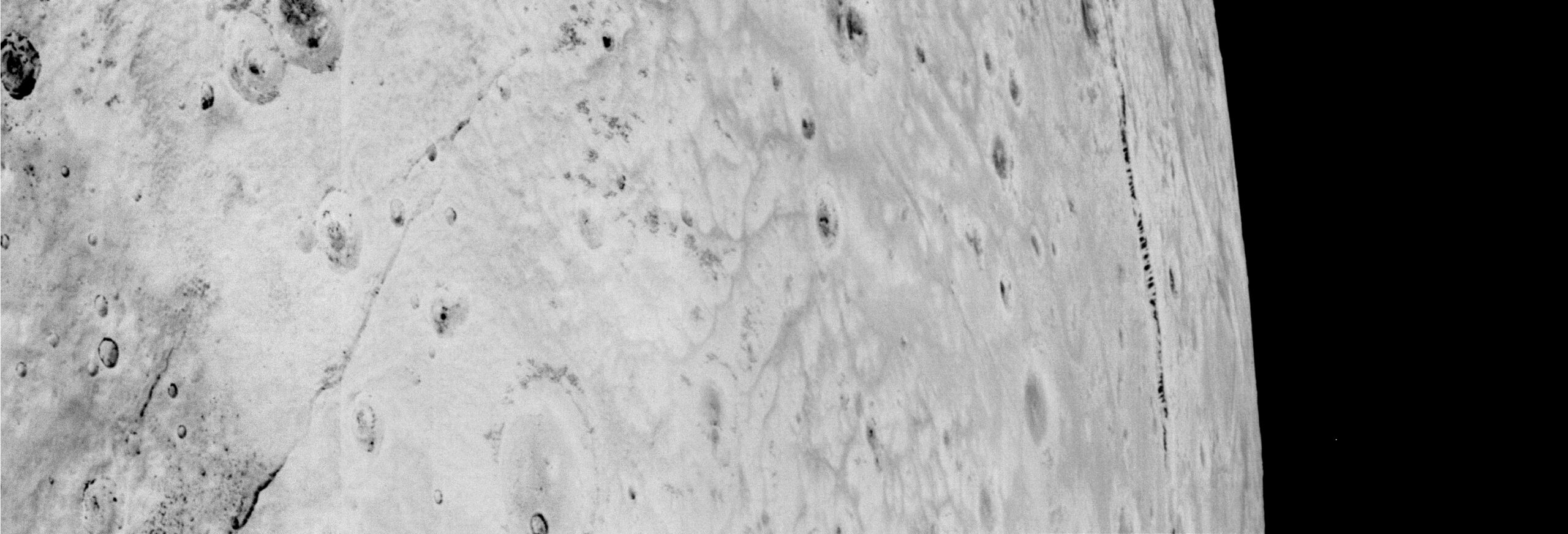
Cool image time! The panorama above, created from four New Horizons’ images that were cropped and enhanced to post here, was taken by New Horizons on July 14, 2015 (here, here, here, and here), about 30 minutes before its closest approach of 7,800 miles above Pluto.
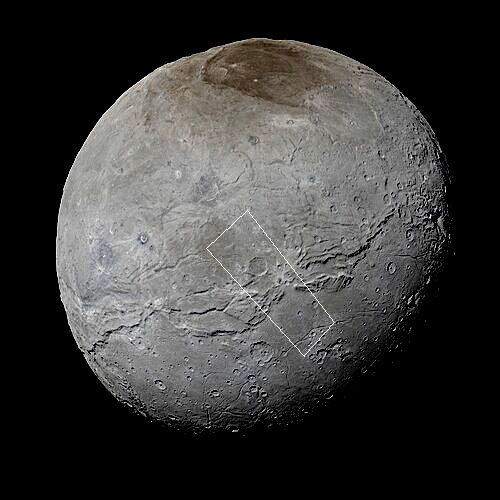
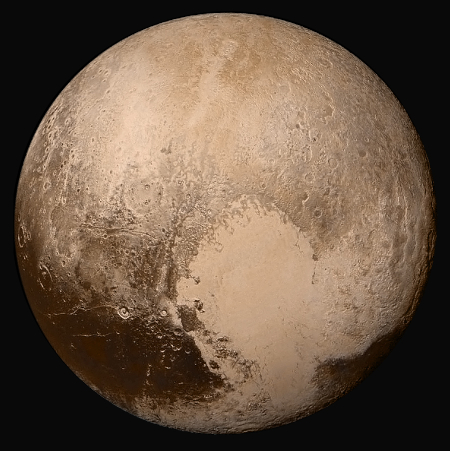
I have searched the New Horizons’ press release archive, and as far as I can tell, this sequence of images and the terrain it shows was never highlighted publicly by the science team. For that reason, I am not sure exactly where to place it on the global true-color image of Pluto to the right, released by the science team shortly after that fly-by. I suspect the panorama covers a strip on the eastern limb of the globe, in the darker crater region to the east of Pluto’s giant frozen nitrogen sea. It is also possible this is actually covering the north pole regions, with the raw images as released oriented with north to the right.
Other than these guesses I cannot tell. If anyone has better information please provide it in the comments.
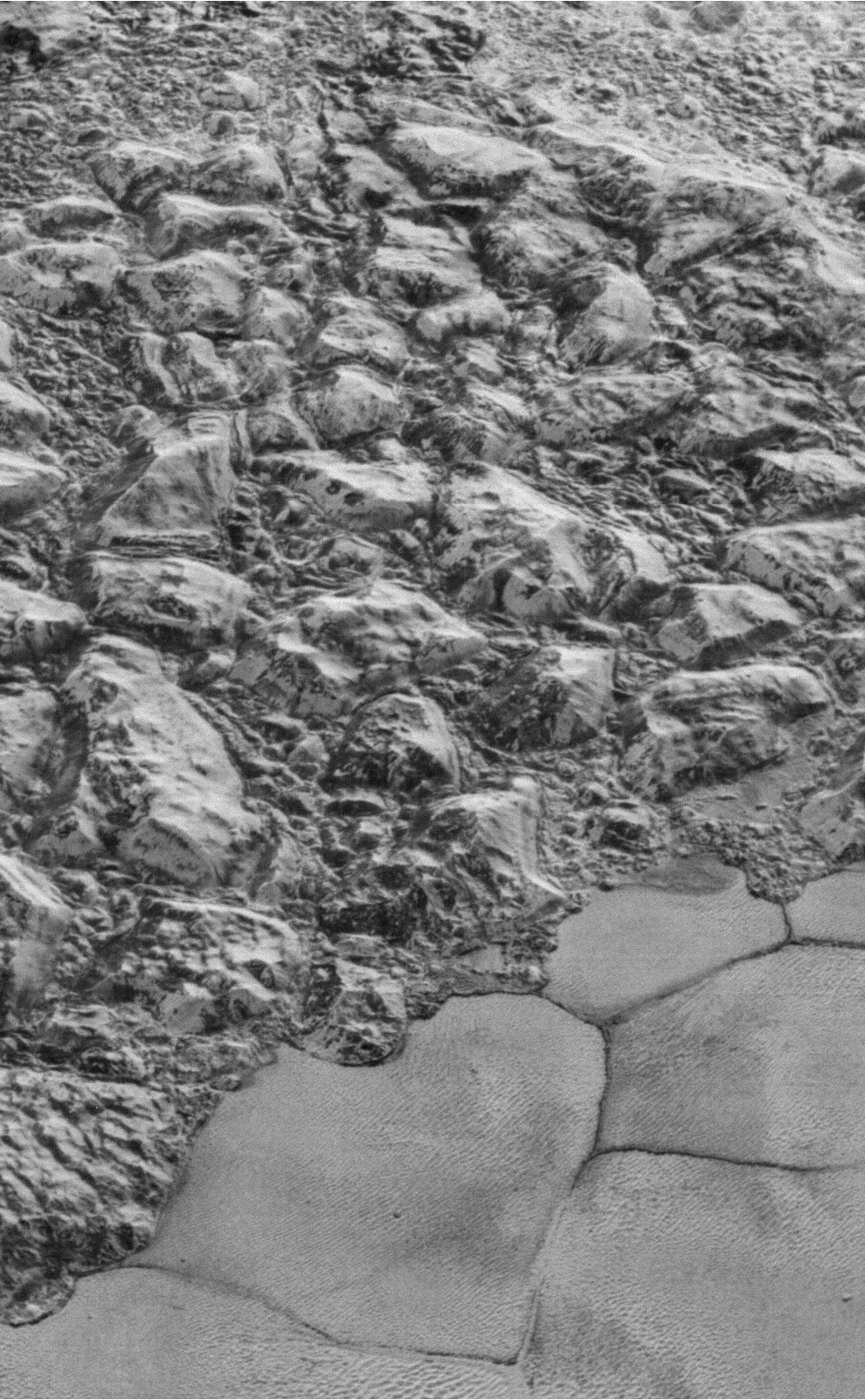
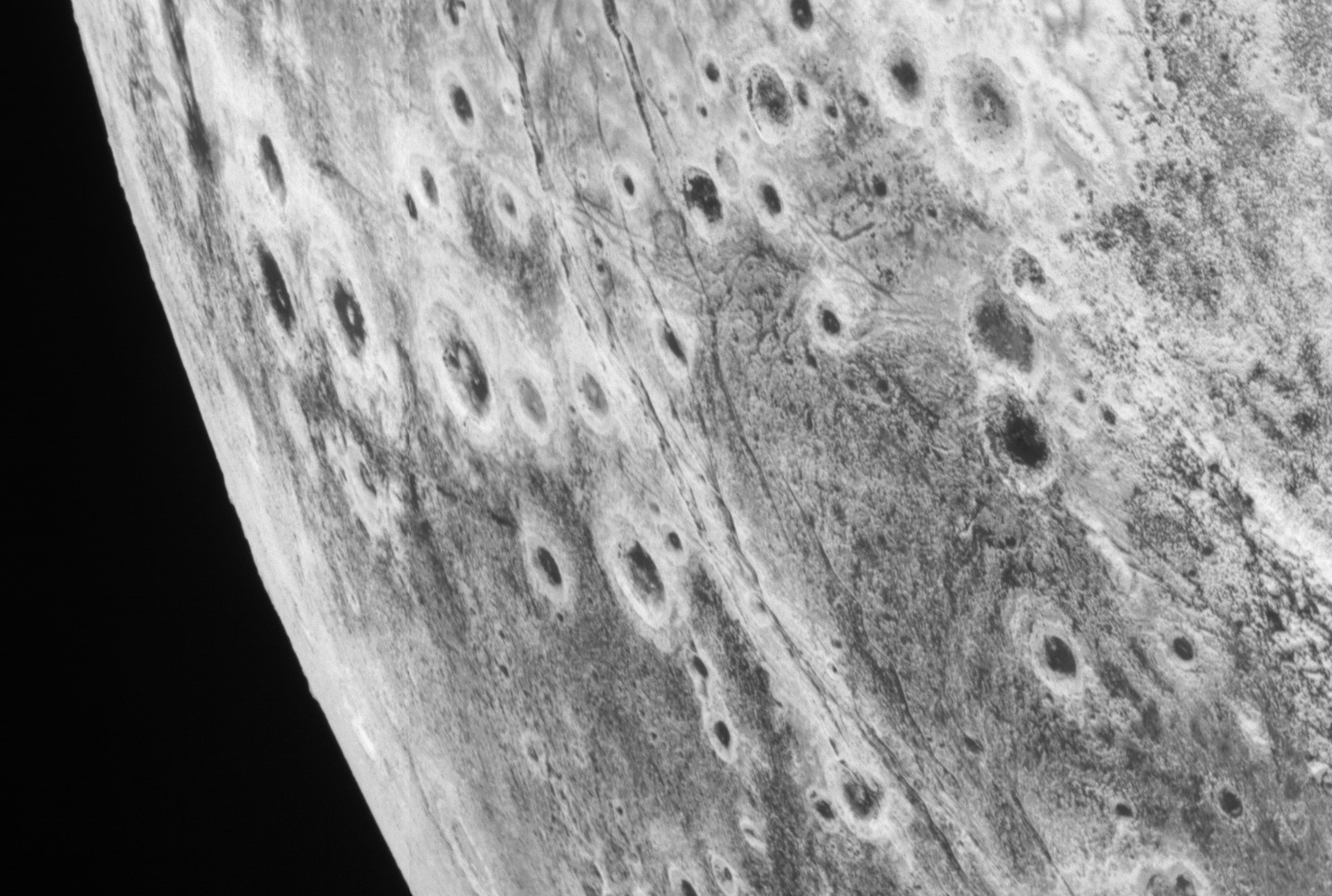
What the panorama does show us is cracked and pitted terrain, thought to be mostly made up of frozen ice mixed with dust and debris with some nitrogen and other materials thrown in. Though in many ways it resembles the Moon, that similarity is only very superficial. For example, the polygon shapes near the picture’s center suggest ice floes or glaciers, though there is no underground liquid ocean on which they could float.
This is a very alien world. And it is likely even more alien than the few pictures obtained during that New Horizons’ fly-by have suggested. After all, we only saw in high resolution one hemisphere. Who knows what’s really on the planet’s other side?
Click for full resolution. For original images go here, here, here, and here.
Click for original image.
Cool image time! The panorama above, created from four New Horizons’ images that were cropped and enhanced to post here, was taken by New Horizons on July 14, 2015 (here, here, here, and here), about 30 minutes before its closest approach of 7,800 miles above Pluto.
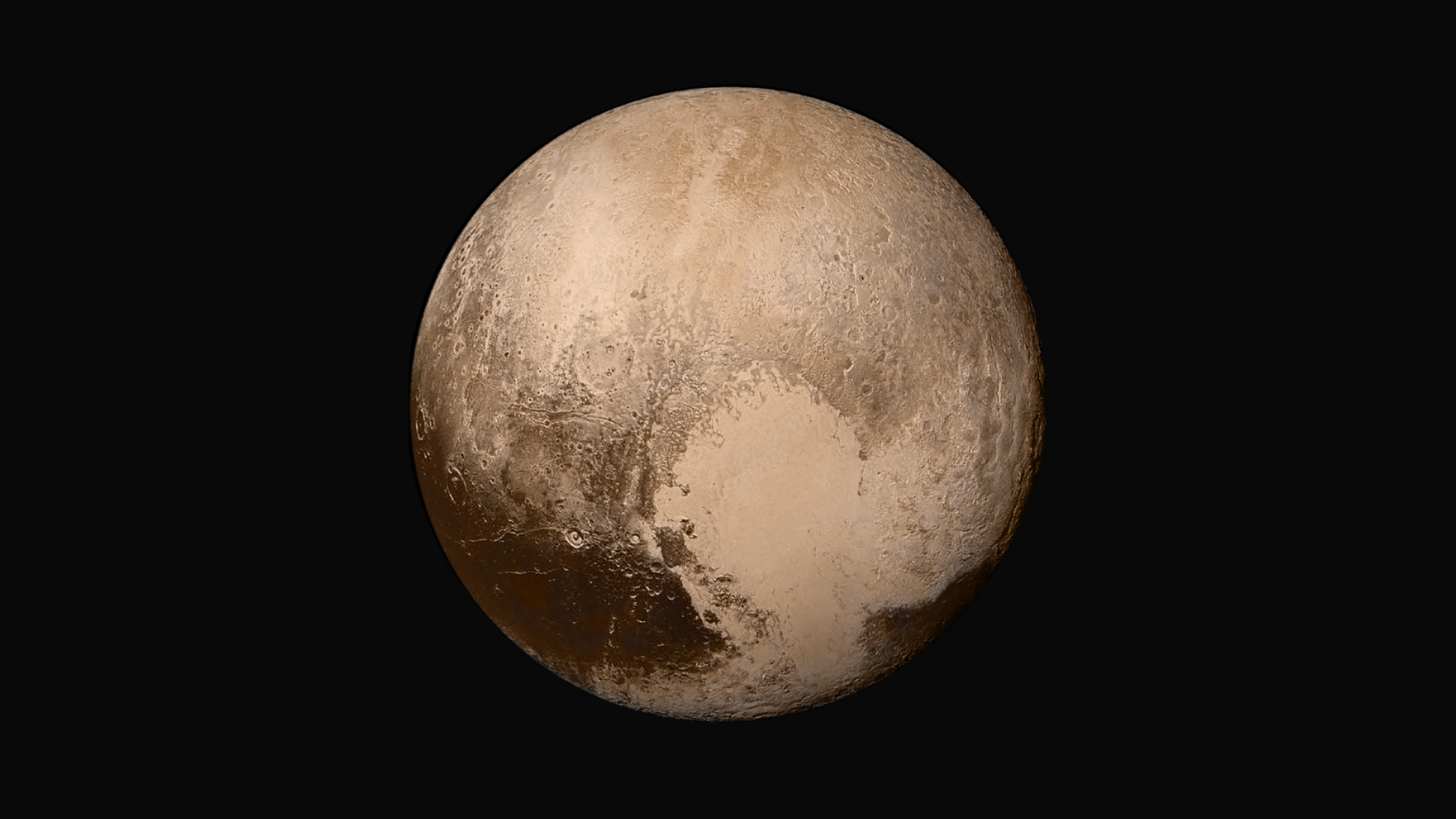
I have searched the New Horizons’ press release archive, and as far as I can tell, this sequence of images and the terrain it shows was never highlighted publicly by the science team. For that reason, I am not sure exactly where to place it on the global true-color image of Pluto to the right, released by the science team shortly after that fly-by. I suspect the panorama covers a strip on the eastern limb of the globe, in the darker crater region to the east of Pluto’s giant frozen nitrogen sea. It is also possible this is actually covering the north pole regions, with the raw images as released oriented with north to the right.
Other than these guesses I cannot tell. If anyone has better information please provide it in the comments.
What the panorama does show us is cracked and pitted terrain, thought to be mostly made up of frozen ice mixed with dust and debris with some nitrogen and other materials thrown in. Though in many ways it resembles the Moon, that similarity is only very superficial. For example, the polygon shapes near the picture’s center suggest ice floes or glaciers, though there is no underground liquid ocean on which they could float.
This is a very alien world. And it is likely even more alien than the few pictures obtained during that New Horizons’ fly-by have suggested. After all, we only saw in high resolution one hemisphere. Who knows what’s really on the planet’s other side?