OneWeb signs deal with SpaceX to launch its remaining satellites, replacing Russia

Capitalism in space: Just 18 days after its contract with Arianespace was suspended because of Russia invasion of the Ukraine, OneWeb has now signed a deal with SpaceX to use its Falcon 9 rocket to launch the remaining 200+ satellites in its satellite constellation.

Few details about the agreement were released Monday morning. “Terms of the agreement with SpaceX are confidential,” OneWeb said in a statement.

OneWeb said the “first launch” with SpaceX is expected before the end of this year, suggesting the company anticipates multiple flights on SpaceX rockets.

It appears that launches could start before the end of this year

There are two big losers in this story. The obvious one is Russia, as it has lost OneWeb as a satellite customer. The second, less obvious, is Arianespace, as it appears it has also lost OneWeb as a customer. It will also have to refund OneWeb any payments the satellite company made for launches that have not occurred, even those that Arianespace had paid Russia for which Russia is refusing to refund.

Though no details have been released about the deal, I would not be surprised if OneWeb got a better price than what it was paying Arianespace. I also suspect that Elon Musk was willing to make this deal with OneWeb, the prime competitor to his Starlink satellite constellation, because he favors the Ukraine in this war.

Finally, this deal will not only make Russia look bad, it will make SpaceX look magnificent. Its PR value cannot be measured for the company.

Rogozin: Lift sanctions by end of March or else!

Dmitry Rogozin, the head of Russia’s Roscosmos space corporation that runs all of that nations aerospace industry, yesterday demanded that Europe and the U.S. lift its sanctions against Russia by end of March or he would take further action against them.

“We will wait until the end of March. The lack of response or a negative response would be a basis for our decision,” he said, without specifying what kind of decision it would be.

According to the official, the space corporation was not going to yield to the sanctions.

One immediately asks, what happens at the end of March? Why time further space-related actions then?

Well, the only area in which Russia is still cooperating with the west in space is on ISS. At the end of March, Russia will bring home American astronaut Mark Vande Hei using its Soyuz capsule. This suggests that once Vande Hei comes home, Rogozin will announce that Russia will no longer fly any western astronauts to ISS on its rockets or capsules. He might also further announce actions that will accelerate the end of the ISS partnership, including laying out Russia’s schedule for adding modules to its half of ISS and then detaching it from the station.

If so, good. Such an action will bring clarity to the station’s remaining days, forcing NASA to make sure the station can function after the Russian half is gone. It will probably quicken the development of Axiom’s modules to the station, and might encourage the private construction of other modules to pick up the slack left by the Russian exit.

ESA makes official the split with Russia

At a press conference yesterday officials from the European Space Agency (ESA) officially announced that the partnership with Russia to launch its Franklin rover to Mars has ended, and the launch will not happen in ’22.

The program is not cancelled, but “suspended.” ESA is looking for alternatives to get its Rosalind Franklin rover to the Red Planet. Earth and Mars are correctly aligned for launches only every 26 months, so the next opportunities are in 2024, 2026, and 2028. Aschbacher said it is not feasible to be ready by 2024, so it will be one of the later dates.

Since Russia had been providing both the launch rocket and Mars lander, ESA cannot simply find a different rocket. It needs to come up with its own lander, or find someone else to build it. For example, one of many new private American companies building lunar landers for NASA might be able do it, though ESA would likely prefer a European company. If it did decide to go with an American company, it would certainly not hire one until it succeeds in completing successfully at least one planetary landing.

The officials also outlined ESA’s need to find new launch rockets for many other missions it had planned to launch on Russia’s Soyuz-2 rocket. That need will also be an opportunity for American rocket companies, but more significantly it could be a blessing for Arianespace’s Ariane 6 rocket. The Ariane 6 has struggled to find customers because of its high cost. The loss of Russia as a launch option will likely drive some ESA business to it.

Roscosmos’ head Dmitry Rogozin in turn announced that it will go ahead with its own Mars mission, using the lander on an Angara rocket

“True, we will lose several years, but we will replicate our landing module, make an Angara rocket for it and carry out this research mission from the newly-built Vostochny spaceport on our own. Without inviting any ‘European friends’, who prefer to keep their tails between their legs the moment they hear their American master’s angry voice,” Rogozin said on his Telegram channel.

Whether Russia will actually do this is questionable. For the last two decades Roscosmos has promised all kinds of numerous planetary missions and new rockets and new manned capsules, none of which has ever seen the light of day. To make such a thing happen now seems even more doubtful.

Russia launches three Russians to ISS on Soyuz-2 rocket

Russia today successfully launched three astronauts to ISS on its Soyuz-2 rocket, the first time the crew on a Russian launch to ISS was entirely Russian.

The docking at the station is expected three hours after launch.

The reason for the all-Russian crew has nothing to do with the Ukraine War. Initially NASA and Roscosmos were negotiating to have an American on this flight as part of a barter deal, whereby astronauts from the two space agencies fly on each other’s capsules in an even trade to gain experience with each. In October both agencies agreed to hold off the first barter flight until ’22. With the on-going sanctions however it is now unknown whether that barter deal will go forward.

The leaders in the 2022 launch race:

10 SpaceX
6 China
3 Russia
2 ULA

The U.S. still leads China 16 to 6 in the national rankings, with SpaceX having a scheduled Starlink launch this evening.

Update on the actual state of the Ukraine War

Much of the reporting about the war in the Ukraine has been either based on individual anecdotal events, or propaganda being churned out by both sides in an effort to influence events and public opinion to their cause.

All of this information is generally useless in determining what is really happening.

A better way to understand the actual state of the war, who is winning and who is not, is to find sources that don’t look at individual events, but try to compile all the reliable and confirmed stories into an overall whole.

One source that does this routinely and with great success is the Institute for the Study of War. I have relied on their maps and reports for a clear understanding of the various Middle Eastern conflicts now for years. One week ago I posted a link to the Institute’s March 9, 2022 update on the Ukraine War, because I believed it provided the best review, well documented and sourced, covering Russia’s entire military operation in the Ukraine, as well as the effort of the Ukraine to fight back. At that time, the known data strongly suggested that though Russia appeared to be very slowly capturing territory, it was also meeting heavy resistance everywhere. Furthermore, Russia’s effort was hampered by a lagging logistics and supply operation. All told, this data suggested that Russia’s take-over of the Ukraine was going to take a lot longer than expected by Putin and his generals, and might even get bogged down into a long quagmire similar to what the Soviet Union experienced in Afghanistan in the late 1970s.

A week has passed, and the Institute has issued several updates since. By comparing today’s March 17th update with last week’s we can quickly get a sense of what has happened in that week.
» Read more

Overview of the impact Russia’s invasion is having on the Ukraine’s space industry

Link here. The summary focuses on the major aerospace regions in the Ukraine, Dnipro and Kharkiv, outlining how they have so far been untargeted by the Russian invasion.

“In Dnipro, Yuzhmash and Yuzhnoye have not been bombed or targeted by missile attacks so far. One of the possible reasons is that Russia’s plan is to take them over as part of their invasion, so they intend to keep these facilities intact,” Usov said. “Because of the Russian attacks in the Dnipro region, these facilities are not operating at full capacities, and they were forced to halt work on their projects. But a share of their employees ensures their operations continue.”

The situation is the same in Kharkiv. No aerospace facilities have been directly targeted, but the war has shut down some operations, while others — especially those partnering with western nations or companies — have gone almost entirely virtual.

The article also describes a Ukrainian startup, Orbit Boy, that is trying to develop an air-launched smallsat rocket in partnership with companies in Poland and Italy. The war is making this development difficult, if not impossible.

OneWeb and Arianespace scramble to find a rocket to launch satellites

Capitalism in space: With the cancellation of the last six Soyuz-2 launches for OneWeb and Arianespace due to Russia’s invasion of the Ukraine, the two companies are struggling to find an alternative rocket to launch the remaining 216 satellites that would complete OneWeb’s satellite constellation.

OneWeb has already paid Arianespace for the launches, so the responsibility to get the satellites in orbit is at present Arianespace’s. The problem is that its flight manifest for both the Ariane-5 (being retired) and the new Ariane-6 rocket are presently full.

Going to another rocket provider is problematic, even if a deal could be negotiated. The flight manifest for ULA’s Atlas-5 and Vulcan rockets is also filled. Though SpaceX’s Falcon 9 could probably launch the satellites, that company’s Starlink satellite constellation is in direct competition with OneWeb, which makes it unlikely the two companies could make a deal.

There have been negotiations with India to use its rockets, but it is unclear at present whether this will work.

One other option is to buy a lot of launches from the smallsat rockets of Rocket Lab, Virgin Orbiter, and Astra. This will likely cost more because more launches will be required, and that would required a complex negotiation between all parties.

Entire Russian communications satellite industry threatened by Russia’s Ukraine invasion

Because almost all Russian communications satellites rely on western components, the sanctions imposed on Russia due to its invasion of the Ukraine will likely prevent the future launch of any such satellites.

The overwhelmingly wide sanctions against the Kremlin left practically no chance for Russia to complete any of its communications satellites in the development pipeline at the time due to their dependency on Western payloads.

Conceivably, Russia could turn to China for necessary components or/and Moscow could try again developing necessary competencies inside the country, but given little signs of progress on both of those fronts in the past, it could probably take years if not decades before all the technological gaps could be closed and it would be even more difficult to do under much harsher economic conditions and export controls. It is also a question whether China would be interested in boosting strategically important industries in Russia with potential military implications or whether it would want to challenge the Western sanctions regime by putting at risk its far more important trade relations with the United States.

The article at the link also notes the generally low quality of Russian communications satellites, which for example generally last only five to six years, compared to the 10 to 15 year lifespan of western satellites. This low quality has meant that Russia has been unable to sell this technology to anyone outside Russia.

Russia today confirmed it will return NASA astronaut as planned

As expected, Russia today confirmed in its state-run TASS news agency that NASA astronaut Mark Vande Hei will come back to Earth in its Soyuz capsule on March 30th, as planned.

The Soyuz MS-19 space capsule with Anton Shkaplerov, Pyotr Dubrov and Mark Vande Hei is expected to land on March 30. Dubrov and Vande Hei arrived on the ISS in the Soyuz MS-18 spacecraft together with Oleg Novitsky. This descent module brought back to Earth the two feature film crew members – actress Yulia Peresild and film director Klim Shipenko, who had arrived on the ISS together with Anton Shkaplerov in the Soyuz MS-19 on October 5.

There had been a number of stories in the mainstream press suggesting the Russians would leave Vande Hei behind in response to the international sanctions being imposed on Russia because of its invasion of the Ukraine. All were based on a single comment by Roscosmos’ head Dmitry Rogozin, who had simply noted visuals from a Russian news source and aired in the U.S. that showed the Russian half of ISS separating away and leaving Vande Hei behind. Rogozin was only noting that the U.S. press was worried about this possibility.

There was no chance the Russians would separate its half of ISS now. Zero. To do such a thing will require several months of preparation. For example, the Russian half has at least one module, Zvezda, that is failing. If Russia ever creates its own new space station using part of ISS, it will have to launch some new modules first.

Also, for Russia to leave Vande Hei behind would be a public relations disaster that would only make worse the disaster of its invasion of the Ukraine. Russia might end its partnership at ISS in the near future, but it won’t do it in a way that might threaten the lives of any astronauts, from any nation.

Russia to lose seventeen launches due to Ukraine sanctions

This article at Space News today provides a nice summary of the number of launches that Russia’s Roscosmos will likely lose in the next three years due to the break off of commercial operations against that country because of its invasion of the Ukraine.

According to the article, Russia will lose sixteen launches. The list however misses one South Korean satellite scheduled for launch on an Angara rocket later this year. The total breakdown of this lost business is therefore as follows:

13 launches lost in 2022
3 launches lost in 2023
1 launch lost in 2024

The entities impacted are as follows:

Government launches:
Europe: six launches in ’22 and ’23, totaling eight satellites
South Korea: two launches in ’22
Sweden: one launch in ’22

Commercial launches:
OneWeb: six launches in ’22, totaling 199 satellites
Axelspace: one launch, totaling four satellites
Synspective: one launch

If the Ukraine War were to end today, it is possible that most of the government launches would be reinstated. The commercial companies however are almost certainly going to find other launch providers, no matter what. OneWeb for example is hardly going to trust its business to Russia after that country cancelled the launches and (at least at this moment) has confiscated the already delivered satellites.

If the war continues for another two or three months, then all this business will vanish for good, as alternative rocket companies will likely be found.

This list however does reveal one interesting fact. It appears that very few private companies have been interested in buying Russian launch services, with or without the Ukraine War. Most of Russia’s international customers have been other governments. Even OneWeb falls partly into this category, as it is half owned by the United Kingdom.

This fact suggests that Russia’s product has simply not been competitive against the new commercial market. The governments meanwhile probably had political motives in addition to economics to throw their business Russia’s way. Those political motives are now gone.

The actual state of the Ukraine War

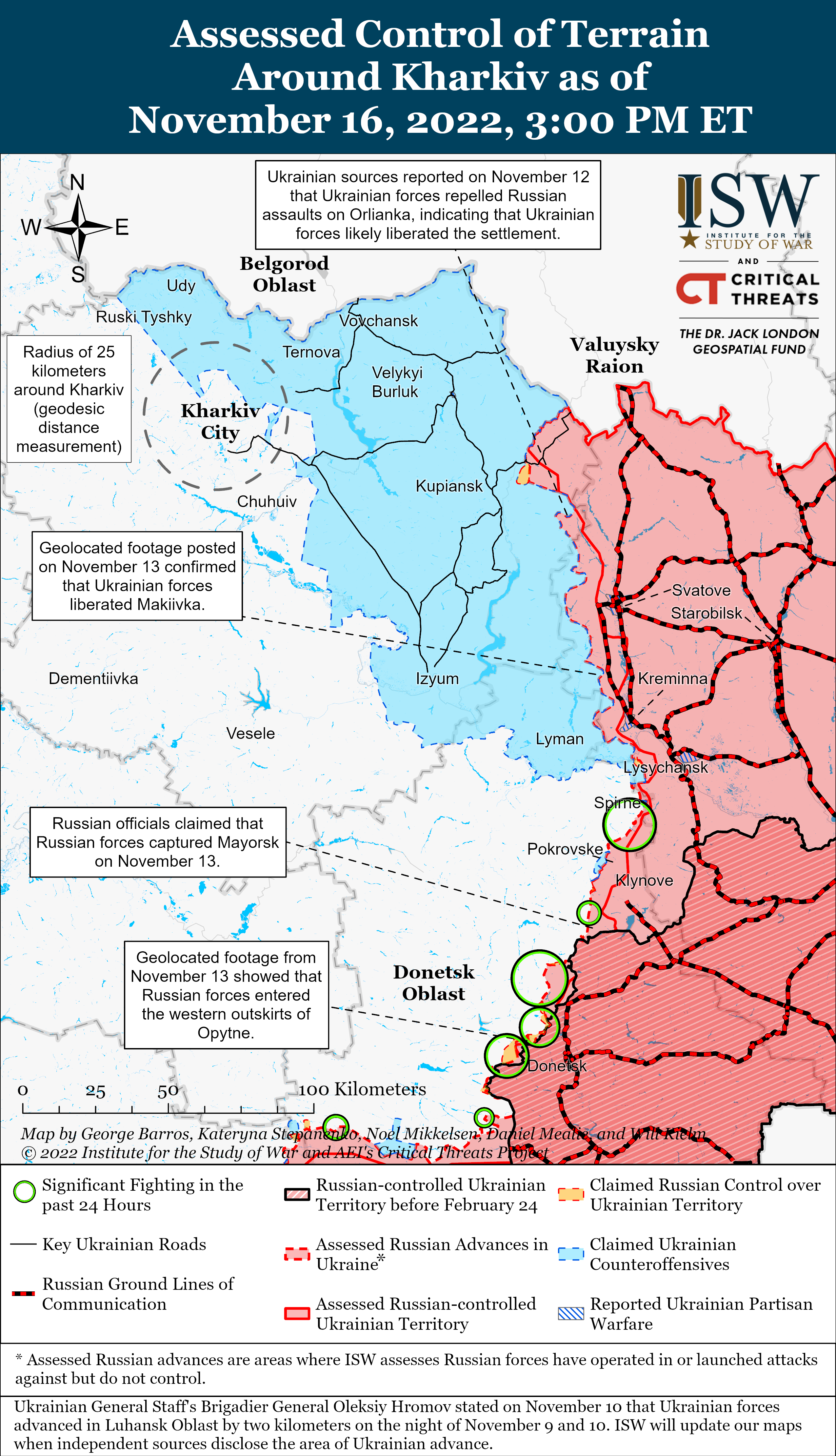
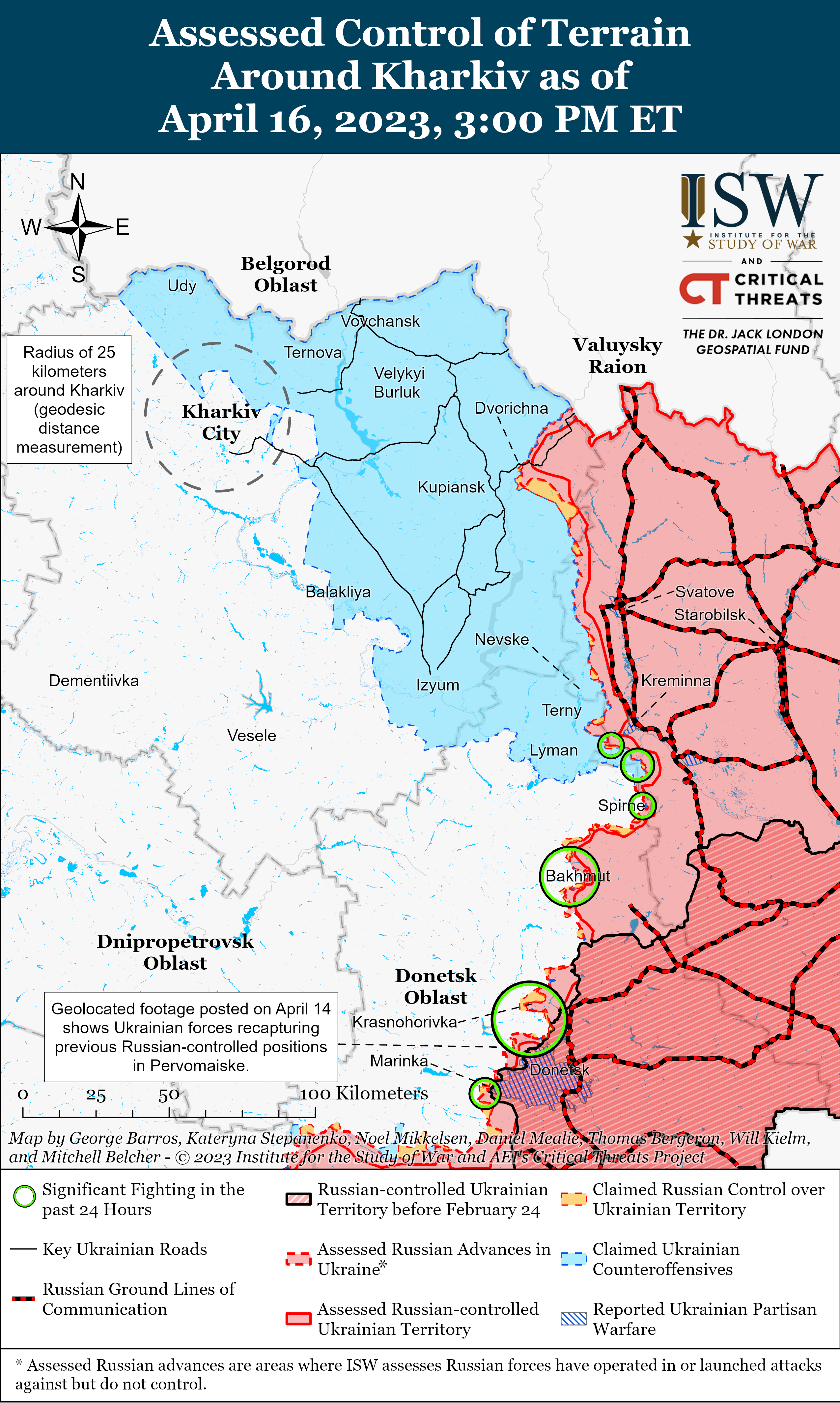
Though nothing at this moment is certain, this update report yesterday from the Institute for the Study of War is likely the best quick summary, including a very informative map.

Russian operations to continue the encirclement of and assault on Kyiv have likely begun, although on a smaller scale and in a more ad hoc manner than ISW expected. The equivalent of a Russian reinforced brigade reportedly tried to advance toward Kyiv through its western outskirts and made little progress. Smaller operations continued slowly to consolidate and gradually to extend the encirclement to the southwest of the capital. Russian operations in the eastern approaches to Kyiv remain in a lull, likely because the Russians are focusing on securing the long lines of communication running to those outskirts from Russian bases around Sumy and Chernihiv in the face of skillful and determined Ukrainian harassment of those lines. The battle for Kyiv is likely to continue to be a drawn-out affair unless the Russians can launch a more concentrated and coherent attack than they have yet shown the ability to conduct.

The Russian military is clearly struggling to mobilize reserve manpower to offset losses and fill out new units.

Russia appears to be very very very slowly gaining ground, but meeting heavy resistance everywhere, while struggling with its own lagging logistics and cumbersome military.

What strikes me as most strange about this entire war is the relatively little use of air forces by either side. Russia’s air bombing efforts have paled compared to other recent wars.

The Ukraine’s has even been less active. Consider: Russia had a forty-mile-long convoy in plain sight backed up for days on the main road from Russia to Kiev. What a sitting target! The Ukraine apparently had no air force capability to hit it.

Based on the present known data, this war will drag on for a very long time, even if Russia eventually takes control of the Ukraine. In the meantime it has made itself a pariah with the rest of the world’s nations for its unjustified invasion of a neighboring country, not unlike Saddam Hussein’s invasion of Kuwait in 1990. This in turn is crashing the Russian economy.

All in all, even at its best a victory in this Russian war will be a Pyrrhic victory.

UK bans all space-related exports to Russia

In response to Russia’s invasion of the Ukraine, the United Kingdom yesterday announced new sanctions, banning all space-related exports as well as increased sanctions on aviation.

For Russia, this component of these new space sanctions might be the most painful, should something go wrong on one of its launches:

The space export ban includes all related services, including insurance or reinsurance services, U.K. officials said. “This means cover is withdrawn on existing policies and UK insurers and reinsurers will be unable to pay claims in respect of existing policies in these sectors,” wrote in the statement.

This restriction also means that any satellite customers will not be able to claim damages. Thus, customers like South Korea, which still has two launches planned on Russia rockets, will lose everything if the launch fails. Because of this, it is almost certain that it will cancel these launches,

Bahrain signs Artemis Accords

Bahrain announced today that it has signed Artemis Accords, making it the second Arab country, after the United Arab Emirates (UAE), to do so.

The full list of signatories, now seventeen: Australia, Bahrain, Brazil, Canada, Israel, Italy, Japan, Luxembourg, Mexico, New Zealand, Poland, Romania, South Korea, the United Kingdom, the United Arab Emirates, the Ukraine, and the United States.

In the past week both Bahrain and Romania have joined the accords. The timing suggests both actions might have been triggered by the Ukraine War. Russia opposes the Artemis Accords, and for Romania, a former Soviet block nation, and Bahrain, an Arab nation, to make such announcements so quickly after Russia’s invasion of the Ukraine suggests both are signalling their willingness to ally themselves against Russia.

For this western alliance in space to be complete however it will require that France and Germany as well as more members of the European Space Agency (ESA) to sign on. Before Russia’s invasion these two nations as well as other ESA partners were considering allying themselves with either Russia or China (which also opposes the accords) in future space endeavors. Such an alliance would have prevented them from signing the accords.

The Russian invasion has almost certainly ended any chance these European nations will partner with Russia in space. Thus, it is very likely Russia’s invasion will force them back into a more firm space alliance with the U.S., and get them to sign the accords. If the American State Department has any competence (something we should not expect) it will be jumping on this situation and ramping up its pressure on Europe to sign on.

UK rocket startup Skyrora badly impacted by the Ukraine War

The smallsat rocket startup Skyrora appears to be badly impacted by the Ukraine War, since half its employees work in the Ukraine and the founder of this United Kingdom company is Volodymyr Levykin, a Ukrainian entrepreneur.

Skyrora, headquartered in Edinburgh, Scotland, has about 80 employees in Dnipro, working on research and development of new manufacturing methods and materials, Levykin said.

“From day one, the priority for everyone in Ukraine was the family, then the country and then the company,” said Levykin, who comes from a small town near Dnipro. “And that’s what I told our team. Some of our people managed to move somewhere away from Dnipro, but the majority are staying there and showing significant resilience during this challenging time.”

It more and more appears that one of the biggest fallouts from the Ukraine War will be the destruction of that country’s aerospace industry. From the article at the link:

The Ukrainian space community will watch the developments in Dnipro anxiously. The rocket research and manufacturing facilities, worth billions of dollars, could not only fall into Russian hands but also face irreparable destruction, Ukraine’s former space chief Volodymyr Usov told Space.com in an earlier interview. Due to the amount of toxic rocket fuels and other chemicals, a rocket strike at Yuzhmash and Yuzhnoye could also cause a major environmental disaster, Usov said.

Russia certainly wants to recapture these space assets without damaging them, but that might not be possible. And even if this happens, any partnerships between western and Ukrainian aerospace companies — such as Skyrora’s — will vanish, and will likely not be renewed after the war ends. No commercial company is going to risk any investment with Russia for many years.

Confirmed: Tomorrow’s OneWeb launch on Soyuz-2 rocket cancelled

Russia’s state-run press today confirmed that the launch tomorrow of another 36 OneWeb satellites on a Soyuz-2 rocket from Baikonur has been cancelled.

The decision was announced by Roscosmos head Dmitry Rogozin.

He also instructed to stop preparations for the launch of British OneWeb communications satellites from three spaceports. “All the launches from all Russian launch pads in Kourou, in Baikonur and at the Vostochny Cosmodrome involving the OneWeb company are to be stopped,” the Roscosmos CEO said.

Rogozin has already said that Russia will not refund OneWeb any money it paid for any of the cancelled launches. Nor will Russia return the OneWeb satellites in Kazakhstan to OneWeb.

Meanwhile, it appears that OneWeb is aggressively searching for new launch alternatives.

“We’re looking at U.S., Japanese and Indian options,” Chris McLaughlin, OneWeb’s chief of government, regulatory affairs and engagement, said March 3. “But in the first instance, we’re pointing to Ariane and saying you still owe us a number of launches.”

This statement implies that OneWeb is trying to get Arianespace to pick up the cost of any launches where Russia has been paid but will not launch. This way OneWeb won’t have to pay twice for the launch. This strategy will only work if the partners in the European Space Agency, which owns Arianespace, decide to cover OneWeb’s losses to Russia, which makes this a political decision.

Russia blocks future rocket engine sales to U.S.

Dmitry Rogozin, head of Roscosmos, today announced that Russia will no longer sell any rocket engines to U.S. companies.

The head of Roscosmos, Dmitry Rogozin, announced the new policy in an interview with the Russia 24 TV channel. “Today we have made a decision to halt the deliveries of rocket engines produced by NPO Energomash to the United States,” Rogozin said in the interview, according to Russia’s state press site Tass. “Let me remind you that these deliveries had been quite intensive somewhere since the mid-1990s.” Rogozin also added: “Let them fly on something else, their broomsticks, I don’t know what,” according to Reuters.

Russian engines are used on two American rockets, ULA’s Atlas-5 and Northrop Grumman’s Antares. The Atlas-4 however is being phased out, and has already received all the engines it needs for all of that rocket’s remaining flights. ULA plans to replace it with its new Vulcan rocket, using Blue Origin’s (long delayed) BE-4 engine.

Antares however is a more serious issue. Northrop Grumman uses this rocket to launch Cygnus freighters to ISS. It depends on two Russian engines for its Ukrainian-built first stage. The Ukraine War now probably makes building more Antares rockets impossible, which means at some point Northrop Grumman will no longer be able to supply ISS with cargo using Cygnus. Furthermore, NASA’s plan to use Cygnus’ engines to maintain ISS’s orbit will be impacted if Cygnus launches to ISS cease.

There is an option, though it too has issues. ULA has already launched one Cygnus to ISS using its Atlas-5. Though this rocket is going away, ULA could probably use its Vulcan instead — assuming Blue Origin finally gets the BE-4 engine operational so that Vulcan can finally launch.

Overall, Russia’s decision might cause a temporary blip in the American space effort, but if the government doesn’t get in the way I think that competition will force a solution. As Aesop said, necessity is the mother of invention.

Launch of two South Korean satellites threatened by Russia’s Ukraine war

According to South Korean officials, the launch later this year of two new home-built satellites on Russian rockets is now unlikely because of the sanctions imposed because of Russia’s invasion of the Ukraine.

South Korea’s CAS500-2 remote sensing satellite is set to launch in the first half of this year on a Russian Soyuz rocket from Russia’s Baikonur Cosmodrome in Kazakhstan. South Korea’s KOMPSAT-6 multipurpose satellite, equipped with synthetic aperture radar (SAR), is due to launch in the second half of the year on a Russian Angara rocket from Plesetsk Cosmodrome in northern Russia.

“For now, nothing has changed to the plan,” Korea Aerospace Research Institute spokesman Roh Hyung-il told SpaceNews. “We are taking a close look at how the situation unfolds because it could have a significant impact on our missions.” He admitted that it’s “very likely” that the satellites won’t be launched as planned.

Those officials also said that losing Russia as a launch option will be a “serious blow” to South Korea’s entire space effort. I find that puzzling. There are plenty of other rocket companies now available. Why South Korea feels a need to depend on Russia seems short-sighted.

OneWeb scraps further launches from Russia

OneWeb’s board of directors has voted to cancel all further launches of its satellites from Russia, refusing to meet Russia’s demand that the United Kingdom divest its half share in the company.

On Thursday, OneWeb said the company’s board had voted to suspend all launches from Baikonur, Kazakhstan, where the Russian spaceport operated by Roscosmos is based.

OneWeb didn’t elaborate on the vote. But the UK’s Business and Energy Secretary, Kwasi Kwarteng, said his government had refused to divest from OneWeb, which received funding from British authorities in 2020 to stave off a bankruptcy. “The UK Government supports OneWeb’s decision,” Kwarteng tweeted on Thursday. “In light of Russia’s illegal and unprovoked invasion of Ukraine, we are reviewing our participation in all further projects involving Russian collaboration,” he added.

OneWeb hasn’t commented on the company’s contingency plans. But it’s almost certainly looking for a new launch partner. Russia’s Roscosmos previously helped OneWeb send up 428 of 648 satellites for its internet system, which is designed to serve enterprise users.

This decision, combined with Russia’s decision to suspend further Soyuz-2 rocket launches from French Guiana, essentially ends Russia’s partnership with Arianespace. It also likely ends for many years Russia’s place in the international launch market. OneWeb and Arianespace were its last remaining international customers, and their business is now gone. Even if the Ukraine War was settled today, I suspect neither would wish to renew their business with Russia.

As for OneWeb, it has a number of options in the growing launch market, with Arianespace’s rockets its most likely choice. Financially, the delay hurts them in two ways: First, they have paid Russia for a number of launches already, and Russia has said it will not refund the money. Thus, those launches will cost twice as much. Second, the delay hurts them in their effort to compete with SpaceX’s Starlink constellation.

Germany turns off its instrument on the Spektr-RG orbiting X-ray telescope

As part of Germany’s decision to break off all scientific cooperation with Russia in response to Russia’s Ukraine invasion, the Max Plank Institute has turned off its instrument on the Spektr-RG orbiting X-ray telescope.

Meanwhile, Roscosmos’ head, Dmitry Rogozin revealed he will demand compensation from Europe for its sanctions, including this shut down on Spektr-RG.

Europe’s sanctions cause real losses to Russia’s space corporation Roscosmos. The corporation will estimate them and demand a compensation from partners in Europe, Roscosmos’s press-service told TASS on Tuesday. “They have caused harm to the Spektr-RG laboratory’s research program by turning off one of the two telescopes. Their sanctions cause real losses to us. The damage will be estimated and a bill presented to the European side,” Roscosmos said.

It now appears that all the European cooperation with Russia in space is likely dead, at least until Russia gets out of the Ukraine.

Rogozin halts launch of OneWeb satelllites planned for March 5

The head of Roscosmos, Dmitry Rogozin, today announced that he has halted all launch preparations for the March 5th launch of 36 OneWeb satellites on a Soyuz-2 rocket from Baikonur in Kazakhstan unless he received reassurances by March 4th that they would not be used for military purposes against Russia.

Roskosmos head Dmitry Rogozin announced that the mission would not proceed unless he received assurances by 21:30 Moscow Time on March 4 of non-military use of the satellites. Rogozin also demanded that the British government give up its stake in OneWeb.

I suspect Rogozin’s action here is a response to SpaceX’s delivery of Starlink terminals and the activation of its use for the Ukraine to fight the Russian invasion.

It is now certain that all the planned Soyuz-2 OneWeb launches this year will likely not occur, unless the situation in the Ukraine becomes settled quickly. This means OneWeb will have to scramble to find a new launch provider and pay for the launches a second time, since they have already paid Russia for, according to sources I spoke to last night, the next four Russian launches. It won’t get a refund from Russia, for sure.

OneWeb launches from Russia threatened by Russian war in the Ukraine

While all signs suggest that this week’s launch from Kazakhstan of another 36 OneWeb satellites will proceed as planned, later Soyuz-2 launches either from Russia or French Guiana now seem doubtful.

Russia has suspended all further Soyuz-2 launches from French Guiana. And though all the Kazakhstan launches have been paid for and Russia appears willing to proceed, the war has created issues.

But even if Baikonur remains open, it is unclear whether export restrictions could affect the transport of OneWeb satellites from where they are made in Florida to the launchpad in Kazakhstan.

Another potential wrinkle, unrelated to sanctions: OneWeb has traditionally used An-124 aircraft that are operated and maintained by Ukraine’s Antonov to ship its spacecraft overseas. Availability issues aside, airspace restrictions over Europe could complicate otherwise routine logistics.

It will not surprise me if OneWeb will look for other launch services, though this will certainly damage its bottom line. First, it will likely not get a refund from Russia for the Soyuz-2 launches, which means it will pay twice for those launches if it switches to another rocket company. Second, the war is likely going to delay further launches regardless, which will delay roll out of its service and thus prevent it from obtaining customers.

Russia suggests sanctions will force to end ISS partnership in ’24, rather than ’30

Because of the sanctions imposed by the Biden government due to the Russian invasion of the Ukraine, officials at Roscosmos today suggested that they are considering ending their participation on ISS in 2024, rather than 2030 when NASA wants to de-orbit it.

“Roscosmos currently has a government permission for operating the ISS only until 2024. The issue of extending the agreement in the current conditions causes our skepticism,” the Roscosmos press office said.

The Russian space agency said it hoped that the US Department of State would soon stop its pressure on NASA and allow it to begin a dialogue with Russia. “If we do not come to an agreement, this will have its effect on the international piloted space program,” the press office said.

This really isn’t news. Even before the invasion, Russia had been uncertain on whether it would continue on ISS after ’24. It really needs ISS, as its own effort to build a Russian station has numerous problems. The Russians however also recognize that at least one of its modules on ISS, Zvezda, is failing. The station’s life is limited regardless.

Moreover, the U.S. is shifting away from government-owned assets in space. ISS’s replacement will be privately built and owned, and it is very very unlikely those private companies will partner with Russia.

The Russian partnership at ISS is ending no matter what. The Ukraine war is merely accelerating it.

As for maintaining ISS after ’24 should the Russians leave, NASA has some of the main Russian responsibilities well covered, due to private enterprise. It will test raising the station’s orbit shortly using the Northrop Grumman Cygnus freighter presently docked with the station, thus replacing Russia’s Progress freighter boosts. And the availability of Dragon and Starliner capsules will provide lifeboats for station crews.

The big question is that some of the life support equipment is provided by Russian modules. If the Russians detach the portion of the station, ISS will lose some of those capabilities. Hopefully Axiom’s first ISS module, due to launch by ’24, will replace those Russian assets.

ESA: ExoMars launch in ’22 “very unlikely” due to Russian invasion of the Ukraine

In a statement yesterday condemning Russia’s invasion of the Ukraine and responding to the Russians’ decision to suspend cooperation with Arianespace in French Guiana, the European Space Agency (ESA) also admitted, almost as an aside, that the ExoMars launch in ’22 to Mars is now “very unlikely.”

That mission is a partnership with Russia, where the Russians provide the rocket and the lander that will put Europe’s Franklin rover on the surface.

For the scientists running ExoMars, this delay only adds to their frustration, as the mission has already been delayed several times, most recently from a ’20 launch because the lander parachutes — being built by ESA — were not ready.

First delivery of new Starlink terminals arrives in the Ukraine

The first promised deliver by Elon Musk of new Starlink terminals arrived in the Ukraine today, only two days after promised.

Ukraine digital minister Mykhailo Fedorov, who tagged Musk in a request on Twitter on Saturday, posted that Starlink was “here” in Ukraine — with a photo showing more than two dozen boxes of the company’s user kits in the back of a truck.

Each Starlink kit includes a user terminal to connect to the satellites, a mounting tripod and a Wi-Fi router. It’s not known how many kits SpaceX is sending to support Ukraine.

Fedorov thanked Musk in his tweet; Musk responded: “you are most welcome.”

Ukraine-based Oleg Kutkov tweeted a screenshot of an internet speed test on Monday, saying “Starlink is working in Kyiv” and thanked SpaceX for the company’s support.

Two dozen Starlink terminals is only a drop in the bucket, but with a first delivery this quickly, many more are likely to follow, and make a significant difference in helping the Ukraine block Russia’s invasion.

Russia suspends Soyuz-2 launches from French Guiana

Dmitry Rogozin, head of Roscosmos, announced today that Russia is suspending all Soyuz-2 rocket operations with Arianespace at French Guiana in response to the sanctions imposed by the European Union (EU) over Russia’s invasion of the Ukraine.

In response to EU sanctions against our enterprises, Roskosmos is suspending cooperation with European partners over organising space launches from the Kourou cosmodrome and withdrawing its technical personnel… from French Guiana,” Dmitry Rogozin, chief of the Russian space agency, said on messaging app Telegram.

The next planned Russian launch from French Guiana for Arianespace is set for April, launching two EU GPS-type satellites. That launch is now in question. Russia only has 87 engineers in French Guiana, but whether Europe can launch without them is unlikely.

Russia’s other Arianespace commercial customer, the satellite constellation OneWeb, is owned jointly by the United Kingdom and private Indian investors and has a launch scheduled from Kazakhstan in March. While Russia probably intends to proceed with that launch, Arianespace, the EU, and the UK government might respond to Russia’s actions today by cancelling it in turn.

Meanwhile, there are hints coming from the Ukraine that Russia’s invasion is beginning to bog down. If so, expect Putin to try to negotiate a quick settlement, whereby he insists that the Ukraine abandon its effort to join NATO and commit to allying itself with Russia. Based on the poor support NATO provided in this war, expect the Ukraine to agree in some manner.

Space spat between Biden and Rogozin over Russian invasion of Ukraine

Yesterday saw harsh words expressed by both President Biden and the head of Roscosmos, Dmitry Rogozin, concerning the partnership of the two countries at ISS, with Biden imposing sanctions and noting these will specifically harm Russia’s space industry, and Rogozin responding by threatening to dump ISS on either a U.S. or European city.

In Biden’s statement, he said, “We estimate that we will cut off more than half of Russia’s high-tech imports, and it will strike a blow to their ability to continue to modernize their military. It will degrade their aerospace industry, including their space program,”

Rogozin’s response came in a series of tweets on Twitter, with his most bellicose statements as follows:

Do you want to destroy our cooperation on the ISS?

This is how you already do it by limiting exchanges between our cosmonaut and astronaut training centers. Or do you want to manage the ISS yourself? Maybe President Biden is off topic, so explain to him that the correction of the station’s orbit, its avoidance of dangerous rendezvous with space garbage, with which your talented businessmen have polluted the near-Earth orbit, is produced exclusively by the engines of the Russian Progress MS cargo ships. If you block cooperation with us, who will save the ISS from an uncontrolled deorbit and fall into the United States or Europe? There is also the option of dropping a 500-ton structure to India and China. Do you want to threaten them with such a prospect? The ISS does not fly over Russia, so all the risks are yours. Are you ready for them?

Meanwhile, it isn’t Russia’s space industry that will suffer the most from this invasion, but Ukraine’s. For example, the American company Launcher, which has had a software team in the Ukraine, has moved most of that team to Bulgaria for their safety.

As a precaution given the escalating political situation, during the last few weeks, we successfully relocated our Ukraine staff to Sofia, Bulgaria, where we opened a new Launcher Europe office. We also invited their immediate family to join them in this move and funded their relocation expenses. We continue to encourage and support five of the support staff and one engineer who decided to remain in Ukraine.

The company’s press release makes it clear that it is no longer dependent in any way with facilities in the Ukraine.

Launcher’s actions will not be the last. Expect all Western commercial efforts linked to the Ukraine to break off ties in order to protect their investments. Moreover, if Russia should recapture the Ukraine entirely, it will likely not give much support to its space industry, as Roscosmos has developed its own Russian resources in the past two decades and will likely want to support those instead.

Thus, the expected destruction of that country’s aerospace industry by Russia’s invasion proceeds.

The deadly impact of Russia’s Ukraine invasion on commercial space, on ISS, and beyond

The International Space Station
The Russian invasion might be signaling the end of the ISS partnership.

Though the international ramifications of the invasion of the Ukraine by Russia in the past week will be far reaching and hard to predict, we can get a hint by reviewing the impact on Russia’s long-standing partnership on ISS as well as the effect the invasion will have on a number of commercial enterprises dependent on both Russian and Ukrainian space rocketry.

The International Space Station

All signs so far from the western partners on ISS indicate that they are guardedly hopeful that the cooperation with Russia will continue unimpeded. According to two stories (here and here) describing a panel discussion today at George Washington University Space Policy Institute, state department officials expressed complete confidence that the partnership at ISS will continue without interruption, as it did in 2014 when Russia invaded the Crimea, taking it from the Ukraine. From the first link:
» Read more

OneWeb sued by businessman for not paying him

An American businessman with ties in Kazakhstan and who claims he used those ties to obtain permission for OneWeb to launch its satellites there has now sued OneWeb.

Giorgi Rtskhiladze, an American-Georgian businessman, claims that he was not paid for arranging space rocket-launch rights for OneWeb in Kazakhstan. The company received public funding in 2020 after filing for bankruptcy and winning the support of Dominic Cummings, then the Prime Minister’s most senior adviser.

The $30m claim, filed in New York, alleges that Mr Rtskhiladze successfully lobbied the Kazakh government to allow OneWeb to launch satellites from Kazakhstan and operate a ground station for its internet network but was not paid. Mr Rtskhiladze alleges that OneWeb defrauded him by keeping him engaged with Kazakh officials but then terminated his services only after he demanded payment. His work led to “hundreds of millions of dollars in value” for OneWeb, he claims.

OneWeb denies these claims entirely. The claims do appear suspicious because Russia was doing the launching, and it has a solid lease to do so with Kazakhstan. Moreover, it is very doubtful Kazakhstan would do anything to threaten those launches, considering Russia was making a lot of money from them and would not take kindly to such an action.

1 8 9 10 11 12 52