Ancient volcanic vent on Mars

Volcanic vent on Mars
Click for original image.

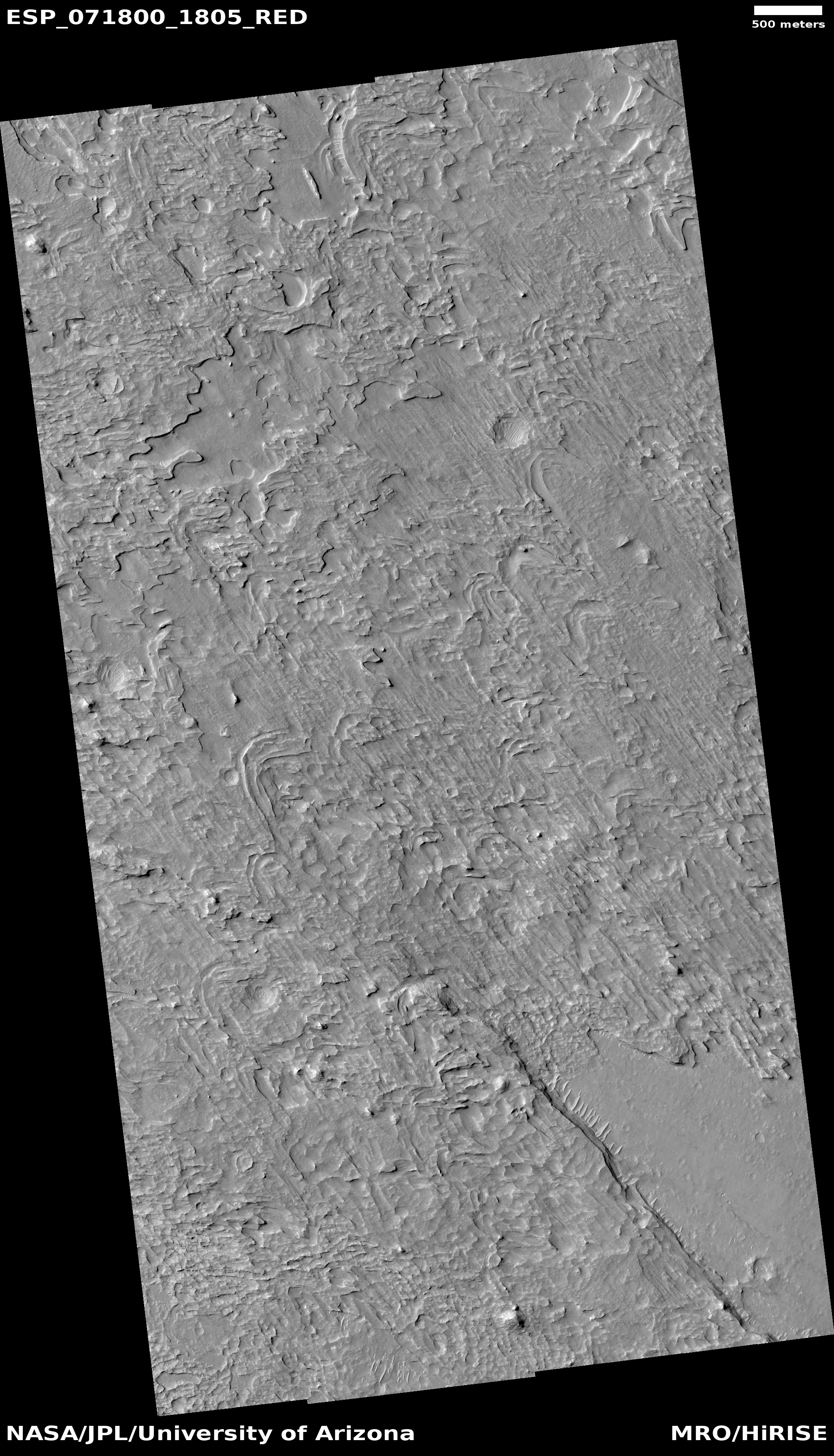
Cool image time! The picture to the right, rotated, cropped, reduced, and sharpened to post here, was taken on May 28, 2023 by the high resolution camera on Mars Reconnaissance Orbiter (MRO).

The picture label describes it as a “Low Shield Vent and Pit Northeast of Arsia Mons,” suggesting these depressions are volcanic in nature. We know the pit in the lower left is not an impact crater because it has no raised rim of ejecta. Instead, it looks like a collapsed sinkhole, formed when the ceiling above a void could no longer support its weight. Similar, the trench to the northeast is aligned with the downhill grade to the northeast, with its features suggesting a vent draining in that direction.

The ample dust inside the trench and pit suggest that it has been a very long time since this vent was active. Research suggests volcanic activity last occurred in this region from 10 to 300 million years ago, so that gives us a rough estimate of this vent’s age. Since then any dust that is blown into it will tend to become trapped there.
» Read more

0 comments

North Korea announces it will attempt orbital launch of spy satellite this week

North Korea has announced that it will make a third attempt to place a spy satellite into orbit this week, lifting off anytime between November 22nd and December 1st, with drop zones of the rocket’s lower stages over the Yellow and East China seas.

The North initially planed to make the third launch attempt in October following two botched launches — in August and May. But it did not press ahead with the plan last month, raising speculation that it might need more preparation time.

As expected, South Korea has protested. It is also likely gearing up to attempt to recover as much debris from the launch as possible, as it did successfully on the previous launches.

0 comments

Rocket engine startup Ursa Major enters solid-rocket motor business

Recognizing a desperate need of the military to ramp up production of solid rocket motors after much of its missile stockpile has been depleted by President Biden’s large gifts to the Ukraine, the rocket engine startup Ursa Major has now announced it is entering solid-rocket motor business.

Describing the solid rocket motor [SRM] market as “plagued by a broken supply chain and an overextended industrial base,” the Colorado startup today announced its plans to use its 3D printing techniques developed for liquid rocket engines to speed production of solid-fuel propulsion systems. Ursa Major has received several contracts from the Air Force Research Laboratory for its work on a new rocket engine for heavy space launch vehicles, as well as a hypersonic engine.

“Traditional SRM providers rely on production lines that are difficult to re-tool, expensive to ramp up, and dependent on a significant workforce to operate,” the company said in a press release touting its “new approach” to manufacturing, dubbed Lynx. “Ursa Major is offering a new way to scale production of SRMs,” Ursa Major CEO Joe Laurienti said in the press release. “Lynx meets the defense industry’s need for a faster, cheaper, scalable, and flexible SRM production process that results in better-performing solid rocket motors.”

The article also notes that at present the military is dependent on only two companies for new solid rockets, Northrop Grumman and Aerojet Rocketdyne (now L3Harris). The article also notes that it could take anywhere from five to eighteen years for these companies to replenish the depleted stocks.

The bottleneck however has brought several new players into the field, with the military eager to issue contracts to these new players. This decision by Ursa Major is thus a very good one.

1 comment

India now plans robotic lunar sample return mission

Following the successful landing of Vikram on the Moon, officials of India’s space agency ISRO have announced it is considering a much more ambitious follow-up, Chandrayaan-4, that will not only land on the lunar surface with a much larger rover, it will also dig up some samples and return them to Earth.

The spacecraft will travel to the moon, land, collect samples, and then connect to another module in space. The module will then return to Earth orbit. As the two modules approach Earth, they will separate, with one part returning to Earth and the other will keep orbiting the planet. Desai described the mission as ambitious, stating, “Hopefully, in the next five to seven years, we will meet the challenge of bringing samples from the moon.”

For return to Earth, Desai said that the mission would need two launch vehicles containing four modules (Transfer module, Lander Module, Ascender Module and Re-entry module). RM and TM would be Parked in the lunar orbit and two will go down from which Ascender Module will get separated from lander module and would collect the sample.

If India does this mission, while also completing its first manned mission during that time frame, it will place itself in direct competition with China and the U.S., and in fact will be getting close to matching both in capabilities.

1 comment

Musk: Next Starship/Superheavy test launch could happen in only 3 to 4 weeks

Superheavy & Starship, on their way
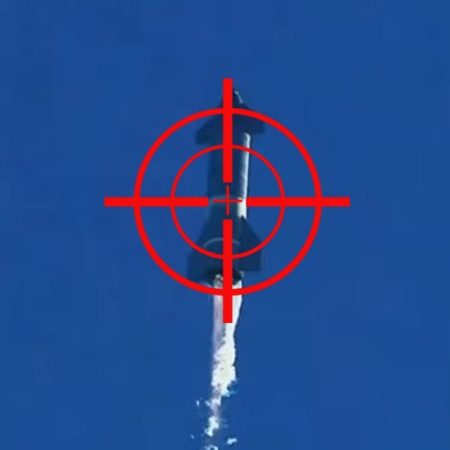
Superheavy & Starship, shortly after liftoff on November 18th

In a tweet on November 19, 2023, Elon Musk revealed that SpaceX could be ready for its next Starship/Superheavy test launch in only a matter of weeks, assuming federal red tape doesn’t get in the way.

Starship Flight 3 hardware should be ready to fly in 3 to 4 weeks. There are three ships in final production in the high bay (as can be seen from the highway).

In reporting on the second test launch on November 18, 2023, I noted that with prototypes ready to go SpaceX could probably launch within a month. Musk has now confirmed that assessment.

I also predicted that the FAA and Fish & Wildlife would not allow such a thing, and though they will determine there is no reason not to launch again, they will not issue a launch licence until the February/April time frame.

I want this prediction clearly on the record. It is important for the public to know the source of these delays.

It is also important for the press to apply pressure on these government paper pushers so they don’t feel encouraged in their intransigence. When I made a similar (and wholly accurate) prediction in May about the second launch, many in the press criticized that prediction (directly and indirectly) for daring to say bad things about government regulators. Now it appears that others in the press are no longer so naive, and are willing to note the slowness of the licensing process.

The regulators might not want to stand in the way and are simply following procedure. The press however mustn’t treat them gently. It must hold their feet to the fire to make sure they don’t take their time doing so.

Moreover, we have seen fewer headlines claiming falsely that the rocket “blew up” or “exploded.” Instead, a large percentage of the press now got it right and noted the mission’s success and that the destruction was not an accident but part of the self-destruct system.

After the last launch I lambasted the press for getting these facts wrong. Maybe holding their feet to the fire forced a reassessment and better reporting this time around.

21 comments

Musk: Starship/Superheavy launchpad essentially undamaged after launch

Superheavy launchpad post launch
Click for original image.

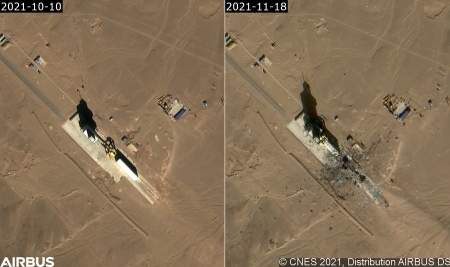
In a tweet posted only a short time ago, Elon Musk announced that the redesigned and rebuilt Boca Chica launchpad experienced little or no damage during the launch of Superheavy/Starship on November 18, 2023.

Just inspected the Starship launch pad and it is in great condition!

No refurbishment needed to the water-cooled steel plate for next launch.

Congrats to @Spacex team & contractors for engineering & building such a robust system so rapidly!

Musk included the picture to the right in the tweet, showing the essentially undamaged launchpad pad. A close looks suggests there was some damage to the rear pillar near the top, but overall it appears the next launch could occur here very quickly.

Musk of course is wrong about who he credits for redesigning and rebuilding this launchpad. The real credit must go to the FAA bureaucrats who led the investigation and must have clearly guided those SpaceX engineers and contractors. To expect private citizens to think for themselves and come up with such difficult engineering without supervision from government paper-pushers in Washington is unreasonable and unfair. Maybe the Biden Justice Department should consider another lawsuit against Musk, this time for spreading more disinformation!

Moreover, who cares that the launchpad deluge system worked exactly as planned? We must allow Fish & Wildlife to spend several months now to investigate this launch — as well as write a long report of many words — to make sure that deluge of water did not harm any of the wildlife that lives on this barrier island, which has a water table of essentially zero and is flooded regularly and repeatedly by storms over time.

Anyone who disagrees is clearly a bigoted racist who wants to harm little children!

11 comments

Webb: Needles scattered near the center of the Milky Way

Needles in space
Click for original image.

Scientists today released a new false-color infrared image taken by the Webb Space Telescope of a region about 300 light years from the center of the Milky Way, dubbed Sagittarius-C. That picture is to the right, cropped, reduced and sharpened to post here. The blue or cyan regions are ionized hydrogen clouds, and with this image were revealed to be much more extensive than expected. The orange blob near the center is a densely packed cluster of protostars, the starlight blocked by the cloud of material.

The most interesting feature however are the needle-like structures within that ionized hydrogen, oriented in all directions in a manner that looks completely random. Though such needles have been seen previously, the data here is far more detailed, and might eventually help astronomers figure out what the heck these features are and what caused them.

5 comments

SpaceX launches 22 Starlink satellites

The beat goes on: SpaceX early this morning launched another 22 Starlink satellites, its Falcon 9 rocket lifting off from Vandeberg in California.

The first stage completed its 15th flight, landing successfully on a drone ship in the Pacific.

The leaders in the 2023 launch race:

85 SpaceX
52 China
14 Russia
7 Rocket Lab
7 India

American private enterprise now leads China 97 to 52 in successful launches, and the entire world combined 97 to 81. SpaceX by itself is now leads the rest of the world (excluding American companies) 85 to 81.

2 comments

SpaceX successfully launches Superheavy and Starship

Superheavy & Starship, on their way
Note how all 33 Superheavy engines are firing.

SpaceX this morning successfully launched its Superheavy/Starship heavy lift rocket into its test orbit.

The test flight achieved far more than the first test in April. First, during the entire flight of Superheavy all 33 Raptor-2 engines fired normally. None cut out prematurely. Then at very risky hot fire stage separation — where the second stage (Starship) ignited prior to separation from Superheavy — the correct number of engines shut down, Starship’s engines fired, and Superheavy successfully separated and began its maneuvers for a soft splashdown in the Gulf of Mexico.

At that point mission controllers issued the self-destruct command to destroy Superheavy. Though it appeared that the stage was struggling to flip for its controlled return to Earth, it is also very likely that mission controllers wanted to test that flight termination system after its not perfect performance on the first test flight. Then, the self-destruct command did not activate the instant the command was given, being delayed by about 40 seconds. This time it appeared it worked as planned.
» Read more

71 comments

SpaceX launches 23 Starlink satellites

While everyone is focused on the Starship/Superheavy launch scheduled for tomorrow at 7 am (Central) at Boca Chica, SpaceX tonight launched another 23 Starlink satellites, its Falcon 9 rocket lifting off from Cape Canaveral.

The first stage successfully completed it eleventh flight, landing on a drone ship in the Atlantic.

The leaders in the 2023 launch race:

84 SpaceX
52 China
14 Russia
7 Rocket Lab
7 India

American private enterprise still leads China 96 to 52 in successful launches, and the entire world combined 96 to 81. SpaceX by itself is now leads the rest of the world (excluding American companies) 84 to 81.

6 comments

The southernmost extent of Mars’ youngest lava flood event

The southernmost edge of Mars' youngest lava event
Click for original image.

Cool image time! The picture to the right, rotated, cropped, reduced, and sharpened to post here, was taken on August 24, 2023 by the high resolution camera on Mars Reconnaissance Orbiter (MRO).

Labeled “flow margin in Elysium Planitia,” it shows the very edge of what scientists believe was the most recent large lava event on Mars, dubbed the Athabasca Valles, that is thought to have occurred only 600 million years ago. In only a matter of weeks the fast flowing lava covered a region about the size of Great Britain. What we see here is the southernmost edge of that flow, with the smooth terrain on the west an older lava flood plain, covered by the new flood lava from Athabasca on the east.

The polygon cracks likely indicate cracks that formed during the hardening process (like the polygon cracks in drying mud). Hot lava then pushed up from below to form the ridges. It is also possible the ridges are what scientists call “wrinkle ridges,” formed when material shrinks during the drying process.
» Read more

1 comment

Salt glaciers on Mercury?

From Figure A1 of paper
From Figure A1 of paper.

Based on a new analysis of data from the Messenger spacecrat that orbited Mercury from 2011 to 2015, scientists today posited the possibility that salt glaciers exist on Mercury and have reshaped its terrain in manner vaguely comparable to what Mars Reconnaissance Orbiter (MRO) has found on Mars.

You can read the paper here [pdf]. The image to the right, enhanced by the scientists to bring out the faint blue in the hollows, is remarkably reminiscent of the hollows and scallop terrain found in many places in the high Martian latitudes. From its conclusion:

Detecting widespread elemental volatile surface compositions, ubiquitous sublimation hollows, and extensive chaotic terrains has significantly reshaped our perception of Mercury’s geological past. These observations collectively point to the presence of volatile-rich strata spanning several kilometers in depth and likely formed before the [Late Heavy Bombardment] (∼3.8 billion years ago). This notion challenges the conventional view of a volatile-depleted Mercurian crust.

The morphologies within Mercury’s Raditladi basin bear a striking morphologic resemblance to glaciers on Earth and Mars, suggesting their origin from an impact-exposed [volatile-rich layer], likely containing halite. Our numerical simulations show that the unique rheological properties of halite, including the high thermal sensitivity of its viscosity, reinforce this hypothesis. These glacier-like features occur beyond the chaotic terrain boundaries, indicating a potentially global yet concealed, volatile-rich upper stratigraphy. We posit that the exposure of these volatile-rich materials, instigated by impact events, could have been instrumental in the formation and evolution of hollow features, signifying a complex geodynamic history of volatile migration and redistribution, essentially interconnecting some of the oldest and youngest stratigraphic materials on the planet.

The scientists do not have enough information as yet to determine if these glaciers are still active or not. Moreover, the theorized layer of volatile material near the surface remains unconfirmed, requiring in situ investigation to determine its existence with certainty. Like Mars, if it exists it likely only does so in the high latitudes.

0 comments
1 293 294 295 296 297 1,329