Starlink expands in the Ukraine, starts in Kazakhstan, but hits roadblock in Lebanon

Access to SpaceX’s Starlink internet constellation to customers worldwide continues to expand.

First. Kazakhstan announced that Starlink is now available in that country, beginning today.

Next, the Ukraine government announced it is beginning beta testing of SpaceX’s direct-to-phone Starlink capability, with the product to launch to its citizens later this year.

With Starlink’s Direct to Cell system, Ukrainians will be able to send SMS messages in remote or hard-to-reach areas—such as in the mountains, during severe weather, or blackouts—without the need for expensive satellite equipment. The only requirements: a standard 4G smartphone with a SIM or eSIM card, and a clear view of the sky.

These actions by both Kazakhstan and the Ukraine underlines the negative consequences of Russia’s invasion of the Ukraine. Its former Soviet provinces, now independent, have become much more willing to forge alliances and deals with western nations and companies, in order to better protect themselves from possible attack.

In Lebanon however things have not gone so well. SpaceX’s request to offer Starlink has met with opposition in that nation’s parliament.

Lebanon’s parliamentary Media and Communications Committee raised serious legal and procedural concerns over a proposed license for SpaceX’s Starlink satellite internet service. Committee chair MP Ibrahim Mousawi and rapporteur MP Yassine Yassine said discussions with the telecom minister and officials from regulatory and oversight bodies revealed “major constitutional and legal violations.” These include bypassing Parliament’s authority to grant natural resource concessions, ignoring public procurement laws, sidelining the Telecommunications Regulatory Authority, and failing to ensure data sovereignty.

The committee recommended against Starlink, demanding a new and expanded review of the proposal. I suspect these ministers are either upset because they didn’t get their own kickbacks in the deal, or are worried that giving Lebanese citizens Starlink — thus bypassing all government censorship — might threaten their hold on power.

6 comments

SpaceX launches 24 more Kuiper satellites for Amazon

SpaceX this morning successfully placed another 24 Kuiper satellites into orbit, its Falcon 9 rocket lifting off from Cape Canaveral in Florida.

The Falcon 9 first stage was new, completing its first flight by landing on a drone ship in the Atlantic. The two fairings completed their 5th and 28th flights respectively.

This was SpaceX’s second of three launches for Amazon, which now has 102 satellites in orbit. It needs to get another 1,498 in orbit by July 2026 in order to meet its licence requirements by the FCC. While ULA seems poised to begin regular launches for Amazon, having a contract for 46 launches (having so far completed two in 2025), the contracts for Blue Origin’s New Glenn (27 launches), and ArianeGroup’s Ariane-6 (18 launches) are more uncertain. Neither company has achieved any launches on their contracts, and it is not clear when either company, especially Blue Origin, will ever begin regular launches.

The leaders in the 2025 launch race:

98 SpaceX (with another Starlink launch scheduled for later today)
43 China
11 Rocket Lab
9 Russia

SpaceX now leads the rest of the world in successful launches, 98 to 74.

7 comments

Starlink now available in Israel

After a year of regulatory paperwork, the Israel government has finally allowed SpaceX to offer Starlink to customers in Israel proper, but not in the West Bank or Gaza.

The company received an operating license from the Communications Ministry last year, following lengthy negotiations and regulatory procedures, but its launch was delayed until now. The restriction on coverage in the West Bank and Gaza is likely due to security concerns over potential use by hostile actors.

Expect the usual leftist anti-Semites to accuse Israel of bigotry for excluding access to Palestinians, but until those Palestinians show some willingness to live with Israel in peace (something they so far show no signs in doing, especially in Gaza), this policy makes perfect sense.

20 comments

Endurance capsule splashes down safely, returning four astronauts from ISS

SpaceX’s Endurance Dragon capsule successfully splashed down off the coast of California this morning, returning four astronauts from ISS after a five month mission.

I have embedded the live stream below. As of posting the capsule was about to be lifted from the water and placed in its nest on the recovery ship.

Once again it is important to note that this recovery is being done entirely by a private company and its employees. Once Endurance undocked from ISS NASA had no part to play. It purchased the ride from SpaceX, and SpaceX is providing the service.
» Read more

6 comments

Azerbaijan officials hold cooperation talks with SpaceX

In connection with the visit of Azerbaijan’s president to the United States, he and other officials held a meeting with SpaceX vice president Stephanie Bednarek to discuss possible areas of cooperation. From Azerbaijan’s state-run press:

At the meeting, we noted Azerbaijan’s economic potential, strategic development directions, and favorable investment climate. We discussed prospects for cooperation with SpaceX, including partnership opportunities in the application of innovative and space technologies, artificial intelligence solutions, and knowledge and experience transfer.

In plain language, Azerbaijan is considering buying services from SpaceX. That it is doing so underlines once again the negative consequences of Putin’s invasion of the Ukraine. Azerbaijan now fears Russia, and is looking elsewhere for aid. It also senses Russia’s increasing weakness, economically, technologically, and militarily, making it more willing to forge alliances with others.

11 comments

Italy to fly experiments on first Starship flights to Mars

According to a tweet by SpaceX’s president and chief operating officer Gywnne Shotwell today, the Italian Space Agency (ASI) has signed an agreement to fly experiments on first Starship flights to Mars that will carrying customer payloads. She quoted a tweet by ASI’s president, Teodoro Valente:

ASI_Spazio and SpaceX have signed a first-of-its-kind agreement to carry Italian experiments on the first Starship flights to Mars with customers. The payloads will gather scientific data during the missions. Italy continues to lead in space exploration!

Little other information has yet been released, but expect more details in the coming days.

UPDATE: ASI’s press release on August 8th added this detail:

The payloads will include a plant growth experiment, a weather monitoring station and a radiation sensor. The goal is to collect scientific data in the approximately six-month interplanetary flight phase from Earth to Mars and then on the Martian surface.

Hat tip to reader Gary.

2 comments

Endeavour launched successfully, carrying four astronauts to ISS

SpaceX’s Endeavour Dragon capsule has been successfully placed in orbit carrying four astronauts to ISS, its Falcon 9 rocket lifting off from Kennedy in Florida.

This is Endeavour’s sixth flight. It will dock at ISS in the early hours tomorrow. The first stage completed third flight, landing back in Florida.

The leaders in the 2025 launch race:

96 SpaceX
41 China
10 Rocket Lab
9 Russia

SpaceX now leads the rest of the world in successful launches, 96 to 71.

1 comment

SpaceX launches 19 more Starlink satellites

Only a few hours after it scrubbed the launch of its Endeavour capsule carrying four astronauts to ISS because of weather at Kennedy in Florida, SpaceX proceeded to successfully launch 19 more Starlink satellites, its Falcon 9 rocket lifting off from Vandenberg in California.

The relatively low number of Starlink satellites on this launch appears related to the higher orbit in which they were placed. The first stage completed its 27th flight, landing on a drone ship in the Pacific. SpaceX now has four boosters that have flown more than 25 times, respectively 29, 27, 26, and 26.

The leaders in the 2025 launch race:

95 SpaceX
41 China
10 Rocket Lab
9 Russia

SpaceX now leads the rest of the world in successful launches, 95 to 71. Meanwhile, the manned Endeavour launch has now been rescheduled for tomorrow morning.

4 comments

The word that best describes our present NASA lunar program is “delusional.”

Artemis, a program based on fantasy

Increasingly it appears everyone in Congress, the White House, and NASA, as well as our bankrupt mainstream press, has become utterly divorced from reality in talking about NASA’s Artemis lunar program. The claims are always absurd and never deal with the hard facts on the ground. Instead, it is always “Americans are piorneers! We are great at building things! We are going to beat China to the Moon!”

An interview of interim NASA administration (and Transportation secretary) Sean Duffy yesterday on the Sean Hannity Show made all these delusions very clear. First Hannity introduced Duffy by stating with bald-faced ignorance that “NASA has a brand-new program. It is called Artemis that aims to get astronauts back on the Moon in the next couple of years.”

I emphasize “brand-new” because anyone who has done even two seconds of research on the web will know that Artemis has existed now for more than a decade. Hannity illustrates his incompetence right off the bat.

Duffy then proceeds to insist that the next Artemis mission, dubbed Artemis-2, will fly in April 2026 and send four astronauts around the Moon, followed by the Artemis-3 manned landing one year later.

Being an incompetent member of the propaganda press, Hannity of course accepts these claims without question. He fails to question Duffy about the serious issues with the Orion heat shield, which experienced extensive unexpected damage that is still not understood during its return on the first Artemis mission in 2022.

Nor does either Duffy or Hannity mention the fact that for Artemis to land humans on the Moon SpaceX’s Starship not only has to become operational for human passengers, it needs an in-orbit refueling capability that does not yet exist. I have full confidence that SpaceX will eventually succeed in achieving these benchmarks, but I also doubt it will be able to do it by mid-2027, as claimed by Duffy.

Duffy and Hannity however are not alone in living in this dream world. » Read more

36 comments

California Coastal Commission to reconsider SpaceX’s Vandenberg launch proposal

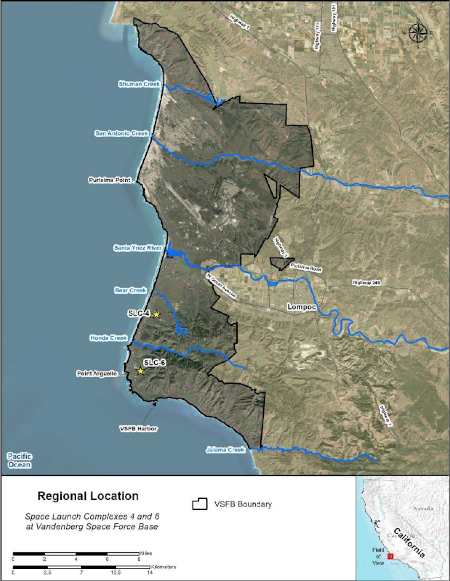
The California Coastal Commission has now scheduled a meeting on August 14, 2025 to reconsider SpaceX’s request to double its launch rate at Vandenberg Space Force Base from 50 to 100 launches per year.

Though it has no real authority over the base, and though the Space Force has indicated it has no objections to SpaceX’s proposal, the commission rejected that increase in a 6-4 vote in October 2024, but did so not because the commissioners thought it would harm California’s beaches, but because they did not like Elon Musk’s endorsement and campaigning for Donald Trump during the election campaign.

SpaceX has subsequently sued, with a judge ruling two weeks ago that the suit can go forward. Based on the statements made by commissioners in October, SpaceX has an excellent case, and will likely win in court.

It appears the commission is now acting to possibly stave off that suit. The article at the link also notes that the make-up of the commission has changed since that October meeting, with at least one of the commissioners who expressed the most hate against Elon Musk, Gretchen Newsom, is no longer a member.

At the same time, the hostility to Musk and SpaceX for environmental reasons appears to still exist within the commission. Either way, in the end SpaceX’s launch rate at Vandenberg is going to increase, since the military is agreeable to the change.

5 comments

Ontario cancels Starlink contract in retaliation to Trump’s tariffs

Cutting off your nose to spite your face: The Ontario government yesterday canceled a $100 million Starlink contract it had with SpaceX to provide internet service to remote areas, doing so in retaliation to Trump’s tariffs.

Ontario Premier Doug Ford threatened to cancel the contract in February if U.S. tariffs on Canadian goods were imposed. He killed the deal in March when U.S. President Donald Trump moved ahead with tariffs. “It’s done, it’s gone,” Ford said at the time. “We won’t award contracts to people who enable and encourage economic attacks on our province … and our country.”

…Ford’s cancellation of the deal came as part of a suite of measures in retaliation to Trump’s tariffs. He pulled American booze off the shelves of LCBO stores in March and has said the U.S. booze ban will be kept in place until Trump removes his tariffs on Canada. Ford also banned American companies from bidding on $30 billion worth of procurement contracts the province awards each year. He also banned U.S. companies from bidding on contracts related to his $200-billion infrastructure plan to build highways, tunnels, transit, hospitals, and jails.

It appears the province had to pay SpaceX a penalty for canceling the contract, but the amount has not been revealed. The cancellation also leaves those rural areas stranded, as the government presently has no alternative service to offer.

8 comments

Next Starship moves to launchpad for static fire testing

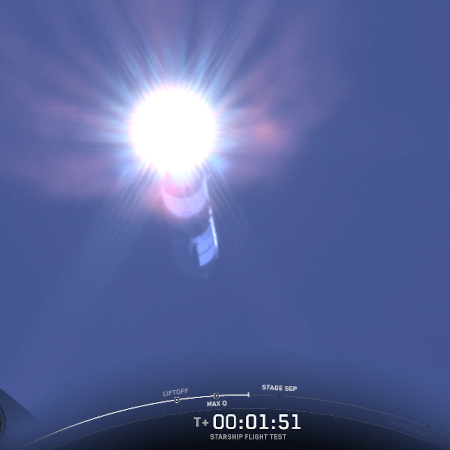
SpaceX has now finished work adapting the Boca Chica launchpad for Starship and has installed the next Starship prototype there for static fire testing prior to the tenth orbital test flight expected in the next few weeks.

The pad is normally configured for Superheavy. SpaceX engineers have quickly jury-rigged it to fit Starship to it for static fire tests because the normal Massey test stand was badly damaged in an explosion during static fire tests of the previous prototype in June.

With this setup, SpaceX is going to be able to static fire a ship on Pad 1 (A). SpaceX will likely do some quick pressure and leak checks; however, no tanking tests appear to be planned. SpaceX seems confident enough in this setup that crews are aiming for a static fire on Wednesday, July 30, and a second static fire on Thursday, July 31. Both of these days have testing closures set for 7 am – 7 pm CDT.

If these go as planned and there are no issues, which, considering how makeshift this setup is, would be a massive achievement. Once its engine testing is completed, SpaceX will roll Ship 37 back to Mega Bay 2 for final work and return the pad to launch configuration; this process could take approximately two weeks.

The company will then do its standard static fire tests of Superheavy, stack Starship on top, and be ready for launch, hopefully by mid- to late August.

This Starship is one of the last two version-2 Starships being prepped for test flights. After they have flown, the company will move to version-3, which hopefully will have a better flight success record than version-2.

1 comment

Another two launches by SpaceX and China

There were two more launches last night and today. First, SpaceX put another 24 Starlink satellites into orbit, its Falcon 9 rocket lifting off from Vandenberg in California. The first stage completed its 19th flight, landing on a drone ship in the Pacific.

Next, China today successfully launched another five satellites in its planned Guiwang (“king”) internet constellation of 13,000 satellites, its Long March 6 rocket lifting off from its Taiyuan spaceport in northern China. No word on where the rocket’s lower stages crashed inside China.

This launch brought the total number of operational satellites in orbit for this constellation to 39, all launched since December 2024. At this pace it will take many years for China to complete this constellation, though it likely can begin selling the service in China with an incomplete constellation. Its international licence requires it to launch 10% by 2029 and 50% by 2032.

The leaders in the 2025 launch race:

93 SpaceX
38 China
10 Rocket Lab
9 Russia

SpaceX now leads the rest of the world in successful launches, 93 to 67.

1 comment

Europe and SpaceX complete two launches late yesterday

Both Europe and SpaceX successfully completed launches in the early morning hours today.

First Arianespace, the European Space Agency’s (ESA) commercial arm, used Avio’s Vega-C rocket lifting off from French Guiana to put five satellites into orbit, including four high resolution Earth observation satellites and one climate satellite. This was only the third launch for Arianespace in 2025, two of which were of the Vega-C.

Next, SpaceX placed 28 Starlink satellites into orbit, its Falcon 9 rocket lifting off from Cape Canaveral. The first stage completed its 22nd flight, landing on a drone ship in the Atlantic.

The leaders in the 2025 launch race:

92 SpaceX
37 China
10 Rocket Lab
9 Russia

SpaceX now leads the rest of the world in successful launches, 92 to 66, with another Starlink launch scheduled for tonight.

0 comments

Starlink went down for almost 3 hours yesterday

In what is a rare event, SpaceX’s Starlink satellite constellation was out of service yesterday for about 2.5 hours “due to failure of key internal software services that operate the core network.”

Starlink experienced an outage Thursday afternoon that went on for 2.5 hours and took down at least tens of thousands of people’s satellite internet service. “Starlink is currently in a network outage and we are actively implementing a solution. We appreciate your patience, we’ll share an update once this issue is resolved,” Starlink posted on X at 1:05 p.m. PT/4:05 p.m. ET.

Though Starlink has yet to confirm that services are fully up and running again, Downdetector showed reports of issues had dropped to just 1,600 as of 4:30 p.m PT after they’d spiked to around 60,000 at about 1 p.m. PT

CNBC incorrectly tried to pin this internet outage to the start yesterday of T-Mobile’s new cellphone-to-Starlink text and emergency subscription, but that makes no sense, since the two use different Starlink satellites.

Since the constellation began offering customers its service several years ago the number of such global outages has been very rare. If anything, Starlink has been far more reliable than almost all comparable land line internet services.

3 comments

T-Mobile makes its Starlink capability available to everyone

T-Mobile officials yesterday announced that it is now offering its Starlink text and location cellphone capabilities available by subscription to all users, whether or not they are a T-Mobile customer.

On Wednesday, T-Mobile CEO Mike Sievert announced that the Starlink-powered service is officially out of beta, though it only supports text messaging and location-sharing for now. The new satellite coverage option is called “T-Satellite,” and it’s currently available as a standalone subscription. It’s being offered at $10 per month for a “limited time,” before increasing to $15 per month. It also comes included for customers on the carrier’s $100 per month Experience Beyond or older Go5G plans.

Your device will automatically connect to T-Satellite if you’re in an area with no cellular coverage. As long as there isn’t a heavy amount of cloud coverage or trees blocking your view of the sky, you should be able to send and receive text messages, including to 911, as well as share a link that temporarily tracks your location.

At present, the service is only available in the United States, though it will expand as SpaceX launches more cellphone-to-satellite Starlink satellites. T-Mobile also expects to add voice capability as well.

Nor is this the only option. AT&T is partnering with the satellite company AST SpaceMobile to offer similar services.

0 comments

Mexico’s president says it will investigate SpaceX for doing salvage operations off its coast

Mexico to SpaceX:
Mexico to SpaceX: “Nice business you got here. Shame
if something happened to it.”

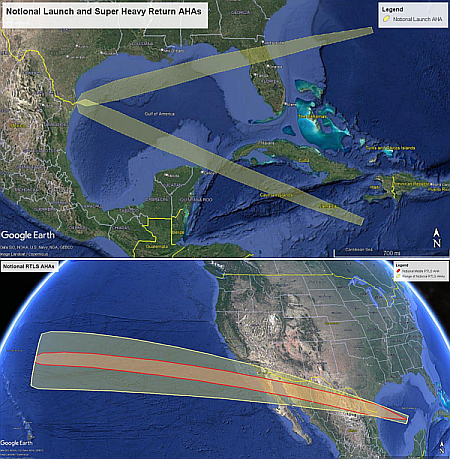
You can’t win with these people: First Mexico’s president Claudia Sheinbaum complained loudly about the debris that landed or washed up on its beaches after several of SpaceX’s Starship/Superheavy test launches, demanding an investigation followed by sanctions against the company.

Now Sheinbaum is complaining and demanding a new investigation about SpaceX’s effort the last two weeks to salvage and remove that debris from the ocean off its coast.

During a passage of her daily press conference, Sheinbaum said the agencies are analyzing whether the company has to be sanctioned after its unit tasked with clearing debris from the Starship launch, located in the Gulf of Mexico, worked without proper authorization. “We are investigating but the Environment, Navy, Digital Transformation, Government and Foreign Relations secretariats are conducting their research. The study is practically done,” Sheinbaum said.

Navy Secretary Raymundo Pedro Morales Angeles said the company hired by SpaceX to retrieve debris from its Starship rocket was allowed to enter the country but didn’t fulfill the requirements to work and ended up leaving the country.

If this behavior doesn’t prove Sheinbaum’s lust for power and control, nothing will. She doesn’t really care about Mexico’s beaches or environment. If she did, she would celebrate SpaceX’s salvage operations. What she really doesn’t like is that someone is doing something without her permission. She is the boss, and SpaceX better remember that!

22 comments

Study identifies range of interference produced by Starlink satellites

In analyzing about 76 million radio images produced by the new Square Kilometer Array (SKA) in Australia scientists have found within them signals produced by SpaceX’s Starlink satellites.

PhD candidate and study lead Dylan Grigg said the team detected more than 112,000 radio emissions from 1806 Starlink satellites, making it the most comprehensive catalogue of satellite radio emissions at low frequencies to date. “Starlink is the most immediate and frequent source of potential interference for radio astronomy: it launched 477 satellites during this study’s four-month data collection period alone,” Mr Grigg said. “In some datasets, we found up to 30 per cent of our images showed interference from a Starlink satellite.”

Mr Grigg said the issue wasn’t just the number of satellites, but the strength of the signals and the frequencies they were visible at. “Some satellites were detected emitting in bands where no signals are supposed to be present at all, such as the 703 satellites we identified at 150.8 MHz, which is meant to be protected for radio astronomy,” Mr Grigg said. “Because they may come from components like onboard electronics and they’re not part of an intentional signal, astronomers can’t easily predict them or filter them out.”

The researchers were careful to note that SpaceX has been following all international regulations, and that these signals are not a violation of any law or regulation. Further, they emphasized that “Discussions we have had with SpaceX on the topic have been constructive.”

Because many other such constellations are now being launched — with several from China that normally does not negotiate these issues like SpaceX — the scientists want new international regulations imposed to protect their work.

More and more it seems astronomers should simply move their operations into space or the Moon, where such issues will not exist. Getting above the atmosphere and away from our modern technological society provides so many benefits for research the move should be a no-brainer. That it is now also much cheaper to do it (thanks to SpaceX) makes the move even more practical.

For some reason however the idea seems too difficult for many astronomers to fathom.

1 comment
1 12 13 14 15 16 141