Supreme Court to SEC: Use of in-house administrative law judges unconstitutional

SEC: no longer above the law

The Supreme Court today ruled 6-3 that the SEC has violated the Constitution with its use of in-house administrative law judges to rule on its various securities fraud cases.

The agency, like other regulators, brings some enforcement actions in internal tribunals rather than in federal courts. The S.E.C.โ€™s practice, Chief Justice John G. Roberts Jr. wrote for a six-justice majority in a decision divided along ideological lines, violated the right to a jury trial. โ€œA defendant facing a fraud suit has the right to be tried by a jury of his peers before a neutral adjudicator,โ€ the chief justice wrote.

This ruling against the use of administrative law judges has a direct bearing on SpaceX’s own lawsuit [pdf] against the National Labor Relations Board (NLRB). In January the NLRB filed a complaint against SpaceX, accusing it of firing eight employees illegally for writing a public letter criticizing the company in 2022. Rather than fight that complaint directly, SpaceX’s response was to file a lawsuit challenging the very legal structure of the NLRB itself, including its use of administrative law judges.
» Read more

13 comments

SpaceX now valued at $210 billion

As part of another sale of insider shares to raise more private investment capital, SpaceX has now been valued at $210 billion.

SpaceX will sell shares at $112 each in the tender offer, the Bloomberg report said, with the newer sales valuing the company much higher than a $180 billion valuation seen during a tender offer in December.

The report does not say how many shares SpaceX hopes to sell, or how much total new capital it hopes to obtain. Previous such sales have raised a total of $12 billion, money the company is using to develop both its Starlink constellation and its Starship/Superheavy rocket.

0 comments

NASA awards SpaceX $843 million contract to de-orbit ISS

NASA today announced that it has awarded SpaceX a $843 million contract to build a de-orbit spacecraft that can dock to ISS and fire its thrusters so that the station will be safely de-orbited when it is retired in 2030, burning up over the ocean.

While the company will develop the deorbit spacecraft, NASA will take ownership after development and operate it throughout its mission. Along with the space station, it is expected to destructively breakup as part of the re-entry process.

The announcement provided no other details. It is not clear whether the thrusters on a Dragon capsule would be sufficient for this task. Most likely not, which means SpaceX will have to develop something else to do the job. Maybe its bid proposed using a Starship for the task.

It is also not clear whether any modules on ISS will be salvaged for other uses before de-orbit. The modules that the commercial company Axiom plans to attach to ISS in the next year or so are supposed to undock to form its own independent space station sometime later this decade. Will Russia’s modules do the same? And will any other modules?

2 comments

SpaceX launches 23 Starlink satellites, using a first stage for the 22nd time

SpaceX early this morning launched another 23 Starlink satellites, its Falcon 9 rocket lifting off from Cape Canaveral and using a first stage on its record-setting 22nd flight.

That stage successfully landed on a drone ship in the Atlantic. The flight was so routinely boring for the launch crew that the flight director felt no need to even bother having anyone do a T-10 second countdown at launch.

The leaders in the 2024 launch race:

68 SpaceX
28 China
8 Russia
8 Rocket Lab

American private enterprise now leads the world combined in successful launches, 79 to 42, while SpaceX by itself still leads the entire world, including other American companies, 68 to 53.

0 comments

Blue Origin to FAA: Limit future SpaceX Starship launches at Cape Canaveral

Blue Origin has once again decided to use lawfare against SpaceX rather than actually build rockets that are competitive. As part of the process by the FAA to do a new Environmental Impact Statement on SpaceX’s plans for Starship/Superheavy launches at Cape Canaveral, Blue Origin last week submitted its own comment asking the FAA to cap the launches of its competitor, citing environment concerns.

The company recommends the following mitigation method for SpaceXโ€™s Starship launches, prior to the company being issued a Vehicle Operator License:

โ€œCapping the rate of Ss-SH launch, landing, and other operations, including but not limited to test firings, transport operations, and fueling, to a number that has a minimal impact on the local environment, locally operating personnel, and the local community, in consideration of all risks and impacts, including but not limited to anomaly risks, air toxin and hazardous materials dispersion, road closures, and heat and noise generation.โ€

Along with requesting a max number of Starship launches at the site, Blue Origin argues that the government increase launch infrastructure that opens other launchpads to nearby lessees when roads are forced to be closed for SpaceX launches. The filing also notes that SpaceX has already received environmental testing at its Starbase site in Boca Chica, Texas.

You can read Blue Origin’s full comment here [pdf]. Essentially, Blue Origin is attempting to use this new impact statement to have the federal government damage or destroy its competition.

Musk’s response was a two word tweet: “Sue Origin.”

It is very clear that Jeff Bezos’s company is poorly focused. In the last decade it has built almost nothing, while spending a lot of time filing lawsuits against its competition. This action is simply another example.

Worse, Blue Origin’s comment will provide ammunition for the continuing Biden administration lawfare against Musk and SpaceX, making it difficult for the FAA to approve the impact statement as requested by SpaceX. If so, the development and operational use of Starship/Superheavy will be seriously threatened.

19 comments

Collins reportedly in the process of canceling its NASA spacesuit contract

As if NASA didn’t have enough spacesuit problems, with a ISS spacewalk this week canceled because one of the NASA-built suits on the station began leaking water again, Collins Aerospace, one of the two companies that won contracts to build new spacesuits, is now in negotiations to end that contract.

But Collins’ role in the program has been bumpy and development has fallen behind schedule, and the company has been in talks with NASA officials on how to wind down its role in the program, the two people said. “After a thorough evaluation, Collins Aerospace and NASA mutually agreed to descope Exploration Extravehicular Activity Services (xEVAS) task orders,” a Collins spokeswoman said in a statement, referring to the spacesuit contract.

If this story is confirmed, it means at present only Axiom is building new spacesuits that can either be used on ISS or on future Artemis missions to the Moon and Gateway. Whether NASA will put out the Collins contract for bid again is unknown. In its original cargo capsule contracts early in the 2010s, one company failed to raise sufficient funds to build its capsule, so NASA cancelled it and awarded Orbital Sciences and its Antares rocket and Cygnus capsule the deal.

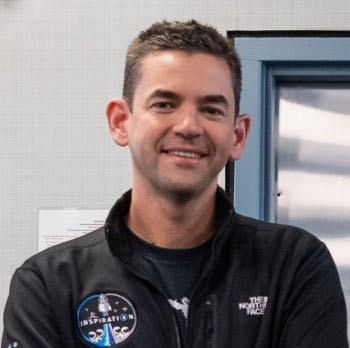
If the contract is put out for new bidding, SpaceX would be in a very strong position to win, as its own internally financed spacewalk spacesuits are about to get their first flight test on Jared Isaacman’s Polaris Dawn mission on the Resilience Dragon capsule later this summer.

The failure of Collins here is disturbing, and might be an indicator of an overall loss in American engineering capabilities. Once a challenge like this would have posed no problem for any American aerospace company. Now such tasks are increasingly difficult and unachievable.

5 comments

SpaceX’s Falcon Heavy launches NOAA weather satellite

SpaceX’s Falcon Heavy rocket today successfully launched a NOAA weather satellite, completing its first flight in 2024 and its tenth flight overall.

The two side boosters completed their first flight, with both landing back at Cape Canaveral. The core stage was allowed to fall into the ocean.

The leaders in the 2024 launch race:

67 SpaceX
28 China
8 Russia
8 Rocket Lab

American private enterprise now leads the world combined in successful launches, 78 to 42, while SpaceX by itself still leads the entire world, including other American companies, 67 to 53.

7 comments

SpaceX completes two launches today, from opposite coasts

The bunny marches on! SpaceX successfully completed two launches today.

First, its Falcon 9 rocket launched 22 Starlink satellites from Cape Canaveral in Florida. This was the launch that had been delayed several times by weather, and then by a tecnical launch abort at T-0. After several days of review, it lifted in the morning today with no problems, the first stage completing its eleventh flight, landing on a drone ship in the Atlantic.

Then, about ten hours later a Falcon 9 rocket lifted off in the evening Vandenberg in California, putting 20 Starlink satellites into orbit, 13 of which are said to be designed for direct cell-to-satellite capabilities. This first stage also completed its eleventh flight, landing on a drone ship in the Pacific.

This post is a bit late because we had a five hour power outage in my neighborhood tonight, caused apparently when someone drove into a utility pole and knocked it over.

The leaders in the 2024 launch race:

66 SpaceX
28 China
8 Russia
8 Rocket Lab

American private enterprise now leads the world combined in successful launches, 77 to 42, while SpaceX by itself still leads the entire world, including other American companies, 66 to 53.

5 comments

SpaceX announces a mini-version of Starlink designed for backpackers

SpaceX today unveiled what it calls Starlink Mini, a smaller version of the Starlink antenna that can fit inside a backpack.

Early Starlink customers were invited to purchase the Starlink Mini kit for $599, according to an invitation sent to customers and viewed by TechCrunch. Thatโ€™s $100 more than the standard Starlink kit. They were also given the option to bundle Mini Roam service with their existing service plan for an additional $30 per month, though the data is capped at 50 gigabytes per month.

That would mean a Starlink residential customer on the standard service plan would spent $150 month. SpaceX aims to reduce the price of the kit, it said in the invitation. As of now, there is no stand-alone Mini Roam plan.

The unit weighs only 2.5 pounds, with the first deliveries arriving in July. It is designed specifically for travelers who want a reliable internet connection wherever they go.

4 comments

SpaceX launches commercial geosynchronous satellite for SES

SpaceX today successfully launched a commercial geosynchronous satellite for the Luxembourg company SES, its Falcon 9 lifting off from Cape Canaveral.

The first stage completed its ninth flight, landing successfully on a drone ship in the Atlantic.

The leaders in the 2024 launch race:

64 SpaceX
27 China
8 Russia
8 Rocket Lab

American private enterprise now leads the world combined in successful launches, 75 to 41, while SpaceX by itself still leads the entire world, including other American companies, 64 to 52.

0 comments

Update on SpaceX activities leading to the next Superheavy/Starship orbital test flight

Link here. Lots happening, including fueling and static fire tests of Starship prototype #26 (which will not fly) and major changes on Starship prototype #30, which is slated to make that fifth test flight:

Ship 30 continues to receive upgrades, preparing it for Flight Five. Now, with most of the older tiles removed [18,000 total], new similar-sized tiles are being attached to Ship 30. These tiles could potentially have a different formula, which would make them more resistant to heat while holding a similar size.

Also, an ablative pyron layer is being added to the hot spots where Ship 30 is most likely infiltrated by plasma during entry. Pyron is used in the Falcon 9โ€™s engine bay and is a material that SpaceX knows and trusts.

SpaceX has said it is targeting July for the flight, and the FAA has said the company’s launch license will allow it to launch whenever it is ready, with no FAA red tape to stand in the way.

4 comments

SpaceX launches 20 Starlink satellites

After a ten day pause in launches, which included one launch abort at T-0, SpaceX yesterday successfully launched 20 Starlink satellites, its Falcon 9 rocket lifting off from Vandenberg in California.

The pause is noteworthy because it is possibly SpaceX’s longest pause in launches this year (I haven’t gone back and checked). Consider this fact: A ten day pause between launches would have once been considered a fast launch pace. Now it seems like something is wrong.

The rocket’s first stage completed its fifth flight, landing on a drone ship in the Pacific.

The leaders in the 2024 launch race:

63 SpaceX (with another launch scheduled for later today)
27 China
8 Russia
7 Rocket Lab

American private enterprise now leads the world combined in successful launches, 73 to 41, while SpaceX by itself leads the entire world, including other American companies, 63 to 51.

2 comments

Space Force names SpaceX, ULA, and Blue Origin as its launch providers for the next five years

As part of the military’s program for issuing launch contracts, the Space Force yesterday announced that it has chosen SpaceX, ULA, and Blue Origin as its launch providers, allowing them to bid on $5.6 billion worth of planned launched over the next five years.

The NSSL Phase 3 program was structured into two โ€œlanes.โ€ Lane 1 is for less demanding launches to low Earth orbit, while Lane 2 is reserved for heavy lift rockets capable of delivering payloads to nine reference orbits, including some of the most demanding national security missions.

The selection of Blue Origin, SpaceX, and ULA for Lane 1 contracts confirms that no other launch providers met the criteria. Seven bids were submitted, according to the DoD announcement.

The Space Force apparently rejected the other four unnamed companies because they “are still maturing their launch capabilities.” It will allow them to re-submit applications next year, and could approve others for bidding at that time, which is a major change from past policy. Previously the military would name approved companies, but not reconsider others for years, a policy that limited its options and reduced competition. Now it appears it will be doing so frequently, possibly every year, in order to regularly increase the number of companies that can bid on military contracts.

This change is excellent news for the American launch industry, as it means the Pentagon has finally ended its long standing launch policy that played favorites.

4 comments

A new lawsuit filed against Elon Musk by former SpaceX employees

Elon Musk, a target for destruction by the left
Elon Musk, a target for destruction

The lawfare won’t stop until morale improves! A new lawsuit has been filed against Elon Musk by eight former SpaceX employees, who now accuse him of sexually harassing them by his sometimes pointed tweets on X, calling those tweets “juvenile, grotesque sexual banter.”

The suit also says Musk’s tweets “had the wholly foreseeable and intentional result of encouraging other employees to engage in similar conduct.”

At SpaceXโ€™s Hawthorne offices, the suit claims, company meetings and employees mimicked Muskโ€™s humor. At meetings, the lawsuit alleges, senior engineers called mechanical parts โ€œchodesโ€ and โ€œschlongs.โ€ A camera that was placed on the bottom of a second-stage Falcon rocket was referred to as the โ€œUpskirt Camera,โ€ and a structure used by astronauts to transfer from SpaceXโ€™s Dragon spacecraft to the International Space Station was called the โ€œFun Tunnel,โ€ a euphemism for anal sex.

Read the whole article. The complaints are quite hilarious. These employees need to get a life. This is all silly stuff, hardly worth even two nanoseconds of concern.

Unfortunately, these anti-Musk employees do have a life, and it is a very sad one, consumed wholly with destroying Musk, not accomplishing anything worthwhile on their own. These eight former employees are the same ones who were fired after they published an internal letter in SpaceX calling for others in the company to denounce Musk for his tweets. Following their firing they also instigated a National Labor Relations Board (NLRB) suit against Musk, which is presently suspended because SpaceX is claiming the NLRB’s very existence is unconstitutional, and no further action on the complaint will occur until the courts decide on that claim.

This new lawsuit is simply another example of new harassment of Musk by these former employees.

6 comments

FAA announces schedule for new EIS public meetings on SpaceX’s Starship/Superheavy operations at Cape Canaveral

FAA has now announced the schedule of public meetings in connection with the new environmental impact statement (EIS) it is doing for SpaceX’s proposed Starship/Superheavy operations at Cape Canaveral.

On June 12 and 13, the Federal Aviation Administration (FAA) will host a series of public scoping meetings to inform the public and answer questions about SpaceXโ€™s proposal to launch Starship from Launch Complex 39A (LC-39A). There will also be a virtual meeting on June 17 for those unable to attend in person.

…Among those attending the public hearings will be representative of the Department of the Air Force, the U.S. Space Force, the U.S. Coast Guard, U.S. Fish and Wildlife Service, the Merritt Island National Wildlife Refuge, Canaveral National Seashore and SpaceX.

FAA officials claim this new EIS is required, after doing one only five years ago, because of major changes in SpaceX’s design of Superheavy. For example, it originally planned to land the rocket on a drone ship. Now it wants to catch it with the arms on the launch tower.

The FAA’s argument for this new EIS might sound plausible at first glance, but these regulations were never intended to require new environmental statements every time a project underwent changes. The goal was to make sure the environment would not be impacted by the work, and the first 2019 EIS achieved that. None of the changes SpaceX is proposing change significantly its impact on the local environment.

Moreover, the FAA has three-quarters of a century of empirical data at Cape Canaveral proving that spaceports help the local environment, not hurt it. We know without doubt that none of SpaceX’s launch plans will do harm. The FAA should get out of the way.

Instead, it is sticking its nose into everything. This new EIS is merely mission creep, government bureaucrats both covering their backsides while creating new work that increases their power and justifies bigger budgets for their existence.

0 comments

Review of 4th Superheavy/Starship flight; FAA clears SpaceX for next flight

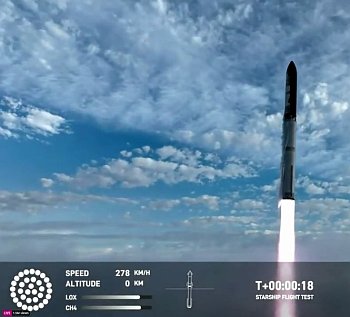
Link here. The article provides a detailed step-by-step review of everything that happened on the fourth Superheavy/Starship orbital test flight on June 6, 2024, as well as describing the changes being applied to Starship and Superheavy due to that flight.

However, the article also included this announcement from the FAA, stating that it will not do its own mishap investigation on that flight.

The FAA assessed the operations of the SpaceX Starship Flight 4 mission. All flight events for both Starship and Super Heavy appear to have occurred within the scope of planned and authorized activities.

While this decision means SpaceX can go ahead with the fifth test launch as soon as it is ready — no longer delayed while it waits for the FAA to retype SpaceX’s investigation and then approve it — it is unclear whether this FAA decision will allow SpaceX to attempt a tower landing of Superheavy, with the tower’s arms catching the rocket.

If the FAA has not yet approved a tower landing, I suspect SpaceX will forgo that attempt on the next launch in order to get it off the ground as soon as possible, even as it pushes the FAA for such an approval for a subsequent launch.

5 comments

A new Chicken Little report: The mega satellite constellations are going to destroy the ozone layer!

The American Geophysical Union, where science is no longer practiced
The American Geophysical Union, where
science is no longer practiced

We’re all gonna die! According to a new paper touted today by the PR department of the American Geophysical Union (AGU), a new study has concluded — based on computer modeling — that the many giant satellite constellations totaling tens of thousands of satellites pose a risk to the ozone layer because the aluminium used in their structures that gets vaporized upon re-entry will interact with the ozone layer and destroy it.

You can read the paper here. From the abstract:

This paper investigates the oxidation process of the satellite’s aluminum content during atmospheric reentry utilizing atomic-scale molecular dynamics simulations. We find that the population of reentering satellites in 2022 caused a 29.5% increase of aluminum in the atmosphere above the natural level, resulting in around 17 metric tons of aluminum oxides injected into the mesosphere. The byproducts generated by the reentry of satellites in a future scenario where mega-constellations come to fruition can reach over 360 metric tons per year. As aluminum oxide nanoparticles may remain in the atmosphere for decades, they can cause significant ozone depletion.

The uncertainties and biases here are hard to count. First, it is a computer model (“Garbage in, garbage out”). Second, the simulations make many assumptions, most of which cannot be confirmed, or are simply absurd. For example, the model is based on a single “typcial, small satellite” coming from a specific orbit and elevation when we know these satellites will have many variations in size, make-up, and orbits. Third, the scientists admit they use “a worst-case scenario” for determining what would happen when the satellite re-enters the atmosphere.

Finally, and most damning, the whole premise of this threat is based on a somewhat implausive chain of chemical actions.
» Read more

16 comments

SpaceX retrieves its Dragon debris that fell in Canada in February

SpaceX yesterday sent a crew and a U-Haul truck to five different farms in Saskatchewan, Canada, to retrieve eight pieces of debris that came from the service module trunk of a Dragon cargo capsule when the trunk was de-orbited to burn up in the atmosphere in February.

I am certain SpaceX engineers want to find out why this debris survived its fall through the atmosphere, so as to better predict what will happen on future de-orbits. If they determine that more of Dragon’s service module survives re-entry than previously predicted, it will require a rethinking on where such de-orbits are planned, making sure they always occur over the ocean.

It also appears that an academic who doesn’t know much about space engineering showed up during this retrieval to talk to the press and attack SpaceX.

Samantha Lawler, a University of Regina astronomy professor, was at the farm when SpaceX employees arrived on Tuesday. She said SpaceX needs to be transparent about how its operations are affecting the atmosphere, and how incidents like this are dealt with.

Lawler was quoted more fully (and more embarrassingly) in this other news report:

“SpaceX has over 6,000 Starlink satellites in orbit that they claim will burn up completely when they re-enter. That comes to 23 re-entries per-day when they are at full capacity. If those re-entries are all making it to the ground, dropping hundred pound pieces of garbage, that will kill lots of people,โ€ Lawler explained.

To claim that any Starlink satellites are threat to hit the ground proves Lawler knowns nothing about space engineering and is acting merely as a anti-SpaceX “Karen” who wants to harass the company. Starlink satellites are too small to pose a threat. Moreover, SpaceX from day one has acted responsibly to de-orbit them under a controlled manner.

Nonetheless, this incident in Canada suggests that more material from larger orbiting objects can reach the ground, and requires a rethinking as to where to de-orbit them.

3 comments

Pentagon wants to buy from SpaceX its own 100-satellite Starshield constellation

The Pentagon is so impressed with its experience using SpaceX’s Starlink system as well as its military-hardened version dubbed Starshield that it is negotiating the purchase from SpaceX of its own 100-satellite Starshield constellation.

Col. Eric Felt, director of space architecture at the office of the assistant secretary of the Air Force for space acquisition and integration, said the plan is to acquire a constellation of Starshield satellites by 2029, contingent upon receiving the necessary funding appropriations from Congress.

Speaking at SAE Media Groupโ€™s Milsatcom USA conference on June 10, Felt noted that the military has been an avid consumer of SpaceXโ€™s commercial Starlink services, but also wants to take advantage of the companyโ€™s dedicated Starshield product line and procure a government-owned constellation. In a briefing slide presented at the conference, titled โ€œSatcom 2029,โ€ Felt showed the DoDโ€™s notional future satcom architecture including more than 100 Starshield satellites.

If approved for funding from Congress, this Starshield constellation would be used in conjunction with other military communciations satellites, which could also include satellites provided by other satellite companies such as Amazon and its as-yet unlaunched Kuiper constellation. The main advantage for such a system is redundancy. It is very difficult for an enemy to take the system down, since it uses so many small satellites. It is also cheaper to maintain and upgrade.

6 comments

SpaceX completes two Starlink launches hours apart

SpaceX last night completed two Starlink launches hours apart from opposite coasts. First its Falcon 9 rocket took 23 Starlink satellites into orbit, lifting off from Cape Canaveral. The first stage completed its 16th flight, landing on a drone ship in the Atlantic.

Then, a Falcon 9 rocket lifted off from Vandenberg carried 20 Starlink satellites into orbit, its first stage completing its 21st flight (tying the record), landing safely on a drone ship in the Pacific.

The leaders in the 2024 launch race:

62 SpaceX
27 China
8 Russia
7 Rocket Lab

American private enterprise now leads the world combined in successful launches, 72 to 41, while SpaceX by itself leads the entire world, including other American companies, 62 to 51.

10 comments
1 32 33 34 35 36 142