Ursa Major test flies a new liquid-fueled missile engine for Air Force
The rocket engine startup Ursa Major last week announced it had successfully completed for the Air Force a test missile launch of its new Draper liquid-fueled rocket engine.
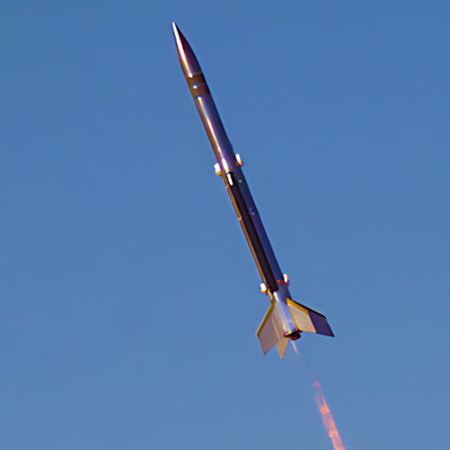
As shown on the right, the Air Force’s Affordable Rapid Missile Demonstrator (ARMD) suborbital rocket was used to fly the engine. More information here.
On January 27, 2026, AFRL and Ursa Major launched the Draper liquid rocket engine on a demonstrator flight. While many details remain classified, the company says the test vehicle reached supersonic speeds during its flight. The test marked a transition from ground-based validation to in-flight evaluation, allowing engineers to study propellant stability, engine throttling performance, and how the system behaves under real flight conditions.
The Draper engine is designed to address key limitations of current hypersonic systems by making them cheaper, more scalable, and easier to operate. It runs on hydrogen peroxide and kerosene, fuels that are safer to store and handle compared to traditional alternatives.
The War Department’s hypersonic testing program has certainly heated up since the military switched to the capitalism model in the past five years. Beforehand, when the military tried to do its own testing, it took it years to get little done, while spending a fortune. Now it is flying suborbital rocket tests with Rocket Lab, Stratolaunch, and Firefly. It is testing new engines on flights such as Ursa’s above. And it testing hypersonic avionics on Varda’s orbiting capsules upon their return to Earth. Based on this commercial activity, it appears the U.S. military might get some real hypersonic capabilities in the very near future.

On Christmas Eve 1968 three Americans became the first humans to visit another world. What they did to celebrate was unexpected and profound, and will be remembered throughout all human history. Genesis: the Story of Apollo 8, Robert Zimmerman's classic history of humanity's first journey to another world, tells that story, and it is now available as both an ebook and an audiobook, both with a foreword by Valerie Anders and a new introduction by Robert Zimmerman.
The print edition can be purchased at Amazon or from any other book seller. If you want an autographed copy the price is $60 for the hardback and $45 for the paperback, plus $8 shipping for each. Go here for purchasing details. The ebook is available everywhere for $5.99 (before discount) at amazon, or direct from my ebook publisher, ebookit. If you buy it from ebookit you don't support the big tech companies and the author gets a bigger cut much sooner.
The audiobook is also available at all these vendors, and is also free with a 30-day trial membership to Audible.
"Not simply about one mission, [Genesis] is also the history of America's quest for the moon... Zimmerman has done a masterful job of tying disparate events together into a solid account of one of America's greatest human triumphs."--San Antonio Express-News
The rocket engine startup Ursa Major last week announced it had successfully completed for the Air Force a test missile launch of its new Draper liquid-fueled rocket engine.
As shown on the right, the Air Force’s Affordable Rapid Missile Demonstrator (ARMD) suborbital rocket was used to fly the engine. More information here.
On January 27, 2026, AFRL and Ursa Major launched the Draper liquid rocket engine on a demonstrator flight. While many details remain classified, the company says the test vehicle reached supersonic speeds during its flight. The test marked a transition from ground-based validation to in-flight evaluation, allowing engineers to study propellant stability, engine throttling performance, and how the system behaves under real flight conditions.
The Draper engine is designed to address key limitations of current hypersonic systems by making them cheaper, more scalable, and easier to operate. It runs on hydrogen peroxide and kerosene, fuels that are safer to store and handle compared to traditional alternatives.
The War Department’s hypersonic testing program has certainly heated up since the military switched to the capitalism model in the past five years. Beforehand, when the military tried to do its own testing, it took it years to get little done, while spending a fortune. Now it is flying suborbital rocket tests with Rocket Lab, Stratolaunch, and Firefly. It is testing new engines on flights such as Ursa’s above. And it testing hypersonic avionics on Varda’s orbiting capsules upon their return to Earth. Based on this commercial activity, it appears the U.S. military might get some real hypersonic capabilities in the very near future.
On Christmas Eve 1968 three Americans became the first humans to visit another world. What they did to celebrate was unexpected and profound, and will be remembered throughout all human history. Genesis: the Story of Apollo 8, Robert Zimmerman's classic history of humanity's first journey to another world, tells that story, and it is now available as both an ebook and an audiobook, both with a foreword by Valerie Anders and a new introduction by Robert Zimmerman.
The print edition can be purchased at Amazon or from any other book seller. If you want an autographed copy the price is $60 for the hardback and $45 for the paperback, plus $8 shipping for each. Go here for purchasing details. The ebook is available everywhere for $5.99 (before discount) at amazon, or direct from my ebook publisher, ebookit. If you buy it from ebookit you don't support the big tech companies and the author gets a bigger cut much sooner.
The audiobook is also available at all these vendors, and is also free with a 30-day trial membership to Audible.
"Not simply about one mission, [Genesis] is also the history of America's quest for the moon... Zimmerman has done a masterful job of tying disparate events together into a solid account of one of America's greatest human triumphs."--San Antonio Express-News