Confirmed: Tomorrow’s OneWeb launch on Soyuz-2 rocket cancelled

Russia’s state-run press today confirmed that the launch tomorrow of another 36 OneWeb satellites on a Soyuz-2 rocket from Baikonur has been cancelled.

The decision was announced by Roscosmos head Dmitry Rogozin.

He also instructed to stop preparations for the launch of British OneWeb communications satellites from three spaceports. “All the launches from all Russian launch pads in Kourou, in Baikonur and at the Vostochny Cosmodrome involving the OneWeb company are to be stopped,” the Roscosmos CEO said.

Rogozin has already said that Russia will not refund OneWeb any money it paid for any of the cancelled launches. Nor will Russia return the OneWeb satellites in Kazakhstan to OneWeb.

Meanwhile, it appears that OneWeb is aggressively searching for new launch alternatives.

“We’re looking at U.S., Japanese and Indian options,” Chris McLaughlin, OneWeb’s chief of government, regulatory affairs and engagement, said March 3. “But in the first instance, we’re pointing to Ariane and saying you still owe us a number of launches.”

This statement implies that OneWeb is trying to get Arianespace to pick up the cost of any launches where Russia has been paid but will not launch. This way OneWeb won’t have to pay twice for the launch. This strategy will only work if the partners in the European Space Agency, which owns Arianespace, decide to cover OneWeb’s losses to Russia, which makes this a political decision.

5 comments

Russia blocks future rocket engine sales to U.S.

Dmitry Rogozin, head of Roscosmos, today announced that Russia will no longer sell any rocket engines to U.S. companies.

The head of Roscosmos, Dmitry Rogozin, announced the new policy in an interview with the Russia 24 TV channel. “Today we have made a decision to halt the deliveries of rocket engines produced by NPO Energomash to the United States,” Rogozin said in the interview, according to Russia’s state press site Tass. “Let me remind you that these deliveries had been quite intensive somewhere since the mid-1990s.” Rogozin also added: “Let them fly on something else, their broomsticks, I don’t know what,” according to Reuters.

Russian engines are used on two American rockets, ULA’s Atlas-5 and Northrop Grumman’s Antares. The Atlas-4 however is being phased out, and has already received all the engines it needs for all of that rocket’s remaining flights. ULA plans to replace it with its new Vulcan rocket, using Blue Origin’s (long delayed) BE-4 engine.

Antares however is a more serious issue. Northrop Grumman uses this rocket to launch Cygnus freighters to ISS. It depends on two Russian engines for its Ukrainian-built first stage. The Ukraine War now probably makes building more Antares rockets impossible, which means at some point Northrop Grumman will no longer be able to supply ISS with cargo using Cygnus. Furthermore, NASA’s plan to use Cygnus’ engines to maintain ISS’s orbit will be impacted if Cygnus launches to ISS cease.

There is an option, though it too has issues. ULA has already launched one Cygnus to ISS using its Atlas-5. Though this rocket is going away, ULA could probably use its Vulcan instead — assuming Blue Origin finally gets the BE-4 engine operational so that Vulcan can finally launch.

Overall, Russia’s decision might cause a temporary blip in the American space effort, but if the government doesn’t get in the way I think that competition will force a solution. As Aesop said, necessity is the mother of invention.

33 comments

The layered Martian history exposed in Valles Marineris

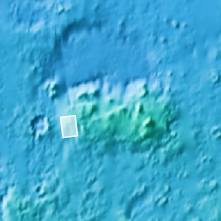
Overview map

The layers in Valles Marineris
Click for full image.

Cool image time! Like the Grand Canyon in the United States, Mars’ largest canyon, Valles Marineris, appears to have been carved out of a layered terrain, thus exposing those many layers in the walls of the canyon.

Valles Marineris, however, is much much larger than the Grand Canyon. You could fit dozens of Grand Canyons inside it and hardly fill it. Yet, its walls have the same layered look, suggesting that in Mars’ long geological history, first came many events that laid down new layers time after time, followed by a long period when the laying ceased and other events carved out the canyon to its almost 30,000 foot depth (which by the way is also about six times deeper than the Grand Canyon).

Today’s cool image to the right, cropped and reduced to post here, was taken on September 5, 2021 and shows a terraced terrain on the floor of Candor Chasma, one small side canyon of Valles Marineris that is still much larger than the Grand Canyon. The black dot in the overview map above indicates its location. I roughly estimate the elevation difference between the high and low spots in the picture is about 3,000 feet, a difference that while two-thirds that of the depth of the Grand Canyon is almost unnoticeable within the depths of Valles Marineris.

This layering is probably the canyon’s most important geological feature. See these previous cool images here and here for other examples. When geologists finally arrive on Mars and can begin dating these layers in detail they will likely reveal the planet’s entire geological history, going back five to six billion years.

Most of the layers are probably volcanic flood lava laid down by repeated eruptions from the giant volcanoes to the west. In between and within however will be deposits from the Martian atmosphere, telling us its composition and thickness. All told, the layers of Valles Marineris will likely unlock almost all of the most basic secrets of Martian geology.

We merely have to go there to find out.

0 comments

Launch of two South Korean satellites threatened by Russia’s Ukraine war

According to South Korean officials, the launch later this year of two new home-built satellites on Russian rockets is now unlikely because of the sanctions imposed because of Russia’s invasion of the Ukraine.

South Korea’s CAS500-2 remote sensing satellite is set to launch in the first half of this year on a Russian Soyuz rocket from Russia’s Baikonur Cosmodrome in Kazakhstan. South Korea’s KOMPSAT-6 multipurpose satellite, equipped with synthetic aperture radar (SAR), is due to launch in the second half of the year on a Russian Angara rocket from Plesetsk Cosmodrome in northern Russia.

“For now, nothing has changed to the plan,” Korea Aerospace Research Institute spokesman Roh Hyung-il told SpaceNews. “We are taking a close look at how the situation unfolds because it could have a significant impact on our missions.” He admitted that it’s “very likely” that the satellites won’t be launched as planned.

Those officials also said that losing Russia as a launch option will be a “serious blow” to South Korea’s entire space effort. I find that puzzling. There are plenty of other rocket companies now available. Why South Korea feels a need to depend on Russia seems short-sighted.

5 comments

Shetland spaceport gets third launch customer

Capitalism in space: The United Kingdom’s Shetland spaceport, SaxaVord, announced today that it has signed a third launch customer, the smallsat rocket startup Venture Orbital Systems.

Venture Orbital Systems (VOS), a developer of micro launchers and rocket engines based in Reims, France, plans to use the site at Unst as part of its aim to reach 15 launches of its Zephyr rocket by 2026 and 40 by 2030.

The new spaceport, presently under construction, already has ABL as a future rocket compan. ABL, mostly owned by Lockheed Martin, hopes to launch before the end of the year.

The UK’s has a second spaceport under construction in Sutherland, Scotland. It will be interesting to see if both can garner enough business to prosper.

0 comments

Former CEO of Virgin Galactic sued over his pump-and-dump stock sale

Buyer beware: Chamath Palihapitiya, who recently stepped down as CEO of Virgin Galactic, has been sued by some of the company’s stockholders for using his insider position to pump-and-dump his stock while keeping vital information secret illegally.

The complaint, filed on behalf of Virgin Galactic to seek damages from its directors and officers, also alleges that founder Richard Branson pocketed $301 million by dumping his shares while the stock price was “artificially inflated.”

Leaders of the company were well aware of defects in its spacecraft three years before they were publicly disclosed last year, according to the complaint filed in federal court in Brooklyn, New York.

It is unclear from the article whether Branson is being sued as well.

0 comments

Satellite photos suggest Iran had a launch failure with rocket explosion on launchpad

Based on new satellite photos, it appears that an attempt by Iran to launch a satellite failed this week when the rocket exploded on the launchpad.

Before and after images taken by imagery satellites from two different private companies, Maxar and Planet Labs, suggest the incident likely occurred around February 26th.

Satellite images from Maxar Technologies seen by The Associated Press show scorch marks at a launchpad at Imam Khomeini Spaceport in Iran’s rural Semnan province on Sunday. A rocket stand on the pad appears scorched and damaged, with vehicles surrounding it. An object, possibly part of the gantry, sits near it.

Successful launches typically don’t damage rocket gantries because they are lowered prior to takeoff. Iran also usually immediately trumpets launches that reach space on its state-run television channels, and it has a history of not acknowledging failed attempts.

The news reports claims that the failed rocket was Iran’s Zuljanah rocket, which uses solid rocket motors for its lower stages. Zuljanah has never made orbit, having been unveiled one year ago after a single suborbital test flight.

4 comments

OneWeb scraps further launches from Russia

OneWeb’s board of directors has voted to cancel all further launches of its satellites from Russia, refusing to meet Russia’s demand that the United Kingdom divest its half share in the company.

On Thursday, OneWeb said the company’s board had voted to suspend all launches from Baikonur, Kazakhstan, where the Russian spaceport operated by Roscosmos is based.

OneWeb didn’t elaborate on the vote. But the UK’s Business and Energy Secretary, Kwasi Kwarteng, said his government had refused to divest from OneWeb, which received funding from British authorities in 2020 to stave off a bankruptcy. “The UK Government supports OneWeb’s decision,” Kwarteng tweeted on Thursday. “In light of Russia’s illegal and unprovoked invasion of Ukraine, we are reviewing our participation in all further projects involving Russian collaboration,” he added.

OneWeb hasn’t commented on the company’s contingency plans. But it’s almost certainly looking for a new launch partner. Russia’s Roscosmos previously helped OneWeb send up 428 of 648 satellites for its internet system, which is designed to serve enterprise users.

This decision, combined with Russia’s decision to suspend further Soyuz-2 rocket launches from French Guiana, essentially ends Russia’s partnership with Arianespace. It also likely ends for many years Russia’s place in the international launch market. OneWeb and Arianespace were its last remaining international customers, and their business is now gone. Even if the Ukraine War was settled today, I suspect neither would wish to renew their business with Russia.

As for OneWeb, it has a number of options in the growing launch market, with Arianespace’s rockets its most likely choice. Financially, the delay hurts them in two ways: First, they have paid Russia for a number of launches already, and Russia has said it will not refund the money. Thus, those launches will cost twice as much. Second, the delay hurts them in their effort to compete with SpaceX’s Starlink constellation.

0 comments

Martian crater overwhelmed by glacier?

Martian crater overwhelmed by glacier?
Click for full image.

Cool image time! The photo to the right, rotated, cropped, and reduced to post here, was taken on January 28, 2022 by the high resolution camera on Mars Reconnaissance Orbiter. It shows what the science team labels a “modified crater.”

What I see is an old crater almost completely covered by glacial material. That material however is also very old, as there are numerous small craters on its surface, enough that it must have been here for a long time. Its cracked surface also suggests this glacier is very old.

Thus, while we might have ice here, buried by a thin layer of dust and debris to prevent it from sublimating away, it must be very old ice. The many climate cycles caused by the extreme swings in Mars’ rotational tilt, from 11 to 60 degrees, have apparently not caused this ice to ebb and flow very much.

Might it therefore not be ice, but hardened lava?

The location, as shown by the overview map below, provides some context, but only makes this mystery more puzzling.
» Read more

2 comments
1 657 658 659 660 661 2,411