Orion completes short 15-second burn to refine its return-to-Earth

The Earth as seen from behind the Moon
The Earth as seen from Orion just before the capsule swung behind
the Moon yesterday. Click for this and other Artemis-2 lunar images.

The Orion capsule today completed a 15-second engine burn in order to fine-tune its return path for splashdown in the Pacific Ocean on April 10th.

At 8:03 p.m. EDT, the Orion spacecraft, named Integrity, ignited its thrusters for 15 seconds, producing a change in velocity of 1.6 feet-per-second and guiding the Artemis II crew toward Earth. NASA astronaut Christina Koch and CSA (Canadian Space Agency) astronaut Jeremy Hansen reviewed procedures and monitored the spacecraft’s configuration and navigation data.

During today’s mission status briefing, NASA officials shared the first images received from the crew during the lunar flyby and confirmed that the USS John P. Murtha has left port and is headed to the midway point toward the recovery site in the Pacific Ocean.

This was Orion’s second small engine burn since it left Earth orbit on April 2, 2026. Unlike the Apollo missions to the Moon in the 1960s-1970s, which involved entering and leaving lunar orbit and doing complex maneuvers while there, the Artemis-2 mission around the Moon has largely been a passive one. The capsule was sent on this course at the start, and has been coasting since. Today’s burn was merely a small adjustment, not a major burn.

The re-entry on April 10, 2026 remains the key moment of the flight, as it has always been. Will that questionable heat shield do as NASA’s engineers predict and work to protect the four astronauts during re-entry? Or will it do things unexpected, because those engineers really don’t understand the engineering issues involved?

I am hopeful and optimistic. I also know that even if everything turns out fine, this flight will simply be a demonstration that NASA has learned nothing from the Challenger and Columbia accidents, and is still willing to risk human lives in order to win some political kudos and get some good PR. And for that reason I am not confident of the agency’s ability to truly do what it says, safely and competently.

One more note: Though the images being sent back are quite beautiful, they are hardly ground-breaking. Lunar Reconnaissance Orbiter has mapped the entire surface of the Moon at much great resolution, far better than anything seen on this mission. NASA might claim the astronauts are doing science, but most of it is minor and not very significant. When you get down to it, this is simply a very expensive tourist trip for four government employees, paid for at an ungodly cost by the American taxpayer.

25 comments

Genesis cover

On Christmas Eve 1968 three Americans became the first humans to visit another world. What they did to celebrate was unexpected and profound, and will be remembered throughout all human history. Genesis: the Story of Apollo 8, Robert Zimmerman's classic history of humanity's first journey to another world, tells that story, and it is now available as both an ebook and an audiobook, both with a foreword by Valerie Anders and a new introduction by Robert Zimmerman.

The print edition can be purchased at Amazon or any other book seller. If you want an autographed copy the price is $60 for the hardback and $45 for the paperback, plus $8 shipping for each. Go here for purchasing details. The ebook is available everywhere for $5.99 (before discount) at amazon, or direct from my ebook publisher, ebookit. If you buy it from ebookit you don't support the big tech companies and the author gets a bigger cut much sooner.


The audiobook is also available at all these vendors, and is also free with a 30-day trial membership to Audible.
 

"Not simply about one mission, [Genesis] is also the history of America's quest for the moon... Zimmerman has done a masterful job of tying disparate events together into a solid account of one of America's greatest human triumphs."--San Antonio Express-News

April 7, 2026 Quick space links

Courtesy of BtB’s stringer Jay. This post is also an open thread. I welcome my readers to post any comments or additional links relating to any space issues, even if unrelated to the links below.

11 comments

Feathery eroding layers on Mars

Feathery layers on Mars
Click for original image.

Cool image time! The picture to the right, cropped, reduced, and enhanced to post here, was taken on February 23, 2026 by the high resolution camera on Mars Reconnaissance Orbiter (MRO). It shows what the science team calls “layers exposed around [a] streamlined feature”.

The elevation difference between the mesa top on the left and the canyon floor on the right is about 1,000 feet. The layers are the terraces stepping downward along that drop.

What makes these layers interesting is how they have been exposed. The material that makes up the layers appears very sandy and delicate, so it breaks away it very small pieces, just like sand on a beach. The result is this feathery look. If you look close you can see that some small craters have been partly obliterated by that erosion, with their existence only marked by their remaining rim, on the high side.
» Read more

0 comments

Conscious Choice cover

Now available in hardback and paperback as well as ebook!

From the press release: In this ground-breaking new history of early America, historian Robert Zimmerman not only exposes the lie behind The New York Times 1619 Project that falsely claims slavery is central to the history of the United States, he also provides profound lessons about the nature of human societies, lessons important for Americans today as well as for all future settlers on Mars and elsewhere in space.

 
Conscious Choice: The origins of slavery in America and why it matters today and for our future in outer space, is a riveting page-turning story that documents how slavery slowly became pervasive in the southern British colonies of North America, colonies founded by a people and culture that not only did not allow slavery but in every way were hostile to the practice.  
Conscious Choice does more however. In telling the tragic history of the Virginia colony and the rise of slavery there, Zimmerman lays out the proper path for creating healthy societies in places like the Moon and Mars.


“Zimmerman’s ground-breaking history provides every future generation the basic framework for establishing new societies on other worlds. We would be wise to heed what he says.” —Robert Zubrin, founder of the Mars Society.


All editions are available at Amazon, Barnes & Noble, and all book vendors, with the ebook priced at $5.99 before discount. All editions can also be purchased direct from the ebook publisher, ebookit, in which case you don't support the big tech companies and the author gets a bigger cut much sooner.


Autographed printed copies are also available at discount directly from the author (hardback $29.95; paperback $14.95; Shipping cost for either: $6.00). Just send an email to zimmerman @ nasw dot org.

Northrop Grumman’s Minotaur-4 rocket launches three payloads for War Department

Northrop Grumman early this morning successfully placed three experimental payloads into orbit for the War Department’s Naval Research Laboratory (NRL), its Minotaur-4 rocket lifting off from Vandenberg Space Force Base in California.

NRL’s payloads included the Lasersheet Anomaly Resolution and Debris Observation (LARADO) instrument; the Global Navigation Satellite System (GNSS) Orbiting Situational Awareness Sensor (GOSAS); and the Gadolinium Aluminum Gallium Garnet (GAGG) Radiation Instrument (GARI-1C).

The first is testing new methods for tracking space junk, the second improved GPS-type location and navigation for military operations, and the third new gamma-ray detection technology for tracking nuclear tests.

This was Northrop Grumman’s first launch in 2026, so the leader board for the 2026 launch race remains unchanged:

42 SpaceX
16 China
5 Rocket Lab
5 Russia

SpaceX continues to lead the entire world combined in total launches, as it did in both ’24 and ’25.

3 comments

Firefly signs deal with modular sea launch startup Seagate

The startup Seagate, which is building a modular sea launch platform for any rocket company, has now signed a partnership deal with the rocket company Firefly to jointly develop that sea platform.

Seagate Space Corporation announced today a Memorandum of Understanding (MOU) with Firefly Aerospace to collaborate on the development of an offshore launch platform that enables a sea-based launch capability for Firefly’s Alpha rocket. This collaboration marks a significant milestone in expanding responsive, resilient launch solutions for the rapidly growing space economy.

Under the MOU, Seagate Space is working closely with Firefly to mature the design of an integrated offshore launch system capable of supporting the unique requirements of liquid-fueled orbital rockets. Central to this development is the integration of Seagate Space’s Gateway Series, the industry’s first purpose-built offshore spaceport designed specifically for launch operations.

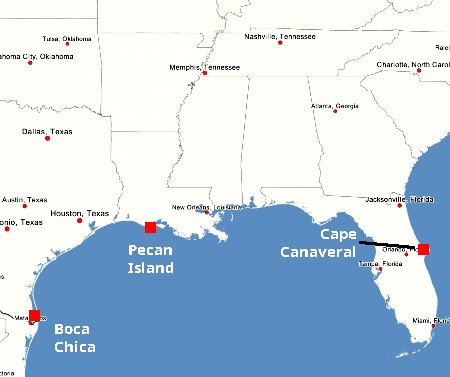
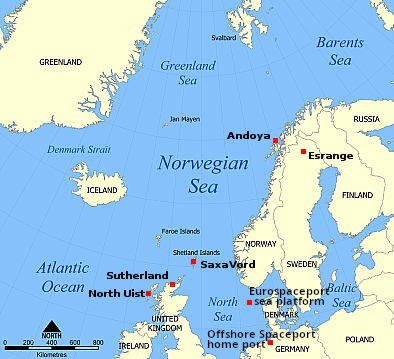
Firefly presently has one operational launchpad, at Vandenberg, though it has a deal to launch its Alpha rocket from Sweden’s Esrange spaceport as well as a lease for a pad at Cape Canaveral. It has also been studying launching from a proposed commercial spaceport in northern Japan. Apparently, the company wants more spaceport options, and a sea platform gives it the most flexibility.

4 comments

Leaving Earth cover

Leaving Earth: Space Stations, Rival Superpowers, and the Quest for Interplanetary Travel, can be purchased as an ebook everywhere for only $3.99 (before discount) at amazon, Barnes & Noble, all ebook vendors, or direct from my ebook publisher, ebookit.

If you buy it from ebookit you don't support the big oppressive tech companies and I get a bigger cut much sooner.


Winner of the 2003 Eugene M. Emme Award of the American Astronautical Society.

 
"Leaving Earth is one of the best and certainly the most comprehensive summary of our drive into space that I have ever read. It will be invaluable to future scholars because it will tell them how the next chapter of human history opened." -- Arthur C. Clarke

SpaceX launches 25 Starlink satellites using new first stage

SpaceX tonight successfully placed another 25 Starlink satellites into orbit, its Falcon 9 rocket lifting off from Vandenberg Space Force Base in California.

This was the first flight for the first stage, which landed safely on a drone ship in the Pacific.

The leaders in the 2026 launch race.

42 SpaceX
16 China
5 Rocket Lab
5 Russia

SpaceX continues to lead the entire world combined in total launches, as it did in both ’24 and ’25.

0 comments

April 6, 2026 Quick space links

Courtesy of BtB’s stringer Jay. This post is also an open thread. I welcome my readers to post any comments or additional links relating to any space issues, even if unrelated to the links below.

8 comments

Cracked bedrock on Mars?

Cracked Martian landscape
Click for full image.

For today’s cool image we return to Mars. The picture to the right, cropped and brightened to post here, was taken on December 3, 2025 by the high resolution camera on Mars Reconnaissance Orbiter (MRO).

The focus of the picture was a strange crater in the floor of Mawrth Vallis, a channel that drains northward from Mars’ cratered southern highlands to its northern lowland plains. You can see the crater in the full image if you click on the picture. It is intriguing because its rim is strangely abrupt and flat on all sides, something that is not seen with impact craters, which have a raised rim of material plowed out by the impact.

In the picture to the right I have however focused on the two small 50-70-foot-high mesas and cracked ground that surrounds them. What struck me was the dry appearance of this landscape. Located at 23 degrees north latitude, it is in the dry tropics of Mars, where little near surface ice is found. The cracks emphasize this conclusion, as they so well resemble the cracks you see in dried mud on Earth.
» Read more

2 comments

Orion completes small mid-course-correction engine burn as it prepares to swing around behind the Moon

The Moon as seen by Orion's astronauts
The Moon as seen by Orion’s astronauts on April 4th, cropped
and reduced to post here. Click for original image.

NASA’s manned Orion capsule last night completed small mid-course-correction engine burn to refine the spacecraft’s trajectory around the Moon and back to Earth.

Mission control teams in Houston and the Artemis II crew completed an outbound correction burn to refine the Orion spacecraft’s trajectory to the Moon. The burn began at 11:03 p.m. EDT and lasted 17.5 seconds. NASA astronauts Reid Wiseman, Victor Glover, and Christina Koch, along with CSA (Canadian Space Agency) astronaut Jeremy Hansen, continue on a precise path to flyby the Moon on Monday, April 6.

The lunar fly-by is scheduled for this evening. As the capsule swings around behind the Moon, there will be a communications black-out from 6:44 pm (Eastern) to 7:25 pm (Eastern). NASA is making a concerted PR effort to compare this to the Apollo 8 mission around the Moon, but the differences are gigantic. Apollo 8 went into orbit around the Moon. There was considerable risk it could get stuck there if its engine failed to fire properly when behind the Moon on its last orbit. Thus, that Apollo 8 blackout was quite tension-filled.

Orion’s fly-around is instead completely benign. They aren’t going into orbit, and they are already on their path back to Earth. There will be no extra element of risk as they fly behind the Moon. All they will be doing is coast along, as they have been doing since leaving Earth orbit. They will simply be out of touch for about 40 minutes.

I sadly remain personally bored by this mission. It is is testing relatively little new engineering for future use, and is mostly designed as a PR stunt to convince everyone that “NASA is back!” Hardly. The capabilities of SLS and Orion are extremely limited, and both are ungodly expensive. Neither will make possible any colonization of the solar system. All they do is act as a jobs program for government employees.

And there still remains this mission’s biggest moment of danger, re-entry and splashdown, using Orion’s questionable heat shield that did not behave properly on its only previous unmanned mission in 2022.

30 comments

Japan’s lunar lander startup Ispace wins contract with Korean rover startup

Artist rendering of Ispace's Ultra lunar lander
Artist rendering of Ispace’s Ultra lunar lander

The Japanese lunar lander startup Ispace has won a new customer for its next attempt to soft-land on the Moon, with the South Korean startup Unmanned Exploration Laboratory (UEL) signing a contract to put its proposed two-wheeled rover on that mission.

Under the terms of the agreement, the UEL rover will be integrated as a commercial payload on ispace’s ULTRA lunar lander for Mission 3, currently scheduled to launch in 2028. The mission would mark the first Korean rover to explore the Moon’s surface and underscores the growing commercial collaboration between Japan and Korea in the aerospace industry.

Mission 3 will serve as the inaugural flight for ispace’s ULTRA lunar lander.

Ispace so far has a very mixed record. It has successfully gotten two landers to the Moon, but both failed just before landing. It has also recently had to delay its lander mission for NASA because it had to replace the lander’s engine, the previous engine found to be inadequate.

Ultra is Ispace’s new larger lander design, intended to fly on all future missions. It remains untested in flight. The company presently has lander contracts for the following missions:

  • 2028: a Japanese mission funded by Japan’s Ministry of Economy, Trade and Industry
  • 2029: a Japanese mission funded by Japan’s Space Strategy Fund (designed at encouraging the private space sector
  • 2030: NASA’s mission, being built in partnership with the American company Draper

At the moment, everything about Ispace remains tentative. It needs to finally land something on the Moon to truly establish itself.

2 comments
1 24 25 26 27 28 2,928