Voyager wins four-year $24.5 million ISS management contract from NASA
The space station startup Voyager Technologies yesterday won a four-year $24.5 million contract from NASA to apparently manage the agency’s missions to ISS.
Under the task-order contract, Voyager will deliver end-to-end mission services spanning payload integration, mission operations, safety and compliance, and post-mission closeout. NASA may add options that extend the scope and value of the agreement over its life, providing Voyager with a multi-year framework for recurring mission execution. Voyager anticipates onboarding three payload missions over the next quarter, reflecting near-term demand and a steady pipeline of task orders supporting ongoing ISS operations.
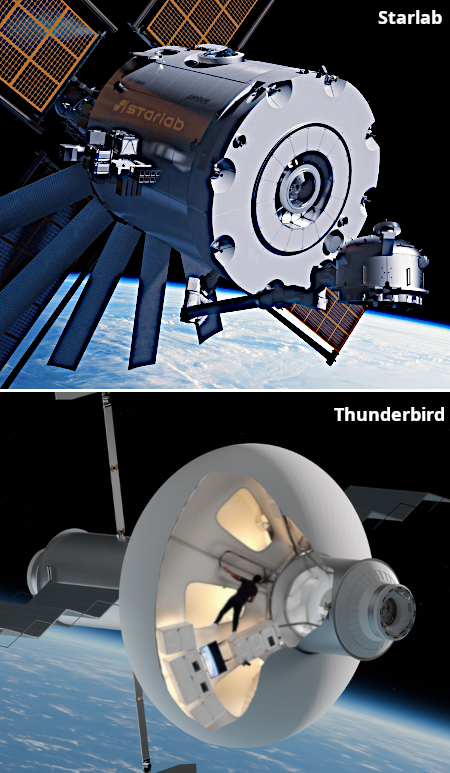
The company has been doing similar ISS work for NASA at the Johnson Space Center in Texas, though this contract appears to expand that work considerably. This deal provides the company further experience operating space station missions, crucial for the Starlab station that Voyager is listed as the consortium’s lead company.
Of the five stations under development, Axiom has run tourist missions to ISS to demonstrate this capability, Vast is launching its own demo single module station to demonstrate this capability, and now Voyager is doing this work for NASA to demonstrate this capability.
Max Space, which only entered this race late last year, has no such contract or experience, but it has recently partnered with Voyager in other work, and plans to launch its own demo station module in ’27.
The last proposed space station, Orbital Reef, has no such deal as far as I know. Led by Blue Origin (partnered with Sierra Space), this station project continues to show no progress of any kind.
The space station startup Voyager Technologies yesterday won a four-year $24.5 million contract from NASA to apparently manage the agency’s missions to ISS.
Under the task-order contract, Voyager will deliver end-to-end mission services spanning payload integration, mission operations, safety and compliance, and post-mission closeout. NASA may add options that extend the scope and value of the agreement over its life, providing Voyager with a multi-year framework for recurring mission execution. Voyager anticipates onboarding three payload missions over the next quarter, reflecting near-term demand and a steady pipeline of task orders supporting ongoing ISS operations.
The company has been doing similar ISS work for NASA at the Johnson Space Center in Texas, though this contract appears to expand that work considerably. This deal provides the company further experience operating space station missions, crucial for the Starlab station that Voyager is listed as the consortium’s lead company.
Of the five stations under development, Axiom has run tourist missions to ISS to demonstrate this capability, Vast is launching its own demo single module station to demonstrate this capability, and now Voyager is doing this work for NASA to demonstrate this capability.
Max Space, which only entered this race late last year, has no such contract or experience, but it has recently partnered with Voyager in other work, and plans to launch its own demo station module in ’27.
The last proposed space station, Orbital Reef, has no such deal as far as I know. Led by Blue Origin (partnered with Sierra Space), this station project continues to show no progress of any kind.