The first Artemis lunar landings might not go to the Moon’s south pole

It appears from remarks recently by one NASA official, that while the south pole remains the agency’s main lunar base target, it is now looking into other landing options in order to make those first manned landing less risky and easier and quicker to achieve.

Amit Kshatriya, NASA Associate Administrator was very vague in his statement, but nonetheless this was what it appears he was saying:

We have opened up the, I would say, the performance specification for the early landing missions in as many ways as we can, in terms of different lunar orbits we want to take, or different other constraints … to make it as agile as possible, to recognize performance limitations in some of the machines we have and let our providers tell us, hey, if you took these constraints out of the way, how could we go faster? So we’re going to do that.

The agency’s administrator, Jared Isaacman, is also pushing to quickly begin sending a lot of unmanned landers to the south pole by next year. Thus, under this plan, we might actually find out first whether there really is water in those permanently shadowed craters, before committing our manned lunar base to this location.

This new approach makes a great deal of sense, especially since the data that has looked into those craters has been very inconclusive, some positive and some negative.

NASA awards ULA’s Centaur-5 upper stage for future SLS launches

NASA yesterday awarded ULA the contract for providing SLS its upper stage after the Artemis-3 mission using the Centaur-5 upper stage that was developed for the company’s Vulcan rocket.

In its procurement statement, NASA said its intention is to issue a sole source contract to ULA, meaning it’s the only upper stage being considered for this new iteration of the SLS rocket. An eight-page supporting document from NASA’s Marshall Space Flight Center (MSFC) in Huntsville, Alabama, was published to document the reasoning for its decision.

Among the stated reasons are the decades-long heritage of the RL10 engine, which has matured over time; the ability of the Centaur 5 to use the interfaces available on the Mobile Launcher 1 (ML1) along with the propulsion commodities of liquid oxygen and liquid hydrogen; and the experience of ULA’s teams working with NASA’s Exploration Ground Systems (EGS) at the Kennedy Space Center and elsewhere in the country.

They also noted that with the Centaur 3 upper stage achieving certification to launch humans as part of the Commercial Crew Program, there are a lot of common features with the Centaur 5.

The decision relieves NASA from wasting more money on the Mobile Launcher-2, which has been a disaster. The contractor Bechtel has gone over budget — from $383 million to $2.7 billion — and is so behind schedule it is still unclear now whether it will be ready by 2029, a decade after the contract was awarded.

It also relieves NASA of spending more money on its own upper stage, which has been as much a disaster, from Boeing.

Instead, this deal is an example of Isaacman doing the right thing. Rather than have NASA design and build its own upper stage, he is buying the product — almost literally off-the-shelf — from a commercial rocket company. He should expand this effort, and consider other private rockets, such as Falcon Heavy, to replace SLS itself.

Now Isaacman should consider suing Bechtel for fraud and incompetence, to try to get back some of the money it wasted.

NASA initiates new program to grab talent from the private sector

Where new talent will now go to wither
Where new talent will now go to wither.

As part of NASA administrator’s effort to remake NASA into a cutting edge agency, “the global leader in space,” the agency in partnership with the federal Office of Personnel Management (OPM) has initiated a new program, dubbed NASA Force, to recruit talent from the private sector for two-year terms, after which they can then try to get a full time job either with NASA or a private aerospace company.

NASA Force will identify and place high-impact technical talent into mission-critical roles supporting NASA’s exploration, research, and advanced technology priorities, ensuring the agency has the cutting-edge expertise needed to maintain U.S. leadership in space.

Tech Force, led by OPM, was established to recruit elite technical professionals into federal service, embed them at partner agencies to modernize systems, accelerate innovation, and strengthen mission delivery. NASA Force represents a focused expansion of that effort, tailored to the unique technical demands of space exploration and aerospace research.

“America’s leadership in space depends on extraordinary talent,” said NASA Administrator Jared Isaacman. “NASA Force will help us attract the next generation of innovators and technical experts who are ready to solve the toughest challenges in exploration, science, and aerospace technology. This partnership strengthens our workforce and helps ensure the United States remains the global leader in space.”

This program however has things entirely backwards. The last thing any engineer who has just graduated college should do is get a short two-year job at NASA. He or she will learn all the wrong lessons, working for a government agency not interested in efficiency or profit.

Instead, it is essential the first job new engineers get is in the private sector, to learn how to do things fast and efficiently. It Isaacman had the right priorities, he would use this money to fund these jobs in the private sector, so that new graduates will get the right training. Unfortunately, that is not Isaacman’s priority. He wants the government to lead.

Moreover, NASA’s job was never intended to be “the global leader in space.” Its job was to formulate the federal government’s needs in space, and then ask the private sector — the American people — to get the job done. Isaacman instead wants to have NASA do the job, as it did for a half century after Apollo, quite poorly. Only after the agency began relying on private enterprise beginning in 2008, the capitalism model, did things finally start happening again.

The worst aspect of this program is that it will take talent away from the private sector. A lot of good and talented young engineers will gravitate to these NASA positions for the high pay, relatively easy good hours, and prestige. They won’t accomplish much there, and their training will be wrong-headed. Meanwhile, the private sector will lose that talent and have to find it elsewhere, assuming it is available at all.

NASA today completes SLS wet dress rehearsal with few problems

NASA today successfully completed its SLS wet dress rehearsal countdown with few problems, fueling the rocket completely and then running the countdown down to T-33 seconds and then recycling back to T-10 minutes and running the countdown down again, this time to T-29 seconds.

During the day-long event there were only two minor issues, neither of significance. Early in the day there was “an issue with ground communications” that required mission control to shift to “backup communication methods” for about a half hour before the issue was resolved.

Then, during the first countdown to T-33 the count was paused and recycled once “due to a booster avionics system voltage anomaly.” This also appeared to be minor issue quickly resolved.

NASA will hold a press conference tomorrow at 11 am (Eastern) to discuss the results of the entire rehearsal.

NASA administrator Jared Isaacman had stated previously that he needed to see a perfect rehearsal before he would approve the launch of Artemis-2, carrying four astronauts on a ten-day mission around the Moon. While today’s rehearsal was not “perfect,” the issues were very minor. I suspect he will give the okay, with a tentative launch date of March 6, 2026 already being considered. The present launch window closes on April 6, 2026.

That mission, should it fly, still carries enormous risk. The Orion capsule will be using a life support system never tested in space before. It will also be using a heat shield that is questionable, having failed to behave as expected in the first Artemis mission in 2022.

Isaacman issues directive to shift power back to NASA and away from private sector

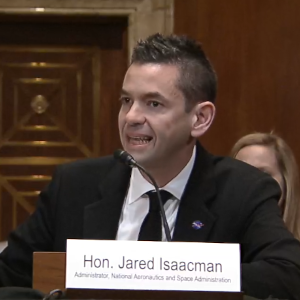
Jared Isaacman, in announcing this directive

NASA administrator Jared Isaacman yesterday issued a major three-part directive which he claimed would save more than a billion dollars at NASA while allowing the agency to “regain its core competencies in technical, engineering, and operational excellence”.

The plan could actually backfire, however, as it appears to shift power and control back to NASA and away from private sector.

First, Isaacman wants to eliminate much of the outside contracting NASA now relies on, bringing that work back into the agency itself. Second, he wants eliminate “restrictive clauses that prevent us from doing our own work and addressing intellectual property barriers that have tied our hands.” Third, he wants to “restore in-house engineering,” having more work done by NASA engineers instead of depending on outside contractors.

To some extent, there is value in all these changes, because in many cases NASA employees use the policy of using contractors to outsource their entire work load, so they can sit and do practically nothing.

Overall however this directive could very well squelch the present renaissance in commercial space, because it will put NASA much more in control of everything. Rather than simply being a customer buying the products built and owned by the private sector (ie, the American people) — the capitalism model — the directive demands that NASA run things, the centralized Soviet-style top-down government model.

This aspect is best illustrated by the second part of his directive. Many contractors, such as SpaceX, do not wish to reveal everything about their product designs to NASA, because then it becomes public and can be stolen by their competitors. By requiring companies to release all proprietary data, those companies will no longer own that data, and thus will no longer be as easily able to benefit from its development. This will discourage private investment. It will also once again centralize development at NASA. Rather than getting multiple ideas and innovation from multiple companies, everything will funnel into the ideas NASA managers and engineers come up with.

Isaacman has come to this directive after spending his first two months as administrator delving into how the agency is operating. But he has gotten the solution entirely backwards. Rather than centralize and expand the work done inside NASA, thus justifying its large workforce that Isaacman has found isn’t doing much, wouldn’t it be better to simply eliminate those government jobs entirely? Trim NASA down to its essentials, and let the American people, not the government, come up with what they need and want in space.

Isaacman is not doing this however. Instead, he is apparently working to rebuild the NASA empire, so that it can once again design all, own all, and control all. That was how things were during the shuttle era, and the result was that for almost a half century, America went nowhere in space.

My doubts and concerns about Isaacman and his priorities, which started during his first nomination hearings, have only increased. Despite being a man who made billions in the free private sector, he increasingly appears to be someone eager to build a government empire to laud over everyone.

Isaacman: SLS stands on very thin ice

Though NASA administration Jared Isaacman continues to support unequivocally NASA’s planned Artemis-2 ten-day manned mission around the Moon — presently targeting a March launch date — in a statement today on X he revealed that he also recognizes the serious limitations of the SLS rocket.

And it takes two-plus years between launches
And it also takes two-plus years between launches

The Artemis vision began with President Trump, but the SLS architecture and its components long predate his administration, with much of the heritage clearly traced back to the Shuttle era. As I stated during my hearings, and will say again, this is the fastest path to return humans to the Moon and achieve our near-term objectives through at least Artemis V, but it is not the most economic path and certainly not the forever path.

The flight rate is the lowest of any NASA-designed vehicle, and that should be a topic of discussion. It is why we undertake wet dress rehearsals, Pre-FRR, and FRR, and why we will not press to launch until we are absolutely ready.

These comments were also in connection with the first wet dress rehearsal countdown that NASA performed with SLS/Orion in the past few days, a rehearsal that had to be terminated early because of fuel leaks. NASA now plans to do another wet dress rehearsal, requiring it to push back the Artemis-2 launch until March.

I think there is more going on here than meets the eye.
» Read more

Isaacman makes it official: Artemis-2 will fly manned around the Moon, despite Orion’s heat shield concerns

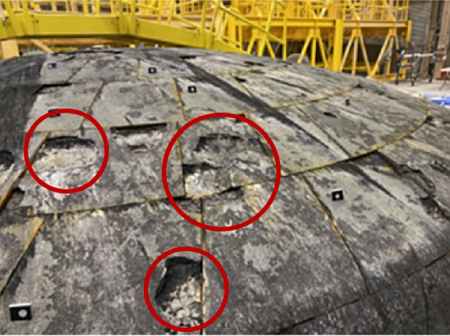
Orion's damage heat shield
Damage to Orion heat shield caused during re-entry in 2022,
including “cavities resulting from the loss of large chunks”

In a tweet yesterday afternoon, NASA administration Isaacman essentially endorsed the decision of the NASA managers and engineers in its Artemis program who decided they could live with the engineering issues of Orion’s heat shield (as shown in the image to the right) and fly the upcoming Artemis-2 mission around the Moon carrying four astronauts with that same heat shield design.

Isaacman’s statement however suggests to me that he is not looking at this issue as closely as he should.

Human spaceflight will always involve uncertainty. NASA’s standard engineering process is to identify it early, bound the risk through rigorous analysis and testing, and apply operational mitigations that preserve margin and protect the crew. That process works best when concerns are raised early and debated transparently.

I appreciate the willingness of participants to engage on this subject, including former NASA astronaut Danny Olivas, whose perspective reflects how serious technical questions can be addressed through data, analysis, testing, and decisions grounded in the best engineering judgment available. [emphasis mine]

The highlighted sentence is fundamentally incorrect. » Read more

Isaacman okays flying Artemis-2 manned, despite heat shield questions

According to an article posted today at Ars Technica, after a thorough review NASA administrator Jared Isaacman has decided to allow the Artemis-2 mission — set to launch sometime before April and slingshot around the Moon — to fly manned with four astronauts despite the serious questions that still exist about its heat shield.

The review involved a long meeting at NASA with NASA engineers, several outside but very qualified critics, as well as two reporters (for transparency).

Convened in a ninth-floor conference room at NASA Headquarters known as the Program Review Center, the meeting lasted for more than three hours. Isaacman attended much of it, though he stepped out from time to time to handle an ongoing crisis involving an unwell astronaut on orbit. He was flanked by the agency’s associate administrator, Amit Kshatriya; the agency’s chief of staff, Jackie Jester; and Lori Glaze, the acting associate administrator for NASA’s Exploration Systems Development Mission Directorate. The heat shield experts joined virtually from Houston, along with Orion Program Manager Howard Hu.

Isaacman made it clear at the outset that, after reviewing the data and discussing the matter with NASA engineers, he accepted the agency’s decision to fly Artemis II as planned. The team had his full confidence, and he hoped that by making the same experts available to Camarda and Olivas, it would ease some of their concerns.

My readers know that I have been strongly opposed to flying Artemis-2 manned, an opposition I expressed in an op-ed at PJMedia only yesterday. However, after reading this Ars Technica report, my fears are allayed somewhat by this quote:
» Read more

New Trump executive order today guarantees major changes coming to NASA’s Moon program

Change is coming to Artemis!

The White House today released a new executive order that has the typically grand title these type of orders usually have: “Ensuring American Space Superiority”. That it was released one day after Jared Isaacman was confirmed as NASA administrator by the Senate was no accident, as this executive order demands a lot of action by him, with a clear focus on reshaping and better structuring the entire manned exploration program of the space agency.

The order begins about outlining some basic goals. It demands that the U.S. return to the Moon by 2028, establish the “initial elements” a base there by 2030, and do so by “enhancing sustainability and cost-effectiveness of launch and exploration architectures, including enabling commercial launch services and prioritizing lunar exploration.” It also demands this commercial civilian exploration occur in the context of American security concerns.

Above all, the order demands that these goals focus on “growing a vibrant commercial space economy through the power of American free enterprise,” in order to attract “at least $50 billion of additional investment in American space markets by 2028, and increasing launch and reentry cadence through new and upgraded facilities, improved efficiency, and policy reforms.”

To achieve these goals, the order then outlines a number of actions required by the NASA administrator, the secretaries of Commerce, War, and State, as well as the Director of the Office of Management and Budget (OMB) and the Assistant to the President for Domestic Policy (APDP), all coordinated by the assistant to the President for Science and Technology (APST).

All of this is unsurprising. Much of it is not much different than the basic general space goals that every administration has touted for decades. Among this generality however was one very specific item, a demand to complete within 90 days the following review:
» Read more

Jared Isaacman confirmed as NASA administrator

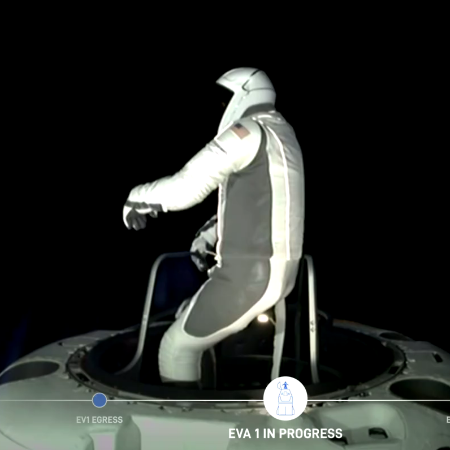
Jared Isaacman during his spacewalk
Jared Isaacman during his spacewalk in September 2024

The Senate today finally confirmed Jared Isaacman to be the next NASA administrator, by a vote of 67 to 30.

All of the opposition came from Democrats, who fear Isaacman will eliminate several NASA centers in their states, centers that for decades have accomplished little but be jobs programs sucking money from the American taxpayer.

During hearings and private meetings with the senators Isaacman denied he had any intention to do this. In fact, the 62-page policy document Isaacman had written outlining his plans when he was first nominated for this position back in the spring makes it clear that is not his goal.

Instead, an honest read of that document shows that Isaacman has approached this position as administrator like the businessman he is. He intends to review every aspect of NASA’s operations and to restructure them to run more efficiently. For one example, he plans to eliminate the numerous “deputies” that every manager at NASA has been given. The managers should do the work, not hire a flunky to do it for them.

He also plans to review the next two Artemis missions, specifically looking at the Orion capsule and the questions relating to its heat shield and its untested environmental system. The concern that I and many others have expressed is that this capsule is not ready yet for a manned mission. The heat shield showed significant and unexpected damage on its return to Earth from its first unmanned mission around the Moon in 2022. Rather than replace it or redesign it, NASA has decided to push ahead and fly four astronauts on it around the Moon no later than April 2026. The agency’s solution will be to change the capsule’s flight path to reduce stress on the shield, a solution that might work but remains untested. It is also willing to fly the astronauts in a capsule with a untested environmental system. This NASA decision to push ahead is so it can meet the goal of Trump and Congress to get humans back on the Moon ahead of the Chinese, and hopefully within Trump’s present term of office.

In other words, NASA management is once again putting schedule ahead of safety and engineering, as it did with Challenger and again with Columbia.

It appears that Isaacman will at least review this situation. Whether he will have the courage to take the astronauts off that mission however remains unknown. He will certainly face fierce opposition from Trump and Congress if he does so.

Senate committee approves Isaacman’s nomination as NASA administrator

The Senate Commerce, Science, and Transportation Committee today approved the nomination of Jared Isaacman for NASA administrator, doing so for the second time after his first nomination was withdrawn by Trump in May and then re-instated his nomination in November.

All 15 committee Republicans and three of the 13 Democrats voted in favor: Senators Ted Cruz (Chairman, R-Texas), John Thune (R-South Dakota), Roger Wicker (R-Mississippi), Deb Fischer (R-Nebraska), Jerry Moran (R-Kansas), Dan Sullivan (R-Alaska), Marsha Blackburn (R-Tennessee), Todd Young (R-Indiana), Ted Budd (R-North Carolina), Eric Schmitt (R-Missouri), John Curtis (R-Utah), Bernie Moreno (R-Ohio), Tim Sheehy (R-Montana), Shelley Moore Capito (R-West Virginia), Cynthia Lummis (R-Wyoming), Maria Cantwell (Ranking Member, D-Washington), Tammy Baldwin (D-Wisconsin), and John Fetterman (D-Pennsylvania).

Ten of the 13 Democrats voted no: Senators Amy Klobuchar (D-Minnesota), Brian Schatz (D-Hawaii), Ed Markey (D-Massachusetts), Gary Peters (D-Michigan), Tammy Duckworth (D-Illinois), Jacky Rosen (D-Nevada), Ben Ray Luján (D-New Mexico), John Hickenlooper (D-Colorado), Andy Kim (D-New Jersey), and Lisa Blunt Rochester (D-Delaware).

In the previous April 2025 confirmation vote two Democrats, Kim and Hickenlooper, had voted yes. Now they voted no. In turn in April Fetterman had voted no and now changed his vote to yes.

Isaacman’s nomination still has to be confirmed by the Senate. No vote has been scheduled, but there have been indications that it will be scheduled in the next week or so. If not, the vote will have to wait until after the New Year. In either case, it is expected Isaacman will be approved handily.

Yesterday’s Senate nomination hearing for Jared Isaacman was irrelevant; America’s real space “program” is happening elsewhere

Jared Isaacman
Billionaire Jared Isaacman

Nothing that happened at yesterday’s Senate hearing of Jared Isaacman’s nomination to be NASA’s next administrator was a surprise, or very significant, even if most media reports attempted to imply what happened had some importance. Here are just a small sampling:

To be fair, all of these reports focused on simply reporting what happened during the hearing, and the headlines above actually provide a good summary. Isaacman committed to the Artemis program, touted SLS and Orion as the fastest way to get Americans back to the Moon ahead of the Chinese, and dotted all the “i”s and crossed all the “t”s required to convince the senators he will continue the pork projects they so dearly love. He also dodged efforts by several partisan Democrats to imply Isaacman’s past business dealings with Musk and SpaceX posed some sort of conflict of interest.

What none of the news reports did — and I am going to do now — is take a deeper look. Did anything Isaacman promise in connection with NASA and its Artemis program mean anything in the long run? Is the race to get back to the Moon ahead of China of any importance?

I say without fear that all of this is blather, and means nothing in the long run. The American space program is no longer being run by NASA, and all of NASA’s present plans with Artemis, using SLS, Orion, and the Lunar Gateway station, are ephemeral, transitory, and will by history be seen as inconsequential by future space historians.
» Read more

Senate Commerce committee to move up its vote on Isaacman’s nomination as NASA administrator

Jared Isaacman
Billionaire Jared Isaacman

Today Senator Ted Cruz (R-Texas) announced that the Commerce committee he heads will vote on the re-nomination of Jared Isaacman for NASA administration on December 8, 2025, only five days after tomorrow’s renomination hearing.

It appears Cruz and his committee is pushing to get Isaacman approved as quickly as possible. At least one Republican senator, John Cornyn (R-Texas) has met with Isaacman again and gotten his commitment to move the space shuttle Discovery to Texas, as mandated by the budget bill passed several months ago. That commitment was likely a quid pro quo by Cornyn to get his vote for Isaacman.

Once Isaacman is approved by Cruz’s committee, the Senate could vote at any time. Whether it will do so before the end of the year remains unknown, as it would likely require a special session as the Senate is expected to be in recess until after the new year.

If it does not, it will likely give Isaacman very little time to review the next Artemis mission, tentatively schedule for launch as early as February 2026, carrying four astronauts around the Moon on a Orion capsule with a questionable heat shield and an untested environmental system.

Senate demands a second hearing before voting on Isaacman as NASA administrator

Jared Isaacman
Billionaire Jared Isaacman

Despite being days from a confirmation vote in June after undergoing a Senate hearing previously — when Trump nominated Jared Isaacman for NASA administrator the first time — the Senate has now demanded a second hearing before it will schedule a second confirmation vote on Isaacman.

Sen. Ted Cruz has scheduled a Dec. 3 hearing for Jared Isaacman, the billionaire entrepreneur and commercial astronaut renominated to lead NASA, before the Senate Commerce, Science and Transportation Committee. … The new hearing will mean that Isaacman will not be confirmed by the Senate in the next batch of nominees, which will likely see the floor in the first week of December.

Trump first nominated Isaacman in December 2024, only to withdraw that nomination in May 2025. Trump then renominated Isaacman two weeks ago.

This extra hearing means Isaacman will likely not be confirmed as NASA administrator until early in 2026. It also means he will probably not be in a position to review and reconsider NASA’s plans to send astronauts around the Moon in the February-April time frame, using an Orion capsule with a questionable heat shield and an untested environmental system.

In fact, I suspect this decision to hold hearings was pushed by Cruz partly to make sure Isaacman couldn’t review those plans. Cruz has made it his goal to save SLS and Orion, no matter the cost, and appears willing to play whatever games necessary to prevent any actions that would delay or impact NASA’s present plans.

This however is not the only reason this new hearing has been scheduled. It appears a lot of Senators, especially the Democrats, want to question Isaacman about Isaacman’s 62-page policy paper that was leaked to many in DC in the past few months. It is certain that questioning will have no impact on the final vote (Isaacman is expected to be confirmed handily), but it will allow these senators to preen before the camera, for no good purpose.

The bottom line however is that Isaacman will not be in place early enough to review and change that Artemis-2 mission. It means that almost certainly NASA will once again fly a manned mission that places schedule above engineering, putting four human lives at risk using a spacecraft that has not be vetted properly.

Isaacman shows up as surprise speaker at Turning Point USA event in Alabama

In what could very well explain why Donald Trump changed his mind about Jared Isaacman’s nomination for NASA administration, Isaacman showed up unexpectedly at a Turning Point USA event at Auburn University in Alabama this past week, where he described how the murder of Charlie Kirk had profoundly changed his outlook on life.

[O]n a very personal note, I didn’t grow up very religious at all — my mother’s family, we celebrate Christmas. My father’s family, we celebrated Hanukkah. But I can tell you, having gone to space twice and looking back on our planet, looking at the stars around us, it is very hard not to be spiritual.

But it was only recently, in the last couple weeks that I was inspired for the first time in a very long time to pick up the Bible, and I’ll tell you why.

It’s because of Charlie, and it’s for Charlie, and there’s millions others just like me. Thank you.”

One of the theories as to why Trump withdrew Isaacman’s nomination in May was because of Isaacman’s past political and financial support for numerous Democratic Party candidates, along with his apparent support for DEI at his companies. It was speculated that once Trump learned of these associations during the confirmation process he decided Isaacman was not trustworthy and dumped him.

I wonder now if Isaacman changed Trump’s mind when they met several times in the past few weeks by talking about Kirk’s assassination and how it had changed Isaacman. I can easily see how that would have influenced Trump.

This is also another case of the Democrats and their most radical and public cohort doing a good job of alienating another former Democrat, simply by advocating and committing violence against those who disagree. They did it to Trump and Elon Musk, both former Democrats, and apparently they have done it to Isaacman as well.

Trump renominates Jared Isaacman for NASA administrator

Jared Isaacman
Billionaire Jared Isaacman

President Donald Trump late yesterday announced that he has renominated billionaire Jared Isaacman as his nominee to become the administrator of NASA.

Just as Trump had given no reasons why he had withdrawn Isaacman’s nomination in late May, in his announcement yesterday Trump made no effort to explain why he had changed his mind.

One week ago I would have said that Isaacman’s nomination would proceed very quickly to a vote in the Senate, as he had already been vetted completely in the spring and was fully expected to be confirmed within days when Trump pulled the nomination. Now however I expect the Senate might want to bring Isaacman back for questioning in response to the leak this week of a policy paper he had written in the spring outlining his plans for NASA should he be approved.

That paper, still not released to the public, apparently contained a lot of specifics about Isaacman’s plans to reshape NASA that appeared to raise the hackles of the many swamp creatures in DC that live off the government trough. Isaacman addressed that leak in a very long and very detailed tweet yesterday that outlined in detailed but general terms what his goals were in that paper, and it could be his reasoning in this tweet that convinced Trump to renominate him. As Isaacman concluded:

This plan never favored any one vendor, never recommended closing centers, or directed the cancellation of programs before objectives were achieved. The plan valued human exploration as much as scientific discovery. It was written as a starting place to give NASA, international partners, and the commercial sector the best chance for long-term success. The more I see the imperfections of politics and the lengths people will go, the more I want to serve and be part of the solution… because I love NASA and I love my country

These speculations however are all worthless. As we really don’t know the exact reasons why Trump pulled the nomination in May, it is difficult to guess why Trump changed his mind now.

It will be interesting to see how the Senate responds to this new Trump decision.

More Washington shenanigans over who will be NASA’s next administrator

Two news outlets in the past day (Politico and Ars Technica) have posted stories about a 62-page plan — supposedly written by Jared Isaacman while he was still the nominee to become NASA administrator — that was recently leaked to them as well as others inside and outside NASA.

The plan itself, dubbed “Project Athena”, has not been made available, though the descriptions at both sources suggest it matches closely with the overall Trump effort to cancel SLS and Orion and shift space operations out of NASA and more into the private sector.

The nature of this plan of course threatens NASA’s established work force and the big space contractors who have worked hand-in-glove with NASA for decades, producing little but distributing a lot of money and jobs to these groups. Not surprisingly, both news sources quote extensively from anonymous sources within that NASA work force and those big space contractors, lambasting the plan and blasting Isaacman for proposing it. From the Politic article:

Sean Duffy
Sean Duffy: “Pick me! Pick me!”

Putting all of these plans into writing is a “rookie move,” and “presumptuous,” said an industry insider who has seen the document and thought it would stoke congressional skepticism around his nomination. Many of these ideas would need congressional approval to enact, and Congress could always block them.

The Ars Techica article speculates that interim NASA administrator Sean Duffy was the source of the leak, in his effort to become NASA’s official administrator. If the plan is Isaacman’s, it generates opposition to renewing Isaacman’s nomination as NASA administrator while garnering support for Duffy from NASA’s workforce and those big space contractors.

All of this is pure Washington swamp, however, which really matters little in the long run. First of all, none of this is real. We are talking about an unreleased plan that no one has seen publicly, and the reactions of anonymous sources criticizing that unseen plan. It is all the stuff of ghosts and fantasy. For we know, it is all made up, just like the Russian collusion hoax was manufactured against Trump.

Second, and more important, who runs NASA next is becoming increasingly unimportant. » Read more

Is Trump considering re-nominating Jared Isaacman for NASA administrator?

Jared Isaacman
Billionaire Jared Isaacman

According to a report late today (based on anonymous sources), President Trump has held several face-to-face meetings in the past few weeks with billionaire Jared Isaacman, and those meetings have raised the possibility of Trump re-nominating him for NASA administrator.

According to Bloomberg News, President Trump has reportedly met with Isaacman several times in recent weeks to discuss NASA’s operational plans and future plans. Isaacman is the founder of fintech company Shift4 Payments and a private astronaut at SpaceX who has had a longstanding relationship with Elon Musk.

Isaacman, who has flown two private missions in space (and done one spacewalk), had been nominated by Trump for NASA administrator in December 2024, and was only days away from a Senate confirmation vote when Trump suddenly withdrew the nomination on May 31, 2025. Though it has never been clear why Trump withdrew the nomination, Isaacman’s past support of Democrats and his close links to Musk have been raised as issues, especially because of the Trump-Musk kerfuffle in the spring. Isaacman has also expressed some opinions since then about NASA and what it should do that might not have fit with Trump’s plans.

At the same time, NASA is presently without its own administrator, with Transportation Secretary Sean Duffy holding down the job as an interim head. It appears Trump might be reconsidering his earlier decision in order to get someone in charge of NASA who isn’t distracted by other responsibilities.

Note however that this report is solely from anonymous sources, and we all know how unreliable those are. The whole story could be fantasy cooked up by someone in DC for any number of devious political purposes.

Jared Isaacman proves in an op-ed today why Trump dumped him

Jared Isaacman
Jared Isaacman has now proven he was
the wrong man for NASA administrator

In an op-ed posted today by Jared Isaacman and Newt Gingrich, the two men pushed the idea that NASA should lead a new “mini-Manhattan Project” to develop “nuclear-electric-powered spaceships” in order to conquer the heavens.

The President’s budget calls for an eventual pivot away from NASA’s Space Launch System (SLS)—leaving the heavy-lift rocket business to a capable commercial industry. That pivot should be toward something no other agency, organization, or company is capable of accomplishing: building a fleet of nuclear-electric-powered spaceships and extending America’s reach in the ultimate high ground of space.

The NASA centers, workforce, and contractors that manage, assemble, and test SLS are suited to take on this inspiring and necessary challenge. NASA Center at Michoud, for example, built landing craft during WWII, the Saturn V during the space race, the Space Shuttle, and the SLS. It is now waiting for the next logical evolution to ensure the competitiveness of our national space capabilities.

Oy. What piffle. » Read more

Isaacman hints of future space plans

In receiving an award from a space advocacy group on June 21, 2025, billionaire Jared Isaacman hinted that his future space-related plans could include working with science organizations to finance scientific probes.

[Had he become NASA administrator he had wanted] NASA to partner with academic organizations on missions where such organizations would have had a bigger role in funding. “My priorities would have been leadership in space and the orbital economy,” he said, “and trying to introduce a concept where NASA could help enable others to conduct interesting scientific missions, getting academic organizations to contribute.”

That was something he said he might be interested in pursuing outside the agency. “I wouldn’t mind maybe trying to put that to a test and see if you could fund an interesting robotic mission, just to show that it can be done, and try and get some of the top tier academic institutions who want to perform. So that’s on my mind.”

He also indicated that he generally has no problem with the Trump administration’s proposed NASA cuts, noting that such academic organizations need to figure out how to work with less money.

Despite this statement, it appears he is still unsure of what he will do next in space. He has not restarted his Polaris Dawn manned program — suspended when he was nominated to become NASA administrator — and has said that right now he is more focused taking advantage of this unexpected break from work to spend more time with his family.

Trump’s NASA budget cuts and rejection of Jared Isaacman for NASA administrator signal a very bright future for American space

To most Americans interested in space exploration, my headline above must seem extremely counter-intuitive. For decades Americans have seen NASA as our space program, with any cuts at NASA seen as hindering that effort. Similarly, Isaacman, a businessman and private astronaut who has personally paid for two flights in space, had initially been nominated by Trump to become NASA administrator expressly because of that commercial space background. For Trump to reject such a person now seems at the surface incredibly damaging to NASA’s recent effort to work with the private sector.

All of that seems true, but it really is not. Both of these actions by Trump are simply what may be the last acts in the major change that has been engulfing the American space industry now for the past decade.

Jared Isaacman

Jared Isaacman during his spacewalk
Jared Isaacman during his spacewalk in September 2024

First, let’s consider Isaacman. Before Trump had nominated him for NASA administrator, he had been a free American doing exactly what he wanted to do. As a very wealthy and successful businessman, he had decided to use that wealth to not only fly in space — fulfilling a personal dream — but to also use those flights to raise money for St. Jude’s Children’s hospital, whose work he considered priceless and wanted supported. He ended up flying two space missions, becoming the first private citizen to do a spacewalk, while also raising more than $200 million for St. Jude’s.

Isaacman’s second flight was also the first in what he hoped would be his own long term manned space program, which he dubbed Polaris. The first mission did this spacewalk from a SpaceX capsule. The second would hopefully do a repair mission to Hubble, or if rejected by NASA some other work in orbit. And the third would fly in SpaceX’s Starship around the Moon.

As this program was funded entirely by Isaacman and used no government funds, it was generally free from criticism. If anything, Americans hailed it as ambitious and courageous. He was following his own American dream, and doing it on his own dime.

This history however made him appear on the surface to be a perfect choice for NASA administrator under Trump, especially in a time where America’s space effort is shifting more and more to the private sector.

Everything changed however once Trump nominated him. He had to suspend his private Polaris program. He had to kow-tow to politicians, telling them what they wanted to hear. And he was no longer his own boss.
» Read more

Trump is withdrawing Jared Isaacman’s nomination for NASA administrator

Jared Isaacman
Jared Isaacman

According to numerous reports in various news outlets today and first revealed at Semafor, President Trump has informed Jared Isaacman that he is withdrawing his nomination for NASA administrator.

The White House is pulling the nomination of Jared Isaacman to be the next NASA administrator, just days before he was set to receive a confirmation vote in the Senate, according to three people familiar with the matter and confirmed by the administration.

It must be emphasized that many of these stories speculate absurdly about the reasons for this decision, such as the Washington Post suggestion, underlined by conservative reporter Laura Loomer, that it was Isaacman’s links with Elon Musk that caused this decision, implying that Trump as problems with Musk, something that seems blatantly wrong based on Trump’s positive and many public expressions of support for Musk.

The Semafor story however indicated the most likely reason for this decision, by quoting one White House spokeswoman:

“It’s essential that the next leader of NASA is in complete alignment with President Trump’s America First agenda and a replacement will be announced directly by President Trump soon,” said Liz Huston, a spokesperson for the White House.

This statement confirms something I sensed in March, before anyone else. I noted Isaacman’s past support for Democratic Party candidates and his apparent support in his companies for DEI, and wondered if the delay in getting him confirmed was due to headwinds in the White House and Republican Party over these issues. As I noted then:

These facts suggest to me that within both the Trump administration and among Republican in the Senate there are now second thoughts about Isaacman. Trump’s experience in his first administration, with federal appointees constantly sabotaging his efforts behind his back, has made him very determined to only bring people into his second administration he is certain to trust. Isaacman’s long support for the Democratic Party as well as DEI could be the reason the administration is delaying his confirmation.

More recently Isaacman has publicly expressed some concerns about the budget cuts at NASA proposed by the White House. Those tweets could have been the final blow to his nomination.

For Isaacman, this simply means that he can resume his own private Polaris space program, and align it with Musk’s parallel private Starship program to send humans to Mars, with both entirely without any government funding.

Senate schedules vote for confirming Jared Isaacman as NASA administrator

The Senate is now targeting early June for its vote on Jared Isaacman’s nomination as NASA administrator.

Senate Majority Leader John Thune (R-S.D.) filed cloture on Isaacman’s nomination May 22, a procedural move that would set up a vote on the nomination in early June. The Senate is not in session the week of May 26 because of the Memorial Day holiday.

Since his nomination was approved by the Senate Commerce committee in April, Isaacman has been meeting with many other senators. The article at the link does the typical mainstream press thing of pushing back 100% against the proposed NASA cuts put forth by Trump’s 2026 budget proposal, telling us that these senators were generally opposed to those cuts and questioning Isaacman about them, a claim not yet confirmed. It did note something about those senators and those proposed cuts that if true was very startling and possibly very encouraging.

While many of the proposals in the budget, like winding down SLS and Orion, were expected, the scale of the cuts, including a nearly 25% overall reduction in NASA spending, still took many by surprise. [emphasis mine]

In other words, Congress was not surprised by the proposed end of SLS and Orion. It even appears they are ready to give it their stamp of approval.

None of this is confirmed, so take my speculation with a grain of salt. Still, the winds do appear to be blowing against SLS and Orion.

Jared Isaacman’s nomination approved by Senate committee

The Senate Commerce, Science, and Transportation Committee today voted 19 to 9 in favor of Jared Isaacman, Trump’s nominee to become NASA administrator.

The vote was 19-9, with all Republicans and four Democrats voting yes and nine Democrats voting no. The four Democratic yes votes were Senators Maria Cantwell (Washington), Tammy Baldwin (Wisconsin), John Hickenlooper (Colorado) and Andy Kim (New Jersey).

The nine Democratic no votes were Senators Amy Klobuchar (Minnesota), Brian Schatz (Hawaii), Ed Markey (Massachusetts), Gary Peters (Michigan), Tammy Duckworth (Illinois), Jacky Rosen (Nevada), Ben Ray Luján (New Mexico), John Fetterman (Pennsylvania) and Lisa Blunt Rochester (Delaware).

The opposition here is almost solely based on Trump Derangement Syndrome. The only policy for these Democrats is to oppose all things Trump, even if that opposition makes no sense. This is not to say that Isaacman is a perfect choice. At the moment it is not clear exactly where he stands on Trump’s effort to shrink the waste in the federal government, including NASA.

Isaacman’s nomination still has to be confirmed by the full senate. Expect him to be approved handily, with the vote breaking down along similar party lines.

Isaacman’s nomination hearing reveals nothing of note

Jared Isaacman
Jared Isaacman

The Senate committee on commerce, science, and transportation has just concluded its hearing on the nomination of Jared Isaacman as NASA administrator. Several take-aways:

First, there was little opposition to Isaacman on either side of the aisle. He will be confirmed easily.

Second, Isaacman was very careful to say nothing that might commit him to keeping all present Artemis programs (such as SLS, Orion, or Gateway) unchanged. He instead made it clear his goal is for NASA to attempt a parallel programs to establish a permanent American presence on both the Moon and Mars. This enthusiasm suggests he sees Starship as the vehicle capable of making those parallel programs possible.

In other words, he kept his options open. His goal is to get the Artemis program functioning more efficiently, and will do whatever is necessary to do so. He repeatedly made it clear that too many of NASA’s projects, including specifically Artemis, are routinely overbudget and behind schedule, and this must be fixed.

At the same time he said his goal is to get Americans back to the Moon ahead of the Chinese, and suggested that the present plan using SLS and Orion is likely the fastest way to do so. The technical issues that might make that program very unsafe for the astronauts however were never mentioned.

We shall see whether Isaacman as administrator will be so sanguine about sending Americans around the Moon within an Orion capsule with a questionable heat shield.

Ted Cruz: Isaacman in interview commits NASA to getting Americans to Moon fast

In a tweet posted yesterday, Senator Ted Cruz (R-Texas) revealed that in his private interview with Jared Isaacman, nominee for the post of NASA administrator, Isaacman “committed to having American astronauts return to the lunar surface ASAP.”

During our meeting, Mr. Isaacman committed to having American astronauts return to the lunar surface ASAP so we can develop the technologies needed to go on to Mars.

The moon mission MUST happen in President Trump’s term or else China will beat us there and build the first moonbase.

Artemis and the Moon-to-Mars Program are critical for American leadership in space!

It appears Cruz is trying to apply pressure on Isaacman and the Trump administration to not cancel SLS, as has been rumored for months. Though SLS and Orion have numerous issues, being too costly and cumbersome with risky designs that threaten the lives of any astronauts on board, cancelling them would likely delay any American manned mission to the Moon for several years, possibly allowing China to get there first.

We shall get a better idea of this situation at Isaacman’s nomination hearing, scheduled for tomorrow.

Senate schedules hearing to review Jared Isaacman’s nomination as NASA administrator

After months of delays, the Senate Committee on Commerce, Science, and Transportation yesterday finally announced it has scheduled for April 9, 2025 the confirmation hearing for Jared Isaacman’s nomination as NASA administrator.

I have previously speculated that the delay in scheduling this hearing was because there was opposition to Isaacman among Republicans both in the Senate and inside the White House, based on his past donations to the Democratic Party as well his previously strong support for Divesity, Equity, and Inclusion in his companies. It appears Isaacman must have eased those concerns when he began face-to-face private meetings with several Senate Republicans in the last two weeks, thus allowing the hearing to be scheduled.

Isaacman has been in Washington in recent days for one-on-one meetings with senators, a standard part of the confirmation process before a formal hearing. That included Sen. Jerry Moran (R-Kansas), who chairs the committee’s subcommittee on aviation, space and innovation, as well as the Senate Appropriations Committee’s subcommittee on commerce, justice and science, which funds NASA.

Moran said in an April 1 social media post that he met with Isaacman and discussed topics such as exploration and “a shared desire to beat our adversaries back to the Moon” as well as work on science and technology at NASA. “I am eager for the Commerce Committee to quickly conduct a confirmation hearing on his nomination to lead NASA,” Moran stated.

It now appears likely that this opposition is dissolving, and that Isaacman’s confirmation is likely.

Rolling Stone provides more details about Jared Isaacman and his nomination as NASA administrator

Jared Isaacman
Jared Isaacman

This article from Rolling Stone published yesterday provides a wealth of new information about Jared Isaacman, Trump’s still unconfirmed pick to become NASA’s next administrator.

Two key details: First, the article quotes Isaacman saying he opposes NASA’s policy of signing up two companies, SpaceX and Blue Origin, to build manned lunar landers.

I will try to help, but this is why I get frustrated at two lunar lander contracts, when will be lucky to get to the [Moon] a few times in the next decade. People falsely assume its because I want SpaceX to win it all, but budgets are not unlimited & unfortunate casualties happen.

In other words, he opposes using NASA to develop an aerospace industry with multiple companies capable of doing things NASA needs done. He also appears to dismiss the value of redundancy that two landers provides.

Second, the article provides links to the financial [pdf] and ethics [pdf] disclosures that he submitted to the government after being named as nominee. In the financial statement he indicates he paid SpaceX more than $50 million for providing the transportation for his multi-mission Dragon/Starship Polaris Dawn manned program. In the ethics statement he asserts he would end that contract if confirmed as NASA administrator, with SpaceX refunding any monies for services not yet rendered. The program itself would be suspended until Isaacman completes his term as administrator.

The Rolling Stone article, though detailed and fair-minded, appears to strongly endorse Isaacman, and thus joins a growing public campaign from many insider Washington players — a large number of whom have been passionately hostile to Donald Trump — to get Isaacman approved. At the moment however his nomination appears stalled because the Trump administration has not yet submitted to the Senate the paperwork needed to allow that body to schedule hearings.

The strange campaign by many of Trump’s opponents to endorse Isaacman continues to suggest to me that the Trump administration has had second thoughts about its NASA nominee. The swamp now wants him, and this is raising hackles inside the administration, which thus explains the slow-walking of his paperwork.

Is the nomination of Jared Isaacman as NASA’s administrator facing political headwinds?

Jared Isaacman
Jared Isaacman

I admit immediately that I have no inside information to back up the speculation that will follow. Instead, it is based entirely on my fifty years of experience observing the political machinations that take place inside the DC swamp.

In the past week there have been a slew of stories all aimed at pressuring Congress to quickly confirm Jared Isaacman (billionaire, jet pilot, businessman, and commercial astronaut), Trump’s pick to be NASA’s next administrator. For example, two days ago NASA’s last Republican-appointed administrator Jim Bridenstine publicly called for Isaacman’s confirmation by the Senate.

“I think Jared Isaacman is going to be an amazing NASA administrator,” he said. “I think he’s got all the tools to be what could be the most consequential NASA administrator given the era in which we live in now.” That era, he said, involves greater reliance on commercial space capabilities. “He’s going to be able to take that and do things that have never been able to be done before.”

This week there was also an article in Space News, touting Isaacman’s desire to increase funding to NASA’s planetary defense program, expressed by him in February when it looked like asteroid 2024 YR4 had a good chance of hitting the Earth in 2032.

Furthermore, a group of seven Republican senators this week also joined the chorus, sending a letter [pdf] to Senators Ted Cruz (R-Texas) and Maria Cantwell (D-Washington), the chair and ranking members respectively of the Senate Commerce, Science, and Transportation Committee, extolling Isaacman in glowing terms and calling for his quick confirmation.

So with all this enthusiastic support bubbling out everywhere, why do I suspect Isaacman might actually be in trouble?
» Read more

Part 2 of 2: De-emphasize a fast Moon landing and build a real American space industry instead

In part one yesterday of this two-part essay, I described the likelihood that Jared Isaacman, Trump’s appointment to be NASA’s next administrator, will push to cancel NASA’s Space Launch System (SLS) rocket and its Orion capsule, deeming them too expensive, too unsafe, and too cumbersome to use for any viable effort to colonize the solar system.

I then described how the Artemis lunar landings could still be done, more or less as planned, by replacing SLS with Starship/Superheavy, and Orion with Starship. Such a change would entail some delay, but it could be done.

This plan however I think is short-sighted. The Artemis lunar landings as proposed are really nothing more than another Apollo-like plant-the-flag-on-the-Moon stunt. As designed they do little to establish a permanent sustainable human presence on the Moon or elsewhere in the solar system.

Isaacman however has another option that can create a permanent sustainable American presence in space, and that option is staring us all in the face.

And now for something entire different

Capitalism in space: I think Isaacman should shift the gears of Artemis entirely, and put a manned Moon landing on the back burner. Let China do its one or two lunar landing stunts, comparable to Apollo but incapable of doing much else.
» Read more

1 2