
Saturn’s moon Enceladus, as seen during Cassini’s last close fly-by
Click for original.
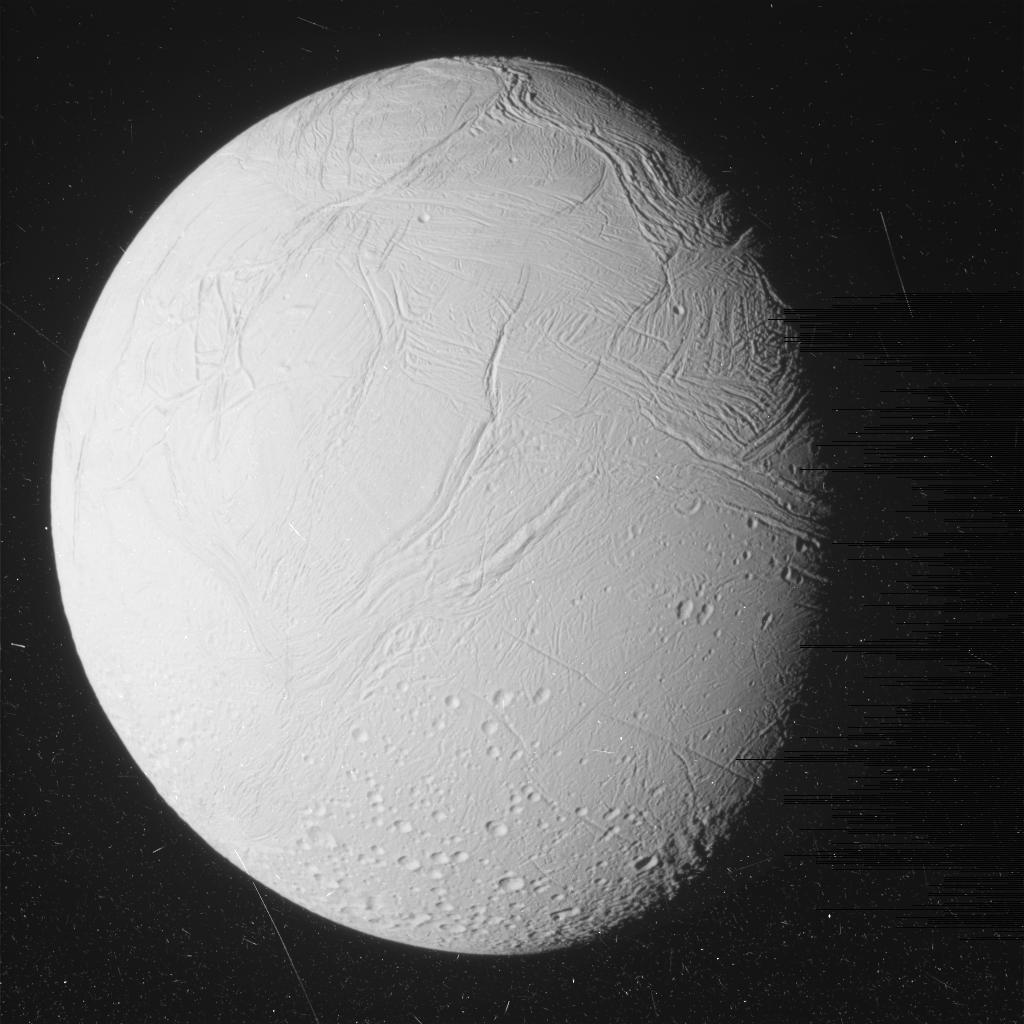
Cool image time! On December 19, 2015 the Saturn orbiter Cassini made its last close fly-by of the moon Enceladus, known best for the many geysers detected on its surface venting water and other carbon-based materials.
The picture to the right, reduced and enhanced to post here, shows that the entire face of this
Saturn’s moon Enceladus, as seen during that fly-by. The moon itself is only about 310 miles across.
Its icy surface is evident, as are the many fractures, some meandering almost like rivers. Interestingly, for some reason there are a lot more craters in the lower hemisphere, while the upper hemisphere is more completely covered with fractures.
The black outline indicates the approximate area captured by the two close-up images below.
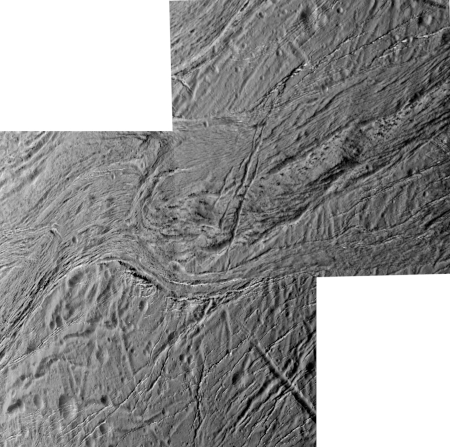
Close-up of Enceladus’ equatorial regions. Click
here and here for original images.
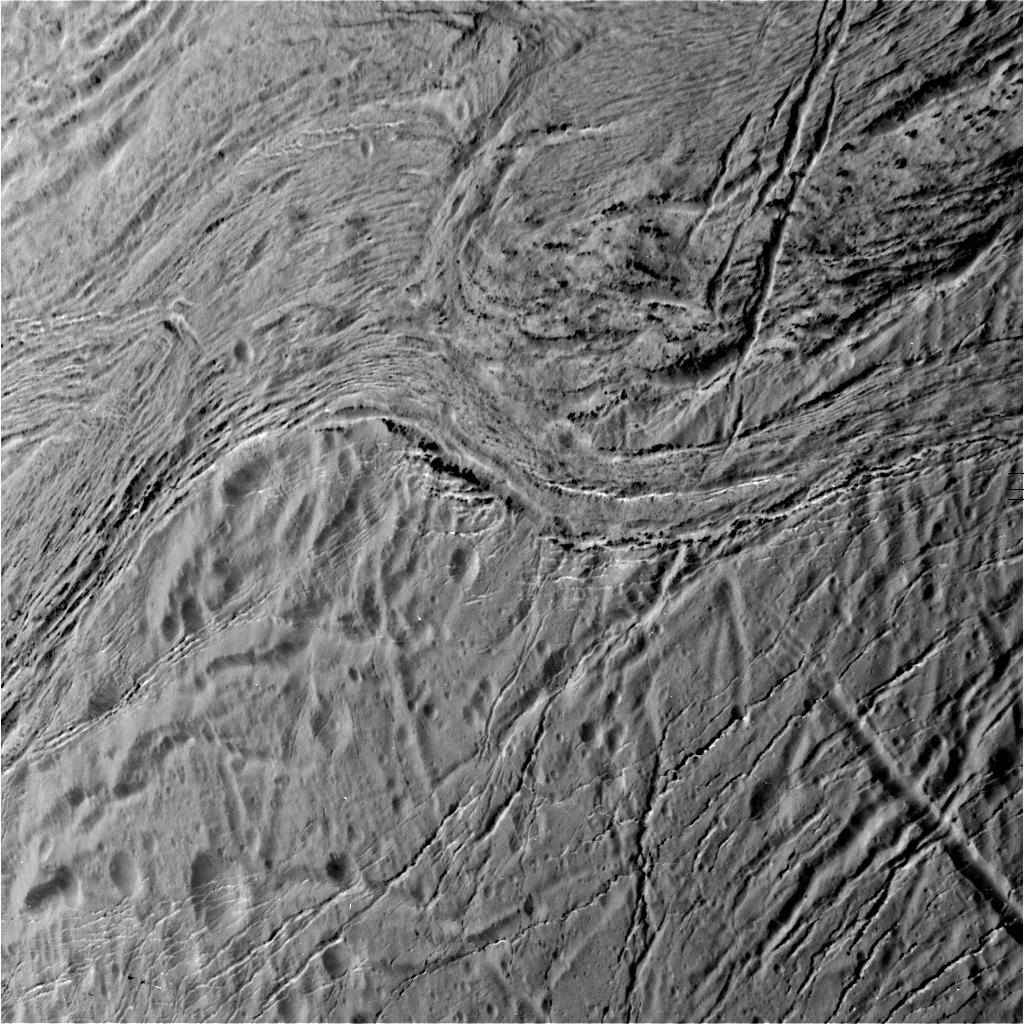
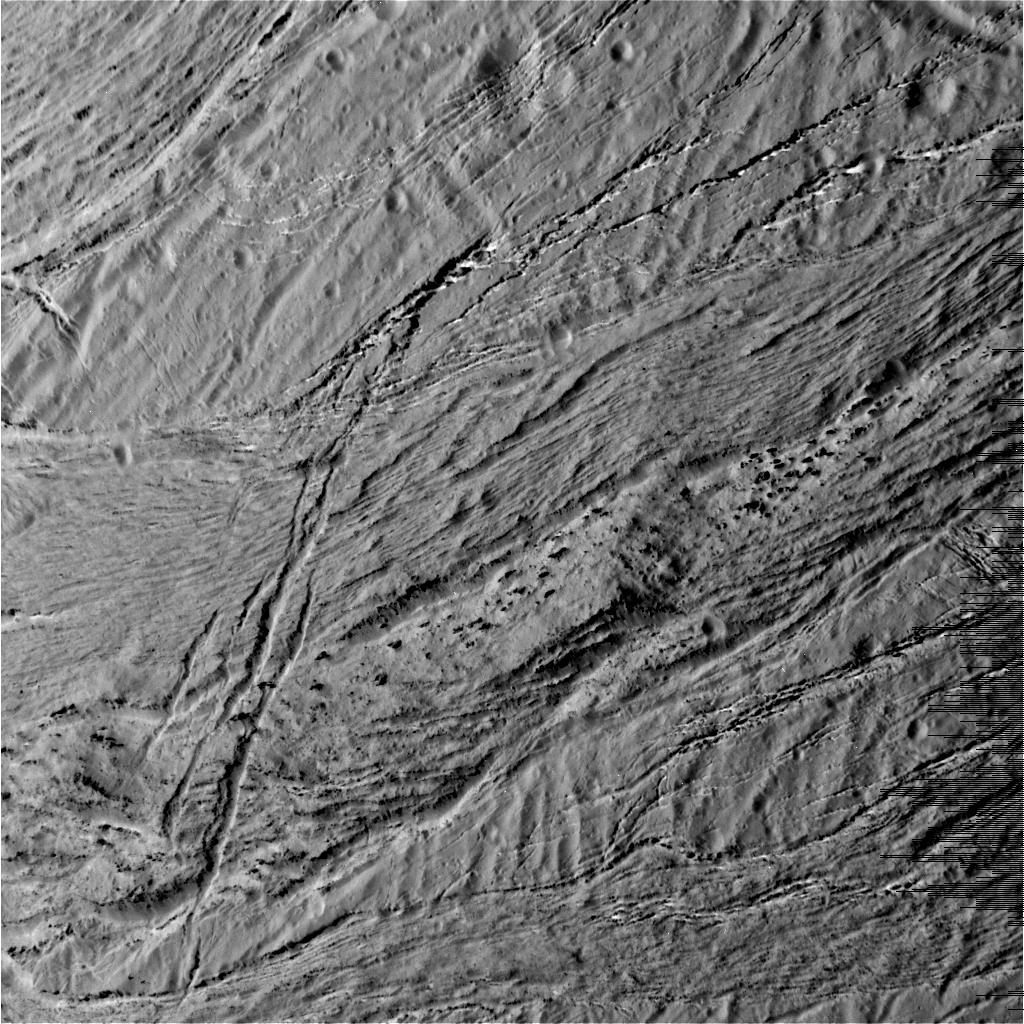
The two pictures to the right, reduced and cropped to post here, were taken (here and here) only a few minutes before Cassini made its closest approach, 3,106 miles from the surface.
Based on data obtained during Cassini’s fly-bys of Enceladus, scientists believe a liquid ocean exists beneath the surface. And if you have ever looked at images of the Arctic ice coverage on the North Pole, this surface will look somewhat familiar, reinforcing that conclusion. Over time the Arctic cap of ice cracks and shifts as it floats on the liquid, causing fractures as well as curving lines.
It sure does appear the same thing is happening on Enceladus.
The presence of only a few craters suggests however this surface does not change quickly. It does change, though, wiping out earlier impact evidence.

On Christmas Eve 1968 three Americans became the first humans to visit another world. What they did to celebrate was unexpected and profound, and will be remembered throughout all human history. Genesis: the Story of Apollo 8, Robert Zimmerman's classic history of humanity's first journey to another world, tells that story, and it is now available as both an ebook and an audiobook, both with a foreword by Valerie Anders and a new introduction by Robert Zimmerman.
The print edition can be purchased at Amazon or from any other book seller. If you want an autographed copy the price is $60 for the hardback and $45 for the paperback, plus $8 shipping for each. Go here for purchasing details. The ebook is available everywhere for $5.99 (before discount) at amazon, or direct from my ebook publisher, ebookit. If you buy it from ebookit you don't support the big tech companies and the author gets a bigger cut much sooner.
The audiobook is also available at all these vendors, and is also free with a 30-day trial membership to Audible.
"Not simply about one mission, [Genesis] is also the history of America's quest for the moon... Zimmerman has done a masterful job of tying disparate events together into a solid account of one of America's greatest human triumphs."--San Antonio Express-News